On 1 September 2026, REIDIN data show that annual residential rent growth in Abu Dhabi eased from 21.8% in December 2025 to 12.0% in April 2026.
On this page
Abu Dhabi rent growth is cooling sharply. According to REIDIN index data released on 1 September 2026, the annual rise in residential rents in the Emirati capital fell from 21.8% in December 2025 to 12.0% in April 2026. Consultancy Cavendish Maxwell attributes the slowdown to new supply entering the market. For an investor, this shift signals not a downturn but the normalisation of a rental market emerging from two years of exceptional pressure.
The essentials
- According to REIDIN, annual residential rent growth in Abu Dhabi fell from 21.8% in December 2025 to 12.0% in April 2026.
- Apartment rents were rising faster than villa rents in April 2026, at 12.9% versus 7.7% year on year.
- Cavendish Maxwell attributes the moderation in rental growth to new residential supply entering the Abu Dhabi market.
- Despite the slowdown, Abu Dhabi rents were still growing at a double-digit pace in April 2026.
A slowdown that remains strong growth
The standout figure is still the market's vigour: at 12.0% annual growth in April 2026, Abu Dhabi retains double-digit rental momentum. The turn comes from the point of comparison: after peaking at 21.8% in December 2025, any move back towards the average looks like a slowdown, even as rents keep climbing.
The divergence between segments is telling. Apartments posted 12.9% annual growth in April 2026, against 7.7% for villas. That gap reflects still-robust rental demand in the apartment segment, driven by mobile professionals, expatriates and young households, while the more asset-heavy villa segment stabilises earlier.
A project in mind?
Talk to a Lucretia adviser
Tailored guidance, no obligation.
New supply, the engine of normalisation
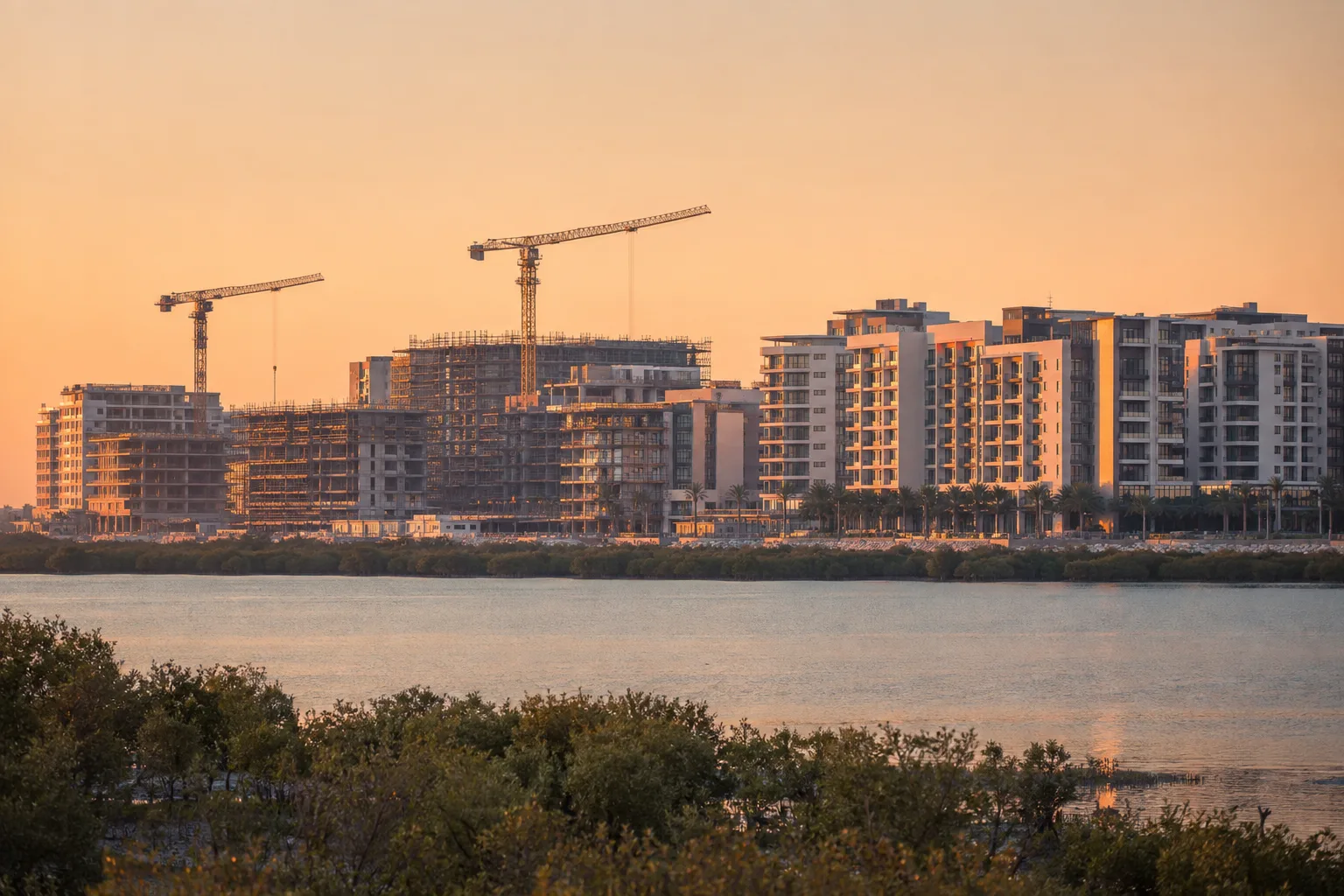
Cavendish Maxwell points to the direct cause: new homes coming into service. After a period when demand far outpaced completions, the ramp-up of new-build projects is gradually rebalancing the relationship between landlords and tenants. It is the classic mechanism of a maturing market: the scarcity that fuelled sharp increases eases as the cranes deliver.
For anyone tracking the capital's market, this signal calls for distinguishing districts already well served by new supply from those where demand remains structurally higher than deliveries. We break down these dynamics sector by sector in our overview on how to invest in Abu Dhabi.
What it changes for investors
At Lucretia, we read this slowdown as a healthy correction, not an alarm bell. Rent growth at 12% in April 2026 remains solid; what changes is the pace at which a landlord can revise rents on re-letting. Yield assumptions built on the spectacular increases of 2024-2025 need to be recalibrated to a more sustainable trajectory, particularly in the villa segment, which stabilises first.
In practice, we advise building a prudent rental progression into cash-flow models and favouring assets where demand stays structurally strong — well-located apartments, districts with high expatriate flows — rather than betting on the continuation of 20% growth. In Abu Dhabi, the absence of income tax on rental income for individuals remains a major advantage: it cushions the effect of rental growth as it normalises. Our local team supports every acquisition to invest in Abu Dhabi by calibrating projections against the most recent market data, without ever promising a return.
Source: globalpropertyguide.com — 2026-09-01
Free guide, delivered on WhatsApp
Get the guide "Investing in Abu Dhabi"
Taxation, visas, financing, buying steps: 14 pages written by our advisers, sent to your WhatsApp within minutes.

This article is part of our guide
Abu Dhabi Property Investment Guide: Buy, Let and Resell with Confidence
About the author