On 12 October 2026, the Abu Dhabi Department of Economic Development (ADDED) set out its goal: to attract AED 235 billion in investment and create 130,000 skilled jobs by 2045. Over the same period, foreign direct investment in the emirate's real estate rose 309% year on year in the first half of 2026.
On this page
For Abu Dhabi real estate investment, 12 October 2026 brought a significant signal: the Abu Dhabi Department of Economic Development (ADDED) announced a target of AED 235 billion in investment, spread across four specialised economic clusters, to create 130,000 skilled jobs by 2045. Hamid Saiah Al Mazrouei, ADDED Undersecretary, said these clusters should add more than AED 284 billion to the emirate's gross domestic product by that date.
For property, this announcement sits alongside another figure: in the first half of 2026, Abu Dhabi's real estate sector received AED 13.8 billion in foreign direct investment (FDI), up 309% year on year. International capital is already flowing in, and public strategy aims to draw skilled talent over the next two decades.
Key takeaways
- On 12 October 2026, the Abu Dhabi Department of Economic Development (ADDED) set a target of AED 235 billion in investment across four specialised economic clusters by 2045.
- These four clusters are expected to create 130,000 specialised jobs for highly skilled profiles in the innovation economy by 2045.
- According to ADDED, the clusters should contribute more than AED 284 billion to Abu Dhabi's GDP by 2045.
- The four clusters cover smart and autonomous vehicles (SAVI), agriculture and water (AGWA), health and longevity (HELM), and finance, insurance, digital and alternative assets (FIDA).
- In the first half of 2026, Abu Dhabi real estate received AED 13.8 billion in foreign direct investment, up 309% year on year.
Four clusters to attract highly skilled talent
ADDED's strategy rests on four clusters: Smart and Autonomous Vehicle Industries (SAVI) for smart and autonomous vehicles, Agriculture and Water Abundance (AGWA) for agriculture and water, Health, Endurance, Longevity and Medicine (HELM) for healthcare, and Finance, Insurance, Digital and Alternative Assets (FIDA) for finance and digital and alternative assets.

This choice matters for property. The 130,000 targeted jobs are specialised roles, often filled by expatriate professionals and their families. These households look for quality homes close to business hubs, well served by schools and amenities. More broadly, the plan is part of the emirate's diversification beyond hydrocarbons, which is making Abu Dhabi an increasingly watched market for investors, as we explain in our guide Investing in Abu Dhabi.
What 309% FDI growth means for Abu Dhabi real estate
With AED 13.8 billion in foreign direct investment in the first half of 2026, 309% more than a year earlier, Abu Dhabi real estate is drawing markedly more international capital. This growth validates the choices the emirate has made in recent years: a clear regulatory framework, freehold zones open to foreign buyers and high-end residential projects.
Foreign capital and skilled jobs reinforce each other. Investors buy in anticipation of new residents, and those residents take up the homes as they are delivered. To see how this dynamic shapes the pace of prices, read our analysis of the Abu Dhabi property market and its outlook.
What it changes for investors
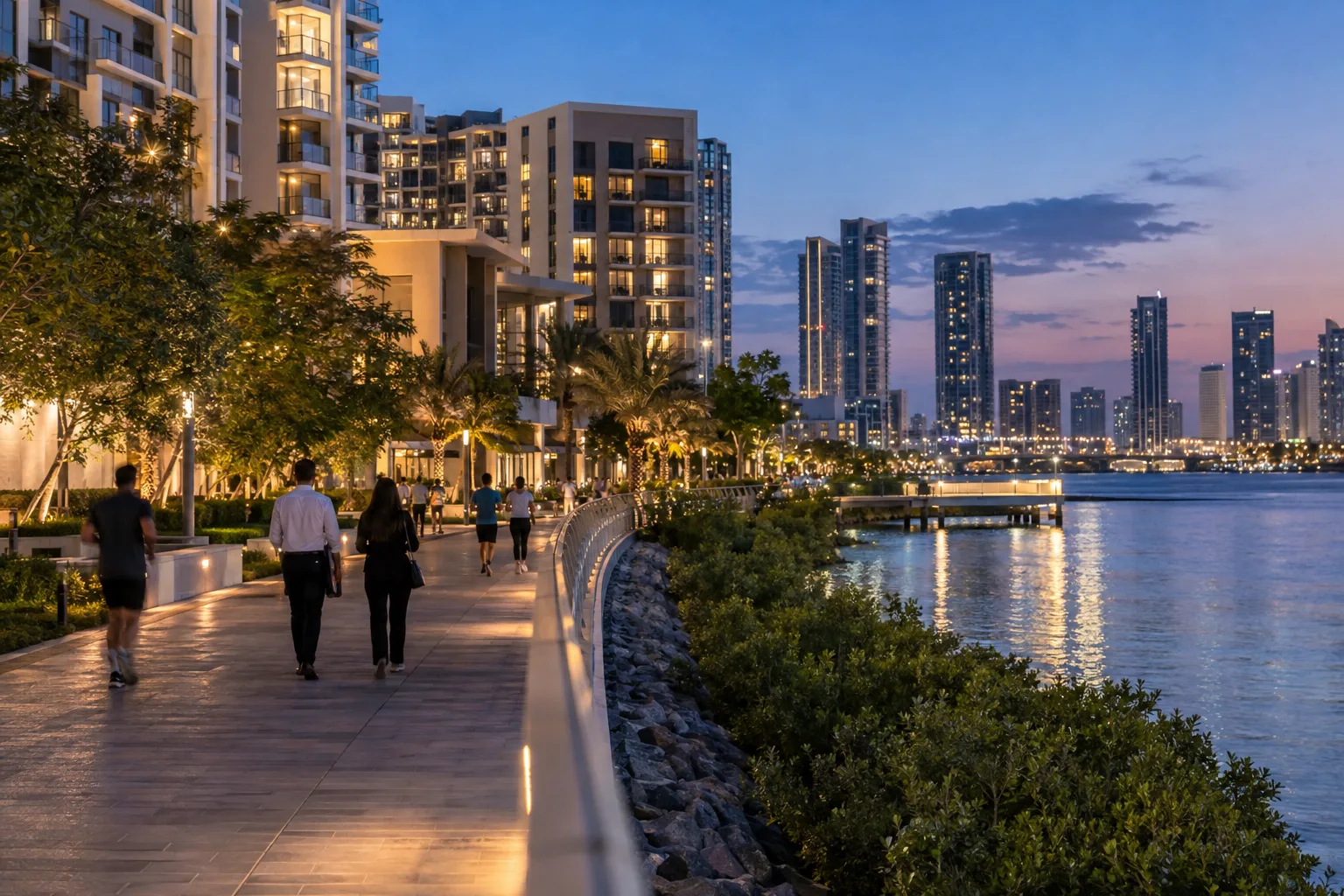
For investors, the first thing we look at is the effect on rental demand. Tens of thousands of additional skilled jobs by 2045 mean a steady flow of creditworthy tenants, particularly in residential districts close to business centres. Al Reem Island is one of the best-placed areas to attract these profiles, thanks to its proximity to the financial centre and its supply of recent apartments. In the United Arab Emirates, individuals pay no tax on rental income, which makes this tenant flow all the more valuable.
Next, Abu Dhabi offers a way to diversify a portfolio already invested in Dubai. The two markets move at different speeds and target slightly different tenants. Abu Dhabi relies more on public strategy and on institutional and technology jobs. These figures point to a favourable trend, but they guarantee neither yield nor capital gain: the choice of district, product and entry price remains decisive.
Finally, returns also depend on day-to-day property management. Occupancy, tenant selection and maintenance make a real difference: our guide to rental management in Abu Dhabi covers these points in detail. Lucretia helps you define a strategy suited to your situation, from selecting opportunities to letting the property.
Source: gulfnews.com — 2026-10-12
Free guide, delivered on WhatsApp
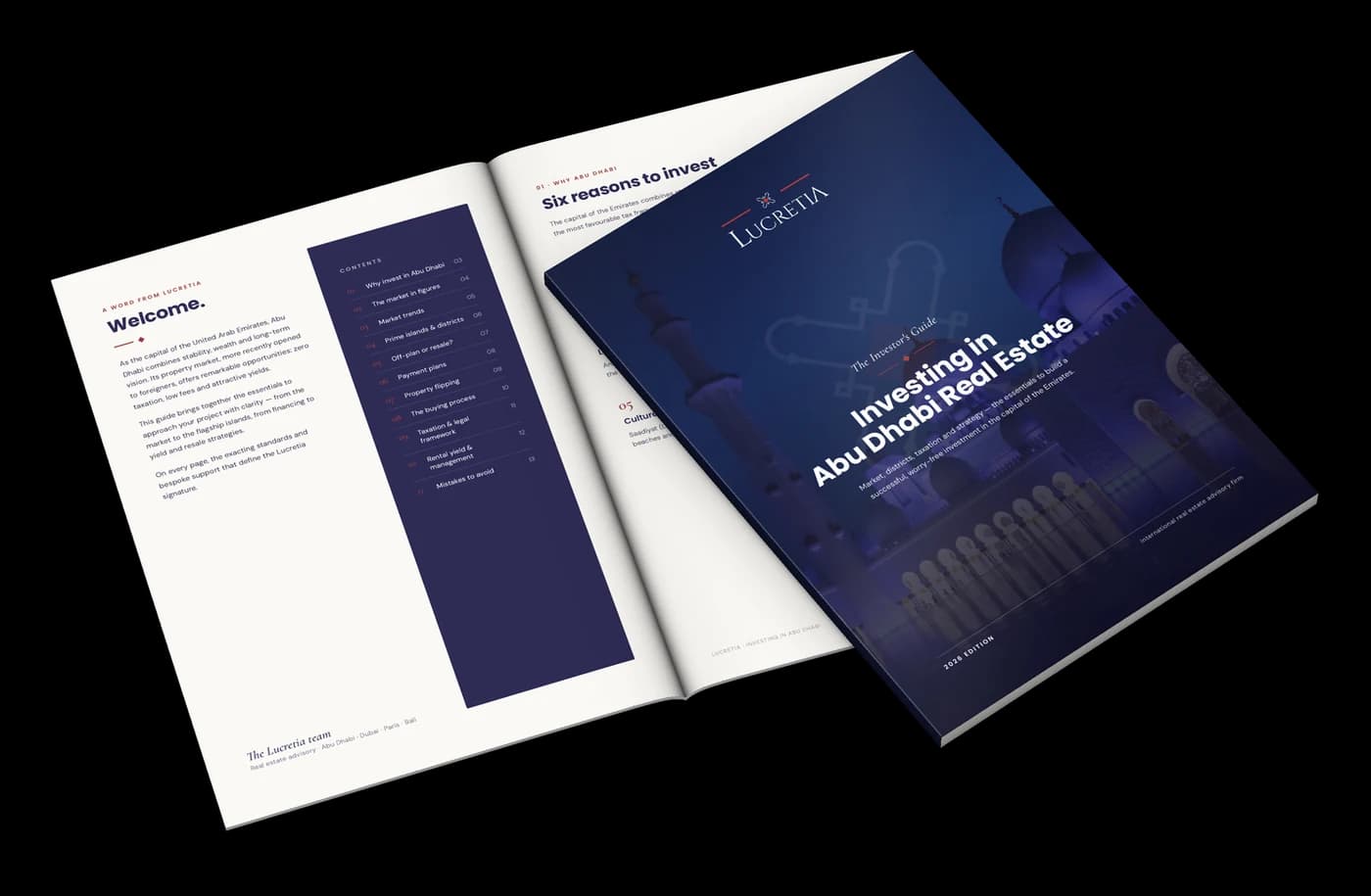
Get the guide "Investing in Abu Dhabi"
Taxation, visas, financing, buying steps: 14 pages written by our advisers, sent to your WhatsApp within minutes.
This article is part of our guide
Abu Dhabi Property Investment Guide: Buy, Let and Resell with Confidence
About the author

Adeline LAUVERNAY
Real Estate Consultant
An expert in luxury sales and marketing, Adeline honed her sense of high-end service at prestigious Houses such as Hermès and Bvlgari. Her expertise allows her to meet the expectations of a demanding clientele by offering a tailor-made experience. Passionate and rigorous, she supports her clients by identifying unique opportunities and offering exceptional properties perfectly aligned with their aspirations.