Yield, capital gain or prestige: each objective calls for a different neighbourhood profile in Dubai. Here's the decision framework, backed by Bayut figures.
On this page
- Where to invest in Dubai by neighbourhood, based on your objective?
- How to read price, rent and yield neighbourhood by neighbourhood?
- Appreciation trends: which neighbourhoods have capitalised, which are just starting
- How much to actually invest depending on the neighbourhood?
- The framework that shapes the neighbourhood choice: freehold, costs and financing
- Points to watch: the pitfalls of choosing a neighbourhood
To work out where to invest in Dubai by neighbourhood, start with your objective: affordable areas deliver a calculated gross yield of up to 7.7% (Dubai International City), premium zones sit around 5–6% but carry the prestige, in a market whose median yield stands at 5.6% for a median price of AED 1,883/sq ft according to Bayut data (monthly series, most recent point August 2026).
The same budget is deployed differently depending on whether you're after cash flow, five-year appreciation or high-end personal use. This framework cross-references prices, rents and appreciation trends neighbourhood by neighbourhood to align your geographic choice with your strategy.
Where to invest in Dubai by neighbourhood, based on your objective?
The right neighbourhood in Dubai flows from three typical objectives — maximum yield, capital gain, or premium use — each pointing to a distinct price and yield profile, in a market that ranges from 1.5% gross yield (La Mer) to 7.7% (Dubai International City), according to Bayut data.
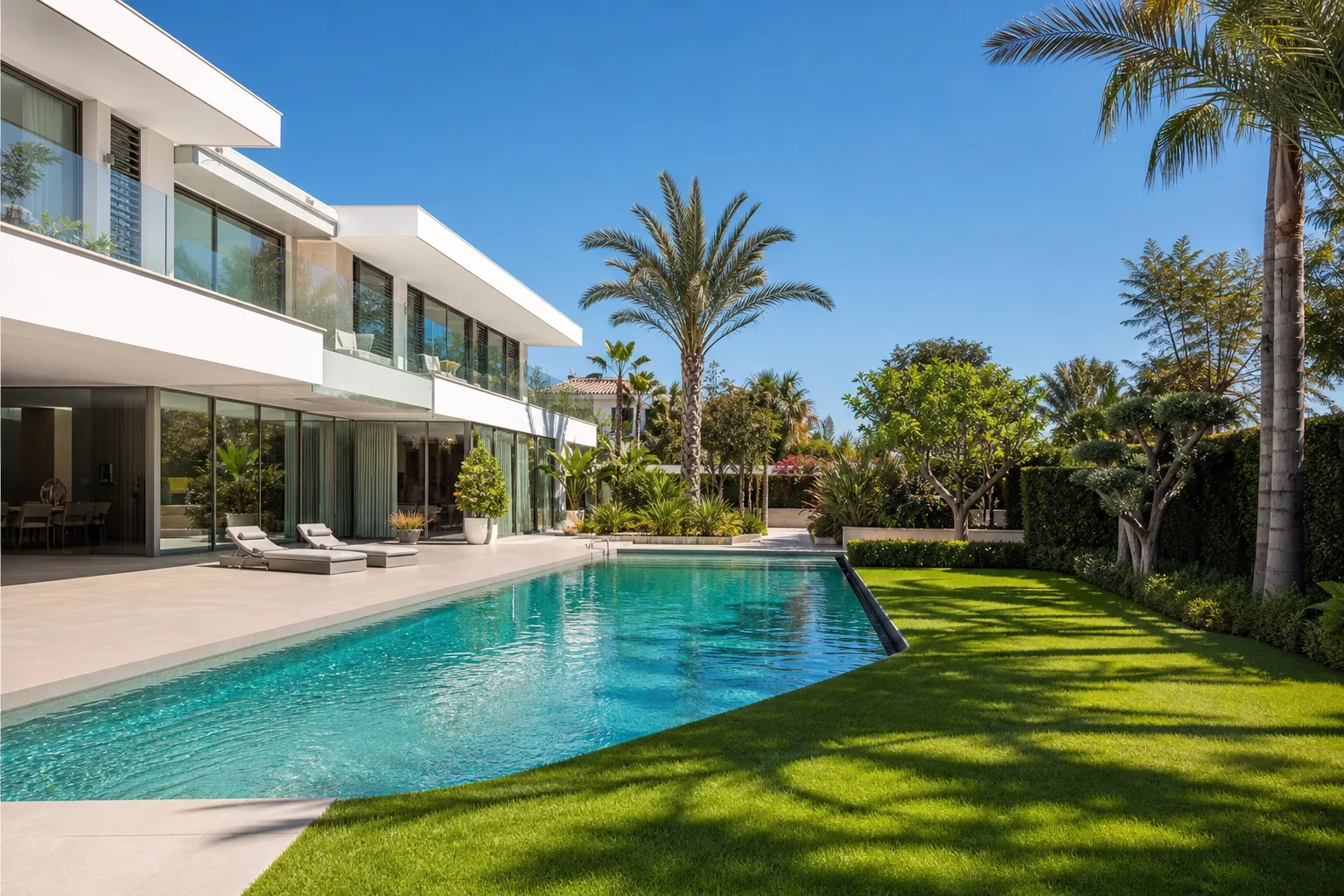
If you're chasing cash flow, look at the affordable neighbourhoods. Rent carries real weight against a moderate entry price, and this is where the highest yields on the market sit, detailed in the table below.
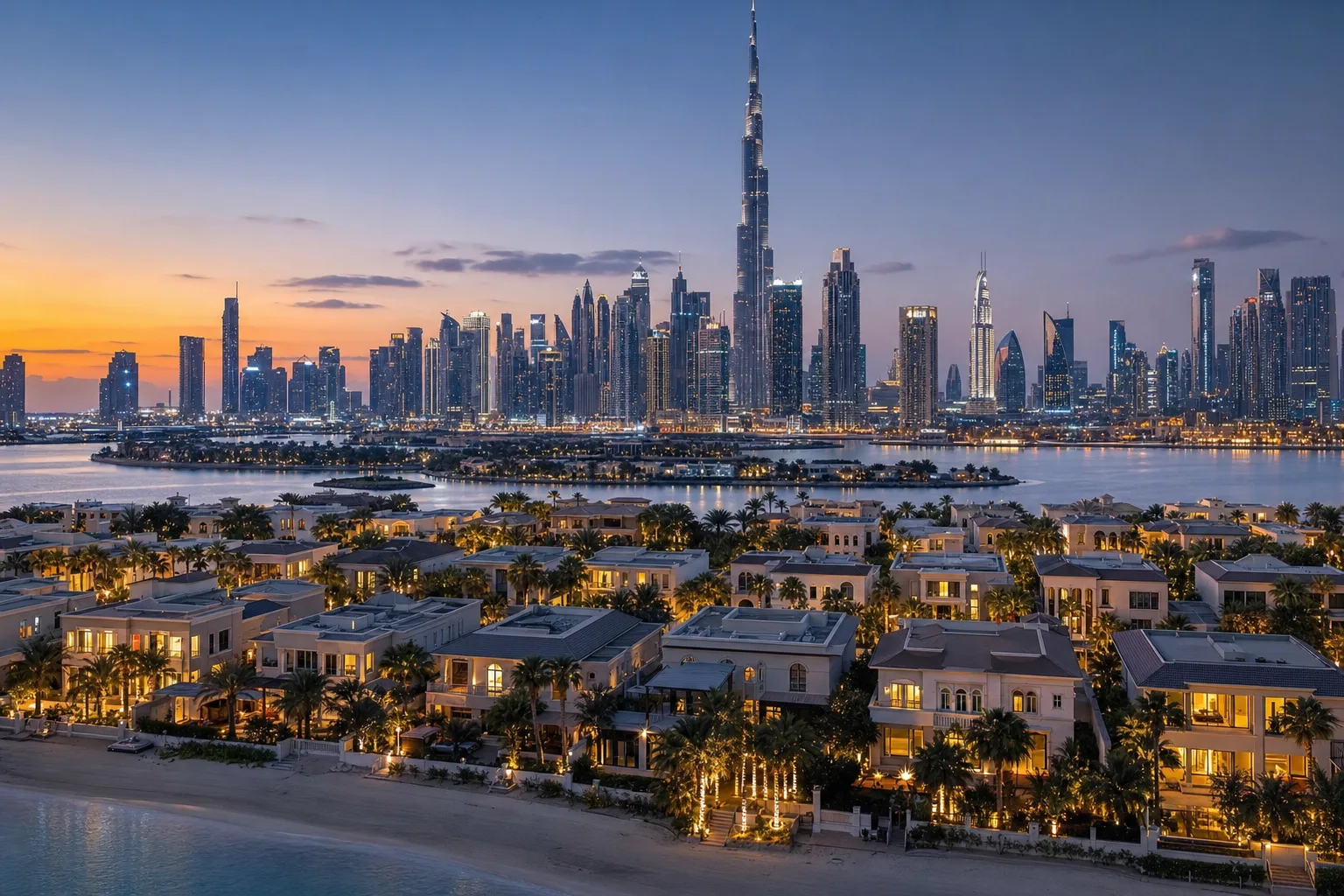
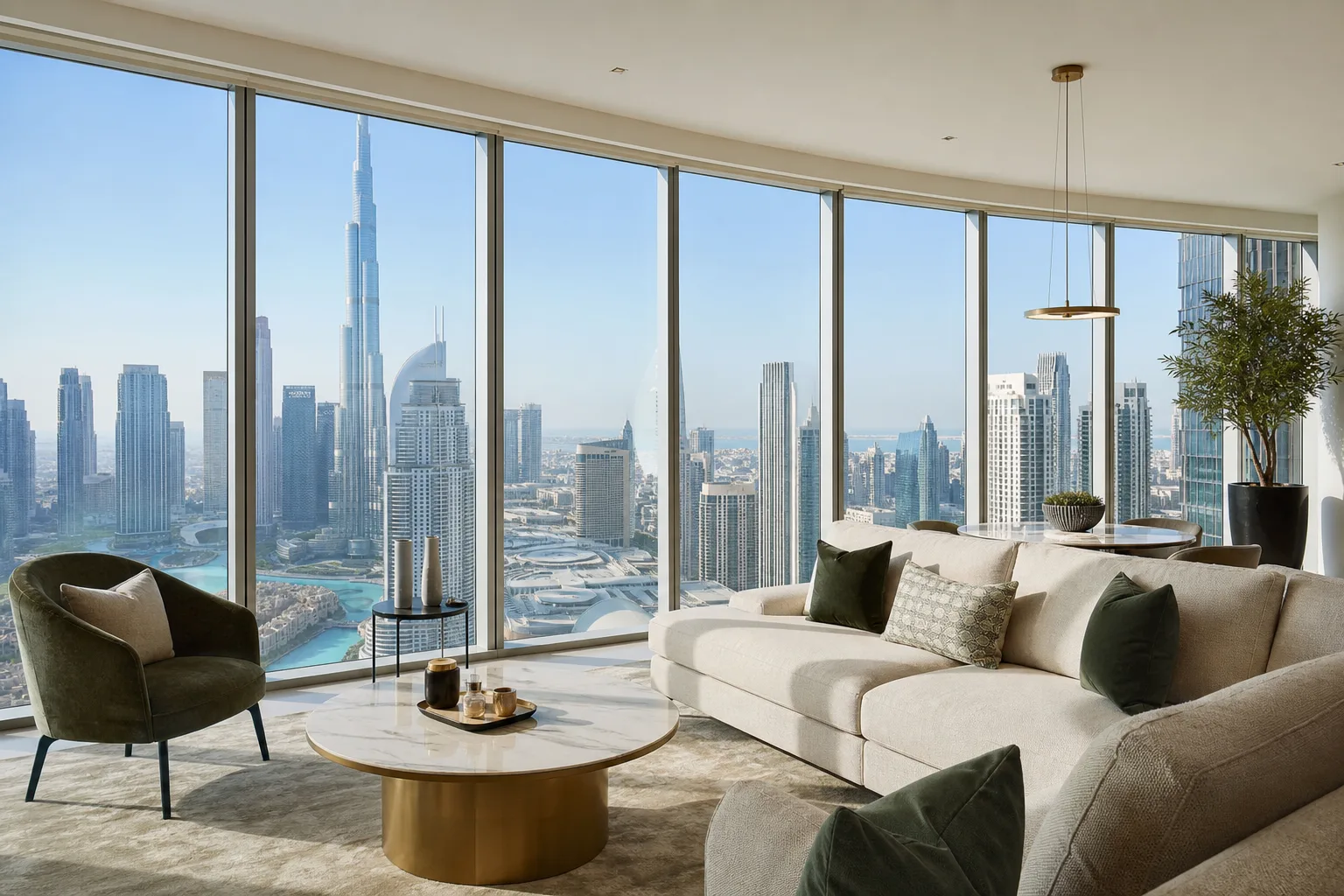
If you're after prestige and personal use, the logic flips. Palm Jumeirah trades at AED 4,336/sq ft for a 5–6% yield, Downtown Dubai at AED 3,454/sq ft for 5.6% (Bayut March 2026): you're paying for the address, not the yield.
These three logics shape everything else. Our complete guide to investing in Dubai places this choice within a broader strategy.
How to read price, rent and yield neighbourhood by neighbourhood?
Calculated gross yield reads simply: annual rent per square foot ÷ price per square foot, excluding charges and vacancy — never a "net" or "guaranteed" yield. It's a comparison ratio, not a promise of income.
| Neighbourhood | Price (AED/sq ft) | Rent (AED/sq ft/yr) | Gross yield |
|---|---|---|---|
| Arjan | 1,485 | 106 | 7.1% |
| Dubai Sports City | 1,318 | 89 | 6.8% |
| Dubailand Residence Complex | 1,277 | 81 | 6.3% |
| Business Bay | 2,445 | 143 | 5.8% |
| Downtown Dubai | 3,454 | 194 | 5.6% |
| Palm Jumeirah | 4,336 | 196 | 5.6% |
Source: Bayut (Business Bay February 2026, other rows March 2026). Calculated gross yield, excluding charges and vacancy.
Affordable segment: yield takes the lead
Arjan leads the market at AED 1,485/sq ft for a rent of AED 106/sq ft/yr, or 7.1%, ahead of Dubai Sports City (6.8%) and Dubai Science Park (6.6%) (Bayut March 2026). Just behind, Dubailand Residence Complex at AED 1,277/sq ft, rent 81, reaches 6.3%, level with Dubai Silicon Oasis (AED 1,370/sq ft, rent 86).
Mid-range segment: the balance
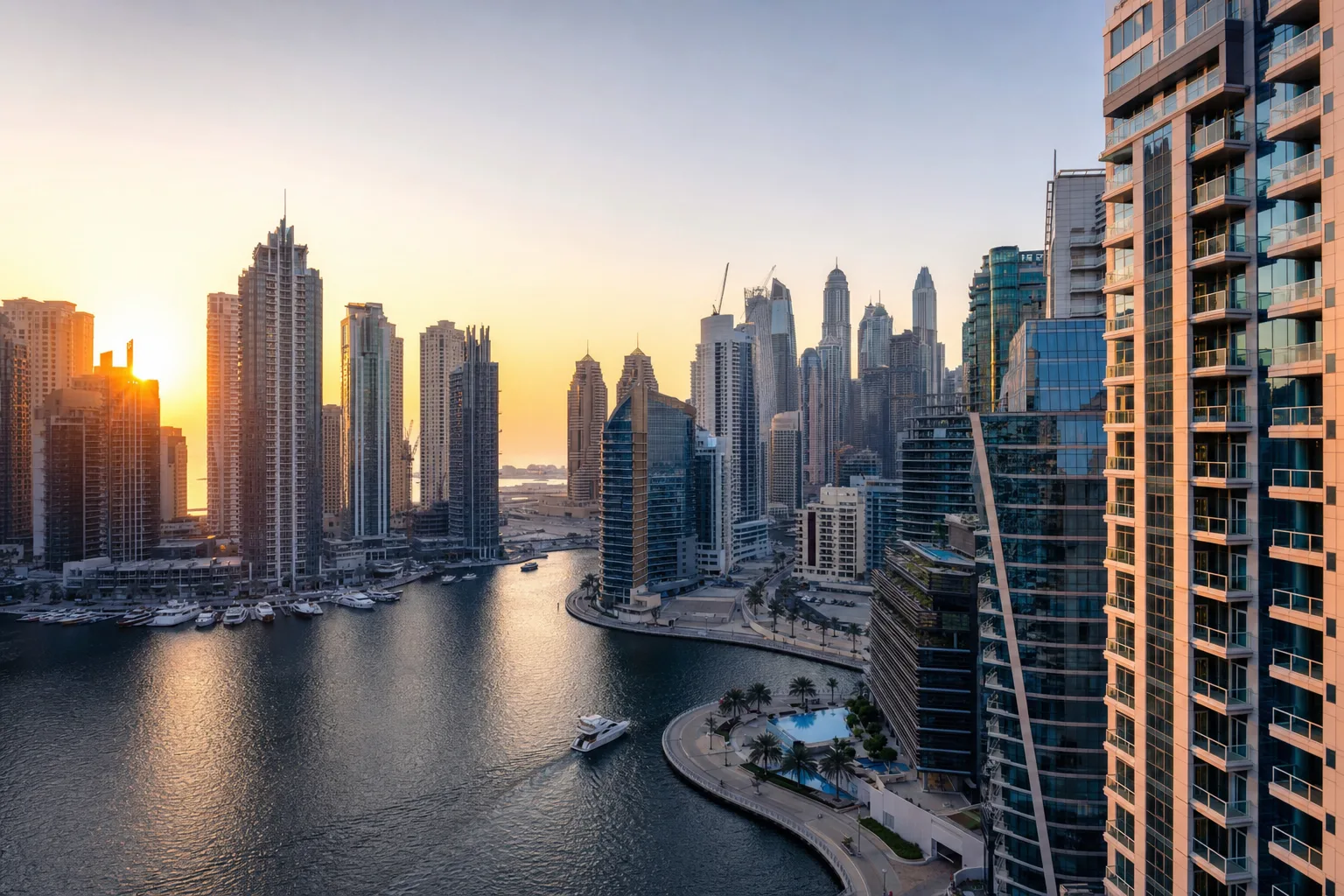
Business Bay shows AED 2,445/sq ft, rent 143, or 5.8% (Bayut February 2026); Dubai Marina AED 2,376/sq ft for 5.8% as well. You move upmarket without sacrificing all the yield. If you're hesitating between the waterfront lifestyle and the central skyline, our comparison of Dubai Marina versus Downtown Dubai weighs price, yield and appreciation profile by profile.
Premium segment: you pay for the location
Palm Jumeirah commands a rent of AED 196/sq ft/yr for a yield of around 5.6% given its price; Downtown 194 for 5.6%. Lower still: Bukadra at 3% and La Mer at 1.5%, the market floor (Bayut).
Appreciation trends: which neighbourhoods have capitalised, which are just starting
Over five years, the strongest appreciation goes to Jumeirah Garden City, +147.6% over 60 months (Bayut) — because the capital-gain objective tracks price movement, not the rent/price ratio, two logics never to be confused. A neighbourhood can "yield" poorly yet capitalise very well.
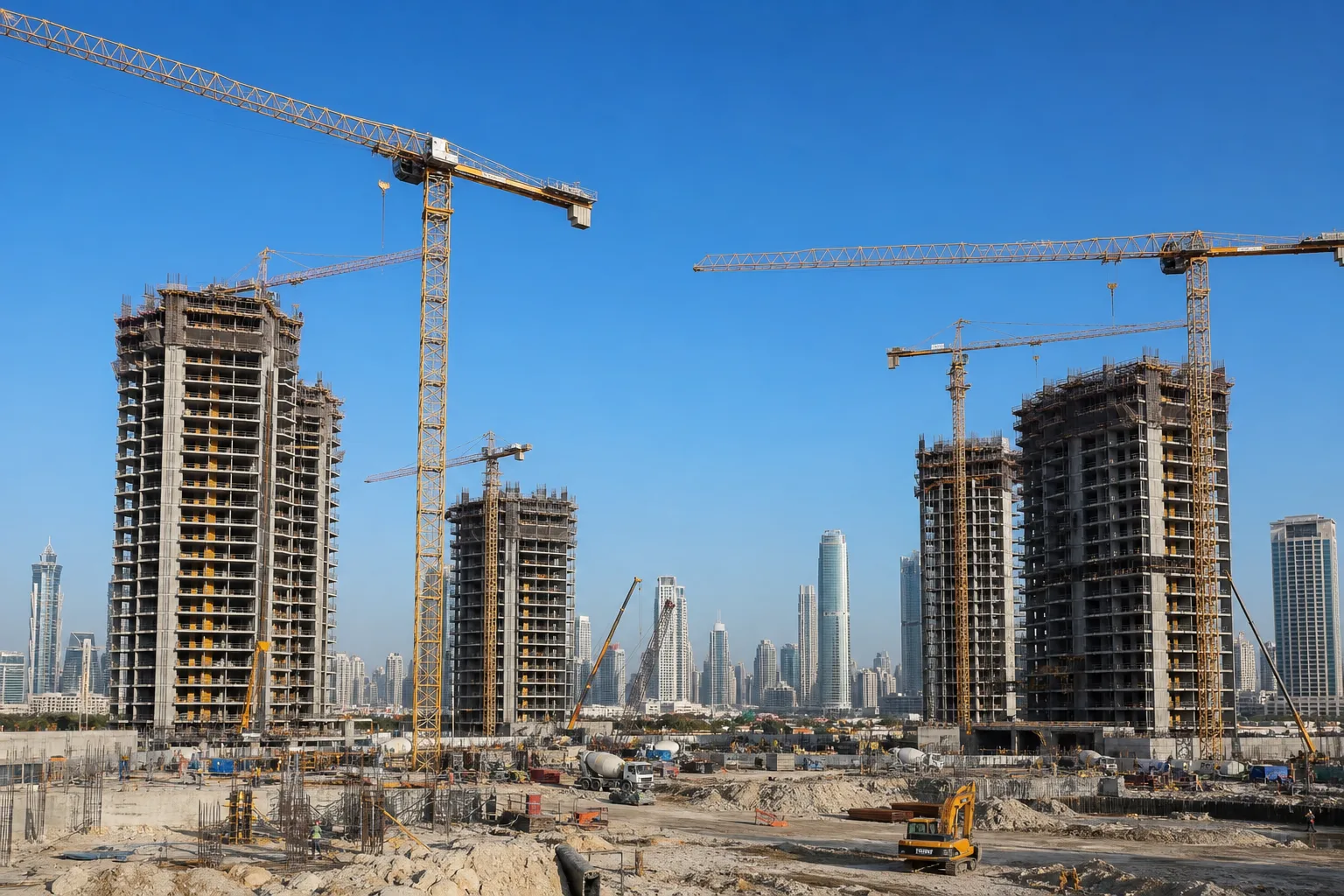

Over five years, the sharpest rises come from areas under development: Jumeirah Garden City +147.6%, Dubai Industrial City +132.1%, Dubailand Residence Complex +110.9% and Dubai Silicon Oasis +108.9% over 60 months (Bayut).
Recent momentum points to other favourites. Over twelve months, Bukadra climbs +12.2%, Dubai Silicon Oasis +5.7%, Dubai Industrial City +5.6% and Dubai Islands +4.1%, while the market median is just +2.6% across 71 neighbourhoods (Bayut).
Mature areas advance more slowly, which isn't a flaw: Business Bay +0.9%, Palm Jumeirah and Downtown +1.7% over twelve months (Bayut). The trade-off is clear — the stability of an established value versus the potential of a rising area. The question of "which neighbourhood has grown the most over five years" is detailed in our investment guide.
How much to actually invest depending on the neighbourhood?
Price per square foot translates into a real budget: among the 229 projects we list, entry tickets range from AED 500,000 to AED 2M, with a median of AED 1.2M across 107 projects with a displayable price.
A project in mind?
Talk to a Lucretia adviser
Tailored guidance, no obligation.
For a low entry point, Coventry Curve 2 in Dubai Industrial City starts at AED 500,000, and AUM 99 Residences in Dubailand Residence Complex at AED 600,000. To picture what each budget actually buys, our guide on investing in Dubai by budget breaks down every tier, from the entry ticket to the high end.
A concrete yield case: in Arjan (AED 1,485/sq ft, Bayut), a project like Bond Enclave starts at AED 1.3M. Set against the rent of AED 106/sq ft/yr, you get back the neighbourhood's 7.1% gross (Bayut).
A premium case: target Downtown via Binghatti Skyblade from AED 1.8M, or Business Bay via Canal Heights from AED 1.2M.
The framework that shapes the neighbourhood choice: freehold, costs and financing
Before choosing a neighbourhood, check it's in a freehold zone: full ownership has been open to foreigners since 2002 in Dubai's designated zones, according to the Dubai Land Department.

Acquisition costs are identical whatever the neighbourhood: 4% of the price to the DLD, plus roughly AED 4,700 to 5,500 in fixed fees, and on the secondary market a 2% agency fee + 5% VAT payable by the buyer (Property Finder). This baseline doesn't vary from one neighbourhood to another — only the base price changes.
Financing, on the other hand, depends on your profile. The CBUAE caps lending for resident expats at 80% (property ≤ AED 5M), 70% above that, 60% for a second property and 50% off-plan; a non-resident typically obtains 50–75%, meaning a 25–50% deposit.
In emerging neighbourhoods, purchases are often off-plan: funds pass through a mandatory escrow account (Law No. 8 of 2007), the deposit ranges from 5 to 20% and lending is capped at 50%. On taxes, the absence of tax on rental income and capital gains is covered in our taxation guide.
Points to watch: the pitfalls of choosing a neighbourhood
The first pitfall is the headline yield: gross is not net. Service charges range from AED 3 to 30/sq ft/yr (RERA/Mollak), rising to AED 20–50 and more for luxury towers, which heavily erodes the premium of high-end neighbourhoods.
Free resource
Get our investment guide
The essentials — strategy, taxation, steps — to download.
The second pitfall is liquidity. The number of projects in a neighbourhood signals its market depth: Dubailand Residence Complex has 27 in our catalogue, Palm Jumeirah 7, and some zones just one. A thin market complicates both resale and re-letting.
On the ground, I see plenty of buyers drawn to an emerging address without gauging how long resale can take there. I advise them to align their holding period with the neighbourhood's depth.
The third pitfall is the dated figure. Never mix a neighbourhood price with a ballpark read in the press; always refer back to the month of the Bayut series.
One last point: by default, Sharia law can apply to succession. A will registered with DIFC Wills secures inheritance for non-Muslims — a subject covered in our taxation guide.
Among my clients, the most common mistake is falling in love with an address before setting their objective. We settle the strategy first, then choose the neighbourhood.
— Mourad LACHAB, Real Estate Consultant
In this guide
Articles in this guide
This article is part of our guide
Dubai Property Investment Guide for Foreign Buyers
About the author

Mourad LACHAB
Real Estate Consultant
Originally from Strasbourg and after ten years in Paris, Mourad moved to Dubai. A former soldier in the French Army for five years, he developed discipline, rigor and a sense of responsibility — qualities he now puts to work for his clients. He started out in Dubai at an English-speaking agency specializing in the secondary market, then joined Lucretia to support French-speaking clients with a 360° view of the market: off-plan, resales, rentals, taxation, etc. A committed and passionate professional, Mourad stands out for his seriousness, transparency and determination. He also practices boxing, a sport that perfectly reflects his mindset.