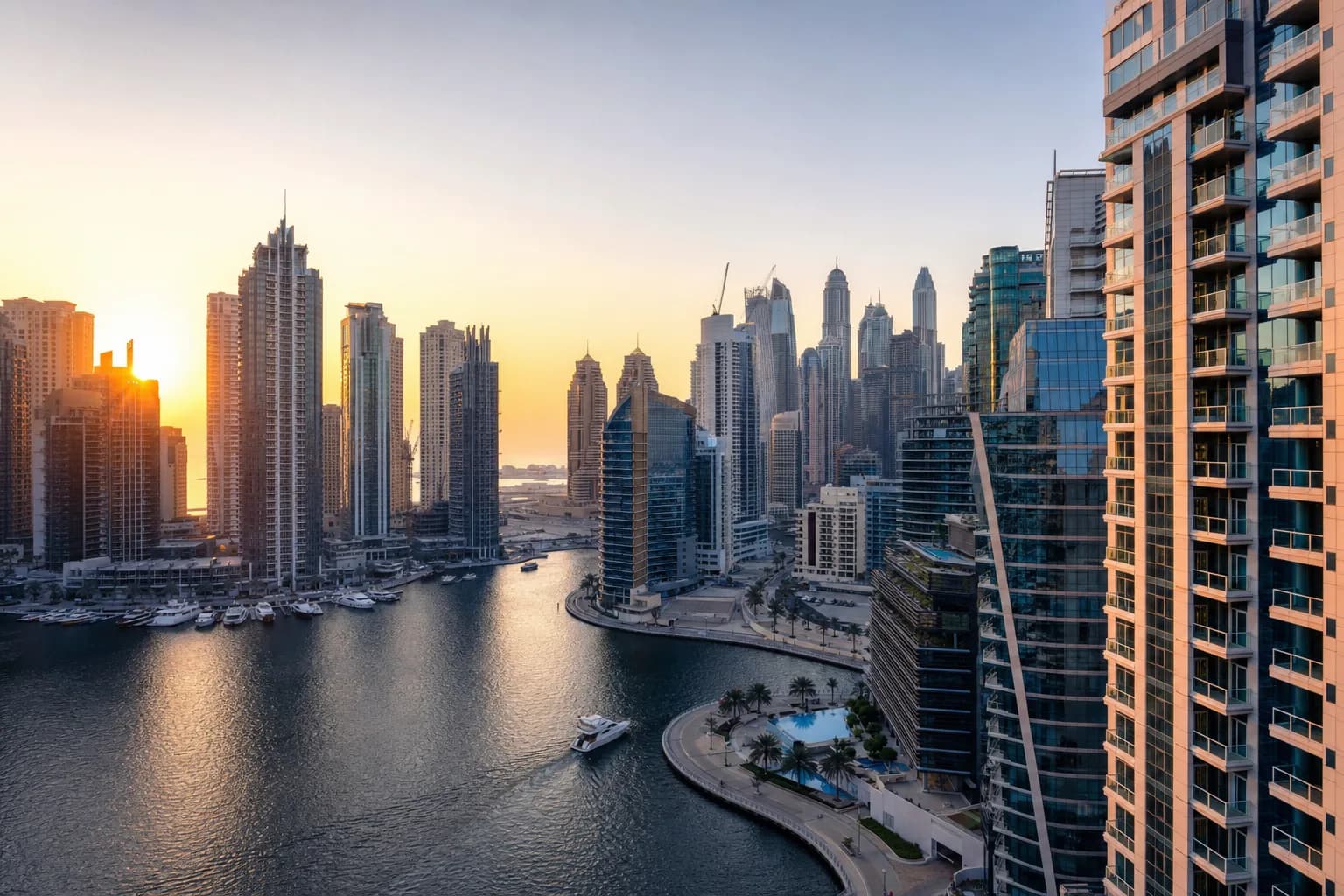
Two opposing logics, one 0% tax market: collect steady rent or capture appreciation. Here's how to decide by your horizon and profile.
On this page
- Buy-to-let or resale in Dubai: the short answer by profile
- Rental yield or capital gain: what does each strategy actually return?
- Cash flow and holding horizon: how much capital does each strategy tie up?
- Off-plan or ready property: which vehicle serves each strategy?
- Where to buy by strategy: the district map
- What tax and residency change in the decision
- Renting or reselling: which to choose by profile
Whether to buy to rent or to resell in Dubai comes down to your horizon: for steady income sustained over time, you buy to let and aim for a gross yield of 4.5% to 7.1% depending on the district (Bayut, March 2026); for a capital gain over a short or medium horizon, you buy to resell and capture the appreciation. There's no universal winner: the right call flows from your need for liquidity, the capital you have on hand, and how long you're willing to tie up your money.
Both strategies share one decisive advantage: a private individual pays neither rental income tax nor capital gains tax in Dubai. So the decision plays out elsewhere — on the district, the vehicle (off-plan or ready), cash flow, and your residency goal.
Buy-to-let or resale in Dubai: the short answer by profile
For steady income and a long hold, buy to let; for a capital gain over a short or medium horizon, buy to resell — both come out tax-free locally, but they don't serve the same goal.

The two approaches stand in direct opposition. Renting means collecting a gross yield of 4.5% to 7.1% depending on the district (Bayut, March 2026) and holding it year after year. Reselling means betting on appreciation: the market median is up +2.6% over 12 months, but some districts show +50% to +147.6% over 60 months according to Bayut data (March 2026). Rent comes in every month; the capital gain is realised all at once, on the way out.
A private individual pays neither rental income tax nor real estate capital gains tax in the Emirates, according to the official UAE government portal. Both strategies are therefore net locally — the decision hinges on horizon, cash flow, and profile.
Rental yield or capital gain: what does each strategy actually return?
Renting returns an annual flow — a gross yield of 4.5% to 7.1% depending on the district (Bayut, March 2026) — while reselling targets a one-off capital gain, up to +147.6% over 60 months in the most dynamic areas.
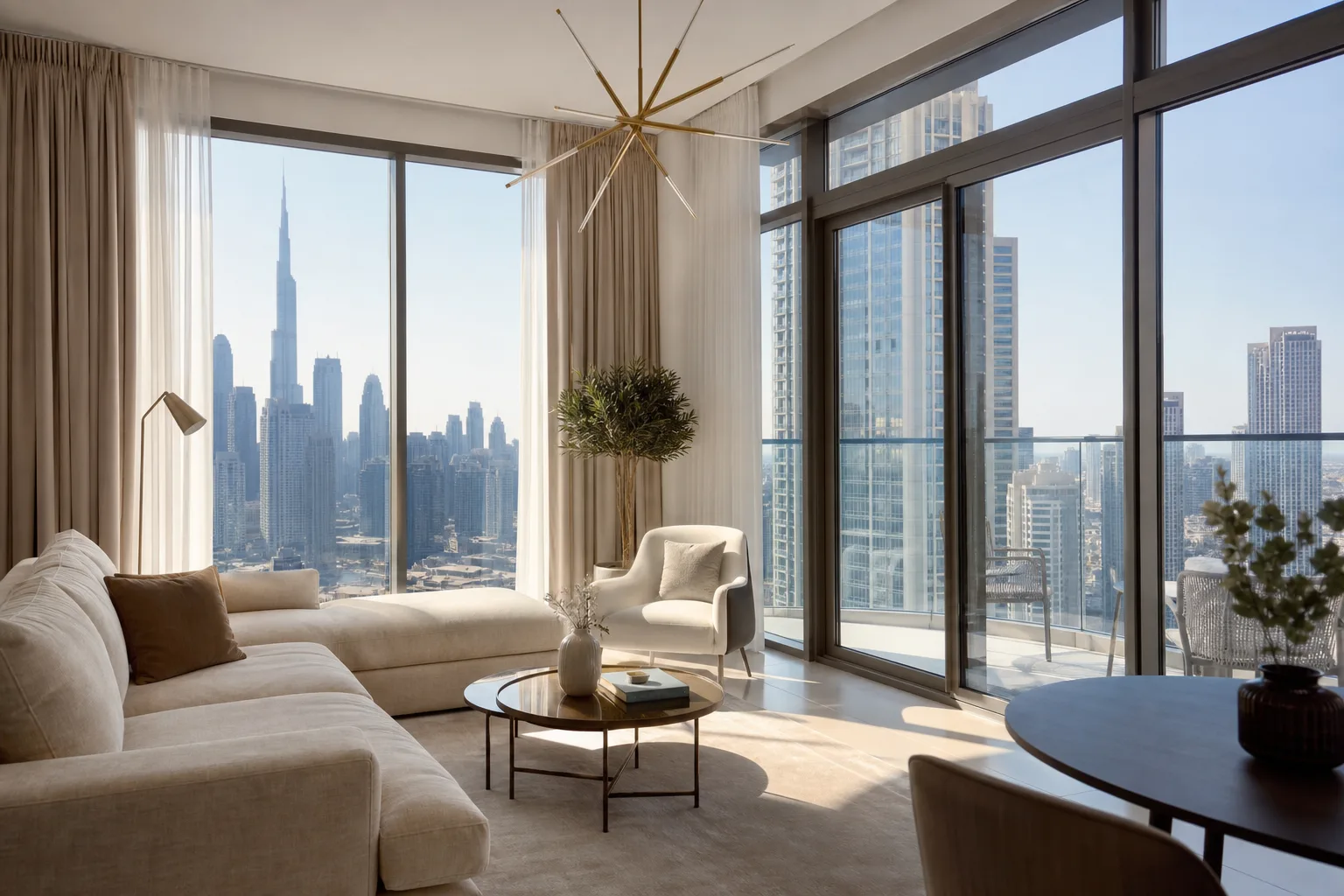
On the rental side, affordable districts lead: Arjan shows a 7.1% gross yield, Dubai Sports City 6.8%, and Dubai Silicon Oasis 6.3%, according to Bayut data (March 2026). Premium districts return less in flow: Downtown Dubai 5.6%, Palm Jumeirah 4.5%. This yield is gross, before service charges and vacancy.
On the resale side, past appreciation draws a different map: Jumeirah Garden City is up +147.6% over 60 months, Dubai Industrial City +132.1%, and Dubai Silicon Oasis +108.9%, according to Bayut data (March 2026). Past gains are no guarantee of future ones.
The same district rarely serves both goals. Palm Jumeirah yields only 4.5% in rent, but its price has climbed +69.1% over 60 months — a capital-gain profile, not a cash-flow one.
| Strategy | Horizon | What you collect | Figure (Bayut) |
|---|---|---|---|
| Renting | Long | Recurring annual rent | Gross yield 4.5% to 7.1% |
| Reselling | Short / medium | One-off capital gain | Change of +50% to +147.6% over 60 months |
Cash flow and holding horizon: how much capital does each strategy tie up?
Renting ties up capital for a long time but generates rent from handover, whereas reselling concentrates the effort on entry costs to be absorbed over just a few years.

Featured
View projects: Six Senses Residences
From AED 10,259,700
Hand-picked new properties with end-to-end expert support.
View projects
In a rental strategy, your money stays committed, but it works every month. From it, subtract the annual service charges, between AED 3 and 30 per sq ft per year and regulated by RERA via Mollak, according to the DLD (Service Charge Index). These charges chip away at the gross yield every year, for the whole holding period.
In a resale strategy, the challenge is to absorb entry costs quickly. On the secondary market, count on 4% transfer fees to the Dubai Land Department, plus AED 4,700 to 5,500 in fixed fees (title deed, plan, trustee office, according to Property Finder), plus 2% agency commission plus 5% VAT payable by the buyer (RERA framework). Over a short horizon, these fees weigh heavily against just a few years of holding.
Financing changes the equation: a non-resident in practice obtains an LTV of 50% to 75% depending on the bank, i.e. a down payment of 25% to 50%, within the framework set by the CBUAE. The choice between paying cash and using leverage is detailed in our guide cash or mortgage to invest in Dubai.
| Criterion | Renting | Reselling |
|---|---|---|
| Initial outlay | Capital tied up for a long time | Capital committed for a few years |
| Cost over time | Service charges AED 3–30/sq ft/year | Entry costs to absorb quickly |
| When the money comes in | Rent from handover | At resale only |
Off-plan or ready property: which vehicle serves each strategy?
A ready property serves renting first, with immediate rent but full entry costs, while off-plan serves appreciation captured during construction.
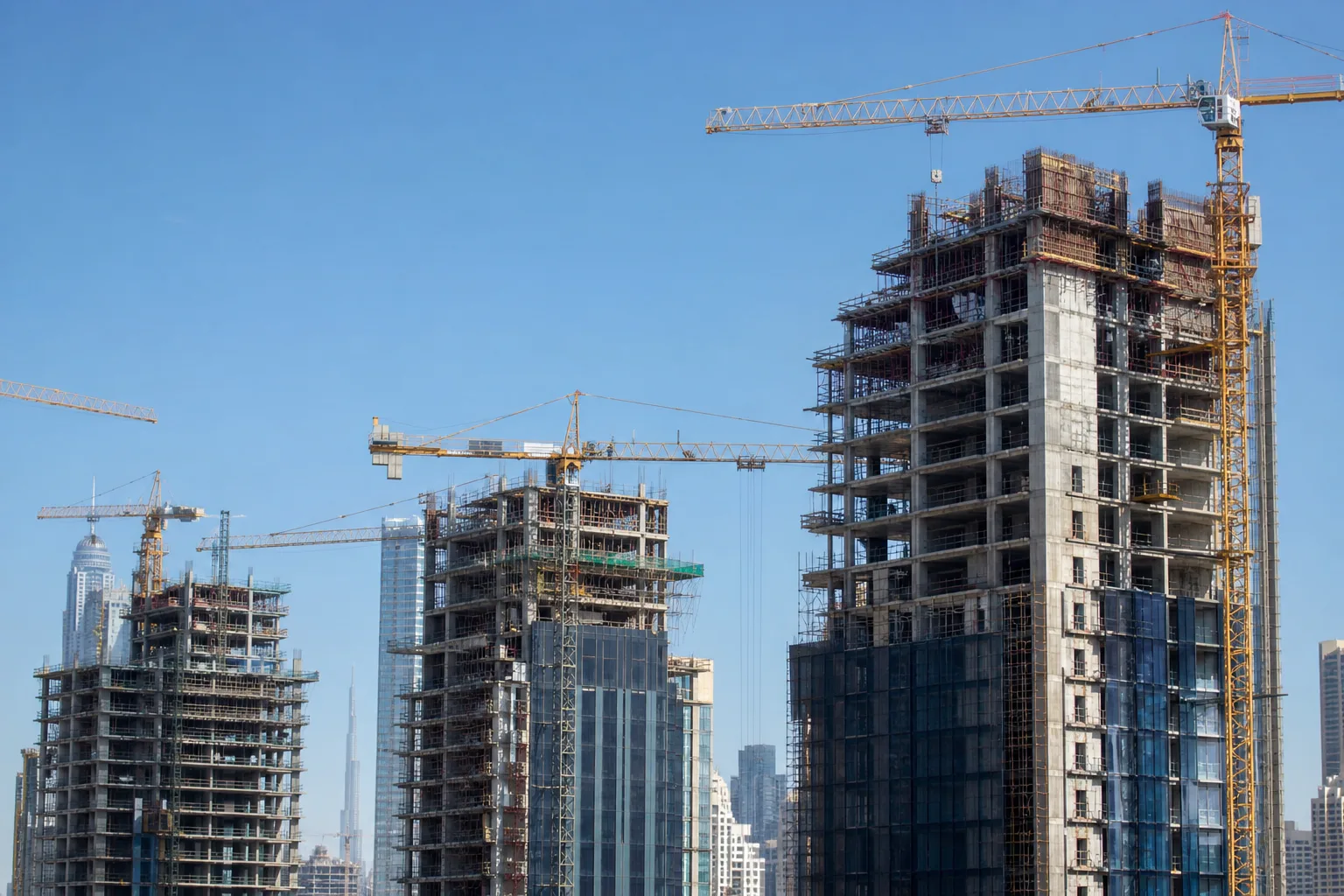
A ready property puts your capital to work without delay: rent starts as soon as it's let. In return, you pay the full entry costs — 4% DLD and 2% agency on the secondary market. Off-plan, by contrast, favours the bet on appreciation: you enter at a launch price and hope to resell higher as construction advances.
Off-plan demands less cash upfront. The reservation deposit ranges from 5% to 20% of the price (often 10–20%), the funds are secured in a mandatory escrow account (Law No. 8 of 2007, RERA/DLD oversight according to the Dubai Land Department), and buying from the developer generally carries no agency commission on the buyer's side.
Among the projects we list, a property like Albero by Emaar Properties at Dubai Creek Harbour (from AED 1.9M, handover September 2029) illustrates the off-plan appreciation logic, while The Archive by Imtiaz Developments at Dubailand Residence Complex (from AED 700,000, handover September 2028) targets an affordable rental yield. The detailed off-plan versus ready trade-off is covered in our guide off-plan or ready-to-live in Dubai.
Where to buy by strategy: the district map
To rent, target high-yield districts; to resell, target those whose appreciation is already proven over 60 months — the two rarely overlap.
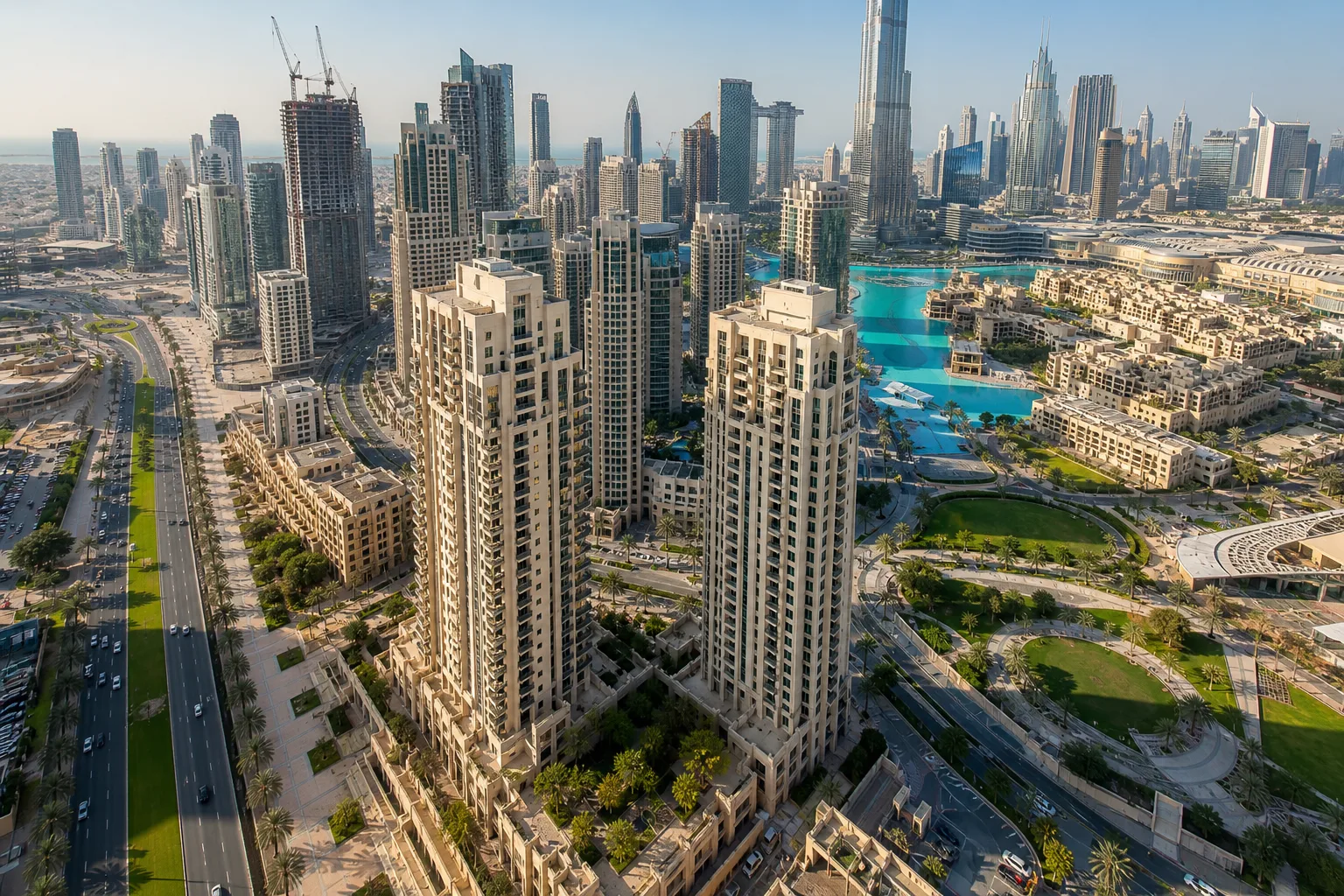
For a rental goal, the highest gross yields are in the affordable segment: Arjan at 7.1% (AED 1,485/sq ft), Dubai Sports City at 6.8% (AED 1,318/sq ft), and Dubai Silicon Oasis at 6.3%, according to Bayut data (March 2026). The entry ticket stays moderate there, which limits the capital tied up.
For a resale goal, look at past appreciation: Dubai Industrial City shows +132.1% over 60 months, Dubai South +87%, and Business Bay +64.9%, according to Bayut data (March 2026). These districts captured strong gains, with no guarantee they'll repeat.
Some premium districts mainly serve capital gains and liquidity, despite a lower yield, like Palm Jumeirah at 4.5%. As a benchmark, the market median stands at 5.6% across 65 districts with both sale and rental series (Bayut, March 2026). Choosing the district by goal is explored further in where to invest in Dubai by district and, for rental cash, in best districts for rental yield.
What tax and residency change in the decision
Locally, neither strategy is penalised: 0% on rent and on capital gains for a private individual, and 5% VAT only on commercial real estate according to the Federal Tax Authority — so the choice plays out elsewhere.
Free resource
Get our investment guide
The essentials — strategy, taxation, steps — to download.
Residential sales and rentals carry no VAT in Dubai; only commercial real estate is taxed at 5%, according to the schedule of the Federal Tax Authority. Neither renting nor reselling residential property incurs any Emirati tax friction.
On the residence-country side, the nuance matters. Your home country's tax treaty and rules can change how the rent you collect or a capital gain is treated, even when the Emirati side stays at zero. This is worth checking against your own situation before committing. The rental angle is developed in rental income in Dubai.
The residency angle often settles the decision. A long-term let aligns with a Golden Visa goal: a property of at least AED 2,000,000 grants eligibility, with the full file processed in a few business days (2 to 4 weeks in total including the Emirates ID and medical exam). Reselling quickly, conversely, means losing the property that carries the visa.
A point of caution common to both: by default, sharia may apply to inheritance. A will registered with the DIFC Courts secures the transfer for non-Muslims, whatever strategy you choose.
Renting or reselling: which to choose by profile
Choose renting if you're after passive income, a long hold, or residency; choose reselling if you're targeting a capital gain over a short-to-medium horizon and accept an active exit.
The "passive income, long hold, residency-seeking" profile is better off buying to let, aiming for a gross yield of 6% to 7% in affordable districts like Arjan or Dubai Sports City (Bayut, March 2026). This profile collects a flow from handover, absorbs its fees over time, and can target the Golden Visa with a property of at least AED 2M.
The "capital-gain-seeking, short-to-medium horizon, market-risk tolerant" profile is better off buying to resell — often off-plan, in districts with proven appreciation. Here, quick absorption of entry costs and exit timing outweigh rent.
With my clients, the best decision is almost never theoretical: it comes from when they need to get their money back, and how long they're willing to let the property work.
— Ralph BERTUCCI, Consultant Manager
Many combine the two over time: rent for several years to collect a flow, then resell once appreciation has materialised. We regularly support these resales and off-plan contract assignments, with on-the-ground figures on fees and timelines. To frame your strategy, discover our support on the Dubai market.
This article is part of our guide
Dubai Property Investment Guide for Foreign Buyers
About the author

Ralph BERTUCCI
Consultant Manager
With over 6 years of experience in real estate, notably as a property trader, Ralph is a key expert at Lucretia. His keen eye and attention to detail make him a valuable ally for investors in Dubai. Passionate about his profession, he puts his expertise at the service of his clients, offering strategic advice and guiding them toward the best opportunities on the market, while ensuring their profitability is maximized.