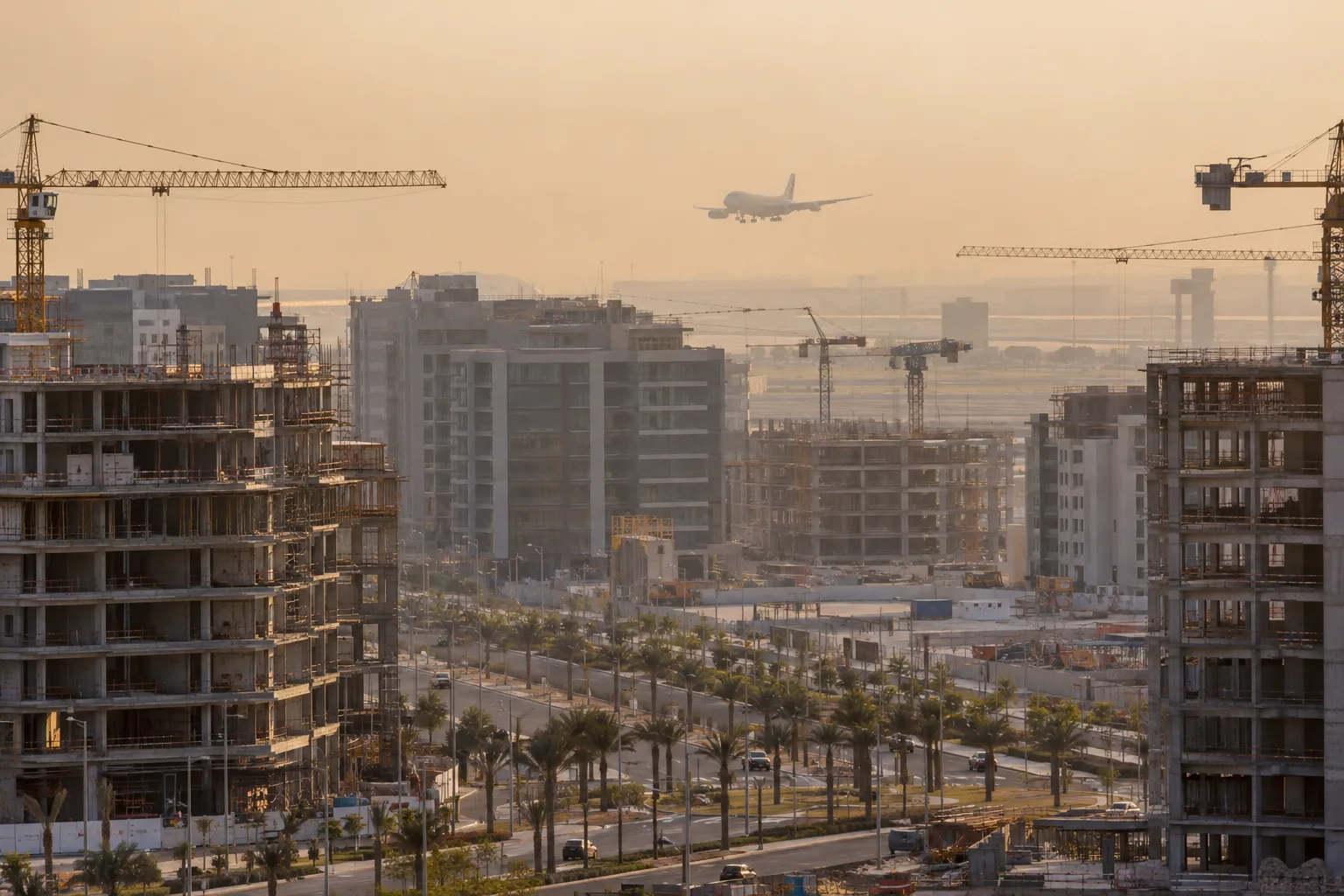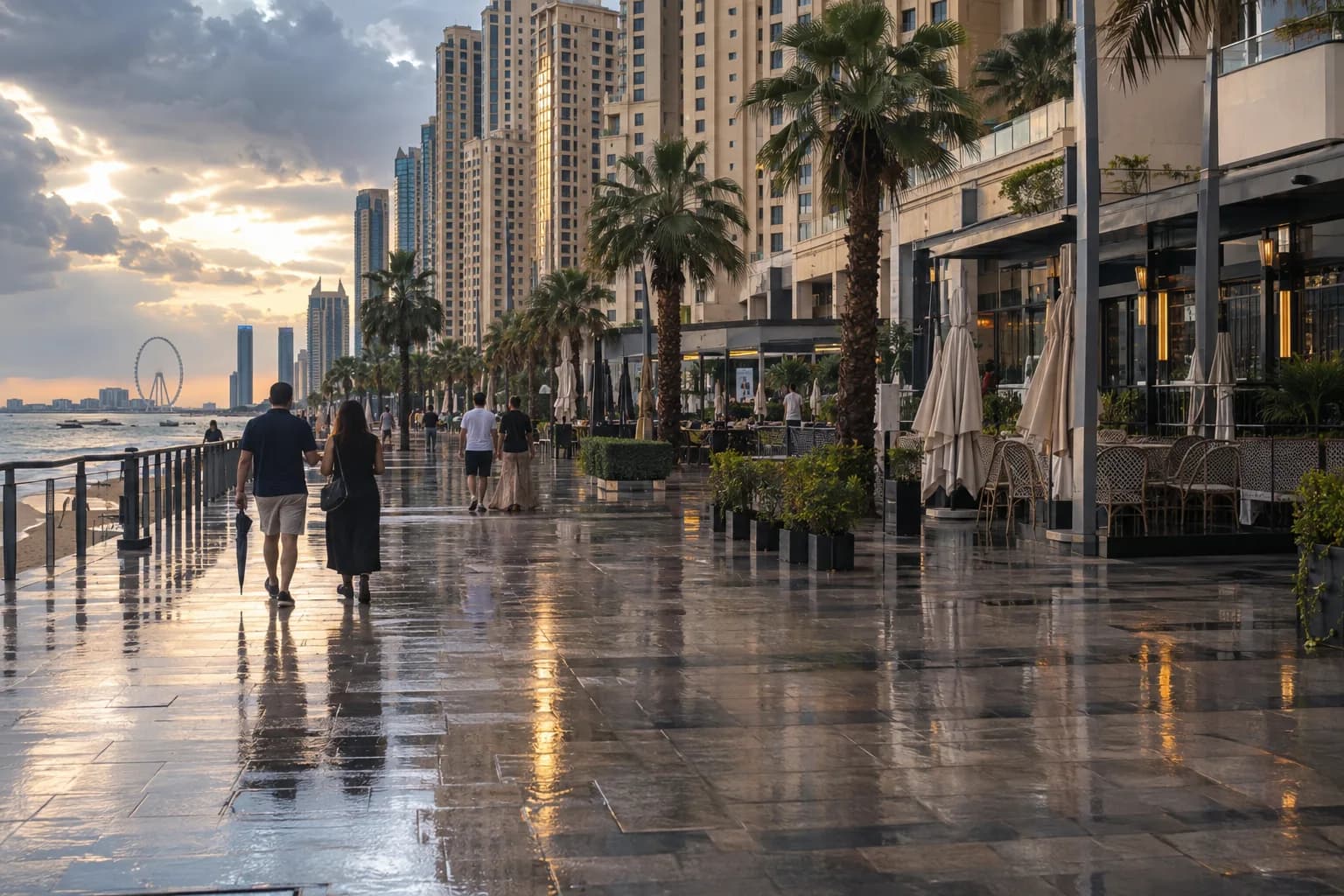
According to the Khaleej Times (12 August 2026), Burj Khalifa, Jumeirah Beach Residence and Town Square recorded the steepest annual apartment price drops in Dubai in July 2026.
On this page
Dubai's residential market is fragmenting. On 12 August 2026, the Emirati daily Khaleej Times, drawing on the July 2026 index from valuation firm ValuStrat, reported that three well-known apartment communities led the annual price correction: Burj Khalifa (-19% year-on-year), Jumeirah Beach Residence (JBR, -15.1%) and Town Square (-8.4%). Over the month, apartment values slipped 0.2%, leaving the segment 4.2% below its July 2025 level. A targeted correction that opens negotiation windows for the prepared buyer.
Key takeaways
- Burj Khalifa posted the steepest annual apartment price drop in Dubai in July 2026, at -19% year-on-year (ValuStrat index reported by the Khaleej Times, 12 August 2026).
- Jumeirah Beach Residence fell 15.1% and Town Square 8.4% year-on-year in July 2026.
- Across the segment as a whole, apartment prices dropped 0.2% month-on-month and 4.2% year-on-year in July 2026, while the villa index held steady.
- Sales of ready (completed) properties rose 11.4% month-on-month, but off-plan still accounted for 72.8% of transactions.
- Dubai delivered 24,800 homes in the first half of 2026, with a further 32,000 units expected in the second half.
A community-level correction, not a broad market retreat
The striking figure from July 2026 isn't the decline itself, but how localised it is. While Burj Khalifa shed 19% year-on-year, other communities gained ground: the gap between the best and worst performers exceeds thirty points within a single city, on just one month of data. In other words, there is no single "Dubai price" but dozens of micro-markets, each moving according to its exposure to off-plan resale, its tenant profile and its delivery pipeline.
The three communities leading the decline share one trait: a heavy concentration of investor-owned properties, more sensitive to arbitrage than owner-occupier neighbourhoods. Conversely, the villa index held steady over the year, confirming the split between an apartment segment catching its breath and a tighter single-family home segment. To understand how these neighbourhood dynamics translate into prices and yields, our guide Investing in Dubai sets out the benchmarks community by community.
Featured
View projects: Artistry Residences
From AED 2,347,000
Hand-picked new properties with end-to-end expert support.
View projects
The delivery pipeline, driver of negotiating power
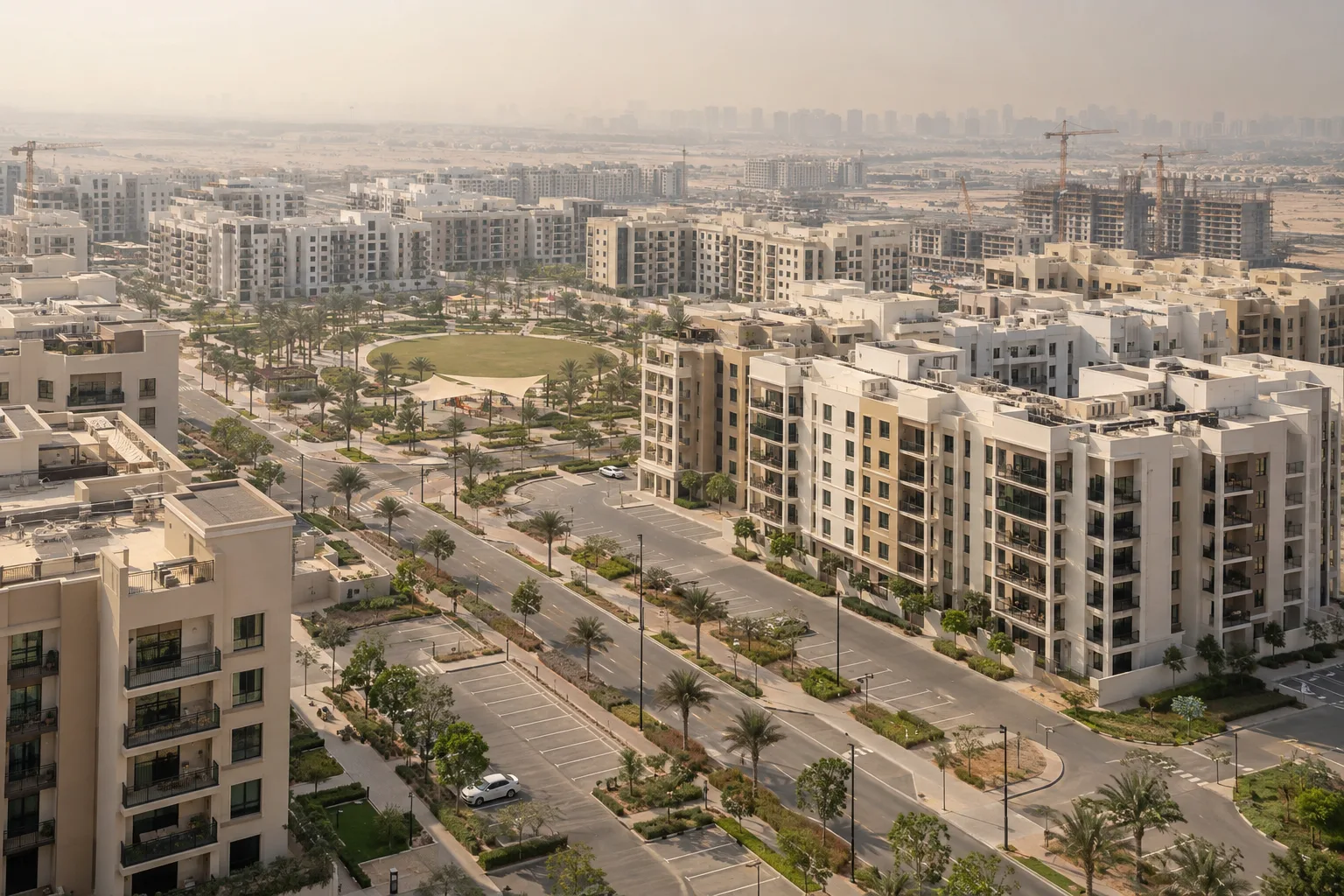
The correction is largely explained by supply. Dubai delivered 24,800 homes in the first half of 2026 and expects 32,000 more in the second half — a flow of new units that weighs on resale values in the most heavily built communities. When a buyer can choose between a resale property and a newly delivered unit in the same neighbourhood, the secondary-market seller loses leverage — hence the discounts observed.
This abundance favours the methodical buyer. The 11.4% month-on-month rise in transactions on completed properties shows that part of demand is shifting towards the tangible and negotiable, even though off-plan still captures 72.8% of deals. Before targeting a community in correction, it's better to map the delivery schedule ahead of it: that's what will determine whether the current discount persists or closes. To gauge a realistic entry budget, our guide Investing in Dubai by budget details what you can buy at each tier.
What it means for the investor
At Lucretia, we read this correction not as a warning signal but as an invitation to be selective. A 19% drop at Burj Khalifa doesn't mechanically make a good deal: it creates an opportunity for whoever buys the right unit, in the right building, at the right price relative to the rent actually collectible. The real work is distinguishing a structural discount from a temporary entry point — and that's done property by property, not index by index.
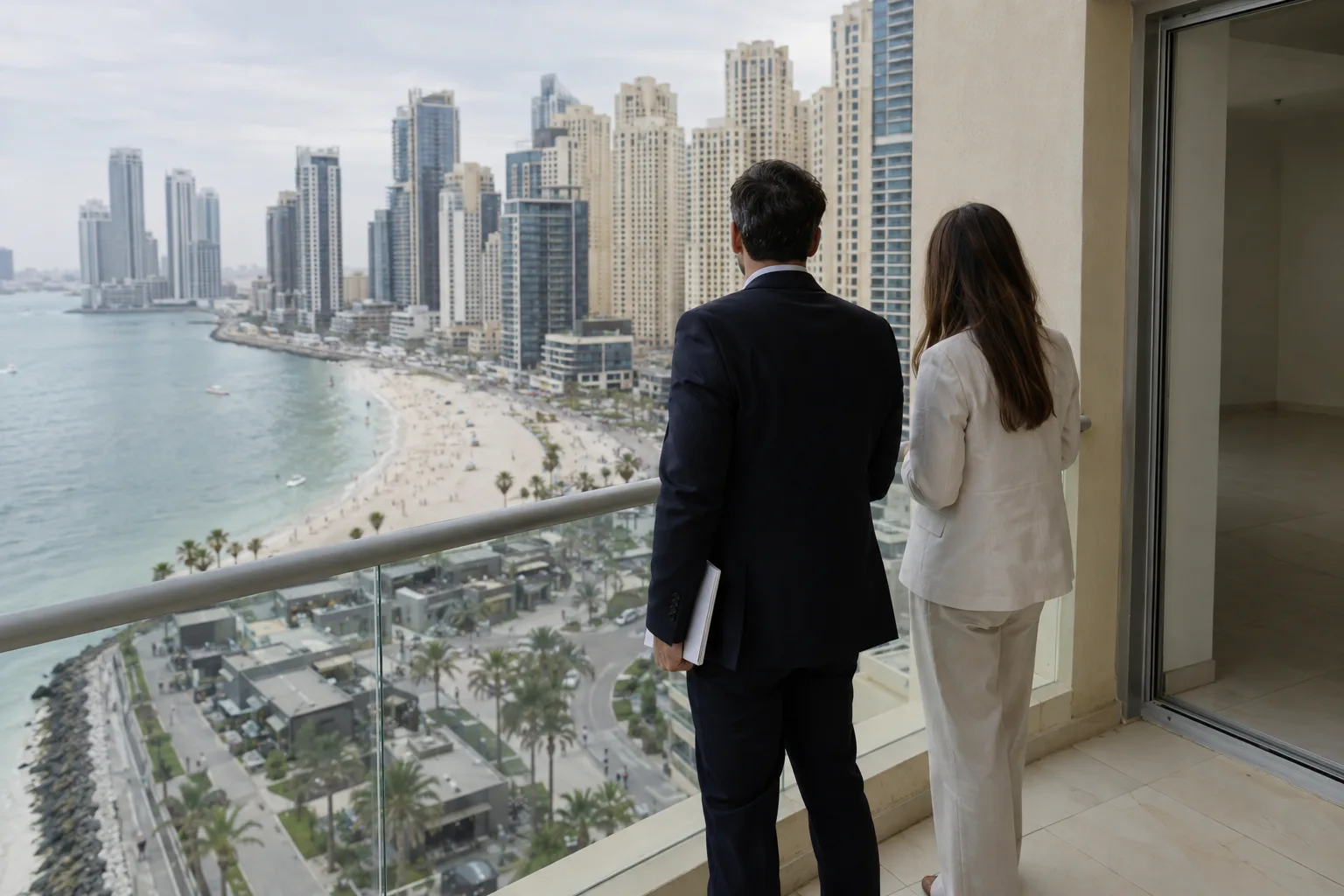
In practice, the balance of power currently tilts towards the buyer in the communities most exposed to new deliveries. We advise negotiating on price AND terms, checking service charges and the property's rental history, and factoring in all acquisition costs before thinking in terms of net yield: our guide Property purchase costs in Dubai quantifies this budget beyond the headline price alone. Bear in mind that in Dubai, individuals pay neither tax on rental income nor capital gains tax on property — a rare net-yield foundation.
For the investor seeking rental volume rather than a prime address, more affordable communities such as Jumeirah Village Circle are worth comparing; we set out their prices and yields in our dedicated guide to buying in JVC. In every case, local presence and access to off-market deals make the difference between enduring a fragmented market and capitalising on it.
Source: astraterra.ae — 15 August 2026
Free guide, delivered on WhatsApp
Get the guide "Investing in Dubai"
Taxation, visas, financing, buying steps: 14 pages written by our advisers, sent to your WhatsApp within minutes.

This article is part of our guide
Dubai Property Investment Guide for Foreign Buyers
About the author

Benoit CLAUDEL
Director of Strategy & Operations
With over 18 years of experience in real estate and wealth management, Benoît has developed recognized expertise in advising private investors, business executives and family offices. After starting out in a real estate agency and working within one of the most reputable wealth management firms in Paris, he then joined LCL as Head of Private Banking for Île-de-France, advising high-income clients on their real estate strategies. An entrepreneur, he founded and ran his own wealth management firm for 7 years, structuring investment and wealth optimization solutions. Today at Lucretia, Benoît oversees operational strategy, sales performance and advisor training. He works on high-value-added cases, particularly investments via French holding companies, legal structuring and wealth taxation.