Service charges in Dubai are an annual fee billed per square foot that funds the upkeep of common areas — and directly weighs on your net yield.
On this page
- Service charges in Dubai: what do building fees actually cover?
- What service charges really cost: a worked example per sq ft
- Do service charges really eat into net yield?
- Who regulates service charges in Dubai: RERA, the Service Charge Index and Mollak
- Service charges and off-plan: what applies after handover
- Service charges within the total acquisition and holding budget
- Watch points and pitfalls with service charges
Service charges in Dubai are an annual fee ranging from ~3 to 30 AED per square foot depending on the property type, regulated by RERA through the Dubai Land Department index (RERA / DLD Service Charge Index). This fee funds the upkeep of the building's common areas: it is neither a tax nor a purchase cost, but a recurring holding cost that every owner bears each year.
Understanding how they're calculated is decisive, because these charges weigh directly on what you actually pocket. A high-charge premium apartment can end up yielding less than a well-maintained affordable property. We factor them into every profitability calculation we present to our clients.
Service charges in Dubai: what do building fees actually cover?
A service charge is an annual fee billed per square foot that funds the upkeep of common areas, security, maintenance, cleaning and the building's reserve fund (sinking fund). Each owner pays it pro rata to the floor area they hold.
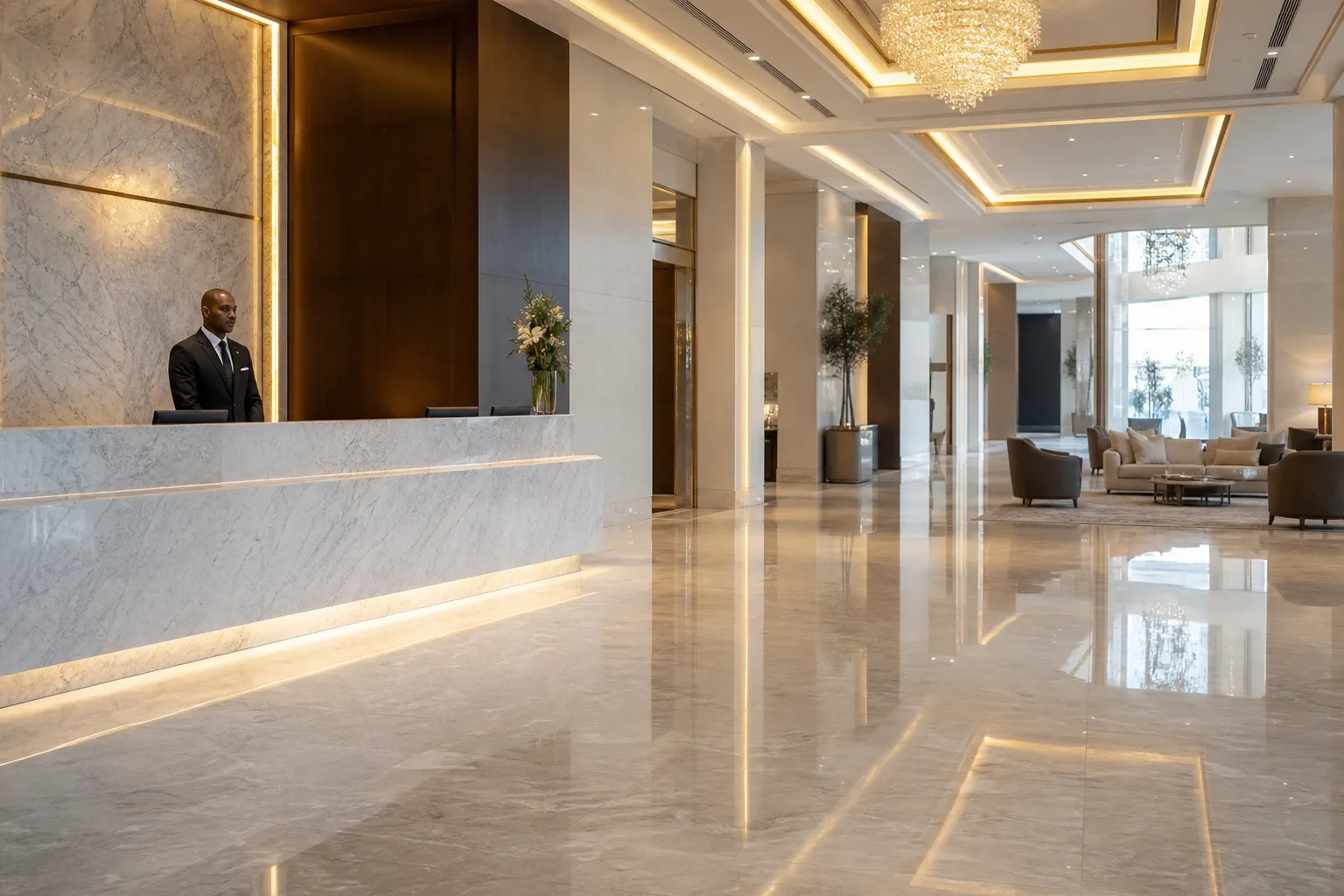
RERA caps these rates within a band of roughly 3 to 30 AED/sq ft/yr according to the RERA / DLD Service Charge Index. The rate that actually applies then depends on the standing and the facilities of the development.
A rate that varies sharply by property type
- Standard apartments: around 10 to 20 AED/sq ft/yr.
- Luxury towers: 20 to 50 AED/sq ft/yr, sometimes more, because of the amenities (concierge, pools, spa).
- Villas: around 2 to 6 AED/sq ft/yr, as there are fewer common areas to maintain.
These charges cover the shared elements: lifts, air conditioning of common spaces, security, upkeep of gardens and pools. They do not cover the inside of your unit — your own repairs, your DEWA bill and your private air conditioning remain your responsibility. Nor should they be confused with the municipality housing fee, which is levied on rent and follows an entirely different mechanism.
What service charges really cost: a worked example per sq ft
The annual bill is calculated by applying the per-square-foot rate to the property's area, within the RERA band of ~3 to 30 AED/sq ft/yr. Here are three concrete cases to set the orders of magnitude.
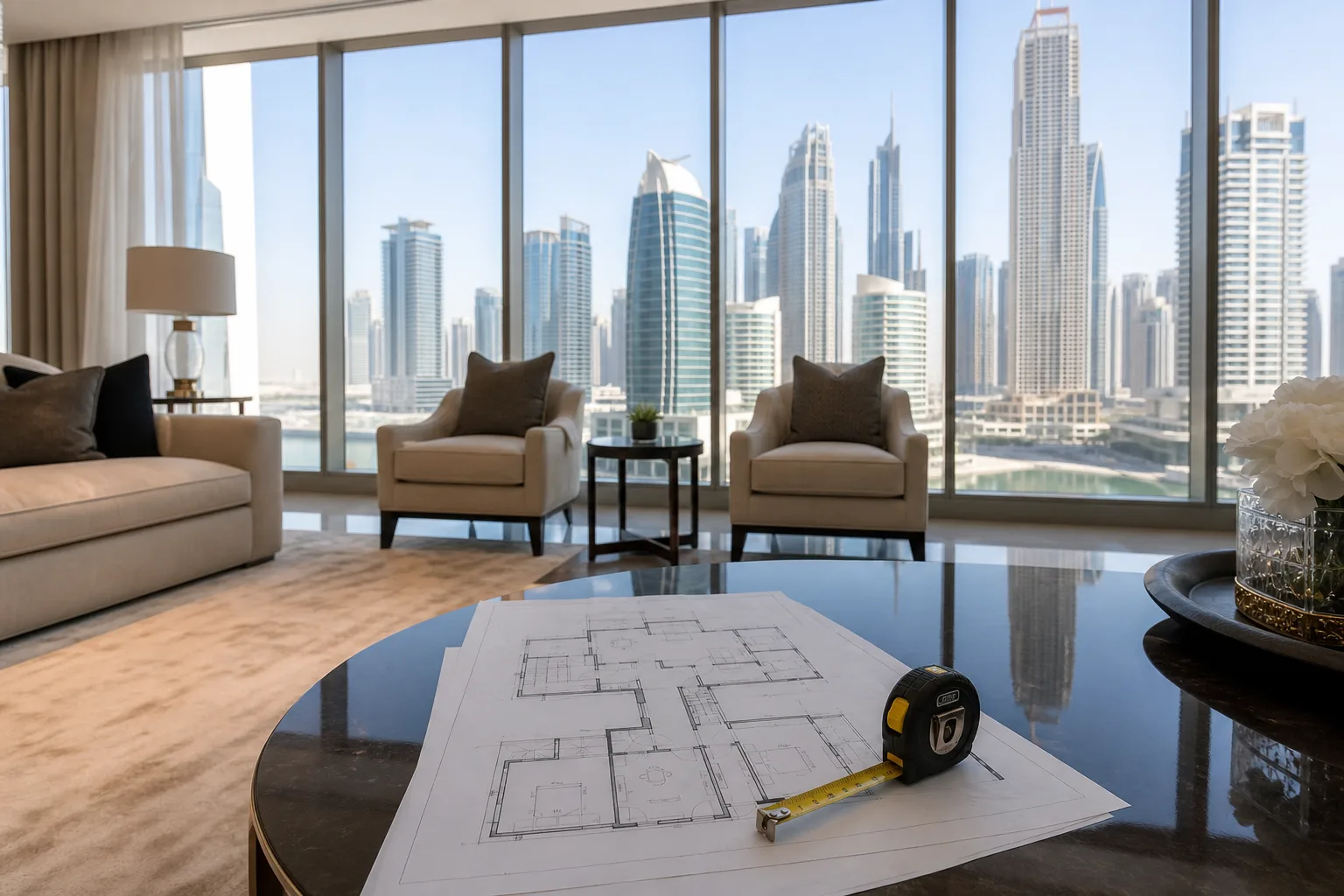
Standard apartment. On an 800 sq ft one-bedroom in a building billed at the middle of the apartment band (10-20 AED/sq ft, per RERA), the annual charge comes out between 8,000 and 16,000 AED. It's the main recurring line item after the purchase price.
Luxury tower. A premium apartment in Downtown Dubai (3,454 AED/sq ft to buy, March 2026, per Bayut data) carries a rate of 20 to 50+ AED/sq ft. On 1,000 sq ft, the bill climbs from 20,000 to over 50,000 AED a year — a considerable spread depending on the tower's standing.
Villa. In Damac Hills (1,616 AED/sq ft, calculated gross yield 6.5%, March 2026, per Bayut data), a 3,000 sq ft villa billed at 2 to 6 AED/sq ft costs only 6,000 to 18,000 AED a year in community charges.
Do service charges really eat into net yield?
Yes, and heavily: the yield advertised in Dubai is gross and calculated (annual rent ÷ price), before charges, and service charges are deducted from it to approach the net yield you actually collect. It's the gap buyers most often underestimate.
Free resource
Get our investment guide
The essentials — strategy, taxation, steps — to download.
In high-gross-yield districts — Arjan 7.1%, Dubai Sports City 6.8%, Dubai Silicon Oasis 6.3% (March 2026, per Bayut data) — standard apartment charges (10-20 AED/sq ft) leave a comfortable net margin. These affordable areas remain the best positioned once charges are deducted.
The maths flips on the premium end. In Palm Jumeirah (4.5%) or Downtown Dubai (5.6%) (March 2026, per Bayut data), the high charges of luxury towers shave a far larger slice off an already lower gross yield. The final net can drop well below that of an affordable property.
To run the full calculation from gross to net, our guide gross vs net yield in Dubai lays out the method, and managing your rental property covers every management line item.
Who regulates service charges in Dubai: RERA, the Service Charge Index and Mollak
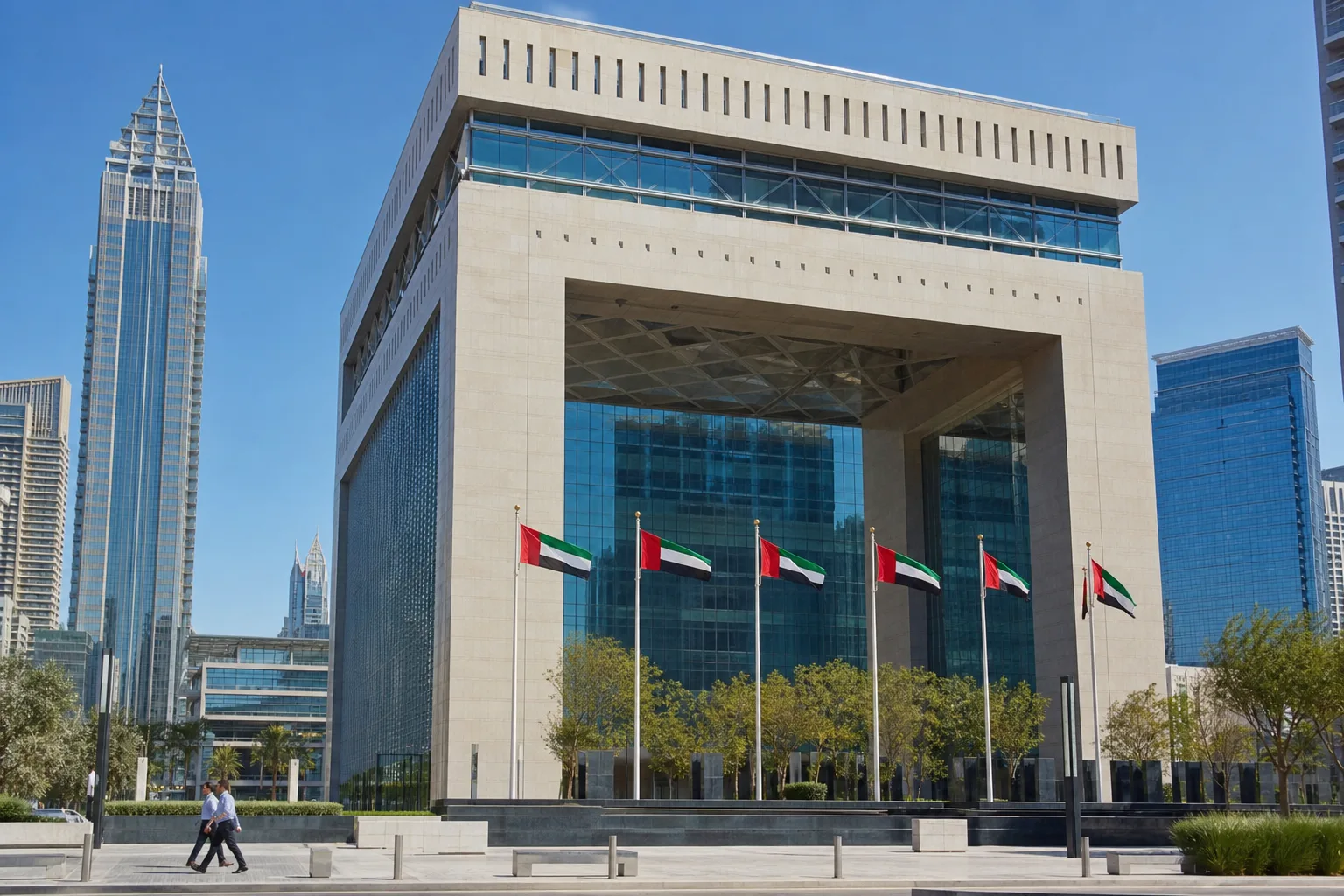
RERA approves and publishes service charge rates through the DLD's Service Charge Index, which prevents a manager from setting an arbitrary amount. No building can bill above the rate approved for the year.
Mollak: the platform that safeguards the funds
Mollak is the DLD's collection and control system: charges paid by owners flow through dedicated, monitored accounts rather than into a manager's free account. Every expense is traceable, which protects the community's money.
The annual budget and the per-square-foot rate are prepared by the management company and then approved within the Owners Association framework. The rate is therefore not fixed: it moves with the maintenance budget that is voted.
Service charges and off-plan: what applies after handover
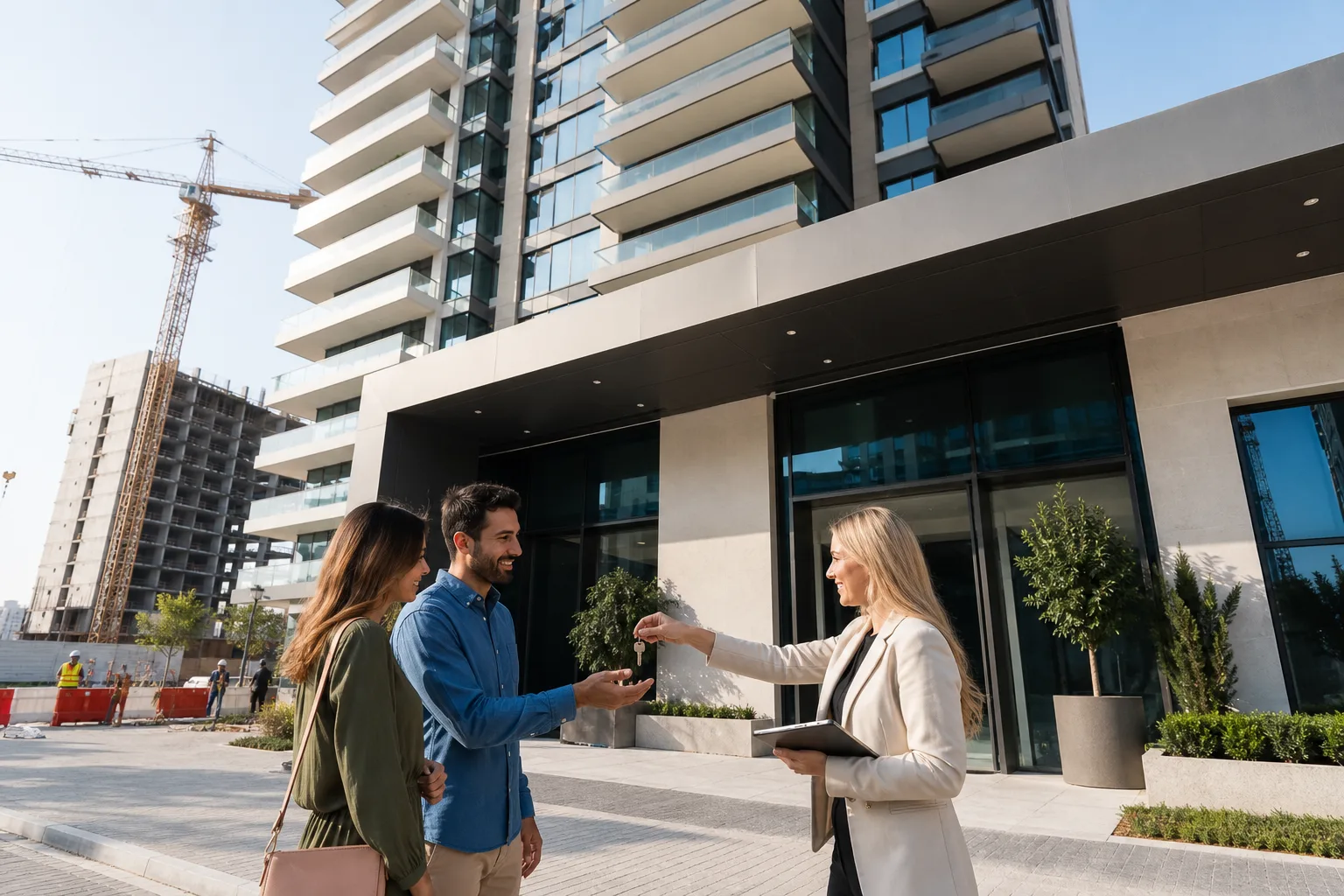
Service charges start running at handover of the property, not during construction: as long as you don't hold the keys, you pay no community charge. It's an important cash-flow point on an off-plan purchase.

During construction, your money is protected by a different mechanism: the escrow accounts (escrow) that are mandatory for any off-plan project, under Law No. 8 of 2007 and RERA/DLD supervision, according to the Dubai Land Department. This account funds construction and has nothing to do with the charge fund that takes over once the building is operational.
The first-year rate is often estimated by the developer, then adjusted by RERA once the building is actually running and operating costs are known. A low estimate at launch can therefore rise after a few months of operation. On a project delivered on a long horizon such as Bayz 102 in Business Bay (delivery January 2030), the real charge rate won't be known until the tower is commissioned.
The full off-plan purchase journey is covered in our guide buying off-plan in Dubai.
Service charges within the total acquisition and holding budget
Service charges are a recurring annual cost, to be clearly distinguished from one-off acquisition fees that you pay only once. Confusing the two throws off any forecast budget.

Featured
View projects: The Archive
From AED 679,604
Hand-picked new properties with end-to-end expert support.
View projects
| Item | Amount | Nature |
|---|---|---|
| DLD transfer | 4% of the price | One-off, at purchase |
| Fixed DLD fees | ~4,700 to 5,500 AED | One-off, at purchase |
| Agency fees (secondary) | 2% + 5% VAT | One-off, at purchase |
| Service charges | ~3 to 30 AED/sq ft/yr | Recurring, every year |
The 4% transfer fee (Dubai Land Department), the fixed administrative fees and the 2% + VAT agency fees are paid only once. Service charges come back every year.
On the tax side, a private individual pays no income tax on rental income and no capital gains tax (official UAE portal), and residential property carries 0% VAT. Service charges are therefore not a tax: they are the building's operating costs.
Finally, they don't count toward the AED 2M threshold of the Golden Visa, but they do add to the long-term cost of ownership. The full entry budget is detailed in property purchase costs in Dubai.
Watch points and pitfalls with service charges
The first pitfall is to simply ignore charges in the profitability calculation, taking the advertised gross yield for real income. It's the most common mistake I see among rushed buyers.
Among my clients, those who compare two properties on gross yield alone almost always pick the wrong one: I systematically ask them for the building's charge rate before we even talk price.
— Mourad LACHAB, Real Estate Consultant
The other traps come up often:
- Underestimating the gap between property types. A luxury tower at 20-50+ AED/sq ft can wipe out a premium property's price advantage over a better-kept standard apartment.
- Failing to check the approved rate on the Service Charge Index before buying, or to review the building's history of increases over recent years.
- Letting arrears build up. Unpaid charges block the NOC, without which the sale cannot be transferred: an unsettled arrear makes it impossible to resell the property.
- Overlooking the quality of the reserve fund. An underfunded sinking fund signals future capital calls for major works (façade renovation, lift replacement).
Our job is to audit these points upfront: we build the real charge rate into every profitability simulation, so that the net figure we present is the one you'll actually collect.
This article is part of our guide
Dubai Property Investment Guide for Foreign Buyers
About the author

Mourad LACHAB
Real Estate Consultant
Originally from Strasbourg and after ten years in Paris, Mourad moved to Dubai. A former soldier in the French Army for five years, he developed discipline, rigor and a sense of responsibility — qualities he now puts to work for his clients. He started out in Dubai at an English-speaking agency specializing in the secondary market, then joined Lucretia to support French-speaking clients with a 360° view of the market: off-plan, resales, rentals, taxation, etc. A committed and passionate professional, Mourad stands out for his seriousness, transparency and determination. He also practices boxing, a sport that perfectly reflects his mindset.