From reservation to handover, here is the full journey of an off-plan purchase in Dubai, punctuated by escrow protections and DLD oversight.
On this page
- What are the 6 steps to buy off-plan in Dubai?
- Step 1 — Set your buying budget and choose the off-plan project
- Step 2 — Reserving the unit: booking, deposit and escrow account
- Step 3 — Sign the SPA and register the purchase with the DLD (Oqood)
- Step 4 — Financing the instalments: staged payment plan or mortgage
- Step 5 — Follow construction through to handover and obtain the title deed
- What to do with your property after handover: rent, resell or aim for the Golden Visa?
Buying off-plan in Dubai follows six key stages — reservation, signing the SPA, Oqood registration with the Dubai Land Department, staged payments, construction, then handover and the final title deed — all secured by a mandatory escrow account under Law No. 8 of 2007 (Dubai Land Department). The funds paid to the developer are not theirs to spend freely: they are held in an escrow account supervised by the RERA and released in line with the actual progress of the build.
The market offers plenty of choice: we track 229 projects with handovers staggered from 2019 to 2031, at a median entry ticket of AED 1.2M. What remains is to understand the sequence of milestones — and that's exactly what this step-by-step journey lays out.
What are the 6 steps to buy off-plan in Dubai?
Buying off-plan in Dubai unfolds across six milestones: reserving the unit, signing the sale contract (SPA), registering the purchase with the Dubai Land Department via Oqood, paying instalments tied to construction progress, following the build, then collecting the keys and the final title deed. Between reservation and handover, allow for the build time announced by the developer — often two to four years depending on the project.
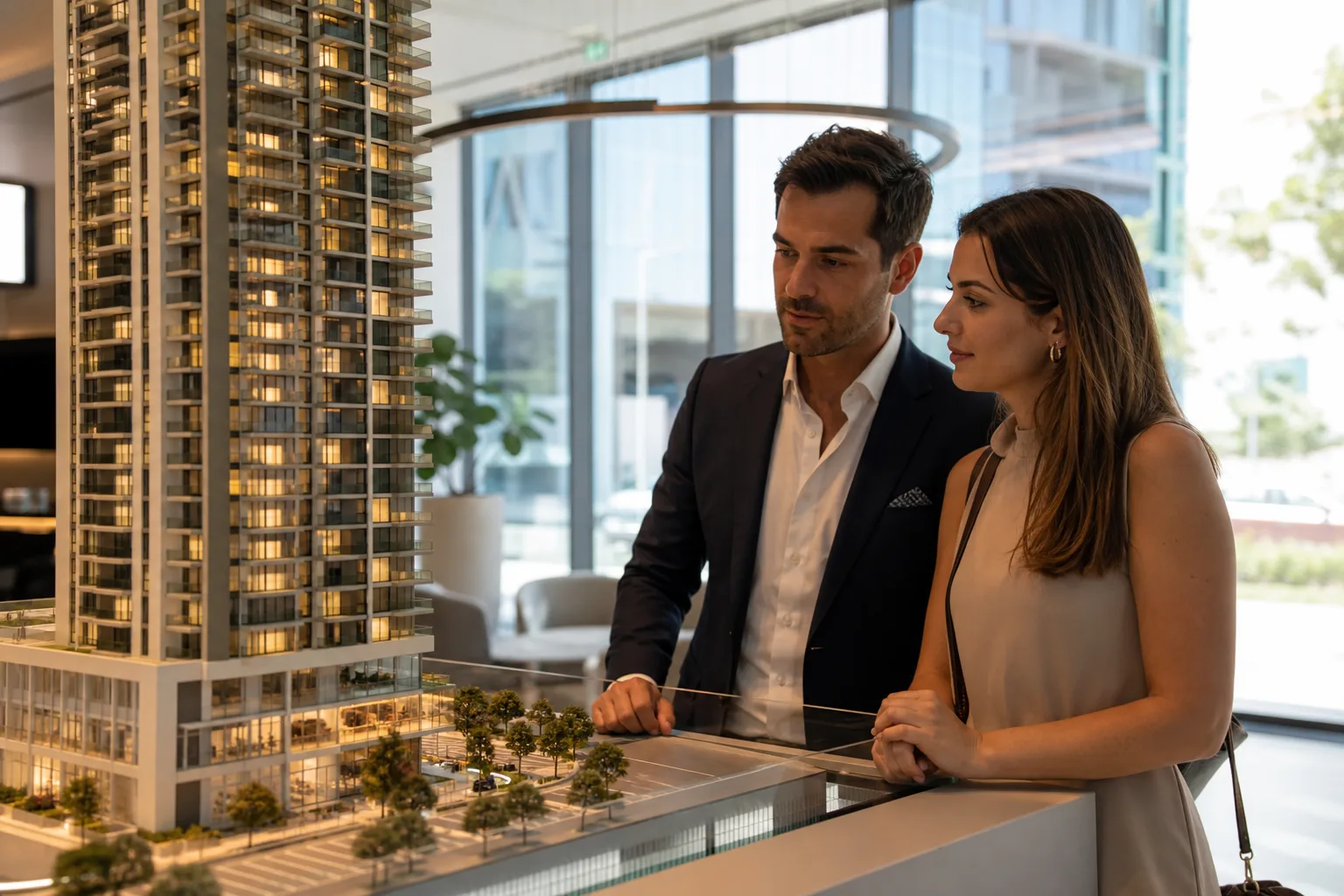
The difference with the secondary market is fundamental. Off-plan, you buy a property still under construction, with payment spread over the build period; on the secondary market, you buy a completed property, paid in one go. If you're still hesitating between the two logics, our comparison of off-plan versus ready-to-move by investor profile weighs them criterion by criterion. We also cover the secondary route in our dedicated guide to buying a completed property on the Dubai secondary market, while the broader framework sits in our complete Dubai property investment guide.
Two safeguards frame every off-plan purchase: the mandatory escrow account, which locks your funds until real construction progress, and oversight by the DLD and RERA. We detail each at the relevant stage.
Who can buy? Freehold ownership has been open to foreigners since 2002 in designated zones — a legal framework we develop in our investment guide.
Step 1 — Set your buying budget and choose the off-plan project
Your buying budget adds up the property price, the 4% transfer fee to the Dubai Land Department and roughly AED 4,700 to 5,500 in fixed fees (Property Finder). Off-plan, the provisional title deed costs just AED 40, versus around AED 580 on a completed property.
Good news on commission: buying off-plan directly from the developer, there is generally no agency commission for you to pay. On the secondary market, the buyer pays 2% of the price + 5% VAT (Property Finder). That's a real cost gap to factor in from the comparison stage.
Choosing from the catalogue
The median entry ticket on the new-build market comes to AED 1.2M, with projects accessible from AED 500,000 across a catalogue of 107 projects with published prices, backed by 80 active developers. Two telling examples: The Archive from AED 700,000, or Coventry Curve 2 from AED 500,000.
The choice of neighbourhood depends on your goal — yield, capital growth or personal use. We mapped this trade-off in our guide on rental yields, so we won't repeat it here. And if you're still weighing destinations before even targeting a project, our comparison of Dubai and Bali by investor profile sheds light on the trade-off between legal security, full ownership and a lifestyle bet.
Step 2 — Reserving the unit: booking, deposit and escrow account
The reservation takes shape through a deposit of 5 to 20% of the price, most often 10 to 20%, sometimes preceded by a fixed booking of roughly AED 20,000 to 100,000 before the SPA is signed (SBA/Grosvenor market sources). This payment locks the unit in your name.

This deposit does not land in the developer's current account: it goes into the project's regulated escrow account. This is the central protection of an off-plan purchase, and the first thing we check before any transfer.
On the paperwork side, the reservation calls for a signed booking form and ID (passport). Nothing heavy at this stage — the thorough due diligence comes at the SPA.
A project like Bayz 102, from AED 1.6M in Business Bay, illustrates this entry point well: you reserve, you secure the unit, then you formalise. At this moment we verify that the project's escrow account is genuinely active before any transfer.
Step 3 — Sign the SPA and register the purchase with the DLD (Oqood)
Signing the Sale & Purchase Agreement (SPA) legally binds the sale: it sets the price, the payment schedule tied to construction progress, the delivery date and the penalty clauses in case of delay. Read those clauses carefully — they define your recourse.

Once the SPA is signed, the off-plan purchase is registered with the Dubai Land Department through the Oqood system, which issues a provisional title. This is when the 4% transfer fee and the fixed fees are settled.
The DLD, together with the RERA, oversees the whole thing: project registration, escrow account monitoring, milestone validation. This dual oversight is what sets an off-plan purchase in Dubai apart from an unregulated market.
Signing can be done remotely, by power of attorney, with no mandatory travel. Our team secures the Oqood registration and ensures the fees are paid to the right party.
| Item | Off-plan (Oqood) | Completed property |
|---|---|---|
| DLD transfer | 4% of the price | 4% of the price |
| Title deed | AED 40 | ~AED 580 |
| Fixed fees | ~AED 4,700 to 5,500 | |
| Buyer commission | Generally 0 | 2% + 5% VAT |
Step 4 — Financing the instalments: staged payment plan or mortgage
Off-plan financing rests on a payment plan tied to construction milestones: you pay a fraction of the price at each stage reached (foundations, structure, finishing), with the funds passing through the escrow account. It's the mechanism unique to off-plan, spreading the cash-flow effort across the entire build period — our dedicated guide breaks down how Dubai off-plan instalments work, from the initial deposit to a worked example.

Featured
View projects: Six Senses Residences
From AED 10,259,700
Hand-picked new properties with end-to-end expert support.
View projects
To finance with a mortgage, the CBUAE caps the LTV at 50% off-plan for a resident expat. In practice a non-resident secures 50 to 75% depending on the bank, meaning a down payment of 25 to 50%.
Your status therefore changes the deposit you need to mobilise. On a staged plan, a good part of the price is paid in cash anyway as milestones are reached; the mortgage often tops up the final tranches or the balance at handover. We detail the deposit to plan for and the framework of a mortgage for a non-resident in Dubai in a dedicated guide.
A project like Damac District Tower B, from AED 900,000 for handover in August 2029, follows this logic: several years of milestone payments before the keys are handed over.
Step 5 — Follow construction through to handover and obtain the title deed
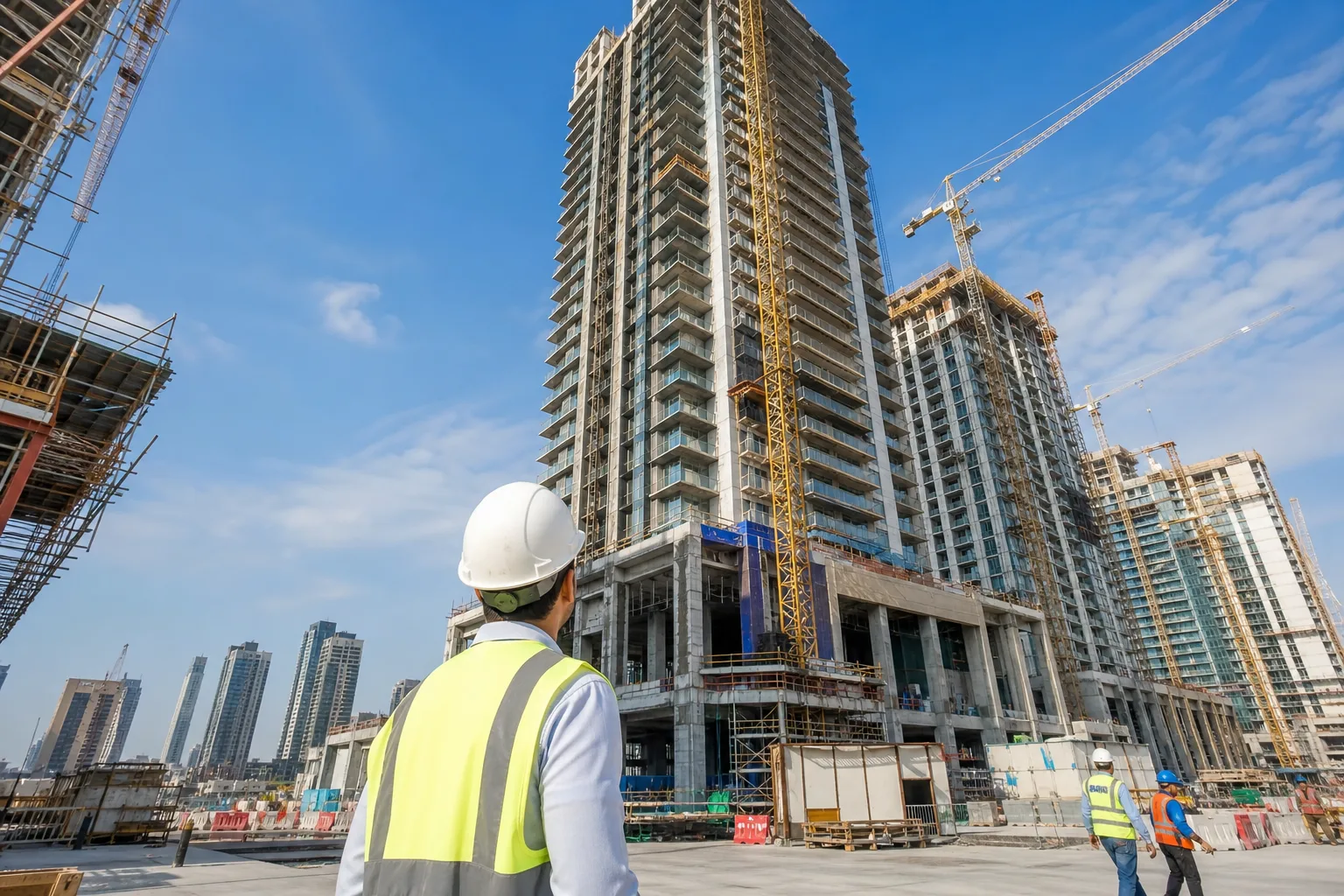
Between the SPA and handover, you track construction progress and meet the milestone payment calls up to the announced delivery date. A project like Albero in Dubai Creek Harbour is targeting September 2029.
A project in mind?
Talk to a Lucretia adviser
Tailored guidance, no obligation.
Before accepting the keys, carry out the snagging: the inspection of defects and workmanship faults. Every recorded issue must be fixed by the developer before your formal acceptance. This step protects the quality of handover.
Then comes settling the balance and obtaining the final title deed, whose issuance costs around AED 580 (Property Finder). Your property is then fully registered.
As soon as the property goes into use, provision for the annual service charges, ranging from roughly AED 3 to 30 per sq ft per year and regulated by the RERA via the Mollak system. They weigh directly on the net yield.
What I keep telling my clients: never sign off on accepting the keys on the day of the viewing. Take the time to snag, list every defect in writing, and wait for the corrections. That's where the months that follow are decided.
— Léonard ARZOUNI, Real Estate Consultant
What to do with your property after handover: rent, resell or aim for the Golden Visa?
Once handed over, your property can be rented out, resold or used as a springboard for a Golden Visa. Rented out, the gross yield sits between roughly 5 and 8% depending on the neighbourhood (Bayut), and individuals pay no tax on their rental income (UAE government). The detailed calculation is in our guide on yields.
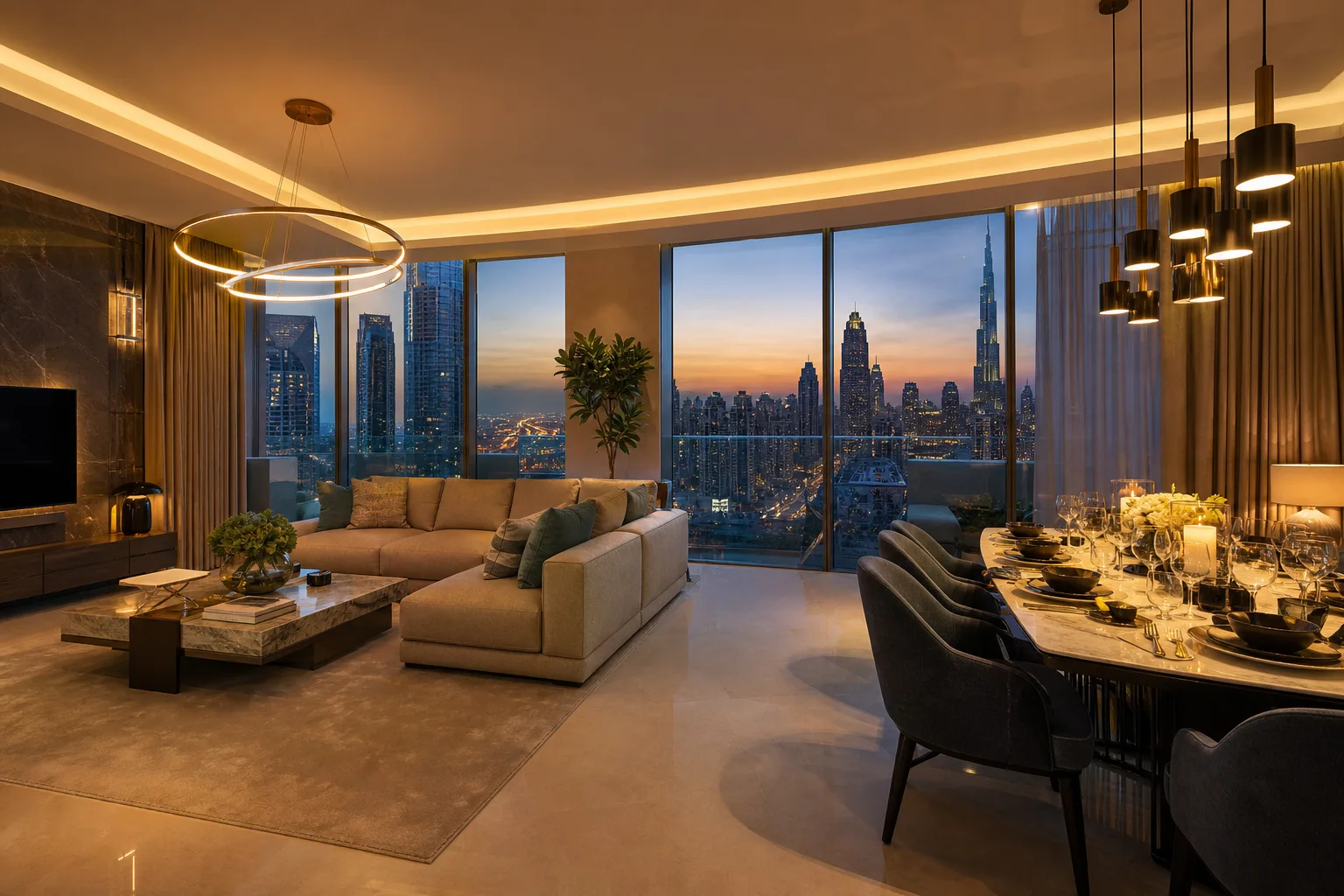
The 10-year Golden Visa is obtained from AED 2M in property investment (UAE portal). Once the file is complete, allow 14 to 28 days in total, including the Emirates ID and the medical check.
You can also resell off-plan before handover, through an assignment under a developer NOC. On succession, a registered will (DIFC Wills) secures the estate for non-Muslims; the tax treatment on resale is covered in our tax guide.
To reach the wealth threshold, a project like Montiva by Vida, from AED 2M, hits the Golden Visa floor directly.
In this guide
Articles in this guide
This article is part of our guide
Dubai Property Investment Guide for Foreign Buyers
About the author

Léonard ARZOUNI
Real Estate Consultant
Léonard is a luxury real estate consultant with more than six years of experience in the high-end market. He is fluent in French and English and assists an international clientele in the acquisition and management of exceptional properties, both residential and investment-oriented. His expertise covers property valuation, portfolio management and strategic negotiation, enabling him to develop tailor-made solutions adapted to each client's wealth objectives. He is appreciated for his rigour and attention to detail. Outside of work, Léonard is passionate about contemporary art, collecting works by emerging artists. He is a curious traveller who loves discovering new cultures.