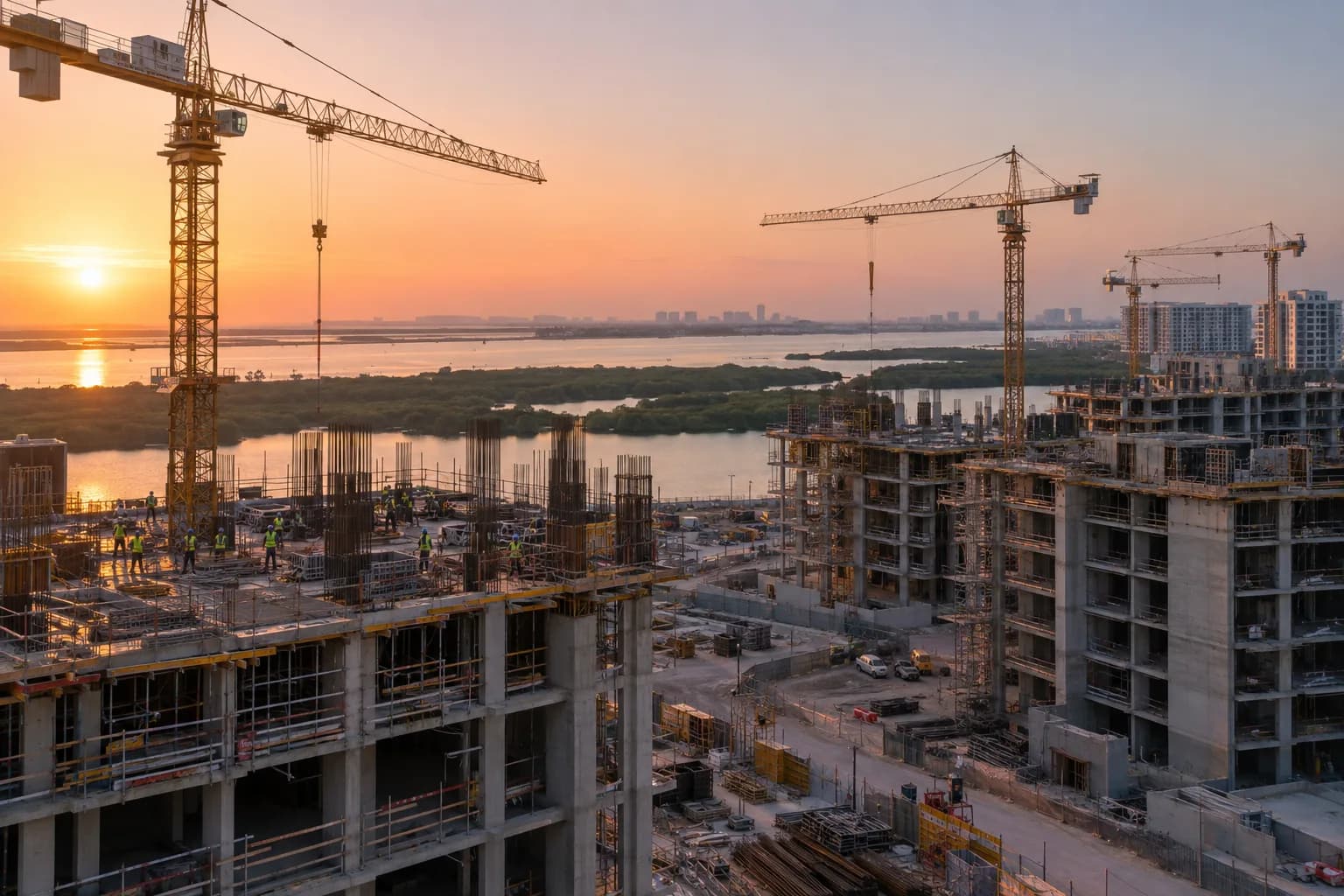
On 18 August 2026, the Abu Dhabi Real Estate Centre (ADREC) released its half-year report: AED 70.4 billion in residential sales over the first half of 2026, with 89% of that value in off-plan.
On this page
The Abu Dhabi Real Estate Centre (ADREC), the emirate's property regulator, released its real estate market report for the first half of 2026 on 18 August 2026. The official figures confirm a clear trend: AED 70.4 billion in residential sales over six months, with an overwhelming dominance of off-plan — properties sold before or during construction. This benchmark document, produced by the authority that oversees and registers transactions in Abu Dhabi, gives investors a dated, data-backed reading of the true state of the market.
The essentials
- ADREC released its Abu Dhabi real estate market report for the first half of 2026 on 18 August 2026.
- Residential sales reached AED 70.4 billion over the first half of 2026, according to ADREC.
- 89% of the value of H1 2026 residential sales was in off-plan — that is, on properties still under construction.
- The market counted around 233,000 active residential leases and a stock of roughly 409,000 units in the first half of 2026.
- Around 71,000 additional units are projected in Abu Dhabi by 2030, according to the ADREC report.
What the official H1 2026 figures reveal
The ADREC report sets residential sales at AED 70.4 billion for the first half of 2026 alone. The most telling figure remains the off-plan share: 89% of that value relates to properties sold before completion. In other words, the bulk of capital invested in housing in Abu Dhabi today targets new-build under construction, not the secondary market.
The report also maps the size of the rental market and existing stock: around 233,000 active residential leases and an estimated stock of 409,000 units. These volumes place Abu Dhabi as a tighter market than Dubai, but one in structured expansion, where supply remains controlled and rental demand is very real.
To set these figures within a broader strategy, we break down the market fundamentals in our guide to investing in Abu Dhabi.
Why off-plan dominates in Abu Dhabi
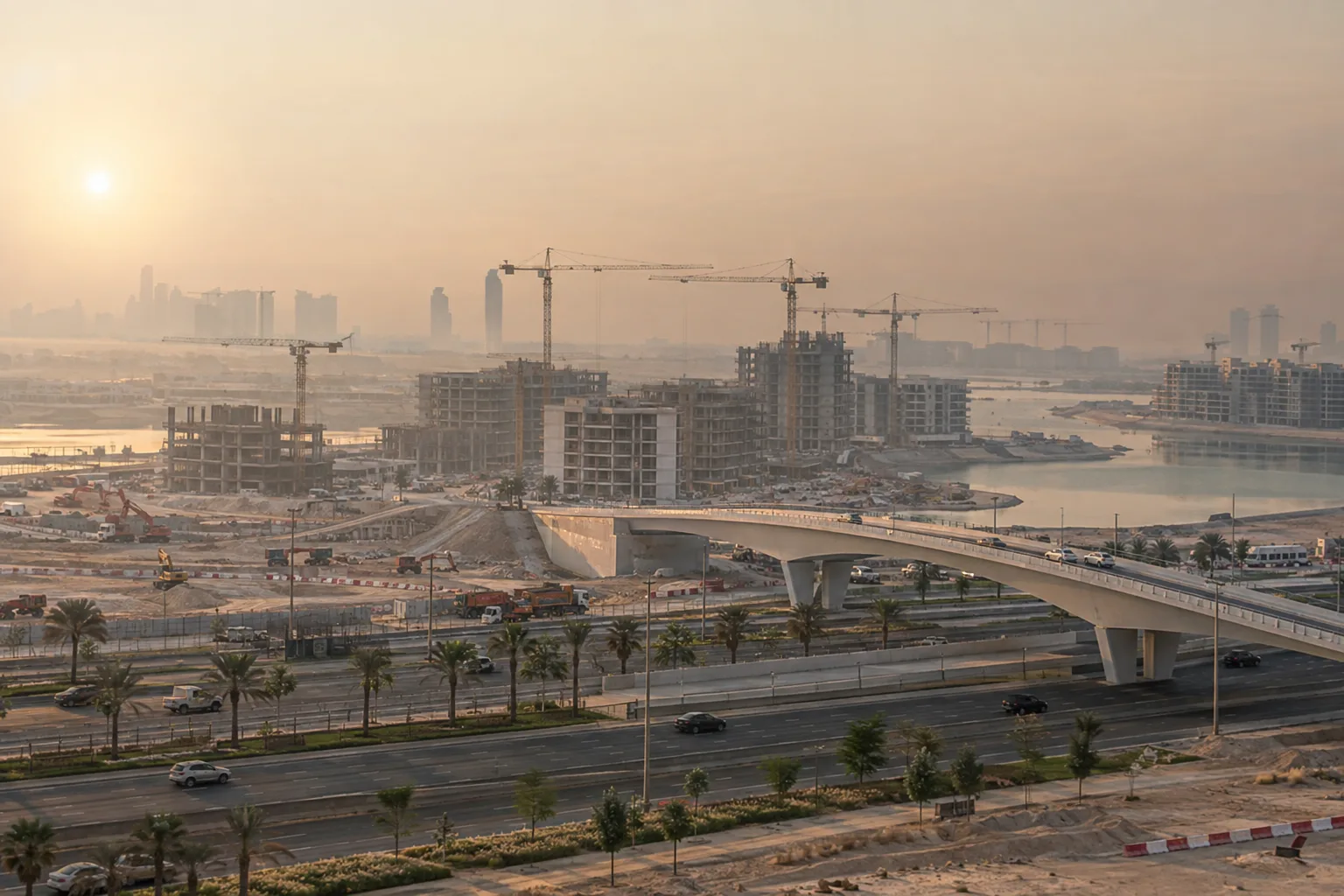
The dominance of off-plan is no accident of the cycle. It stems from the very structure of supply: the emirate's major developers launch new projects on the developing islands and districts, and offer staggered payment plans that spread the buyer's financial effort across the build period.
- An entry ticket often more accessible than in the resale market, thanks to instalment payments during construction.
- A purchase price locked in at launch, ahead of the wave of completions.
- A wider choice of new-build layouts and locations, where the secondary market remains limited.
This mechanism explains why 89% of the value traded in H1 2026 goes through off-plan. It also calls for caution: the developer's track record, the strength of the payment plan and the project's location make all the difference between two neighbouring schemes.
Free guide, delivered on WhatsApp
Get our investment guide
Taxation, visas, financing, buying steps: 14 pages sent to your WhatsApp within minutes.
The 2028-2030 completion wave and buying timing
The ADREC report puts the number of additional units projected by 2030 at around 71,000, to be added to a stock of roughly 409,000 units. This is the key piece of information for an investor: a significant share of what is bought off-plan today will be delivered between 2028 and 2030.
This concentration of completions has two effects to anticipate. On one hand, it gives the market fresh depth and more mature neighbourhoods by 2030. On the other, the simultaneous arrival of thousands of units in certain districts can weigh on rents and resale prices at the precise moment they are delivered. The choice of project, completion date and neighbourhood therefore becomes central.
What it changes for the investor
This report confirms what we see on the ground: in Abu Dhabi, the investor buying today is buying new-build under construction on a massive scale. It is an opportunity in terms of price and payment plans — provided you think in terms of timing. Worth recalling is the tax framework that makes the emirate attractive: individuals pay no tax on rental income or on property capital gains.
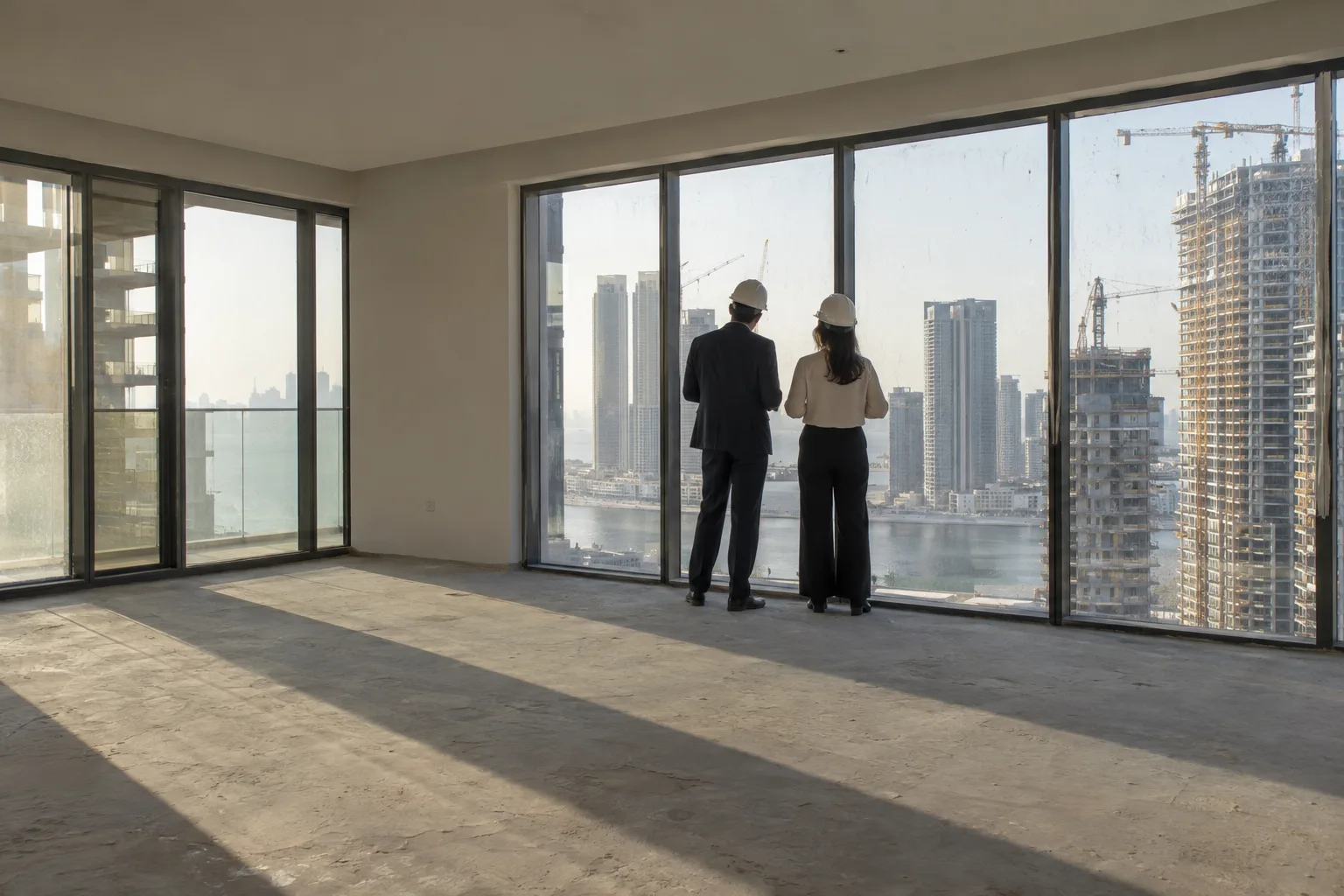
The figure of 71,000 units expected by 2030 is the one we watch most closely. It means that between 2028 and 2030, certain neighbourhoods will see a lot of supply arrive at once. Buying off-plan in a district that absorbs this wave well — or, conversely, targeting an earlier completion — does not produce the same resale outcome. We promise no numerical return: we help you choose the project, the developer and the exit timing.
Our role at Lucretia is precisely to weigh up projects, developers and completion dates so that timing works in the buyer's favour. For those looking to structure a purchase, our support for investing in Abu Dhabi covers property selection, legal safeguards and holding strategy, from reservation to resale.
Source: adrec.gov.ae — 18 August 2026
This article is part of our guide
Abu Dhabi Property Investment Guide: Buy, Let and Resell with Confidence
About the author

Adeline LAUVERNAY
Real Estate Consultant
An expert in luxury sales and marketing, Adeline honed her sense of high-end service at prestigious Houses such as Hermès and Bvlgari. Her expertise allows her to meet the expectations of a demanding clientele by offering a tailor-made experience. Passionate and rigorous, she supports her clients by identifying unique opportunities and offering exceptional properties perfectly aligned with their aspirations.