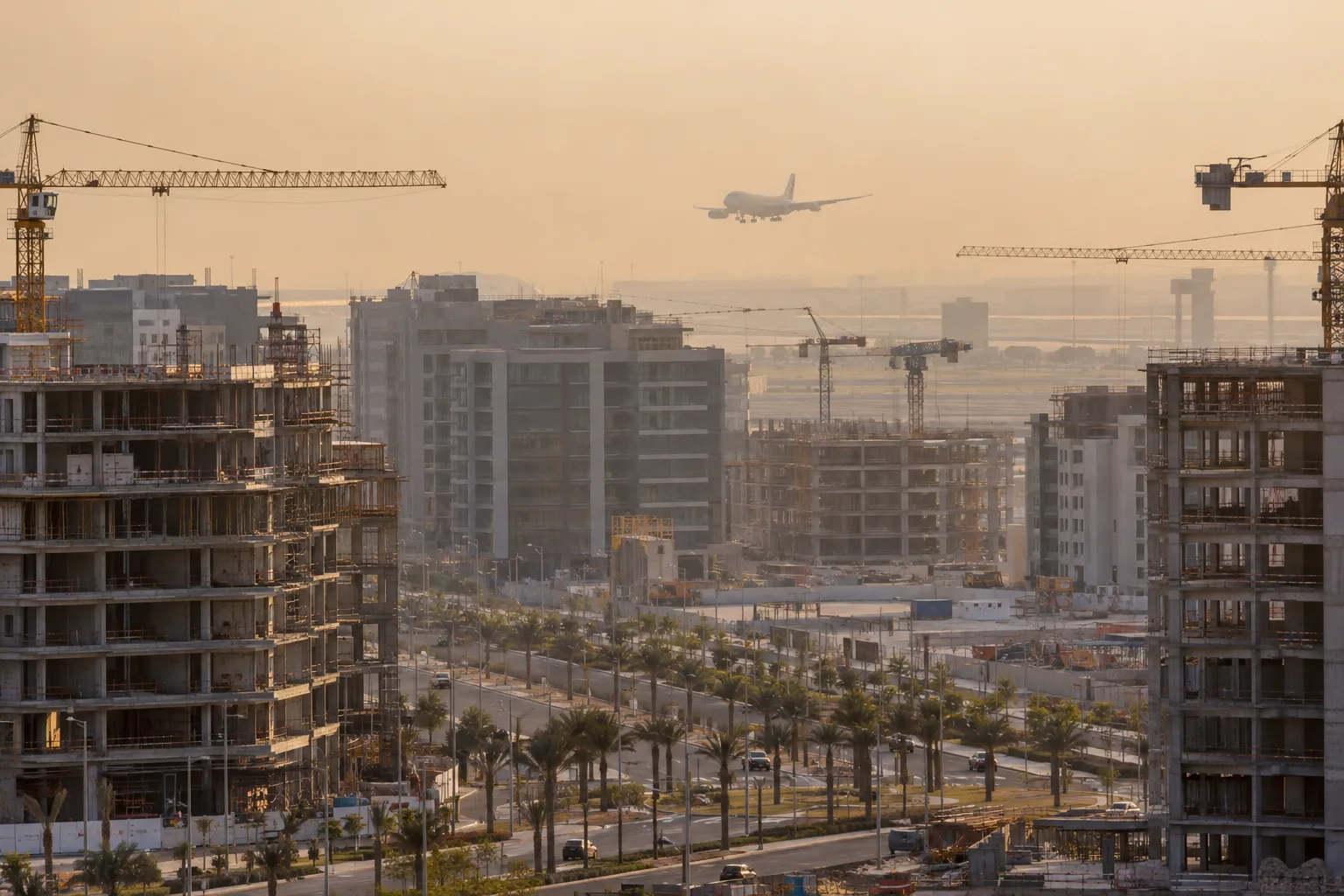
In an August 22, 2026 post on our Instagram account, Lucretia looks back at AHS Properties' acquisition of Dubai's Shangri-La hotel, led by Abbas Sajwani, and the "buy, renovate, resell" strategy behind it.
On this page
In an August 22, 2026 post on our Instagram account, Sofiane, from the Lucretia team, looks back at a deal that got Dubai's property market talking: AHS Properties' acquisition of the Shangri-La hotel, a 42-storey tower on Sheikh Zayed Road, by the company led by Abbas Sajwani. Aged 26, ranked by Forbes among the world's youngest billionaires and the son of the founder of developer DAMAC, Abbas Sajwani built AHS Properties on a single method: buy an underused asset, transform it, then sell it on. Beyond the reported price tag, it's this rationale — so-called "value-add" investing — that we wanted to unpack for our clients.
@lucretia_immobilier · August 22, 2026
At 26, he's just bought Dubai's Shangri-La hotel for 260 million euros. 😮 Abbas Sajwani, ranked by Forbes among the world's youngest billionaires, and incidentally the son of DAMAC's founder. But what interests me about him isn't the family name. It's the method. One idea from the start: buy, renovate, sell. Villas in Palm Jumeirah and Emirates Hills, then a derelict tower on Sheikh Zayed Road, transformed and resold for several times its price. The Shangri-La is the same logic, on a much bigger scale. And the lesson for us? While everyone chases new off-plan units, real investors also make money on existing stock: an underused asset, a prime location, you transform it, and you create the value yourself. That's the real difference between buying and investing. 👇 📩 Want to spot the best buy-and-renovate opportunities? Message me. #SofianeInvest #ImmobilierDubai #InvestirADubai #DubaiRealEstate #Lucretia
The essentials
- On August 22, 2026, Lucretia published a video on its Instagram account @lucretia_immobilier about AHS Properties' acquisition of Dubai's Shangri-La hotel.
- The Shangri-La in question is a 42-storey tower on Sheikh Zayed Road, Dubai's central artery.
- AHS Properties is led by Abbas Sajwani, 26, ranked by Forbes among the world's youngest billionaires and the son of the founder of developer DAMAC.
- AHS Properties' strategy rests on a single idea: buy, renovate then resell assets, starting with villas in Palm Jumeirah and Emirates Hills.
- According to Lucretia's post, a tower left derelict for years on Sheikh Zayed Road had been acquired by the group for just over 100 million euros, completely reimagined, then resold for more than 600 million euros.
A project in mind?
Talk to a Lucretia adviser
Tailored guidance, no obligation.
One method: buy, transform, create value
What sets AHS Properties apart isn't its leader's surname, but a discipline in execution. The group first made its name acquiring villas in two of the city's most sought-after addresses, Palm Jumeirah and Emirates Hills, before scaling up. The next step made an impression: a tower left derelict for years on Sheikh Zayed Road, bought for just over 100 million euros according to our post, completely reimagined then resold for more than 600 million euros.
The Shangri-La acquisition follows the same trajectory, on an even larger scale. This is the principle of value-add investing: you start with an asset whose potential is underexploited, sitting in a prime location, you reposition it, and you create the capital gain yourself rather than waiting for it to come from the market cycle alone. You'll find this kind of dynamic in our guide to trends and outlook in Dubai's property market.
New off-plan isn't the only way in
In Dubai, investor attention concentrates heavily on new off-plan stock. It's an efficient and straightforward route. But the AHS Properties deal is a reminder that underused existing stock represents a very real pool of value — provided you know how to read a location, a building and its repositioning potential.
The strength of this approach rests on a foundation specific to the emirate: taxation. In Dubai, individuals pay no tax on rental income or on property capital gains. A buy-renovate-resell operation therefore keeps most of the value created, which has no equivalent in most European markets. We set out this framework in our guide to property taxation in Dubai.
What it means for the investor
What we take from this story for an investor is less the price than the rationale. The difference between "buying" and "investing" comes down to the ability to transform an asset: a prime location, an underused property, a clear repositioning plan. On an individual scale, that doesn't mean buying a tower, but applying the same reasoning to a dated villa in an established neighbourhood, or an apartment to refresh in a well-located residence.
We do, however, flag the points to watch: a value-add operation demands a tightly controlled renovation budget, an accurate read of the entry price, and a fine understanding of the neighbourhood and the expected rental or resale demand. Poorly calibrated, it destroys value instead of creating it. No return or capital gain is guaranteed, and every project deserves its own analysis. If you're weighing several markets for this kind of strategy, our comparison Dubai or Bali: which market for which profile may help.
At Lucretia, we support this kind of operation end to end, from sourcing the asset to reselling it. To explore buy-and-renovate opportunities, our on-the-ground team points you toward the properties and neighbourhoods that fit your profile. More broadly, our investing in Dubai page brings together the essentials to get started.
Source: Original post on Instagram (@lucretia_immobilier) — August 22, 2026
Free guide, delivered on WhatsApp
Get the guide "Investing in Dubai"
Taxation, visas, financing, buying steps: 14 pages written by our advisers, sent to your WhatsApp within minutes.
This article is part of our guide
Dubai Property Investment Guide for Foreign Buyers
About the author