On 12 September 2026, Arabian Business reported a milestone: Dubai passed 257,000 rental contracts over the first eight months of 2026, with new leases up 19.4% as the market heads for an annual record.
On this page
Dubai's rental market is heading for an all-time record in 2026. According to data reported by Arabian Business on 12 September 2026, more than 257,000 rental contracts were registered across the emirate's freehold zones in the first eight months of the year, driven by a 19.4% rise in new leases. Over the same period, the prime residential segment accounted for 2,046 contracts worth 1.85 billion dollars. These figures extend a momentum already visible since the start of the year and confirm rental absorption fuelled by the city's demographic growth.
The essentials
- Dubai passed 257,000 rental contracts in its freehold zones over the first eight months of 2026 (data reported by Arabian Business, 12 September 2026).
- New leases climbed 19.4% over the period, a sign of accelerating rental demand.
- The prime residential segment recorded 2,046 rental contracts totalling 1.85 billion dollars over these eight months.
- By the end of July 2026, the emirate had already registered 214,445 contracts over seven months, up 1.9% year on year.
- In 2025, Dubai closed the year on a record of 377,660 registered rental contracts.
Rental demand accelerating, driven by new arrivals
What stands out in these figures isn't just the volume, but its composition: the 19.4% jump in new leases reflects a steady flow of arrivals into Dubai, not merely renewals shuffled between tenants already in place. Over the first seven months of the year, the emirate had already registered 214,445 contracts, against the annual record of 377,660 reached in 2025.

This absorption rests on an expanding demographic base: new residents, expats and professionals drawn by the emirate's tax regime and quality of life. For a landlord, this depth of demand is what really matters day to day — a pool of solvent tenants that keeps vacancy low and makes re-letting smooth. It's one of the pillars of attractiveness we detail in our guide to investing in Dubai.
Free guide, delivered on WhatsApp
Get our investment guide
Taxation, visas, financing, buying steps: 14 pages sent to your WhatsApp within minutes.

Prime segment confirms its liquidity
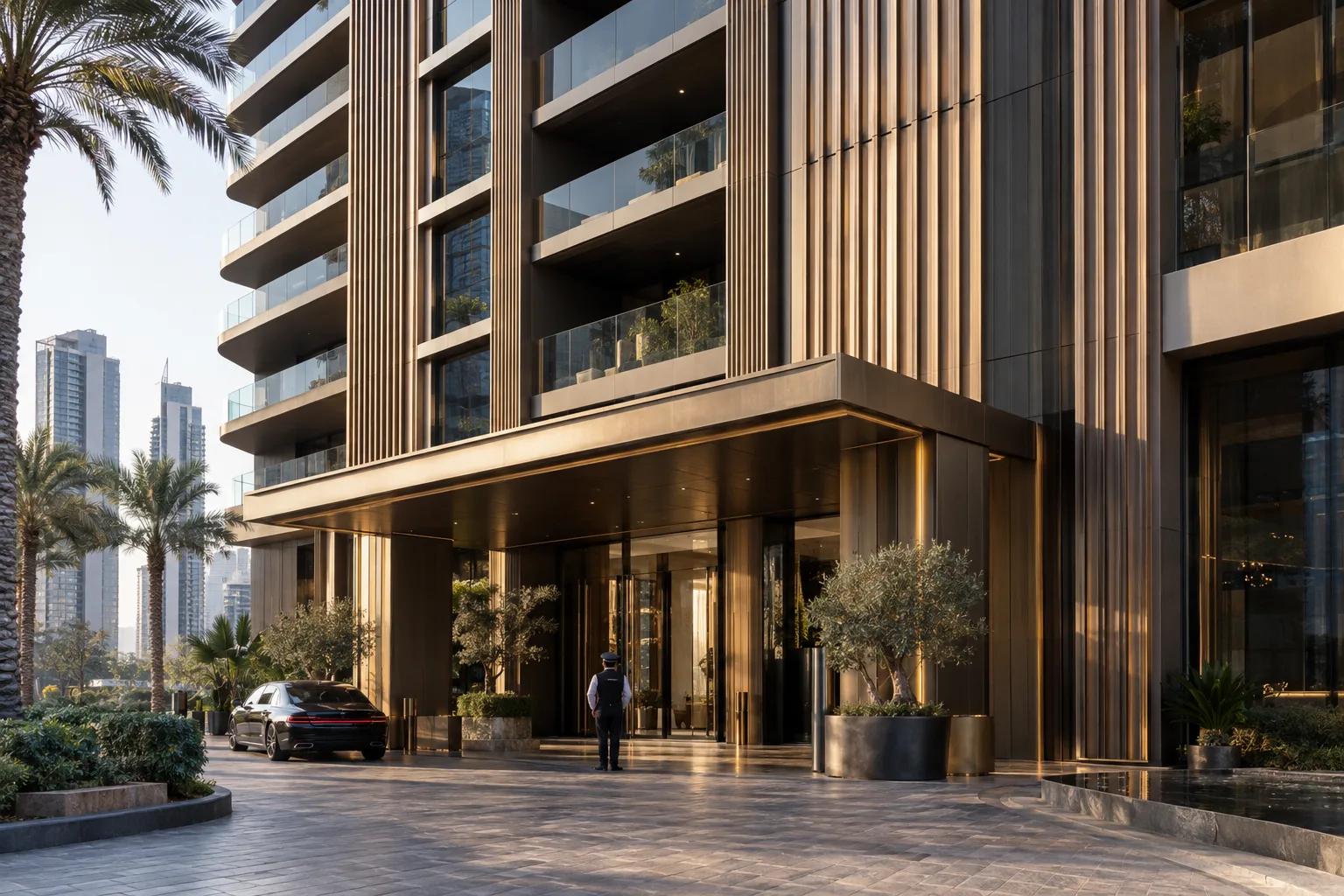
The 2,046 prime rental contracts worth 1.85 billion dollars over eight months illustrate the strength of the luxury segment, where annual rents per property can reach several hundred thousand dirhams. This vigour ripples across the whole market: it underpins the value of sought-after addresses and the ability of high-end new-build properties to find tenants quickly, as seen in developments delivered by major developers such as Emaar's Forte project, in the heart of Downtown.

In Dubai, this rental activity comes with a major tax advantage: individuals pay no tax on rental income or on property capital gains. Gross rental yield is therefore not eroded by local tax, which sets the emirate clearly apart from European markets.
What it changes for investors
For an investor, this rising tempo of leases is first and foremost a signal of rental liquidity: the more contracts signed, the easier it is to let, re-let and secure a steady rental flow. We see it as confirmation of a thesis we've long defended — in Dubai, rental demand is structural, driven by the continuous arrival of new residents rather than a one-off spike. That said, it remains a snapshot of the market: it says nothing about the yield of a specific property, which depends on its neighbourhood, its type and its management.
In practice, the stakes play out on two fronts. First, taxation: the absence of local tax on rents changes the net yield equation, a point we cover in our guide to taxation of rental income in Dubai. Then management: a market this active needs steering, between choosing a long-term lease and pivoting to short-term letting as a holiday home where the location lends itself to it.
Our role at Lucretia is precisely to translate this market data into concrete decisions: choice of neighbourhood, property type and operating model, then rental management once the keys are handed over. That's where the gap opens up between a flattering market figure and income actually collected.
Source: arabianbusiness.com — 2026-09-12
This article is part of our guide
Dubai Property Investment Guide for Foreign Buyers
About the author

Sofiane ABDELAZIZ
Real Estate Consultant
Sofiane is a real estate investment expert in Dubai with a solid background in finance and investment strategy. He specializes in financial market analysis and risk management, treating real estate as a true asset class. After gaining experience in the secondary market, he moved into Off Plan investment, developing in-depth knowledge of the Dubai real estate market. At Lucretia Immobilier, he supports an international clientele in acquiring high-potential properties with a structured, transparent, and performance-driven approach.