According to figures released in September 2026 by the Dubai Department of Economy and Tourism, Dubai welcomed 6.97 million international visitors between January and August 2026, and hotel occupancy climbed back to 66% in August, up from 36% in March.
On this page
The latest Dubai tourism statistics for 2026, released by the Dubai Department of Economy and Tourism (DET) in mid-September 2026 as Arabian Travel Market 2026 opened and covering the period to the end of August, show that Dubai welcomed 6.97 million international visitors over the first eight months of the year. The emirate received around 869,000 international visitors in August 2026, its best month since February. Hotel occupancy reached 66% in August, up from 36% in March 2026. After a difficult start to the year, these figures confirm a steady recovery in tourism demand as the high season approaches.
Key takeaways
- Dubai welcomed 6.97 million international visitors from January to August 2026, according to the Dubai Department of Economy and Tourism.
- In August 2026, Dubai received around 869,000 international visitors, its highest monthly figure since February 2026, with double-digit month-on-month growth every month since March.
- Dubai's hotel occupancy reached 66% in August 2026, up from 36% in March 2026, equivalent to 89% of the August 2025 level.
- Over January–August 2026, Western Europe accounted for 20% of Dubai's visitors, ahead of South Asia (17%), the Gulf Cooperation Council (16%) and the CIS and Eastern Europe (14%).
- Dubai's hotel stock is approaching 149,000 rooms and recorded 21.61 million occupied room nights over the first eight months of 2026.
Dubai tourism in 2026: a steady recovery since March
Visitor numbers in Dubai have grown at a double-digit pace every month since March 2026, according to the Dubai Department of Economy and Tourism. August 2026, with around 869,000 international visitors, posted the best monthly figure since February, even though it is traditionally a quiet month because of the intense summer heat.

Hotels are following the same path. Occupancy rose from 36% in March to 66% in August 2026. It remains below the August 2025 level, at 89% of it, but the gap is narrowing fast. With a stock approaching 149,000 rooms and 21.61 million occupied room nights since January, Dubai heads into winter, its strongest season, on an upward trend.
A diverse visitor base, led by Western Europe
Western Europe remains Dubai's largest source market for January–August 2026, accounting for 20% of visitors. It is followed by South Asia (17%), the Gulf Cooperation Council countries (16%) and the CIS and Eastern Europe (14%).
This balanced mix is a structural strength: no single source market dominates, which cushions shocks specific to any one region. For the owner of a property let by the night, it means demand spread across several holiday calendars, European, Asian and Gulf, and therefore occupancy that is more evenly distributed throughout the year.
Featured
View projects: DWTN Residences
From AED 2,271,477
Hand-picked new properties with end-to-end expert support.
View projects
Tourist districts lead the way
The rebound in hotel occupancy benefits first the districts where leisure and business stays are concentrated: Dubai Marina, Downtown Dubai, Palm Jumeirah and Business Bay. This is where apartments run as short-term rentals (known as "holiday homes", which require a permit from the Department of Economy and Tourism) capture guests who cannot find, or are not looking for, a hotel room.
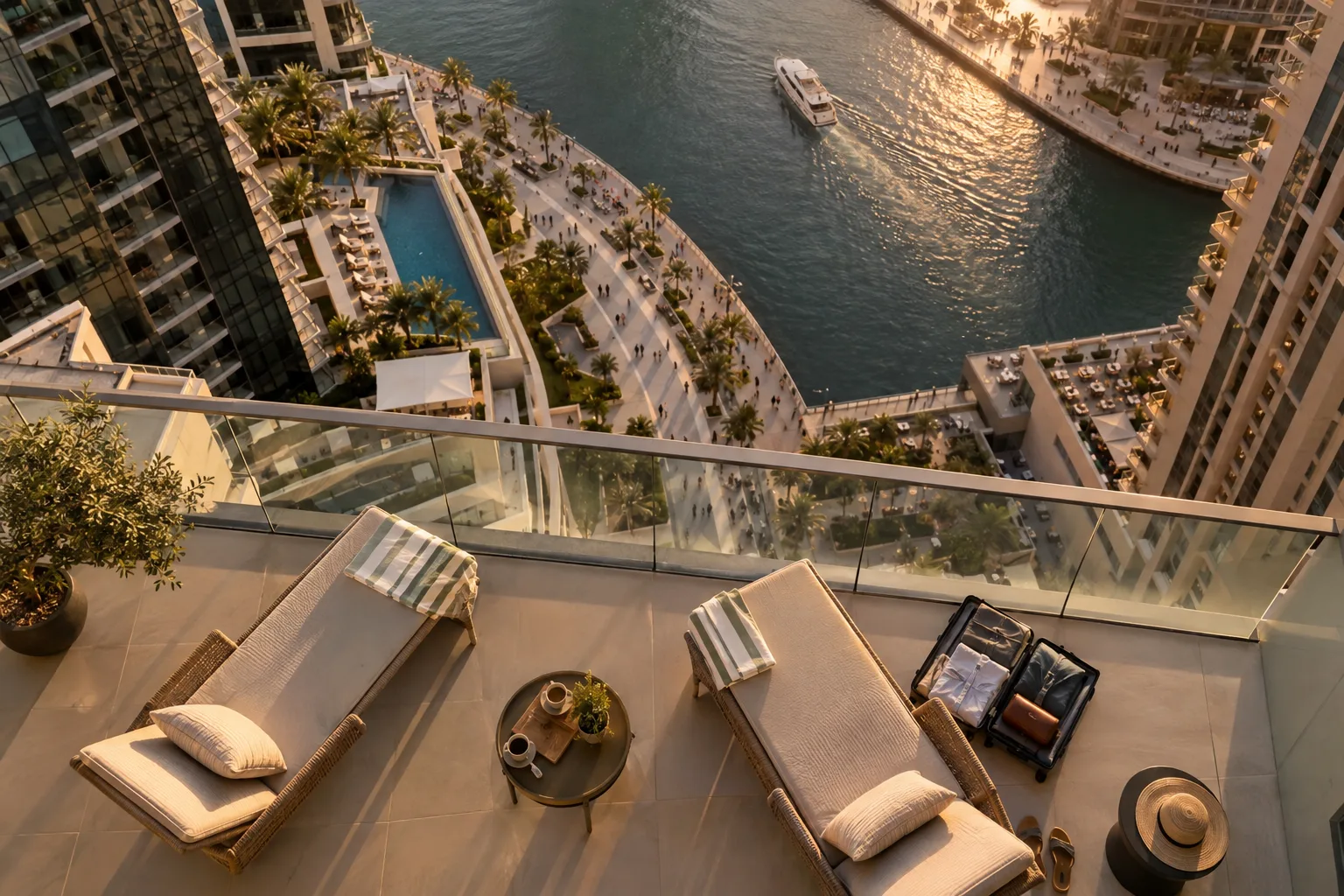
We cover the rules, management and yield drivers of this model in our guide to short-term rentals in Dubai and holiday home yields.
What it means for investors
For investors, these Dubai Department of Economy and Tourism figures send a clear signal: tourism demand is rebuilding month after month, and the high season, from October to April, begins with hotel occupancy back up to 66%. Higher hotel occupancy generally supports nightly rates and occupancy for short-term rentals in the busiest districts. As a reminder, individuals in Dubai pay no tax on rental income or on property capital gains: every night booked translates directly into income free of local tax.
We nonetheless recommend thinking in full cycles rather than isolated months. Occupancy in August 2026 is still at 89% of the August 2025 level: the right approach is to build a rental plan over a full year, factoring in management fees, seasonality and the building's exact location. For a property bought with resale in mind, the depth of rental demand in a district also weighs on its value, a point we develop in our guide capital gains in Dubai: which districts appreciate the most.
Lucretia helps you choose between short-term and long-term letting, select the address that fits your strategy and secure every stage of the purchase. For an overview of the market, visit our Invest in Dubai page.
Source: travelandtourworld.com — 2026-09-27
Free guide, delivered on WhatsApp
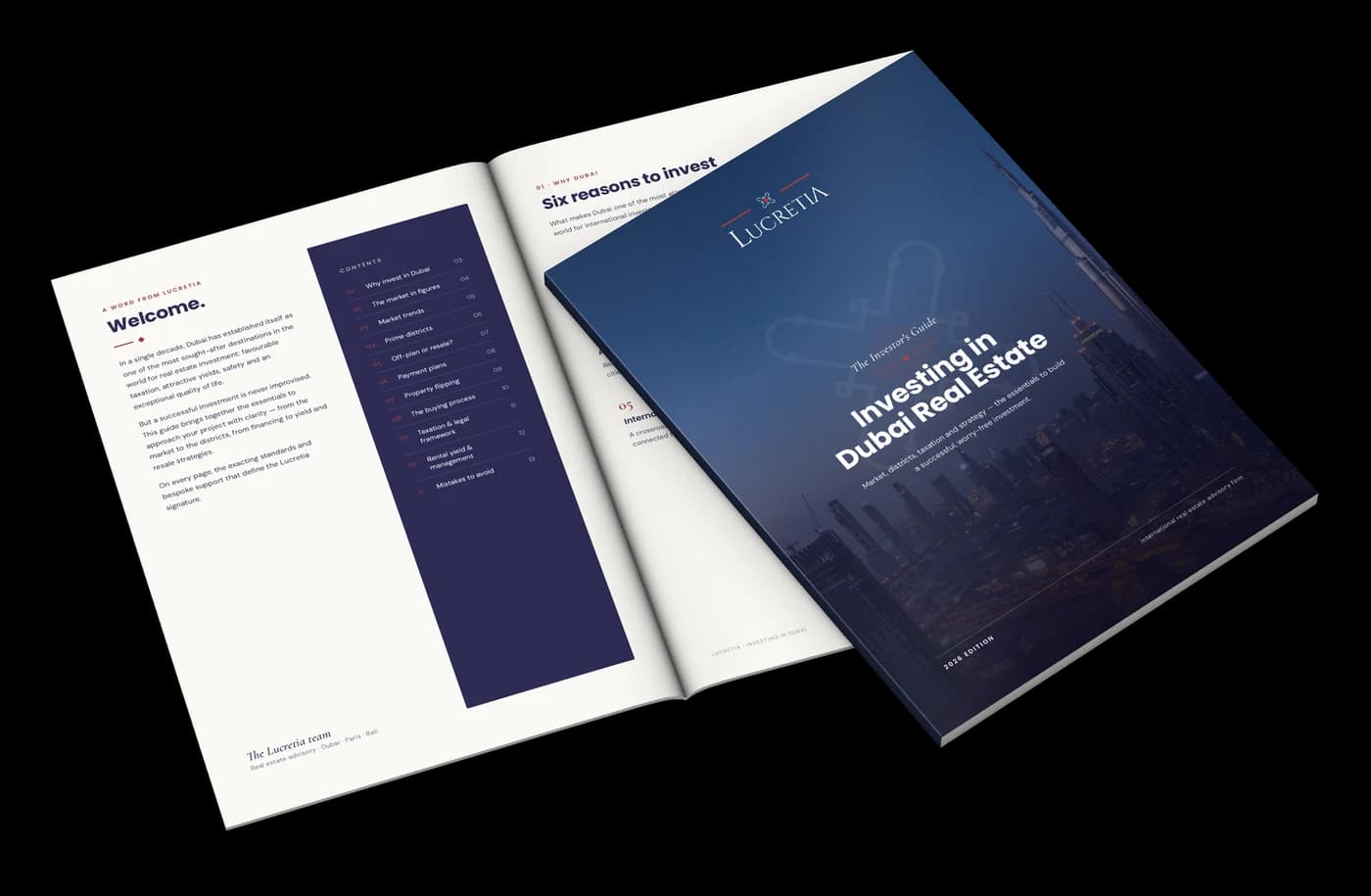
Get the guide "Investing in Dubai"
Taxation, visas, financing, buying steps: 14 pages written by our advisers, sent to your WhatsApp within minutes.
This article is part of our guide
Dubai Property Investment Guide for Foreign Buyers
About the author

Benoit CLAUDEL
Director of Strategy & Operations
With over 18 years of experience in real estate and wealth management, Benoît has developed recognized expertise in advising private investors, business executives and family offices. After starting out in a real estate agency and working within one of the most reputable wealth management firms in Paris, he then joined LCL as Head of Private Banking for Île-de-France, advising high-income clients on their real estate strategies. An entrepreneur, he founded and ran his own wealth management firm for 7 years, structuring investment and wealth optimization solutions. Today at Lucretia, Benoît oversees operational strategy, sales performance and advisor training. He works on high-value-added cases, particularly investments via French holding companies, legal structuring and wealth taxation.