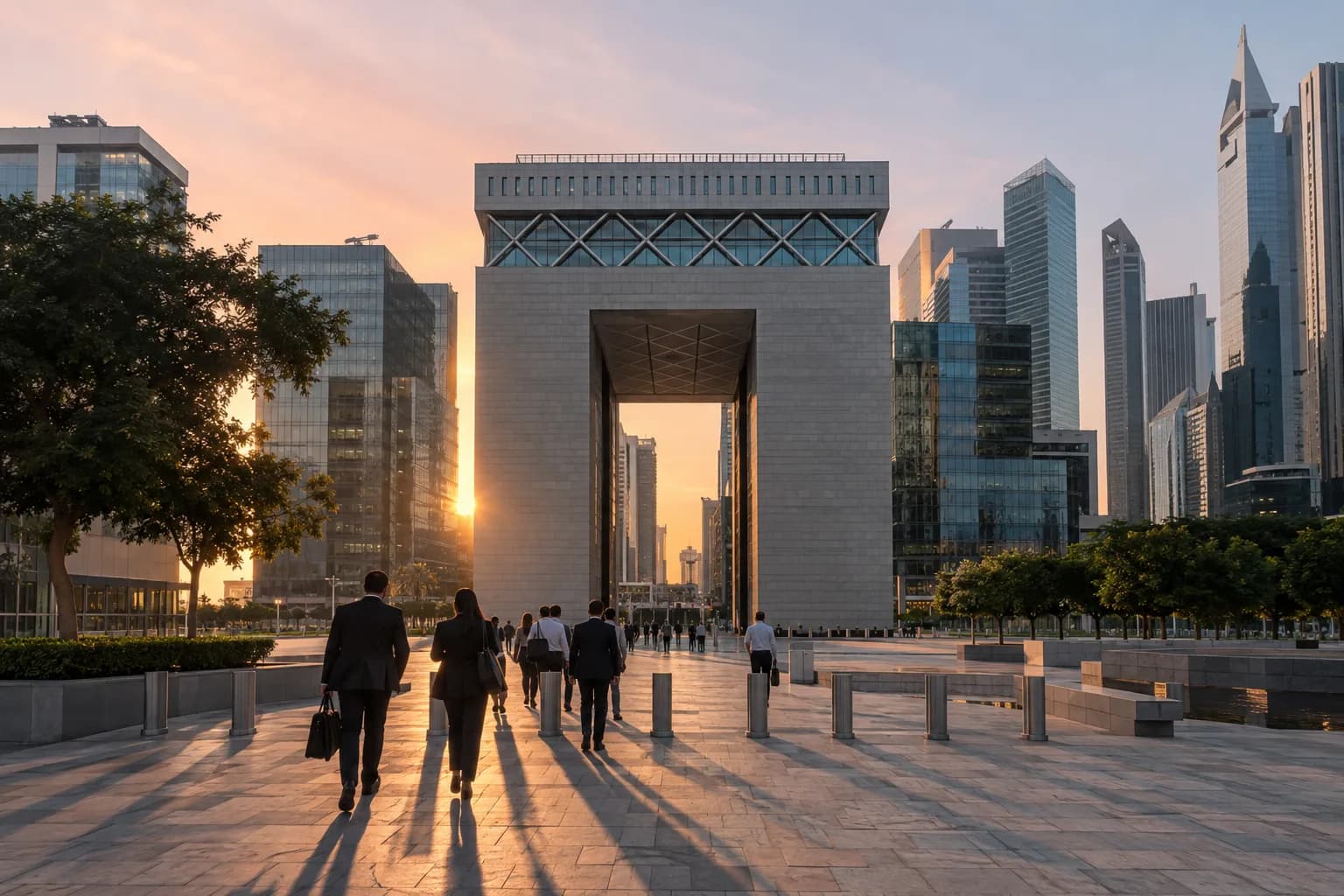
On 22 October 2026, at DIFC, the International Monetary Fund raised its 2027 growth forecast for the United Arab Emirates to 7.7%, 2.4 points higher than in April. We explain what this revision means for Dubai real estate.
On this page
The IMF's UAE growth forecast for 2027 now stands at 7.7%: on 22 October 2026, the International Monetary Fund (IMF) presented its Regional Economic Outlook for the Middle East and Central Asia at the Dubai International Financial Centre (DIFC). Jihad Azour, Director of the IMF's Middle East and Central Asia Department, announced the figure for the United Arab Emirates economy there. That is 2.4 points higher than the forecast the Fund published in April 2026. The IMF attributes the upgrade to the country's substantial financial reserves, advanced infrastructure and technological capabilities, while the region as a whole is expected to see a slight contraction in 2026.
Key takeaways
- The International Monetary Fund forecasts 7.7% growth for the United Arab Emirates economy in 2027, according to its October 2026 regional report.
- This 7.7% forecast is 2.4 points higher than the one the IMF published in April 2026.
- The report was presented on 22 October 2026 at the Dubai International Financial Centre by Jihad Azour, Director of the IMF's Middle East and Central Asia Department.
- According to the IMF, continued investment in artificial intelligence could add around 0.5 points to the UAE's annual growth.
- The IMF expects average inflation in Gulf Cooperation Council countries to ease to 2.4% in 2027, then to around 2% from 2028.
Why the IMF raised its UAE growth forecast
The IMF lifted its 2027 forecast for the UAE by 2.4 points, to 7.7%, because it sees the country as better equipped than its neighbours to withstand regional and global shocks. The Fund points to three strengths: substantial financial reserves, advanced infrastructure and solid technological capabilities.

Artificial intelligence sits at the heart of this assessment. Jihad Azour described the UAE as one of the countries best placed to benefit from rapid advances in AI, thanks to investments already under way. According to the report, sustaining this effort could add around 0.5 points to annual growth. This choice directly supports Dubai's business hubs, starting with DIFC, home to a growing number of finance and technology firms.
A trajectory that stands apart from the rest of the region
The UAE clearly stands out: the IMF expects a slight contraction in regional activity in 2026, but a strong Emirati rebound in 2027. The theme chosen for the DIFC presentation, diverging outlooks across the Middle East and North Africa, says it plainly: economies with fiscal headroom and modern infrastructure are pulling ahead.
On prices, the report expects average inflation in Gulf countries to ease to 2.4% in 2027, then to around 2% from 2028. Strong growth and contained inflation give households and multi-year property investors a readable backdrop.
What growth means for housing demand
An accelerating economy creates jobs, and those jobs bring new residents who need somewhere to live. That is the most direct link between the IMF forecast and Dubai's property market: rental demand follows the arrival of talent and companies.
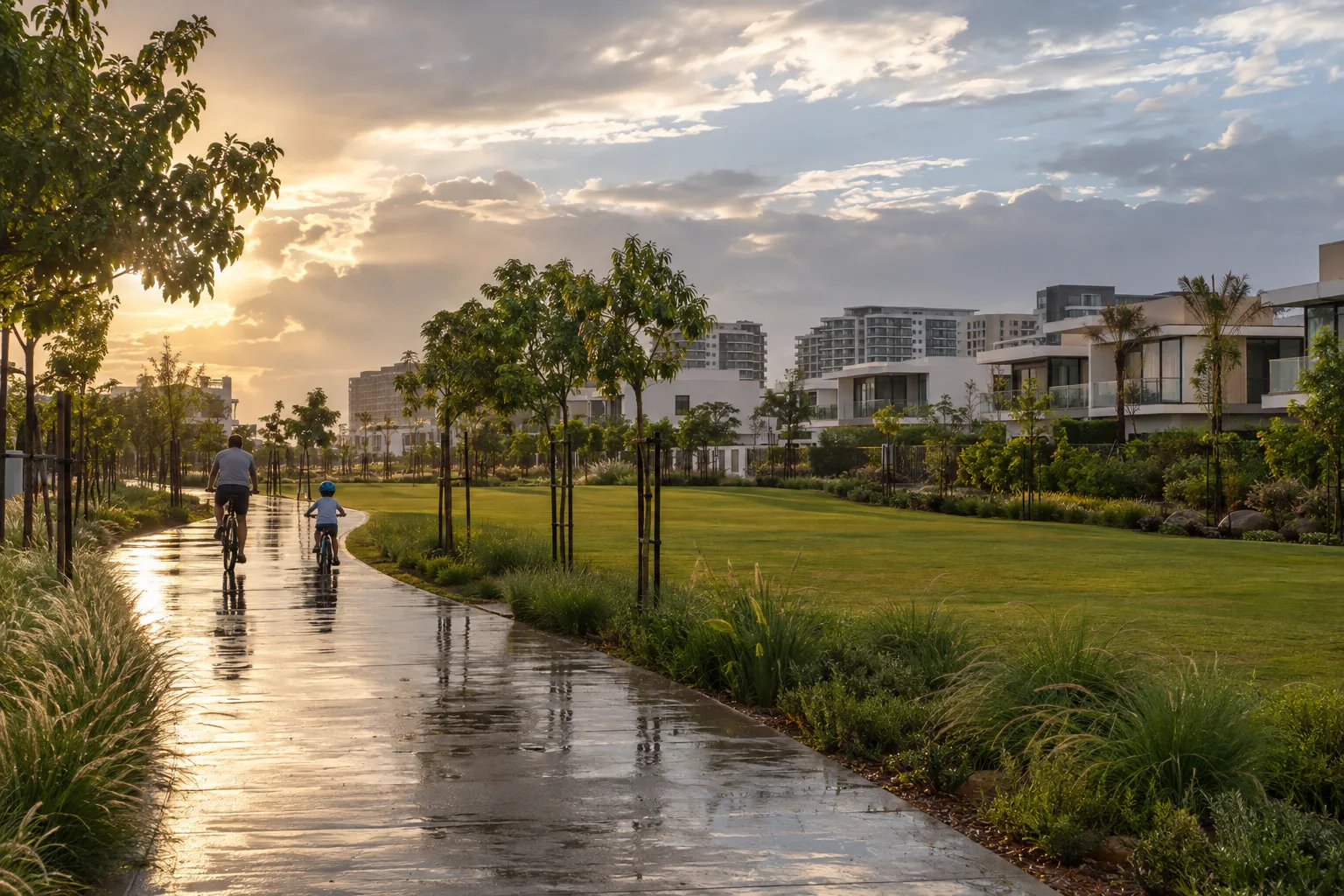
This demand spreads differently across neighbourhoods. Family communities such as Dubai Hills Estate attract professionals settling in for the long term. More affordable areas such as Jumeirah Village Circle house young professionals, who make up a large share of newcomers. A macroeconomic forecast does not set the price of an apartment: the volume of supply delivered in each neighbourhood remains decisive.
What it means for investors
We see this IMF revision as a favourable underlying signal for Dubai. In Dubai, individuals pay no tax on rental income or on property capital gains. With a 7.7% growth forecast for 2027, the UAE adds to this tax advantage one of the strongest economic outlooks in the region. For an investor, the logic is clear: more jobs, more new residents, and therefore better-supported rental demand.
Timing matters too. An off-plan property bought today, with handover scheduled for 2027 or 2028, will reach the market during the period the IMF considers the most dynamic. Our guide buying off-plan in Dubai walks through every step, from the reservation agreement to key handover. A forecast is still only a forecast: it guarantees neither rent nor capital gains. The choice of developer, the quality of the location and the volume of competing deliveries in the same neighbourhood matter more than the national figure.
This is where Lucretia comes in. Our presence in Dubai allows us to cross-check macroeconomic trends against the reality of each neighbourhood and each project. For an overview, see our Invest in Dubai page. For a strategy tailored to your situation, our advisors offer bespoke guidance.
Source: uaebarq.ae — 2026-10-22
Free guide, delivered on WhatsApp
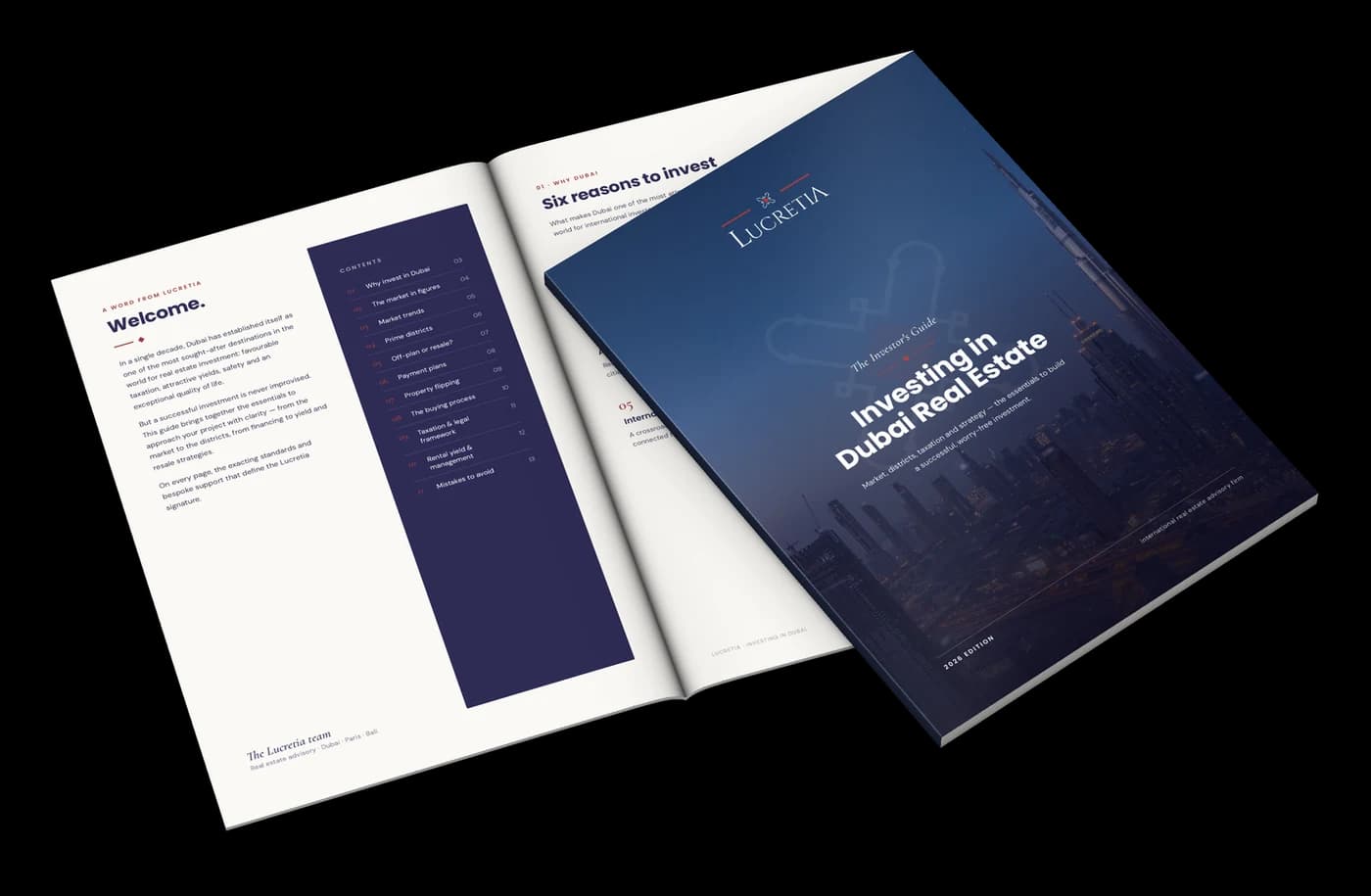
Get the guide "Investing in Dubai"
Taxation, visas, financing, buying steps: 14 pages written by our advisers, sent to your WhatsApp within minutes.
This article is part of our guide
Dubai Property Investment Guide for Foreign Buyers
About the author

Benoit CLAUDEL
Director of Strategy & Operations
With over 18 years of experience in real estate and wealth management, Benoît has developed recognized expertise in advising private investors, business executives and family offices. After starting out in a real estate agency and working within one of the most reputable wealth management firms in Paris, he then joined LCL as Head of Private Banking for Île-de-France, advising high-income clients on their real estate strategies. An entrepreneur, he founded and ran his own wealth management firm for 7 years, structuring investment and wealth optimization solutions. Today at Lucretia, Benoît oversees operational strategy, sales performance and advisor training. He works on high-value-added cases, particularly investments via French holding companies, legal structuring and wealth taxation.