Published in September 2026, Knight Frank's Prime Global Cities Index ranks Dubai 3rd worldwide for annual prime price growth to end-June 2026 (+10.9%), and 1st over five years (+155.3%).
On this page
In the Prime Global Cities Index published by international consultancy Knight Frank in September 2026, Dubai ranks 3rd worldwide, with prime residential prices up 10.9% over the twelve months to end-June 2026, behind Tokyo and Manila. Over five years, Dubai's high-end segment is up 155.3%, the strongest performance of the 46 cities tracked.
The ranking, picked up by the specialist press on 26 September 2026, comes as the overall residential price index from valuation firm ValuStrat is down 3.1% year on year. Two readings of the same market, pointing to a two-speed Dubai.
Key takeaways
- According to Knight Frank's Prime Global Cities Index published in September 2026, prime residential prices in Dubai rose 10.9% in the year to end-June 2026, ranking 3rd worldwide.
- Tokyo tops Knight Frank's Q2 2026 index with +50.7% year on year, ahead of Manila (+14.6%), Dubai (+10.9%) and Singapore (+9.5%).
- Over five years, Dubai prime residential has gained 155.3%, the largest increase among the 46 cities tracked by Knight Frank.
- The global average across the 46 cities in the Knight Frank index stands at +2.6% year on year in Q2 2026, with 32 cities rising; London is down 3.6%.
- ValuStrat's overall residential price index for Dubai is down 3.1% year on year, according to figures reported on 26 September 2026.
Dubai outperforms the global luxury market fourfold
At +10.9% year on year, Dubai prime is growing more than four times faster than the average of the 46 cities in the Knight Frank index (+2.6%). The gap is even starker against the traditional wealth hubs: London fell 3.6% over the same period, while Tokyo, driven by exceptional momentum (+50.7%), and Manila (+14.6%) complete the podium.
The five-year figure is on another scale: +155.3%, meaning prime prices have more than multiplied by 2.5 since mid-2021. No other city in the index does better. For investors, it confirms that Dubai has established itself for the long term among the benchmark markets for wealthy international buyers, rather than as a passing phenomenon.
A two-speed market: prime holds firm, the overall index slows
The rise in prime (+10.9%) coincides with a 3.1% annual fall in the overall ValuStrat index. The two figures don't contradict each other: they measure different segments. The Prime Global Cities Index tracks the top of the market, where the supply of rare properties — beachfront locations, villas at established addresses, branded residences — remains structurally limited. The ValuStrat index covers a much broader stock, including mid-market apartments, where new handovers weigh more heavily on prices.
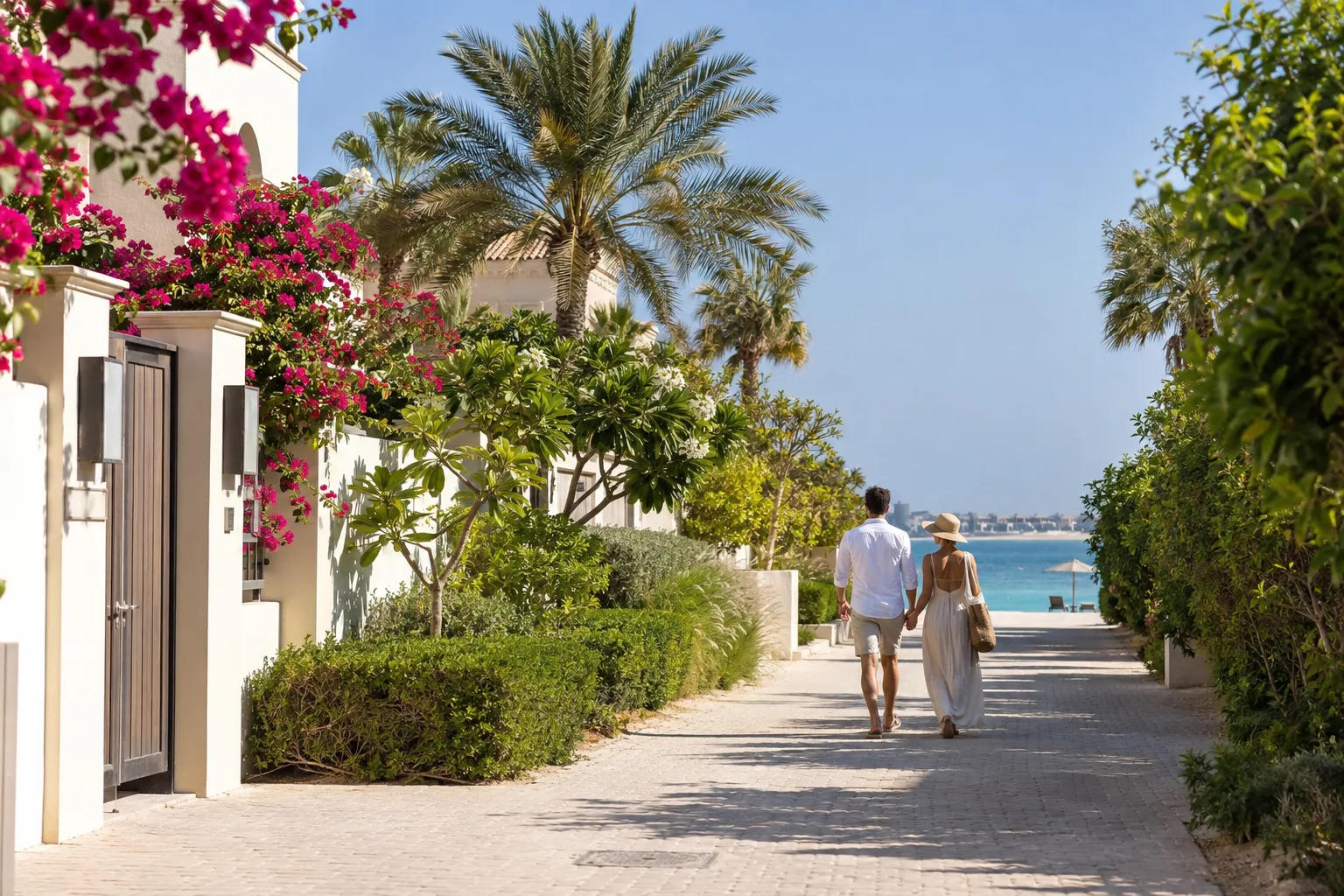
This decoupling signals that the cycle has entered a selective phase. Capital gains are no longer a market-wide story but are won address by address. Our detailed analysis of the neighbourhoods and properties gaining the most value in Dubai shows exactly where this scarcity is concentrated.
Which prime segments remain strong
- Finite-supply properties: villas and penthouses in locations with no buildable land left, whose value rests on scarcity rather than volume.
- Top-quality products: finishes, services and architectural signature make the difference as buyers grow more demanding.
- Liquid assets: internationally recognised addresses resell faster, a decisive criterion in a selective market.
Conversely, segments where handovers are piling up call for a closer look at entry price and holding period.
What it means for investors
For us, this ranking reinforces a key point: in Dubai, individual investors keep the full capital gain, paying neither capital gains tax on property nor tax on rental income. In a segment that has gained 155.3% in five years, this tax advantage weighs heavily on net performance. But past performance is no guide to what comes next: the 3.1% fall in the ValuStrat index is a reminder that not every property follows the prime trajectory.

In practice, we advise our clients to think in terms of scarcity and liquidity rather than momentum. A long-term wealth buyer will favour established addresses with limited supply; an investor targeting medium-term capital growth will focus on entry price and exit timing, two levers we cover in our guide to buy-to-sell strategies in Dubai.
Owners of prime property bought several years ago would do well to review their position, weighing a sale against holding on: our guide to selling a property in Dubai sets out the steps. Lucretia supports you on the ground to identify properties that retain this potential and secure every stage, starting from our Invest in Dubai page.
Source: dubaichronicle.com — 2026-09-26
Free guide, delivered on WhatsApp
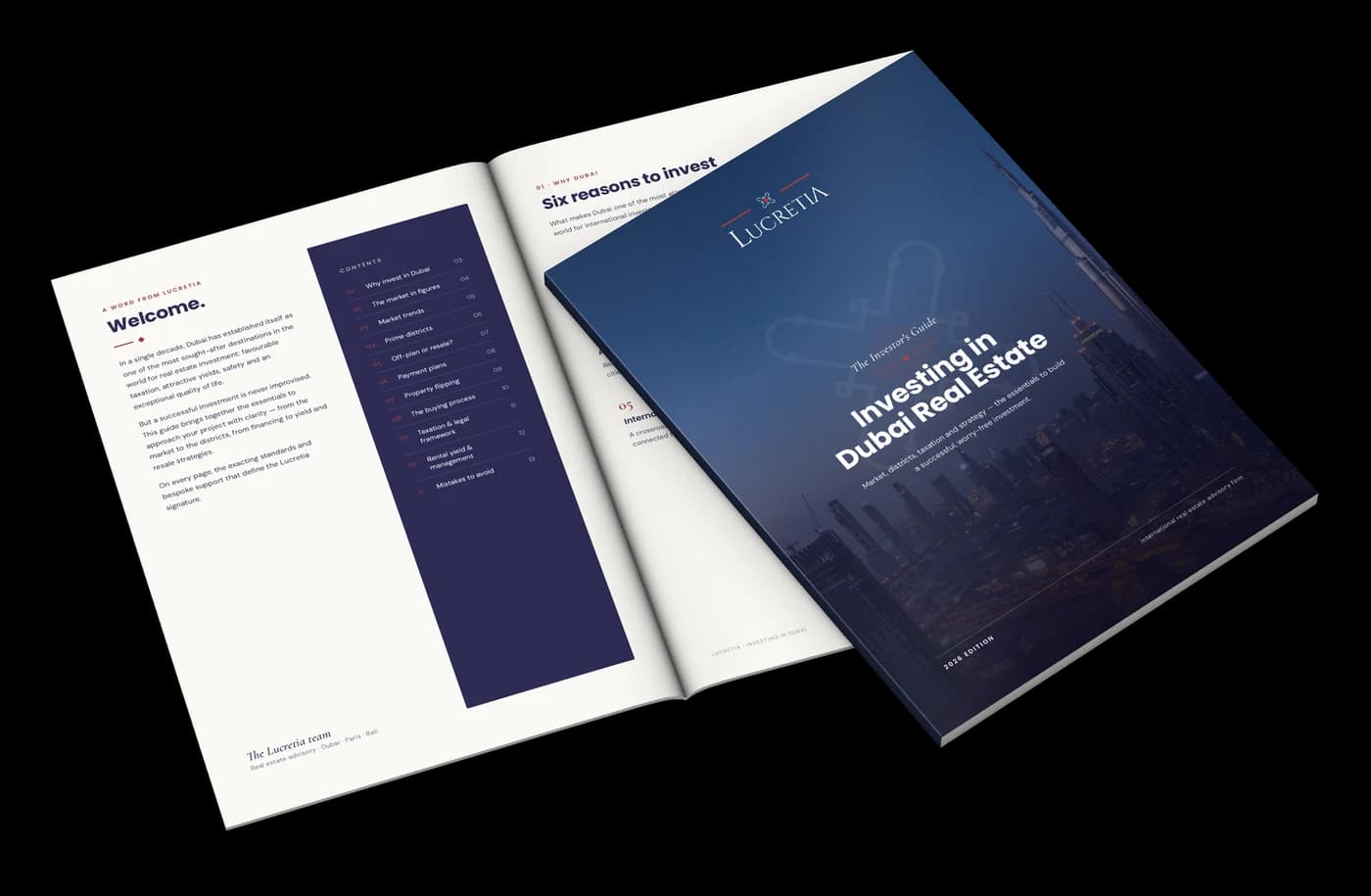
Get the guide "Investing in Dubai"
Taxation, visas, financing, buying steps: 14 pages written by our advisers, sent to your WhatsApp within minutes.
This article is part of our guide
Dubai Property Investment Guide for Foreign Buyers
About the author

Sofiane OULD
Founder & Chief Executive Officer
A visionary entrepreneur and recognized expert in Dubai's prestige real estate market, Sofiane began his career in Paris before joining major players in online real estate (SeLoger, MeilleursAgents, Airbnb). Based in Dubai since 2019, he quickly established himself as one of the city's top-performing brokers. Founder of Lucretia Immobilier, he now supports his clients with an approach combining integrity, innovation and excellence, thereby redefining the standards of luxury.