Where value has risen most in Dubai over five years, and why: emerging areas, premium addresses and property types, backed by Bayut figures.
On this page
- Which areas appreciate most in Dubai? Our data-backed selection
- Do premium areas appreciate as much? Palm, Downtown, Business Bay
- Summary table: prices, 5-year change and yield of the areas that appreciate
- Which property types appreciate most in Dubai?
- How to choose based on your capital gains objective?
The strongest property capital gains in Dubai show up in the emerging areas: Jumeirah Garden City posts +147.6% over 60 months, ahead of Dubai Industrial City at +132.1%, according to Bayut data (March 2026). These are areas that are affordable per square foot, still far from waterfront prices, where an influx of new buyers has pushed values up faster than elsewhere.
But a raw percentage doesn't tell the whole story. One area may have doubled and still trade with little liquidity; another, more modest over five years, offers prestige and an easy resale. We handle resales and off-plan contract assignments: here, sector by sector and property type by property type, is what the price series really show.
Which areas appreciate most in Dubai? Our data-backed selection
The four areas with the strongest proven capital gains over 60 months are Jumeirah Garden City (+147.6%), Dubai Industrial City (+132.1%), Dubailand Residence Complex (+110.9%) and Dubai Silicon Oasis (+108.9%), according to Bayut data (March 2026). What they share: a low entry price at the outset, leaving room to run.
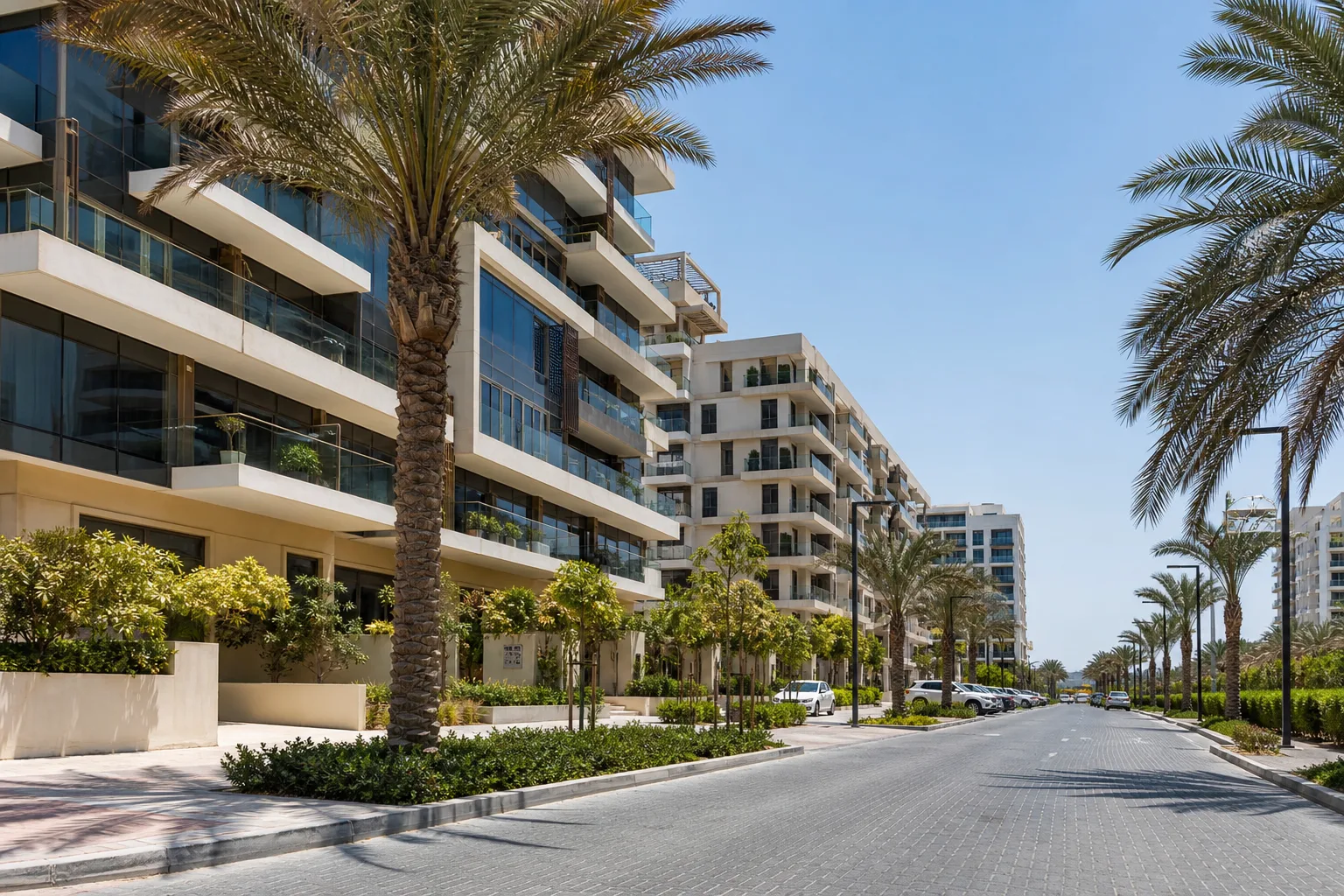
Jumeirah Garden City — +147.6% over 60 months
Jumeirah Garden City sells at 2,097 AED/sqft for a calculated gross yield of 4.8%, according to Bayut data. Central location, ongoing regeneration: the profile suits an investor targeting pure capital appreciation. The caveat lies in that 4.8% yield, low relative to the rise — cash flow isn't the engine here.
Dubai Industrial City — +132.1% over 60 months
Dubai Industrial City shows 1,331 AED/sqft and a calculated gross yield of 5.3%, according to Bayut data. It's the lowest entry price in this quartet. The reservation: a peripheral industrial zone whose residential appeal remains tied to local employment.
Dubailand Residence Complex and Dubai Silicon Oasis
Dubailand Residence Complex (1,277 AED/sqft, 6.3% yield) and Dubai Silicon Oasis (1,370 AED/sqft, 6.3% yield) combine a strong rise with a solid yield, according to Bayut data. These are the most balanced profiles: established capital gains paired with a defensible cash flow. Their caveat remains the distance from the centre and an abundant supply of new stock that can weigh on rents.
Do premium areas appreciate as much? Palm, Downtown, Business Bay
Established addresses appreciate more slowly over five years than emerging areas: Palm Jumeirah gains +69.1% over 60 months, Business Bay +64.9% and Downtown +51.9%, according to Bayut data (March and February 2026). The gap with Jumeirah Garden City's +147.6% is clear — the starting price there was already high.
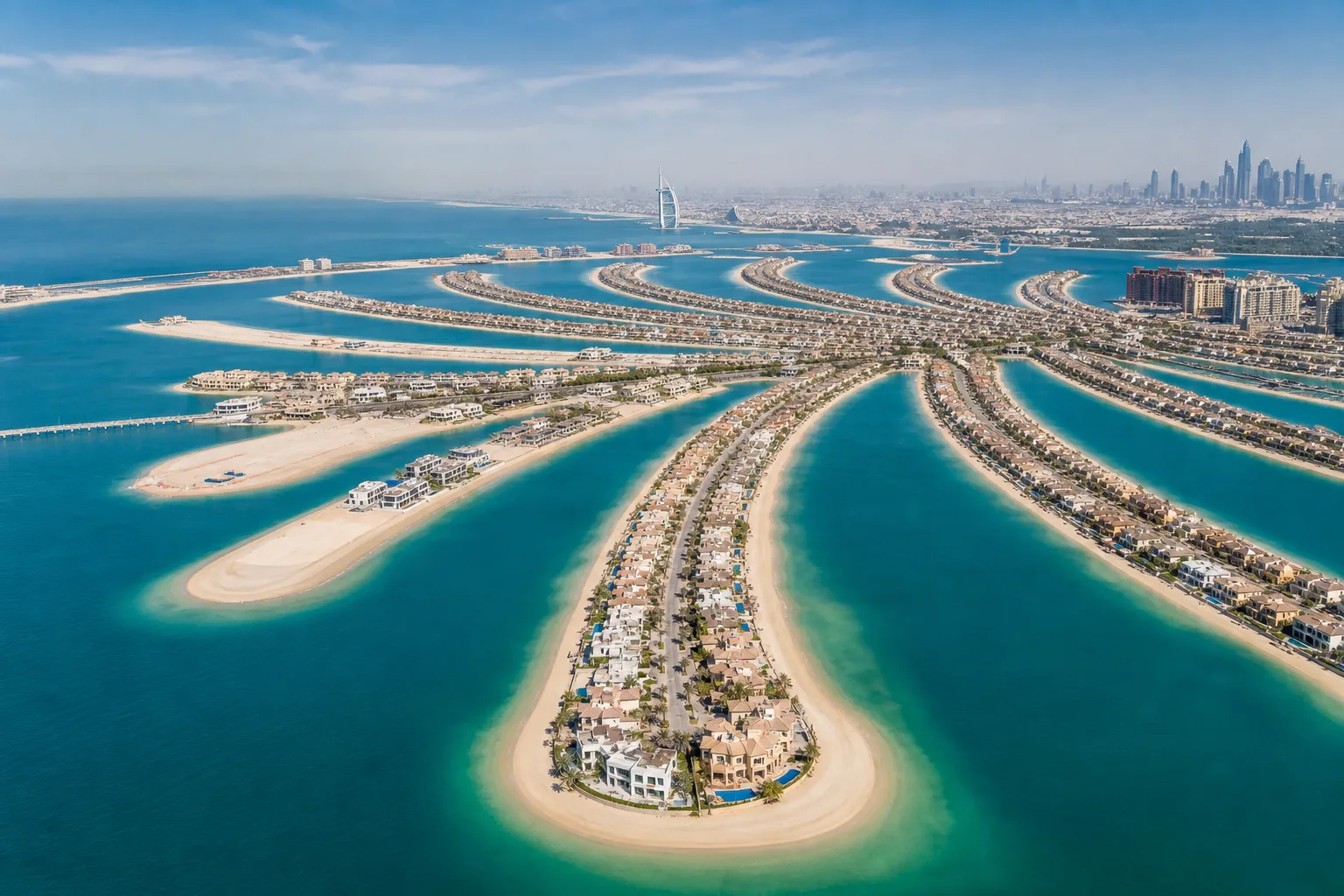
Palm Jumeirah sells at 4,336 AED/sqft for a calculated gross yield of 4.5%, Business Bay at 2,445 AED/sqft for 5.8%, and Downtown Dubai at 3,454 AED/sqft for 5.6%, according to Bayut data. What you pay extra for is liquidity: these properties resell quickly, to a deep international clientele.
The caveat is twofold: a five-year rise below that of emerging areas, and a more contained yield, particularly at Palm Jumeirah with 4.5%. The details for each address appear in our dedicated guides to Palm Jumeirah, Downtown Dubai and Business Bay.
Summary table: prices, 5-year change and yield of the areas that appreciate
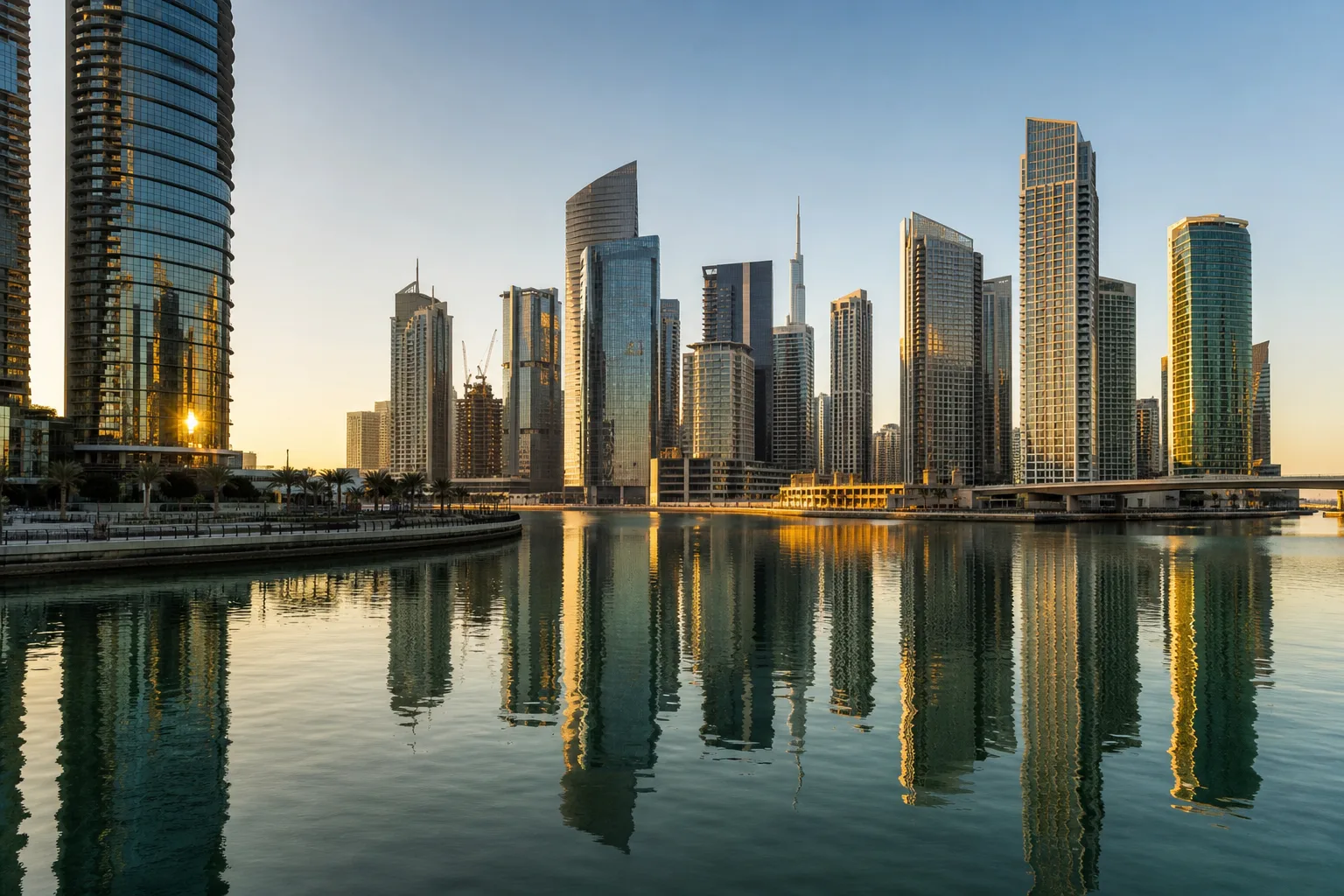
This table brings together each area mentioned with its price per square foot, its change over 12, 36 and 60 months, its rent and its calculated gross yield, all according to Bayut data. It also highlights outsiders worth watching.
| Area | Price AED/sqft | 12 months | 36 months | 60 months | Rent AED/sqft/yr | Gross yield |
|---|---|---|---|---|---|---|
| Jumeirah Garden City | 2,097 | +2.2% | +72% | +147.6% | 100 | 4.8% |
| Dubai Industrial City | 1,331 | +5.6% | +87.3% | +132.1% | 70 | 5.3% |
| Dubailand Residence Complex | 1,277 | +3.4% | +61% | +110.9% | 81 | 6.3% |
| Dubai Silicon Oasis | 1,370 | +5.7% | +77.7% | +108.9% | 86 | 6.3% |
| Dubai South | 1,440 | +2.7% | +55.7% | +87% | 74 | 5.1% |
| Palm Jumeirah | 4,336 | +1.7% | +23.2% | +69.1% | 196 | 4.5% |
| Business Bay | 2,445 | +0.9% | +22.9% | +64.9% | 143 | 5.8% |
| Damac Hills | 1,616 | +2.1% | +26.1% | +52.9% | 105 | 6.5% |
| Downtown Dubai | 3,454 | +1.7% | +23.9% | +51.9% | 194 | 5.6% |
| Bukadra | 2,215 | +12.2% | — | — | 67 | 3% |
Bukadra illustrates the recent surge: +12.2% over 12 months, but a yield of just 3%, according to Bayut data. Dubai South (+87% over 60 months) and Damac Hills (+52.9% over 60 months) show an appreciation that is already established.
To place each row in context, keep the market benchmarks in mind: median price 1,883 AED/sqft, median 12-month change +2.6% and median yield 5.6%, according to Bayut data (65 to 73 areas). The key read: a strong 60-month figure signals established appreciation, a strong 12-month figure a recent momentum still to be confirmed.
Which property types appreciate most in Dubai?
Apartments in tech districts have appreciated the most: Dubai Silicon Oasis posts +108.9% over 60 months, well ahead of villa communities such as Damac Hills (+52.9%, 1,616 AED/sqft) or the waterfront of Dubai Maritime City (+4.4% over 12 months, 2,785 AED/sqft), according to Bayut data. The affordable product acted as the engine, precisely because it started from a low price.
Featured
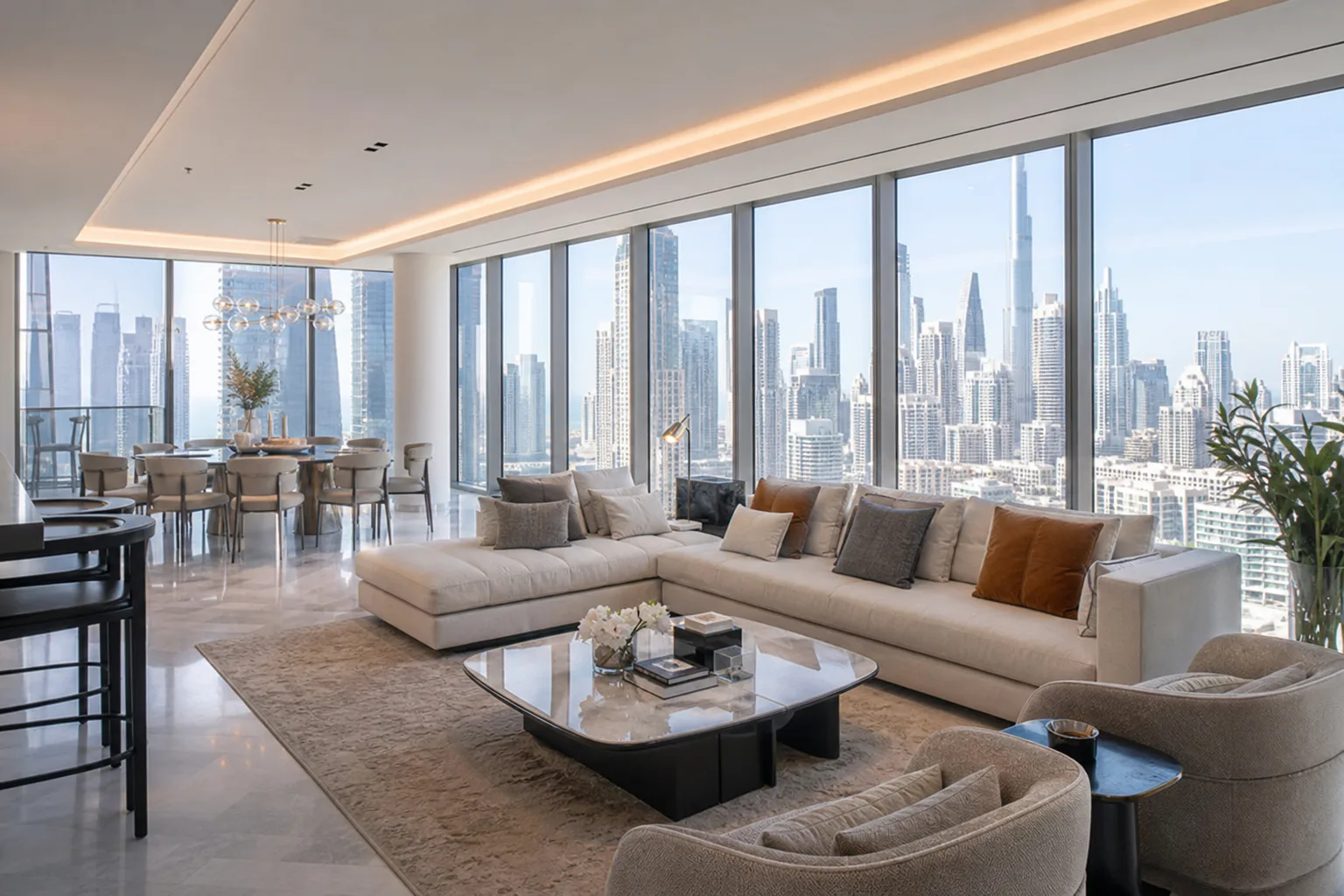
View projects: Lunaya
From AED 6,798,750
Hand-picked new properties with end-to-end expert support.
View projects
Off-plan often amplifies capital gains: you enter with a deposit of 5 to 20% of the price (often 10-20%) and a staged payment plan, with funds secured in a mandatory escrow account under RERA supervision (Dubai Land Department). The mechanics of staged payments and resale before completion are detailed in our guide off-plan step by step.
By way of examples from our catalogue: The Archive at Dubailand Residence Complex (handover September 2028), Breez at Dubai Maritime City (March 2029) and Damac District Tower A at Damac Hills (August 2029) cover these three product families.
How to choose based on your capital gains objective?
The choice comes down to pure capital gains versus capital gains paired with cash flow. For the former, you look towards Jumeirah Garden City or Dubai Industrial City, whose five-year rise far outstrips the rent. For the latter, Arjan (7.1%), Dubai Sports City (6.8%) and Dubai Science Park (6.6%) combine appreciation and yield, according to Bayut data.
Free resource
Get our investment guide
The essentials — strategy, taxation, steps — to download.
If the objective is wealth preservation and liquidity is the priority, premium addresses remain the right call despite a more modest five-year appreciation — you're paying for the depth of the resale market. On the ground, that's a trade-off I raise from the very first meeting.
Among my clients, the most common mistake is chasing the biggest five-year percentage without asking who they'll sell to. An area that has doubled but attracts only a handful of buyers is a paper gain.
— Ralph BERTUCCI, Consultant Manager
The tax lever amplifies everything: individuals pay no local tax on property capital gains (official UAE portal), and for a French tax resident double taxation is neutralised by a tax credit under the 1989 France-UAE treaty, according to the BOFiP. To go further, see our guides on buy-and-sell strategies, up-and-coming areas and rental yield, or the Dubai market page.
This article is part of our guide
Dubai Property Investment Guide for Foreign Buyers
About the author

Ralph BERTUCCI
Consultant Manager
With over 6 years of experience in real estate, notably as a property trader, Ralph is a key expert at Lucretia. His keen eye and attention to detail make him a valuable ally for investors in Dubai. Passionate about his profession, he puts his expertise at the service of his clients, offering strategic advice and guiding them toward the best opportunities on the market, while ensuring their profitability is maximized.