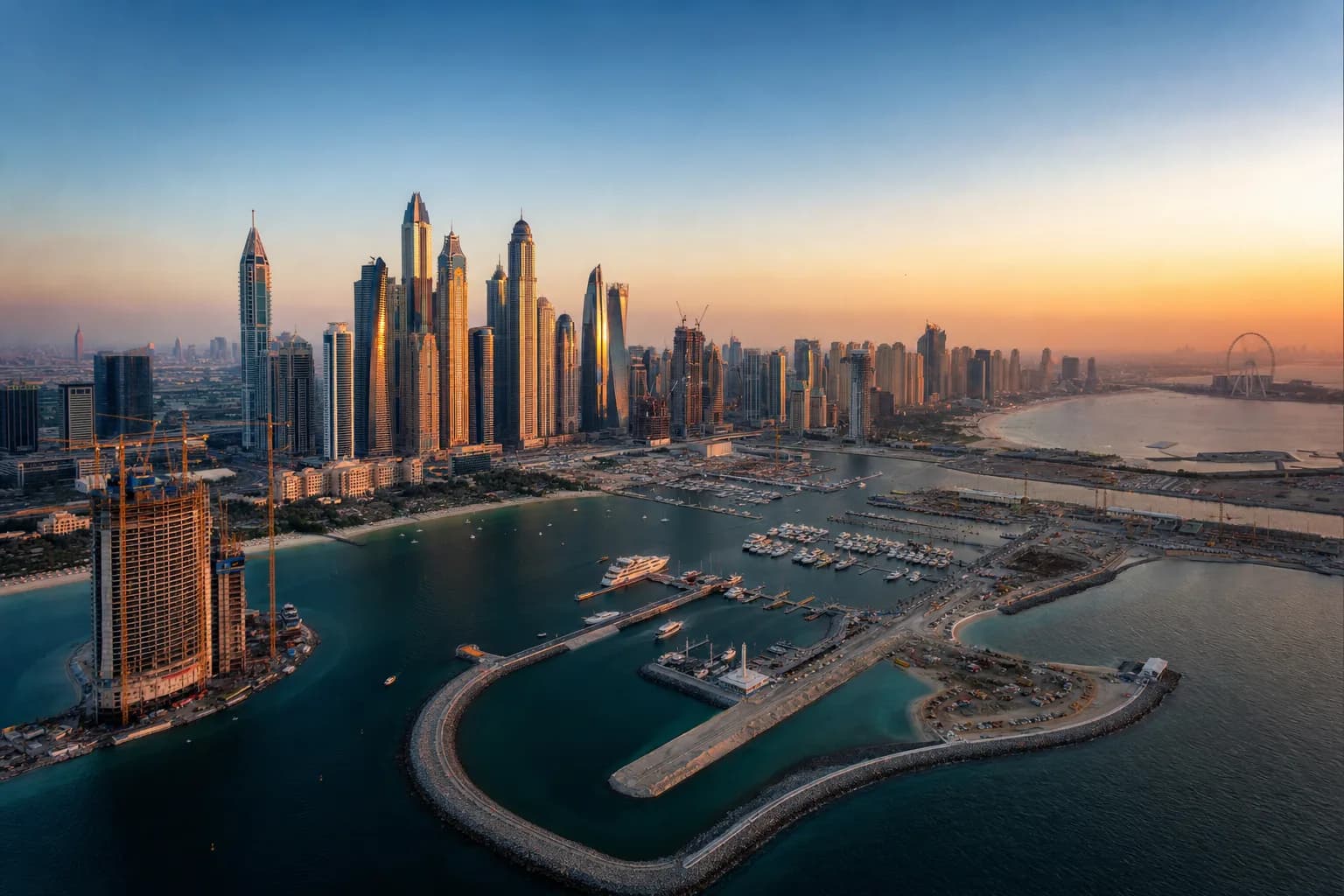
Mandatory escrow account, SPA delivery clause, DLD referral: what the law provides in Dubai when an off-plan project is delivered late.
On this page
- What concrete protections do you have if there's a delay?
- Worked example: what does a buyer recover on a late-delivered project?
- How to act in practice when the developer misses the date
- Why escrow and the RERA framework exist
- Choosing the developer: the best safeguard against delays
- Points to watch and pitfalls to avoid
When facing an off-plan handover delay in Dubai, your funds stay protected: Law No. 8 of 2007 requires a per-project escrow account, supervised by the Dubai Land Department, where deposited sums can only be used to build the specific property concerned. In practice, a developer cannot divert your deposit to another site, and a proven delay beyond the contractual grace period opens the door to well-defined remedies.
This safeguard changes the nature of the risk. The danger isn't losing your money — it's losing time: delayed rental yield, a postponed residency goal, cash tied up. Understanding the escrow mechanism, the SPA delivery clause and the right course of action lets you act quickly and wisely.
What concrete protections do you have if there's a delay?
Your first protection is the mandatory escrow account, required for every off-plan project by Law No. 8 of 2007 under RERA/DLD supervision (Dubai Land Department). The funds you pay are locked into this account and can only finance the construction of the project concerned — never another of the developer's sites.
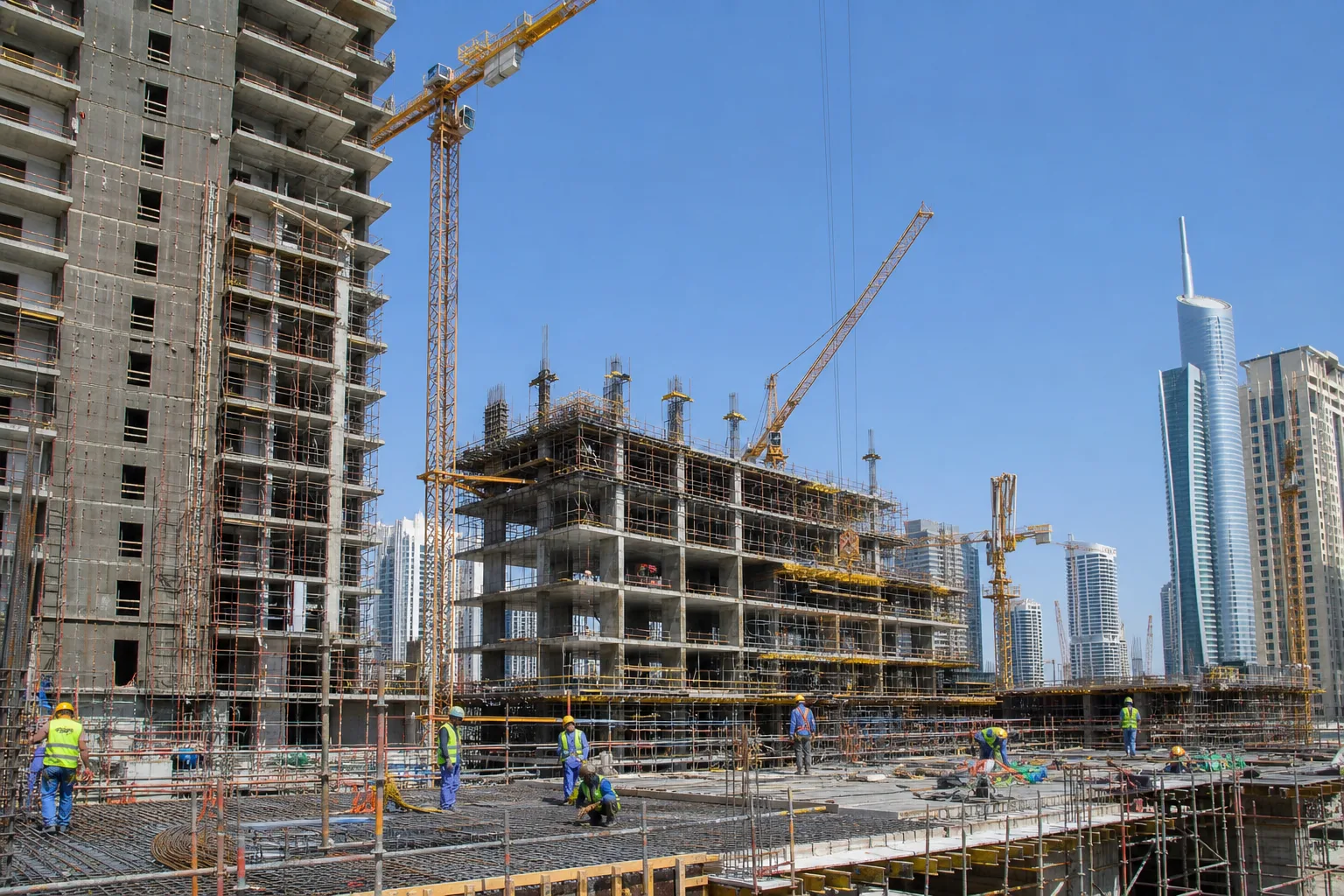
The second protection is contractual. The SPA sets a delivery date and provides for a grace period, often 12 months, beyond which the delay becomes actionable. Even before the final title deed, the Oqood registration at the DLD secures your right to the property.
Once the grace period has passed, three remedies open up in the event of a proven delay:
- Formal notice to the developer in writing, which opens the file and starts the clock.
- Referral to RERA/DLD, the regulator that can audit the project and freeze the escrow account.
- Cancellation action with a refund of the sums held in escrow.
The off-plan deposit, typically 5 to 20% of the price (often 10-20%), is precisely what sits in this regulated account. It ensures your money is traceable and refundable if the project is cancelled — but it doesn't automatically turn into compensation. How the instalments work is detailed in our guide to payment plans.
Worked example: what does a buyer recover on a late-delivered project?
If a delayed project is cancelled, the buyer recovers the full amount held in escrow — but not the registration fees already paid to the state. Let's take a real project from our portfolio to put numbers on it.

At ALDER - Parkfive, developed by Deyaar Development in Dubai Production City, prices start at AED 1.8M for a handover announced for December 2027. Let's imagine an overrun that goes beyond the grace period and ends in cancellation.
| Item | Amount on a AED 1.8M ticket | Status if cancelled |
|---|---|---|
| 20% deposit (Law No. 8 of 2007) | AED 360,000 | Refundable (escrow) |
| Interim instalments already called | Depending on progress | Refundable (escrow) |
| DLD transfer fee (4%) | AED 72,000 | Non-refundable |
| Fixed fees (title deed, plan, trustee office) | ~AED 4,700 to 5,500 | Non-refundable |
What is refundable
The 10 to 20% deposit, plus all instalments already called, are secured in escrow (Law No. 8 of 2007). On a AED 1.8M ticket, a 20% deposit represents AED 360,000 already protected, on top of the interim payments made as construction progresses.
What isn't
The fees paid at registration remain your cost, even in the event of a refund:
- The 4% DLD transfer fee, i.e. AED 72,000 on a AED 1.8M property.
- The off-plan title deed (~AED 40), the plan fee (~AED 250) and the trustee office (~AED 4,000-4,200), i.e. fixed fees of around AED 4,700 to 5,500.
The decisive lever is the payment plan. Draw a clear line between sums already paid — locked in escrow and refundable — and future instalments, which you don't have to honour until construction progress justifies them. This mechanism is detailed in our payment plan guide.
How to act in practice when the developer misses the date
As soon as a developer misses the delivery date beyond the grace period, the process starts with documenting the delay, then referring the matter to the regulator with the right supporting documents. RERA/DLD supervision of escrow accounts (Law No. 8 of 2007) is the central lever of the procedure.

A project in mind?
Talk to a Lucretia adviser
Tailored guidance, no obligation.
The steps
- Document the real state of the site (photos, progress, correspondence) to establish the reality of the delay.
- Notify the developer in writing, backed by a formal notice, referencing the SPA delivery clause.
- Refer to RERA/DLD, attaching the SPA and the Oqood, which prove your right and the developer's commitments.
The regulator has real arbitration powers: freezing the escrow account, auditing the project, then deciding whether to continue or cancel. There are three possible outcomes:
- Construction resumes with a new validated schedule.
- The project is transferred to another developer to complete it.
- Full refund of the funds via escrow if the project is halted.
A non-resident buyer doesn't need to travel: they can appoint a representative through a power of attorney and manage everything remotely, just as with the purchase itself. Our guide on buying remotely sets out this arrangement.
What I keep telling my clients: a delay is managed with a file, not with anxiety. Those who have archived their SPA, their Oqood and every proof of payment get results far faster than those who discover they've filed nothing.
— Jean-Pierre MARTINI, Director of Technology & Innovation
Why escrow and the RERA framework exist
The founding principle fits in one sentence: Law No. 8 of 2007 requires a per-project escrow account to prevent any diversion of buyer funds, under the supervision of the Dubai Land Department. Money from one project cannot fund another — each site has its own vault.

This framework was born of market necessity. Freehold ownership has been open to foreigners in designated areas since 2002, and off-plan holds a central place there. Securing funds paid ahead of construction was the condition for attracting international buyers with confidence.
The link with the payment plan is direct: each instalment is only released from escrow according to real construction progress, certified by the regulator. That's what protects your milestone — you don't pay for a wall that doesn't exist.
Choosing the developer: the best safeguard against delays
The real safeguard against delay is decided before the purchase, in the choice of developer. An established operator with a track record of on-time deliveries mechanically reduces the risk of slippage compared with an emerging player with no track record.
Our portfolio reflects this diversity: Emaar Properties (14 projects listed), DAMAC Properties (17), Binghatti Developers (13) and Danube Properties (8) sit alongside younger developers. We list 91 developers and track their deliveries.
Reading the schedule realistically is decisive. Deliveries in our portfolio range from 2019 to 2031: on a complex project, a date set too close is often the first sign of a delay to come.
- Binghatti Hills, in Dubai Science Park, announced for June 2026: a near horizon to weigh against real progress.
- Six Senses Residences, developed by Select Group in Dubai Marina, delivery scheduled for July 2028: a longer timeline for a premium project.
The full method — guarantees, RERA status, track record — is detailed in our dedicated guide on how to check a Dubai developer's reliability.
Points to watch and pitfalls to avoid
The main pitfall is confusing contractual tolerance with a breach: a delay only opens rights once the grace period has passed. Here are the five mistakes that cost buyers the most.
Featured
View projects: DWTN Residences
From AED 2,271,477
Hand-picked new properties with end-to-end expert support.
View projects
- Assuming a breach too soon. The grace period, often 12 months, is set out in the SPA: read the clause precisely before firing off a formal notice.
- Paying instalments blindly. If the site is at a standstill, don't release an instalment: the payment plan must follow construction progress, as our payment plan guide reminds you.
- Forgetting the non-refundable fees. Even if refunded via escrow, you won't recover the registration fees already paid to the state.
- Underestimating the wealth impact. A delay can push back a Golden Visa goal (AED 2M threshold) or delay the start of the expected rental yield.
- Expecting automatic compensation. Escrow secures your capital; it doesn't compensate lost income. Any penalty depends on the wording of the SPA, not the law.
To frame your first investment, our overview of the Dubai market brings together the essential entry points.
This article is part of our guide
Dubai Property Investment Guide for Foreign Buyers
About the author

Jean-Pierre MARTINI
Director of Technology & Innovation
With over 15 years of experience in corporate strategy, marketing and project management, Jean-Pierre has helped dozens of companies with their business development across several industries. An entrepreneur by training, he founded and led several companies, ranging from specialized retail to innovative digital solutions. Since 2021, he has turned his focus to real estate and the Dubai market, advising investors on their wealth strategies. Currently at Lucretia, his role includes managing technological innovation, optimizing business processes, and developing team skills. He also ensures client follow-up and provides personalized strategic advice to investors.