RERA registration, escrow account, delivery track record: the method for identifying a reliable property developer in Dubai before buying off-plan.
On this page
- How do you recognise a reliable property developer in Dubai?
- Major or emerging developers: which ones do we list and what do they deliver?
- Guarantees and meeting deadlines: a worked example on a real off-plan project
- The developer defines the district: pairing signature and location
- What legal framework secures a purchase from a developer?
- Why developer reliability matters so much in Dubai
- Warning signs and pitfalls when choosing a developer
A reliable property developer in Dubai can be spotted by four verifiable markers: registration with the RERA and the DLD, a track record of completed projects, a dedicated escrow account for each off-plan development (mandatory since Law No. 8 of 2007) and a history of meeting announced deadlines. With off-plan, your deposit goes into that regulated escrow account, not into the developer's cash flow.
Buying off-plan means buying a promise: a property that doesn't yet exist, paid for in stages over several years. The strength of whoever builds it becomes the first line of safety. We track the deliveries of 80 active developers, and our support always starts with this check.
How do you recognise a reliable property developer in Dubai?
A reliable property developer in Dubai is registered with the RERA and the Dubai Land Department, places every off-plan project in a dedicated escrow account, shows a verifiable delivery history and meets its announced deadlines. These four criteria can all be checked upfront, before you pay anything.
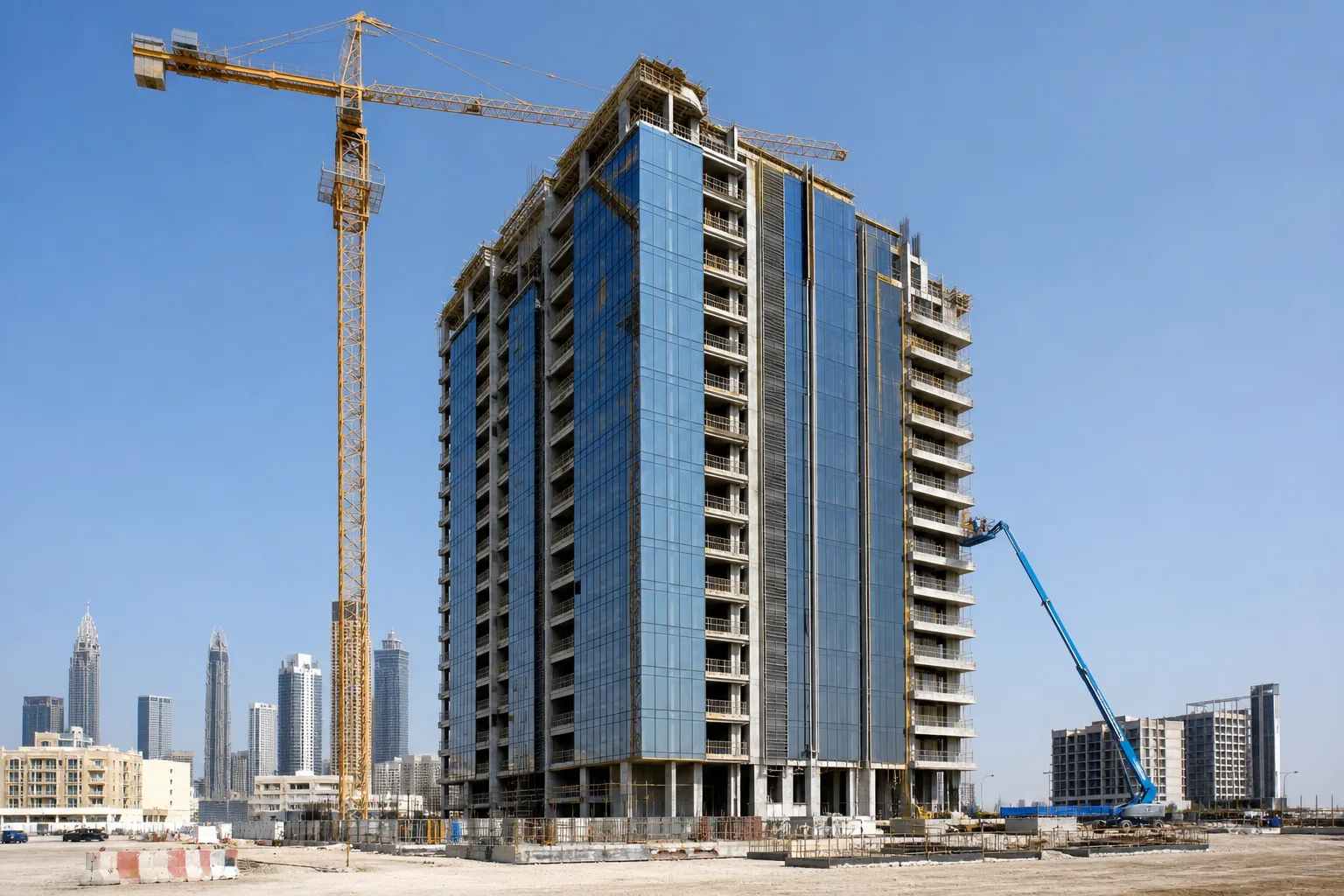
The regulatory framework works in your favour. Escrow accounts have been mandatory for every off-plan project since Law No. 8 of 2007, under RERA and DLD supervision. Your deposit — 5 to 20% of the price, often 10 to 20% — is placed in that account rather than handed directly to the developer; some developments first require a fixed booking of AED 20,000 to 100,000 before the SPA is signed.
The concrete checks to carry out
- The developer: look up its registration with the DLD and the RERA.
- The project: check its Oqood registration number, its completion percentage and the existence of a dedicated escrow account.
- The track record: read past and upcoming deliveries on the developer's profile.
Our profiles give you this reading at a glance: each developer shows its past and upcoming deliveries, across a catalogue of 229 projects and 80 active developers. For the full booking → SPA → Oqood → handover sequence, our guide on buying off-plan step by step covers every phase.
Major or emerging developers: which ones do we list and what do they deliver?
Among the developers we list are 80 active players, from major institutional names to niche signatures. This overview reflects our catalogue, not the entire Dubai market.
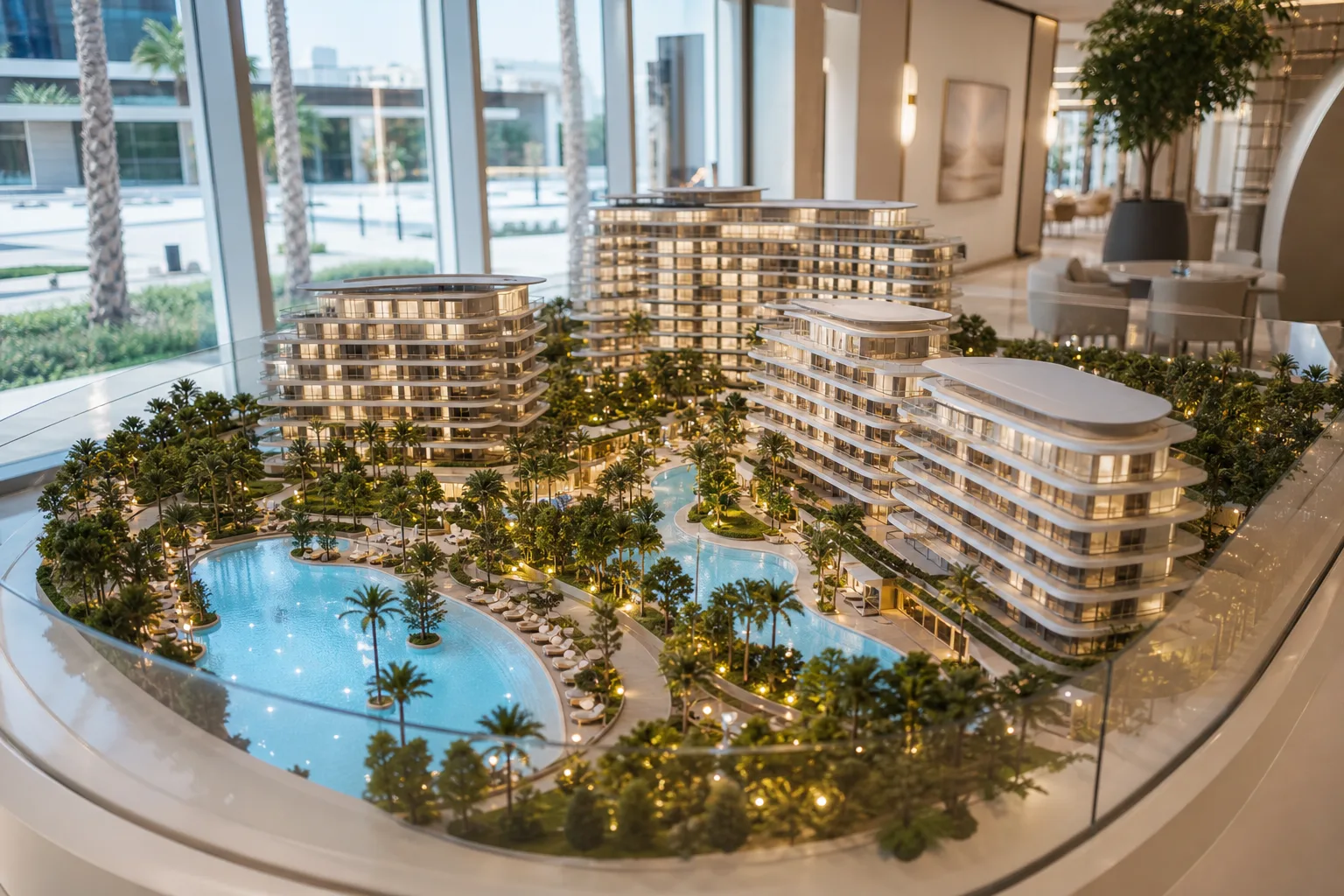
The most present in our catalogue are Imtiaz Developments (19 projects), DAMAC Properties (17), Emaar Properties (14), Binghatti Developers (13) and GFS Developments (10). These volumes reflect sustained activity and a steady flow of launches. To weigh these signatures against one another by objective, our guide comparing Dubai's major developers sets out where each one stands.
Premium and niche segments are covered too: Beyond by Omniyat, Ellington Properties, Meraas and Danube Properties each have 8 published projects, alongside Sobha Realty and Select Group.
To explore the full picture, our developer directory brings together every player we track.
Guarantees and meeting deadlines: a worked example on a real off-plan project
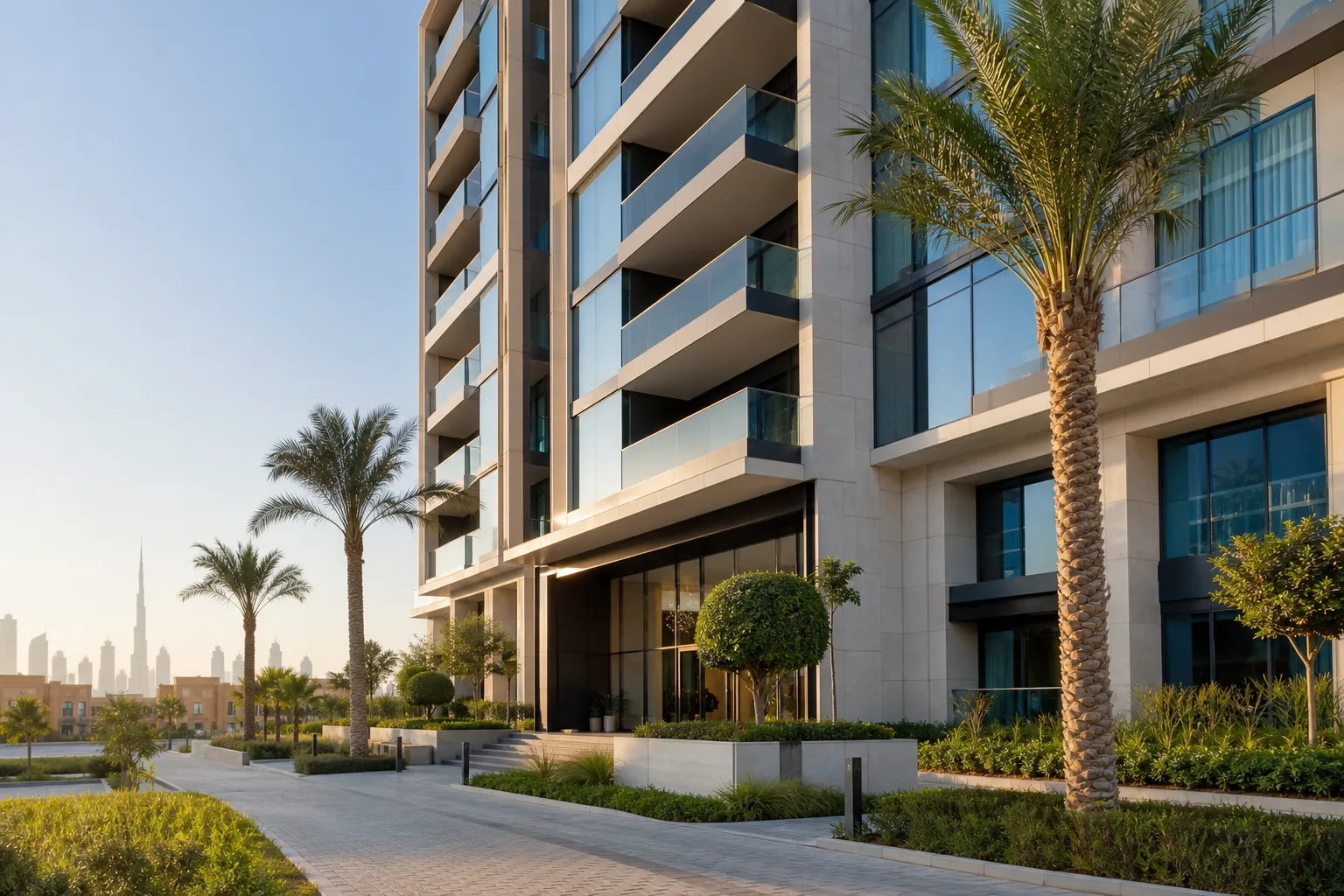
On a project like The Archive (Imtiaz Developments, in Dubailand Residence Complex), listed from AED 700,000 with handover in September 2028, payment is split between a booking, a deposit and instalments, all passing through the project's escrow account.
Free resource
Get our investment guide
The essentials — strategy, taxation, steps — to download.
On this AED 700,000 entry ticket, a 20% deposit amounts to AED 140,000 paid into the RERA-regulated escrow at booking; the following instalments track the pace of construction.
Reading a handover date as a commitment
The announced windows vary widely from one development to the next: Binghatti Hills targeted for June 2026, Canal Heights for June 2027, Damac District Tower A for August 2029. A handover date isn't a slogan: it's a commitment to weigh against the developer's track record.
During construction, the interim title deed (Oqood) registered with the DLD secures your purchase, as our off-plan guide explains. On financing, the CBUAE caps off-plan lending at 50% for resident expatriates (a 50% down payment); a non-resident obtains 50 to 75% in practice depending on the bank — a topic covered in detail in our guide on financing a purchase in Dubai. In the event of a delay or abandonment, the RERA escrow governs the funds, and the SPA delivery clause plus a possible DLD referral frame your recourse: our guide on off-plan delivery delays and buyer protections sets out exactly what the law provides when a project is handed over late.
The developer defines the district: pairing signature and location
Every developer has its own playing field, and the district shapes both yield and appreciation. Emaar illustrates this link: present in Dubai Creek Harbour (AED 2,584/sq ft, calculated gross yield 6.3%) and in Dubai Hills (AED 2,529/sq ft, 6.2%), according to Bayut data.
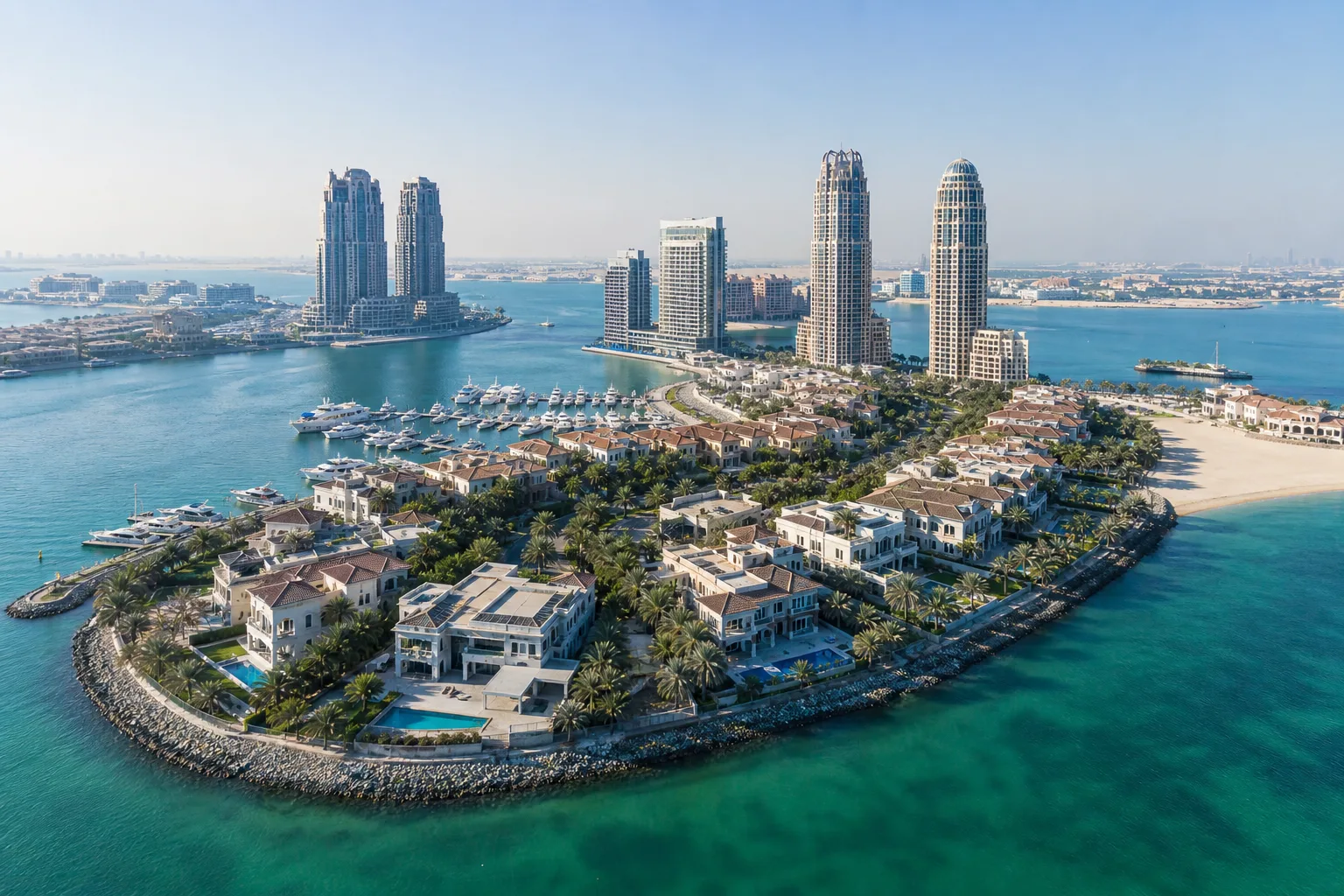
DAMAC is rooted in Damac Hills (AED 1,616/sq ft, calculated gross yield 6.5%, Bayut data) and in Business Bay (AED 2,445/sq ft, 5.8%, Bayut data), two very different profiles between community villas and urban towers.
Binghatti and Danube focus on yield-driven districts: Business Bay, but also Dubai Sports City (AED 1,318/sq ft, calculated gross yield 6.8%, Bayut data) and Dubai Silicon Oasis (AED 1,370/sq ft, 6.3%, Bayut data).
Recognising a developer's signature already tells you the kind of location it offers. To build your decision matrix by objective, lean on our guide on where to invest in Dubai.
What legal framework secures a purchase from a developer?
Freehold ownership has been open to foreigners in Dubai's designated zones since 2002, according to the Dubai Land Department. This framework, detailed in our guide on the legal framework of ownership, gives the owner a full and transferable title.

Beyond the price advertised by the developer, a few costs need to be budgeted for:
| Item | Amount |
|---|---|
| DLD transfer fee | 4% of the price |
| Fixed administrative fees | ~AED 4,700 to 5,500 |
| Agency commission (off-plan from the developer) | Usually none on the buyer's side |
On the holding side, the tax position is clean: 0% tax on rental income and capital gains for individuals, and the 5% VAT (Federal Tax Authority) does not apply to residential property. Our guide on property taxation in Dubai covers it all.
Finally, the AED 2,000,000 property investment threshold opens the door to the 10-year Golden Visa: an objective that can shape the choice of project and developer, as our guide on the Golden Visa through property explains.
Why developer reliability matters so much in Dubai
Dubai launches a lot, fast: our catalogue lists 229 projects with deliveries staggered from 2019 to 2031. This volume makes filtering developers essential — the more new supply there is, the wider the gap grows between those who deliver and those who disappoint.
Featured
View projects: Artistry Residences
From AED 2,347,000
Hand-picked new properties with end-to-end expert support.
View projects
Regulation frames the process but doesn't excuse you from checking. The RERA and the DLD require escrow and publish a service charge index through the Mollak system, where annual charges range from AED 3 to 30/sq ft/year depending on the type of property. This safety net protects the funds but does not replace your own due diligence on the builder.
Among my clients, the most common mistake isn't choosing the wrong district: it's signing with a developer on the sole strength of a 3D render, without ever opening its record of past deliveries.
— Jean-Pierre MARTINI, Director of Technology & Innovation
The market rewards well-developed areas, with a median gross yield of 5.6% across 65 districts, a context analysed in our guide on the Dubai property market. The trap of a poor developer choice is covered in our guide on mistakes to avoid.
Warning signs and pitfalls when choosing a developer
The first instinct: be wary of a headline price that doesn't fit the district. A price that is abnormally low relative to the area's per-square-foot rates often signals faulty data or misleading marketing — always worth checking before going any further.
We have a direct example in our own data: the project Dubai Harbour Residences shows a starting price that is clearly aberrant, which we exclude from all our aggregates. We therefore quote no price for this development until the data has been verified.
The right checking reflexes
- Compare the price to the district: a square foot well below the area average should raise a flag, not tempt you.
- Verify the project's registration: a development with no Oqood number or escrow account offers no protection.
- Cross-check the deadlines: compare the announced date with the developer's actual delivery history.
It's precisely this cross-checking — price, registration, track record — that we carry out for every file. Our advisory service covers this due diligence, from selecting the developer to handing over the keys.
In this guide
Articles in this guide
This article is part of our guide
Dubai Property Investment Guide for Foreign Buyers
About the author

Jean-Pierre MARTINI
Director of Technology & Innovation
With over 15 years of experience in corporate strategy, marketing and project management, Jean-Pierre has helped dozens of companies with their business development across several industries. An entrepreneur by training, he founded and led several companies, ranging from specialized retail to innovative digital solutions. Since 2021, he has turned his focus to real estate and the Dubai market, advising investors on their wealth strategies. Currently at Lucretia, his role includes managing technological innovation, optimizing business processes, and developing team skills. He also ensures client follow-up and provides personalized strategic advice to investors.