A Dubai off-plan payment plan spreads the price across the entire build, starting from a 5–20% deposit. How it works, a worked example and the pitfalls.
On this page
- How does a Dubai off-plan payment plan work?
- A worked example: what does an off-plan schedule actually look like?
- What are the points to watch and the pitfalls of instalment payment?
- Payment plan during construction or post-handover: which to choose?
- Why are instalment payments so widespread in Dubai?
- How does the payment plan vary by developer and project?
A Dubai off-plan payment plan is an instalment schedule offered by the developer that spreads the price of an under-construction property across the build, starting from a deposit of 5 to 20% of the price paid at reservation (often 10–20%), according to SBA/Grosvenor market sources. This mechanism lets you acquire an off-plan property without tying up your entire capital at once, paying in stages until you receive the keys — and sometimes beyond, with a post-handover plan.
It's one of the levers that make Dubai's new-build market so accessible to international investors. But you still need to read a schedule properly: what the deposit covers, how the instalments follow one another, which fees are added and which pitfalls await anyone committing over several years.
How does a Dubai off-plan payment plan work?
A Dubai off-plan payment plan is an instalment schedule offered by the developer for a property bought under construction, paid as the build progresses and separate from a bank loan. You aren't repaying a bank: you pay the developer directly, instalment after instalment, on a timetable set out in the contract. Bank financing remains a complementary option, with its own logic.

It all starts with a reservation deposit: 5 to 20% of the price, often 10–20%, sometimes preceded by a fixed booking fee of AED 20,000 to 100,000 before signing the SPA, according to SBA/Grosvenor market sources. This first payment secures the unit and sets the process in motion.
Next come the payment milestones. Two approaches coexist: the construction-linked plan tied to the build's progress, and the plan tied to fixed dates (time-linked).
In practice, a payment plan reads in three blocks, often summed up in a notation like 20/60/20 or 40/60. The first number is the reservation deposit, the second the total of instalments paid during construction, the last the share paid on handover — or spread out afterwards, if it's a post-handover plan. A 40/60 therefore means 40% during the works and 60% on handover; a 20/60/20 means a 20% deposit, 60% in construction instalments and 20% on delivery.
The payment plan is just one piece of the puzzle: for the full timeline, from booking to title deed, see our guide on buying off-plan step by step.
A worked example: what does an off-plan schedule actually look like?
An off-plan schedule starts with the deposit, then runs through intermediate instalments during the works and a balance on handover. Take a real project from our portfolio: Cove Boulevard, by Imtiaz Developments in Dubailand Residence Complex, from AED 1.9M, delivery June 2028.

On this AED 1.9M ticket, the 10 to 20% reservation deposit represents AED 190,000 to 380,000 (the SBA/Grosvenor range applied to the entry price from our fact base). The rest is then split into instalments during construction, through to the balance on handover in 2028.
To put the ticket in context, the sale price in Dubailand Residence Complex stands at AED 1,277/sq ft according to Bayut data (March 2026).
On the ground, I often see buyers focus on the deposit alone. My advice: unfold the whole schedule before signing, because it's the rhythm of the intermediate instalments, not the deposit, that really weighs on your cash flow.
An example of a post-handover plan
Some projects spread part of the price after delivery. That's the case with Bayz 102, a Danube Properties project in Business Bay, from AED 1.6M, delivery January 2030. In Business Bay, the sale price reaches AED 2,445/sq ft according to Bayut data (February 2026).
What are the points to watch and the pitfalls of instalment payment?
The first instinct: check that every payment flows through a mandatory escrow account. In Dubai, escrow is required for any off-plan project by Law No. 8 of 2007, under the supervision of RERA and the Dubai Land Department. Funds are released to the developer in instalments, as verified construction progresses — which protects the buyer if the project stalls.
Featured
View projects: Lunaya
From AED 6,798,750
Hand-picked new properties with end-to-end expert support.
View projects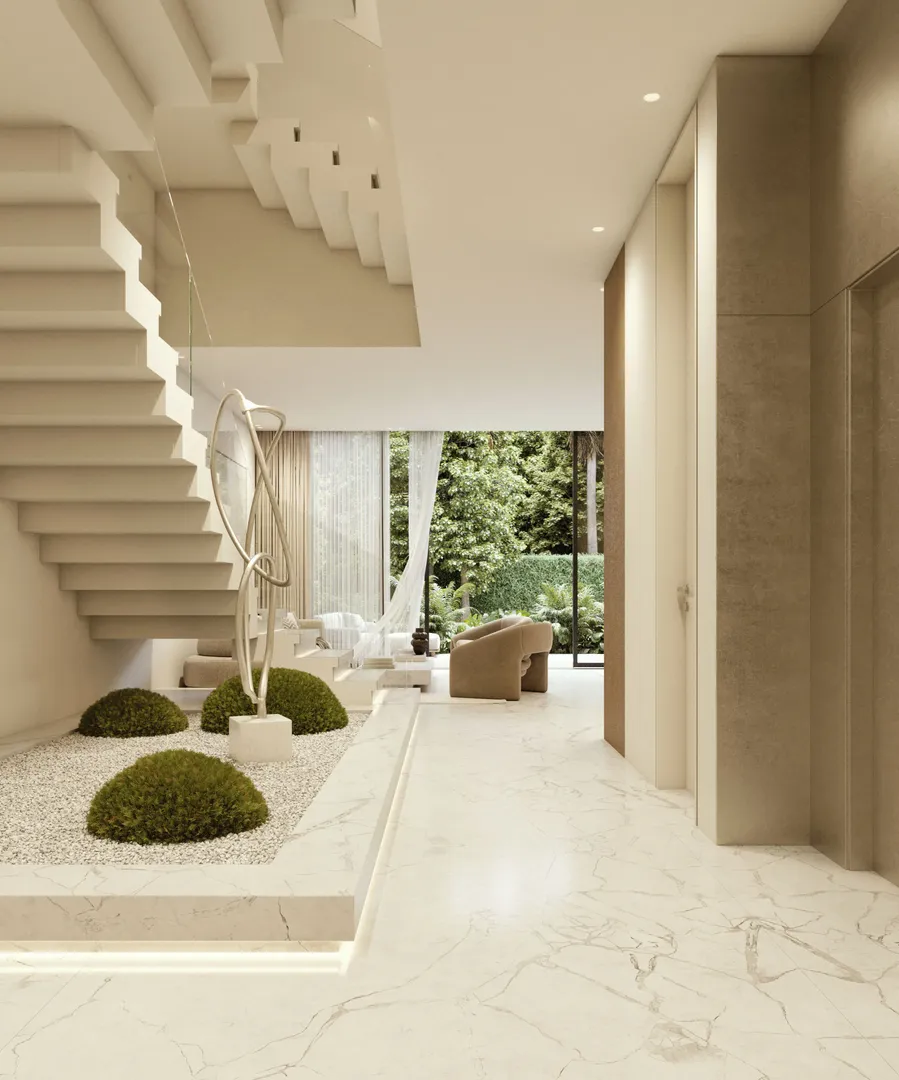
The very nature of the schedule changes your exposure. A construction-linked plan, tied to actual build progress, proves more reassuring: it slows down if the works slow down. A time-linked plan relies on fixed dates, to be honoured even if the build falls behind.
- Cash-flow gap: you fund the instalments without collecting any rent before delivery; the yield only arrives afterwards (see our guide on rental yields in Dubai).
- Post-handover that's too good: a plan spread far beyond delivery sometimes comes with an inflated price, or a resale (assignment) subject to the developer's conditions.
- Realistic delivery: you commit over several years; the developer's strength and the credibility of the date matter as much as the plan itself.
On that last point, our guide to choosing a reliable developer details the checks to carry out.
Payment plan during construction or post-handover: which to choose?
The choice is between a standard plan, where the price is settled 100% on delivery, and a post-handover plan, which spreads part of the price after the keys are handed over, once the property can be let. The latter ties up less capital at the critical moment.

Free resource
Get our investment guide
The essentials — strategy, taxation, steps — to download.
The post-handover lever is simple: you start collecting rent while you settle the final instalments. In Business Bay, the calculated gross yield comes to 5.8%, against 6.3% in Dubailand Residence Complex, according to Bayut data. This rent helps absorb the remaining payments.
The holding horizon varies widely depending on the delivery date. A project like Binghatti Skyrise in Business Bay is delivered in December 2026, while Bayz 102 runs until January 2030: between the two, your capital stays committed three years longer.
| Type | Price balance | Rent collected |
|---|---|---|
| Standard plan | 100% on delivery | After delivery |
| Post-handover plan | Spread after handover | While instalments are settled |
The payment plan can also be combined with a loan: the off-plan LTV cap is 50% for resident expats and stricter for non-residents, according to the CBUAE. The detail is in our guide on financing a purchase in Dubai.
Why are instalment payments so widespread in Dubai?
Instalment payment took hold because Dubai's legal framework allows and secures it. Since 2002, freehold ownership has been open to foreigners in designated zones, according to the Dubai Land Department, which makes off-plan directly accessible to non-residents.
The confidence comes from regulated escrow. By requiring funds to flow through a dedicated escrow account (Law No. 8 of 2007), Dubai enabled developers to sell off-plan while protecting the buyer — the essential condition for a large-scale instalment market.
Add to that an abundance of supply. We list 107 projects delivered by 80 active developers, with deliveries staggered from 2019 to 2031 according to our portfolio data: this competition pushes developers to offer ever more flexible plans.
Two factors complete the picture. The 0% tax rate for individuals strengthens the case for tying up capital over several years, a topic covered in our guide on Dubai property taxation. And the Golden Visa threshold, set at AED 2,000,000, remains attainable through an off-plan property paid in instalments.
How does the payment plan vary by developer and project?
Each developer builds its own schedule structures, and the gap from one player to another is real. In our portfolio, Emaar Properties has 14 projects, DAMAC Properties 17, Binghatti Developers 13 and Danube Properties 8 — that's as many distinct payment policies, between a lighter deposit, smoothed instalments or a generous post-handover.
A project in mind?
Talk to a Lucretia adviser
Tailored guidance, no obligation.
The entry ticket also shapes how accessible the schedule is. Affordable projects like Coventry Curve 2, by GFS Developments in Dubai Industrial City (from AED 500,000), or AUM 99 Residences in Dubailand Residence Complex (from AED 600,000), let you spread a modest amount of capital.
As a benchmark, the median ticket in our portfolio stands at AED 1.2M across 107 priced projects: that's the order of magnitude of the capital a schedule breaks up.
The type of property matters too — an apartment, a villa or a townhouse don't call for the same plan, a subject covered in our guide on which type of property to choose. Finally, always read the schedule against the delivery date: a project delivered in 2026 concentrates the payments over few years, while a 2029–2030 project spreads them further. Lucretia negotiates these payment plans directly with developers to secure the most favourable terms; our advisory services cover every step. For an overview of the market, see our page dedicated to Dubai.
This article is part of our guide
Dubai Property Investment Guide for Foreign Buyers
About the author

Léonard ARZOUNI
Real Estate Consultant
Léonard is a luxury real estate consultant with more than six years of experience in the high-end market. He is fluent in French and English and assists an international clientele in the acquisition and management of exceptional properties, both residential and investment-oriented. His expertise covers property valuation, portfolio management and strategic negotiation, enabling him to develop tailor-made solutions adapted to each client's wealth objectives. He is appreciated for his rigour and attention to detail. Outside of work, Léonard is passionate about contemporary art, collecting works by emerging artists. He is a curious traveller who loves discovering new cultures.