In a post published on 20 August 2026, Lucretia compares the buying journey in France and in Dubai: here, a passport, an email and a phone number are enough, with no need to travel.
On this page
In a post published on 20 August 2026 on our Instagram account @lucretia_immobilier, we compared two property-buying journeys: one in France, the other in Dubai. The point is simple and deliberately striking: while buying a home in France means dealing with a notary, a bank loan, a down payment, debt-to-income limits and a mortgage guarantee, entering the Dubai market comes down to three items — a copy of your passport, a phone number and an email address — and can be handled entirely from a distance.
@lucretia_immobilier · 20 August 2026
🇫🇷 vs 🇦🇪 — The contrast that says it all. To invest in France: a notary, a bank loan, a personal down payment, debt-to-income limits, a mortgage guarantee... the list goes on and on. To invest in Dubai: a passport, a phone number, an email address. And you don't even need to be there in person. Even from a distance, property investment has never been this simple. Got a project in mind? We're in the comments 👇 #Dubai #RealEstate #PropertyInvestment #DubaiRealEstate #ExpatLife
The key points
- In a post published on 20 August 2026 on its Instagram account, Lucretia compares the property-buying journey in France and in Dubai.
- In Dubai, a non-resident can acquire a property outright (freehold) in designated zones with no visa or residency in the United Arab Emirates.
- The basic documents needed to open a purchase file in Dubai come down to a copy of your passport, a phone number and an email address.
- The purchase can be completed remotely, notably through a Power of Attorney granted to an agent for the steps that require a physical presence.
- The registration of transactions and ownership falls under the Dubai Land Department (DLD).
Two radically different buying logics
The difference lies first in the role of credit and the notary. In France, becoming a homeowner most often goes through bank financing, with its train of conditions: a personal down payment, regulated debt-to-income limits, a guarantee and the mandatory involvement of a notary. In Dubai, the off-plan new-build market largely runs on payment schedules offered directly by the developer, which opens up investment without going through a bank.
As for access for foreigners, the framework is clear: a non-resident, of any nationality, can buy outright in freehold zones — Dubai Marina, Downtown Dubai, Palm Jumeirah or Business Bay, for example — without holding a UAE visa. It's this combination of simplified access and full, outright ownership that explains the contrast highlighted in our post. To place this market among others, our guide Investing in Dubai or Bali: which market for which profile helps you decide according to your goals.
Featured
View projects: DWTN Residences
From AED 2,271,477
Hand-picked new properties with end-to-end expert support.
View projects
Buying remotely: how it actually works
Almost the entire process can unfold without you ever setting foot in the Emirates. Reservation, sales contract and payments are all handled from a distance; viewings are done via virtual tour or video. The step that traditionally requires a physical presence — the visit to the trustee office of the Dubai Land Department for a completed property — can be delegated to an agent by means of a Power of Attorney.
Working remotely obviously doesn't remove the need for vigilance. Checking that the property really is in a freehold zone, verifying the developer's registration and the project's progress with the DLD, securing the payment flows: these are the checks that make the difference between a smooth purchase and a shaky file. Our guide Dubai property market: trends and outlook sets these choices within the market's current momentum.
What it changes for the investor
What this contrast changes for you is concrete: the barrier to entry isn't financial in the French sense of the term. Without imposed credit or a minimum regulatory down payment, an investor can position themselves on a new-build property via a developer payment schedule and steer the whole operation from Paris, Geneva or Singapore. On top of that comes a tax environment we detail in our guide Property taxation in Dubai: in Dubai, individuals pay no tax on rental income or on property capital gains.
Ease of access doesn't replace strategy. The choice of neighbourhood, developer and entry timing weighs on rental potential as much as on resale, and a remote purchase calls for a trusted partner on the ground for due diligence and DLD registration. This is precisely where we step in: local presence, access to often confidential opportunities and securing every step, from reservation to handover of the keys. To lay the foundations of your project, our page Investing in Dubai brings together the essentials.
A final word on method: the ease shown in our post is real, but it deserves to be framed by tailored guidance — ours doesn't replace personalised tax or legal advice, it dovetails it with your situation.
Source: Original post on Instagram (@lucretia_immobilier) — 20 August 2026
Free guide, delivered on WhatsApp
Get the guide "Investing in Dubai"
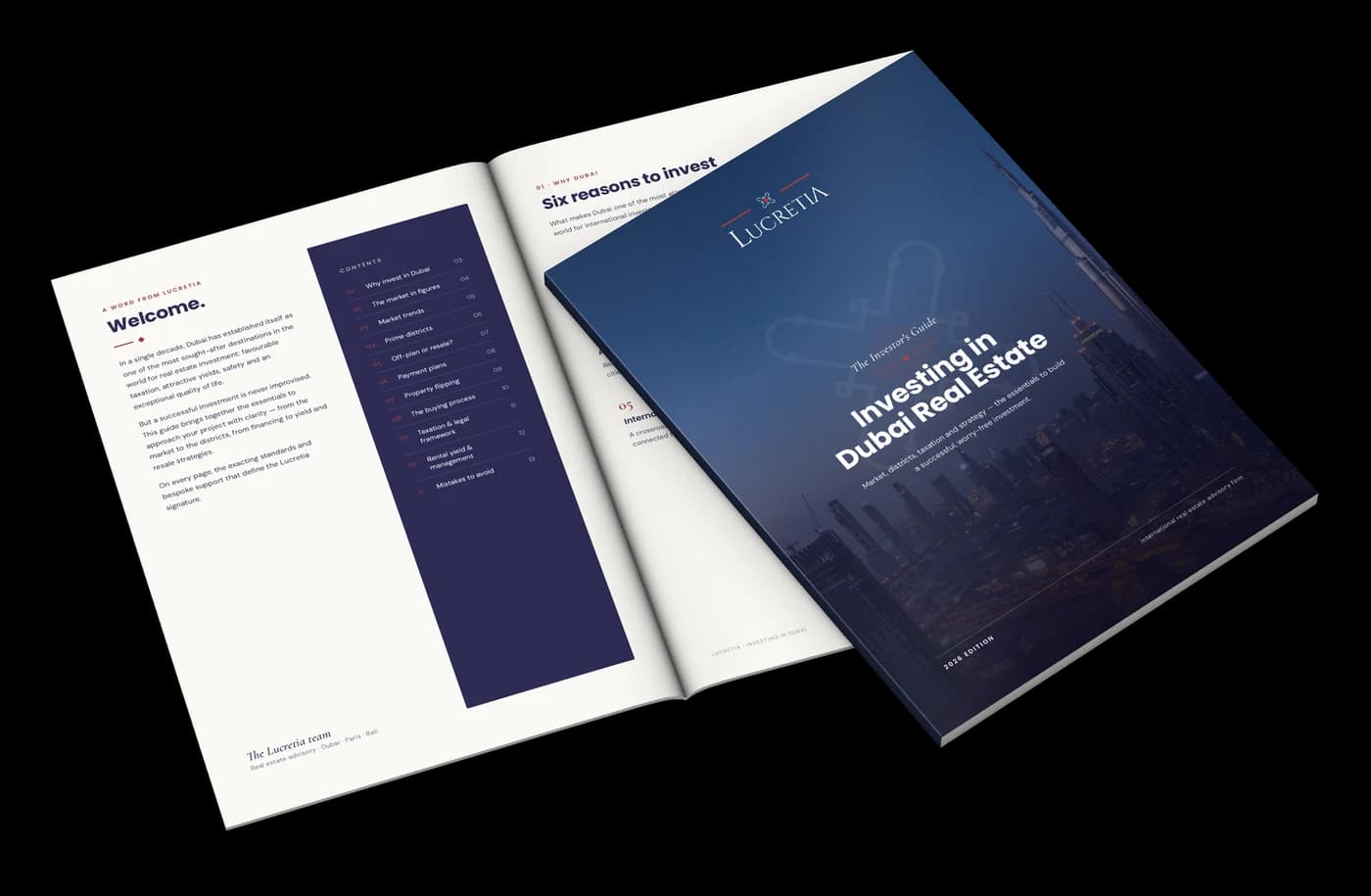
Taxation, visas, financing, buying steps: 14 pages written by our advisers, sent to your WhatsApp within minutes.
This article is part of our guide
Dubai Property Investment Guide for Foreign Buyers
About the author

Ralph BERTUCCI
Consultant Manager
With over 6 years of experience in real estate, notably as a property trader, Ralph is a key expert at Lucretia. His keen eye and attention to detail make him a valuable ally for investors in Dubai. Passionate about his profession, he puts his expertise at the service of his clients, offering strategic advice and guiding them toward the best opportunities on the market, while ensuring their profitability is maximized.