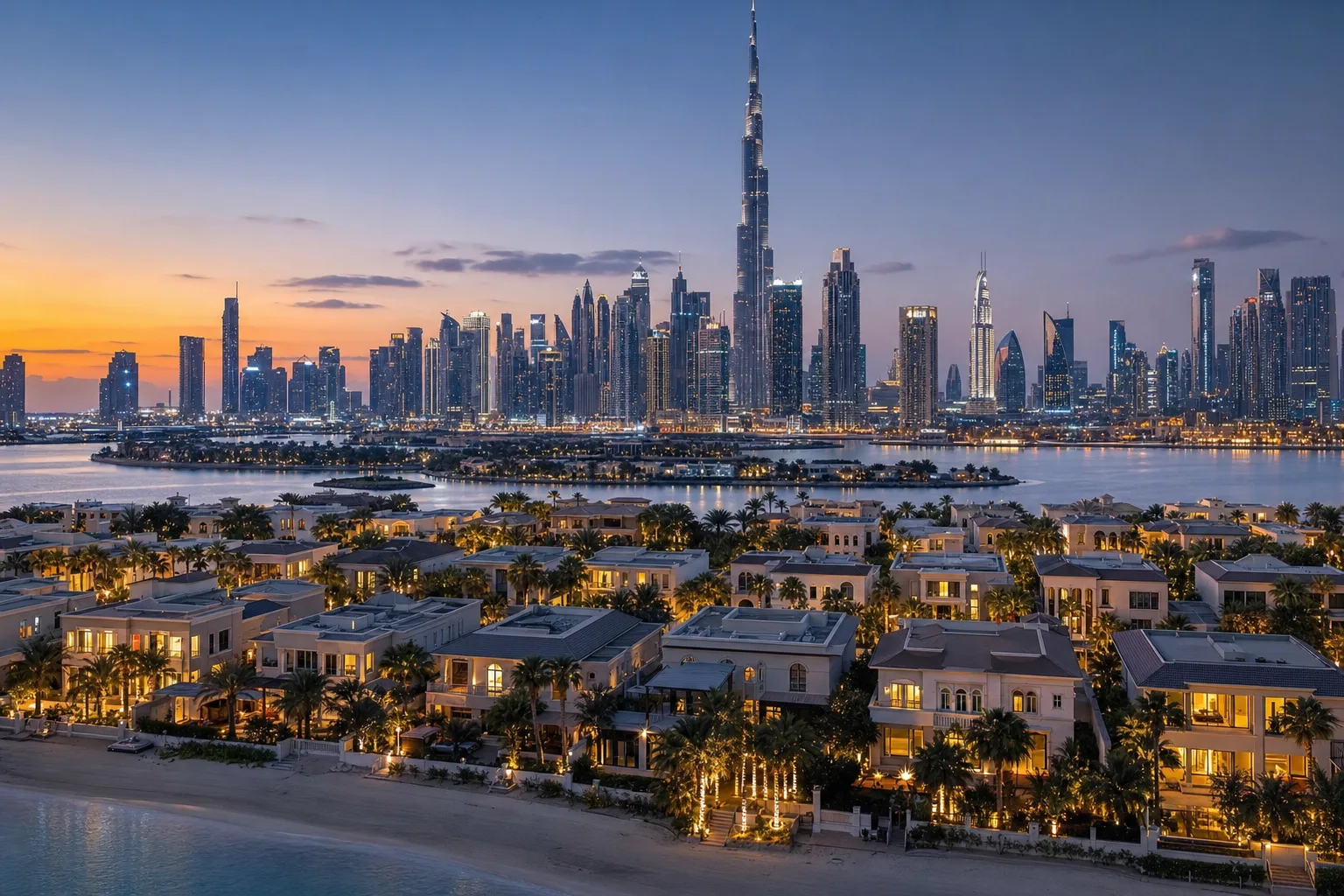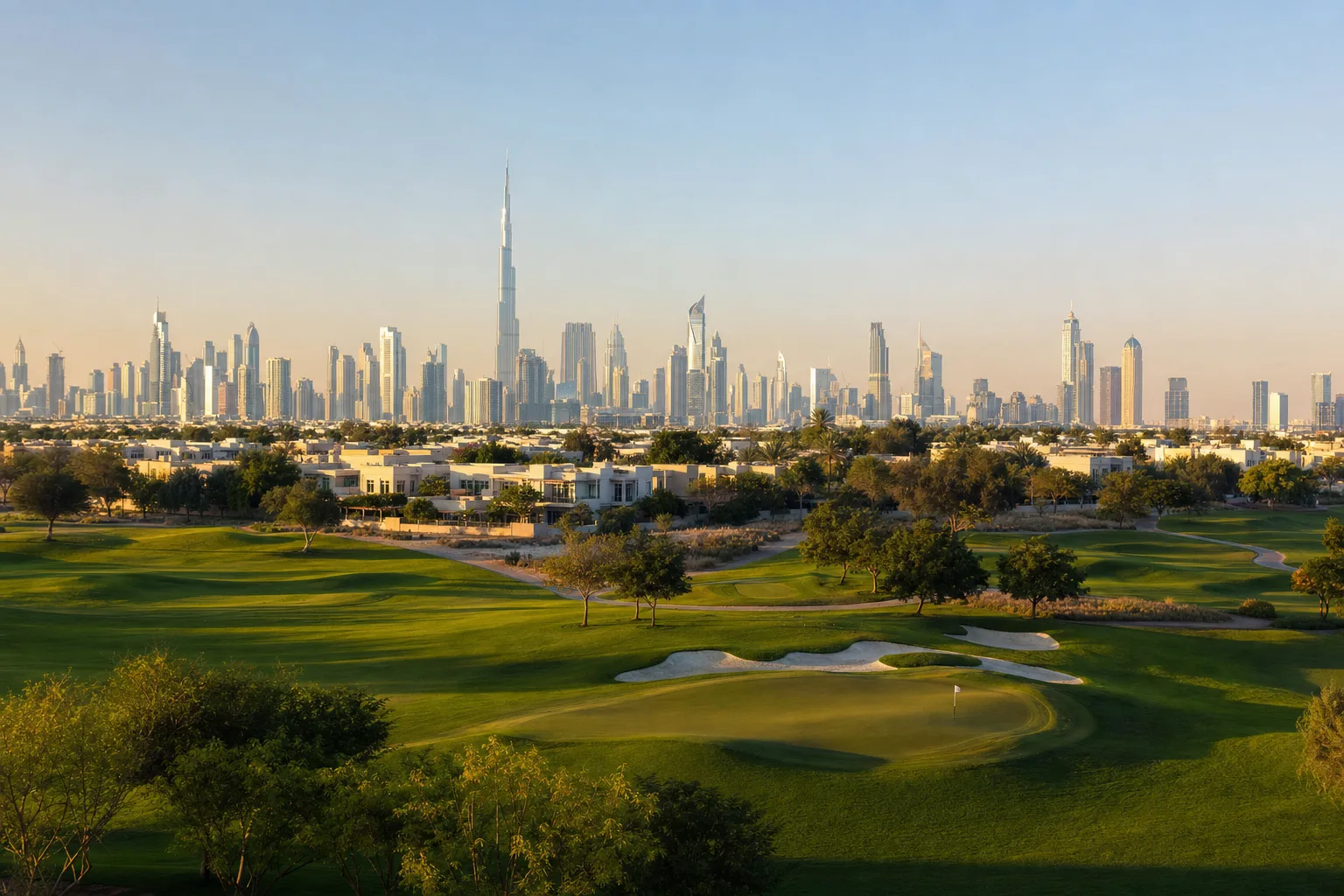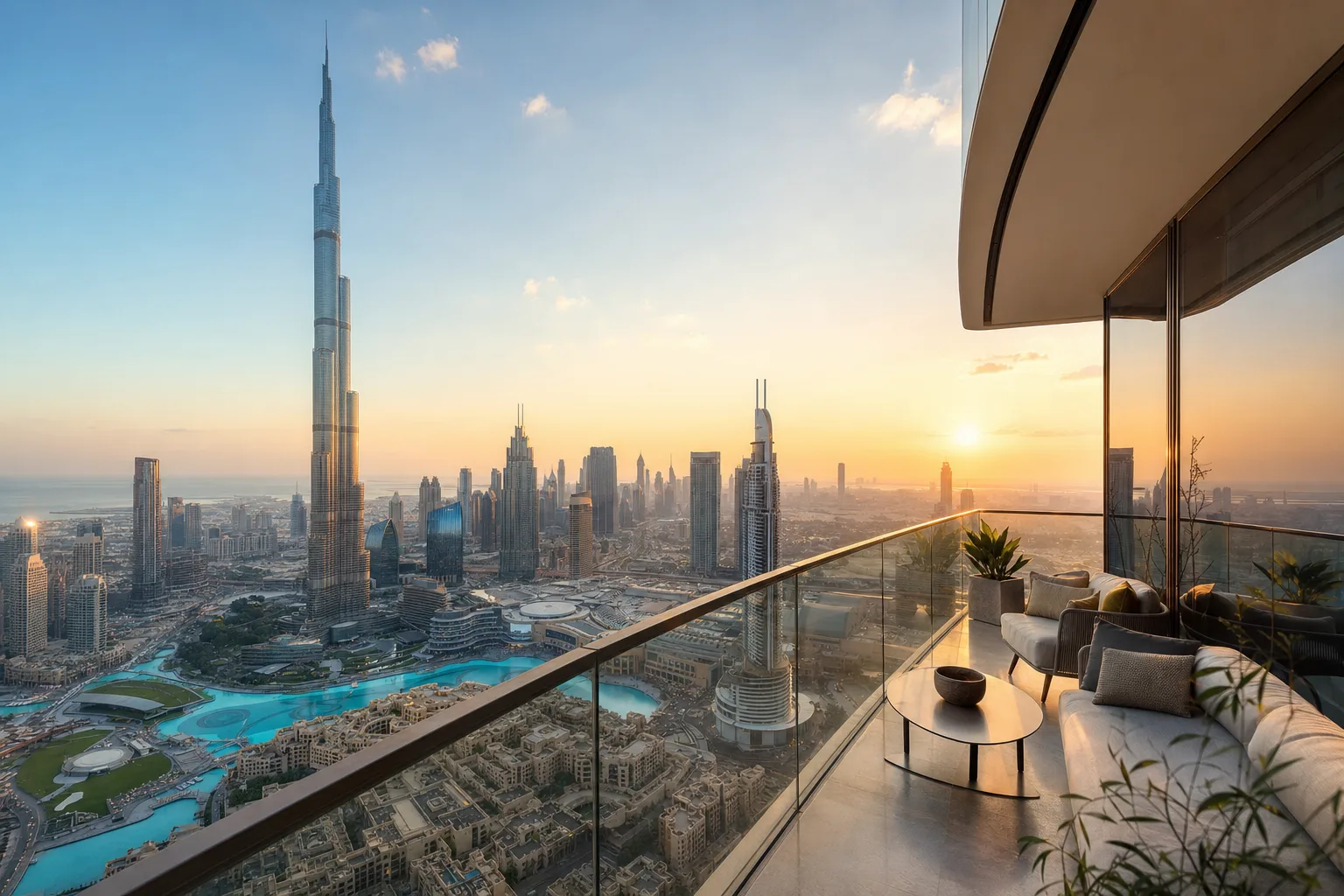
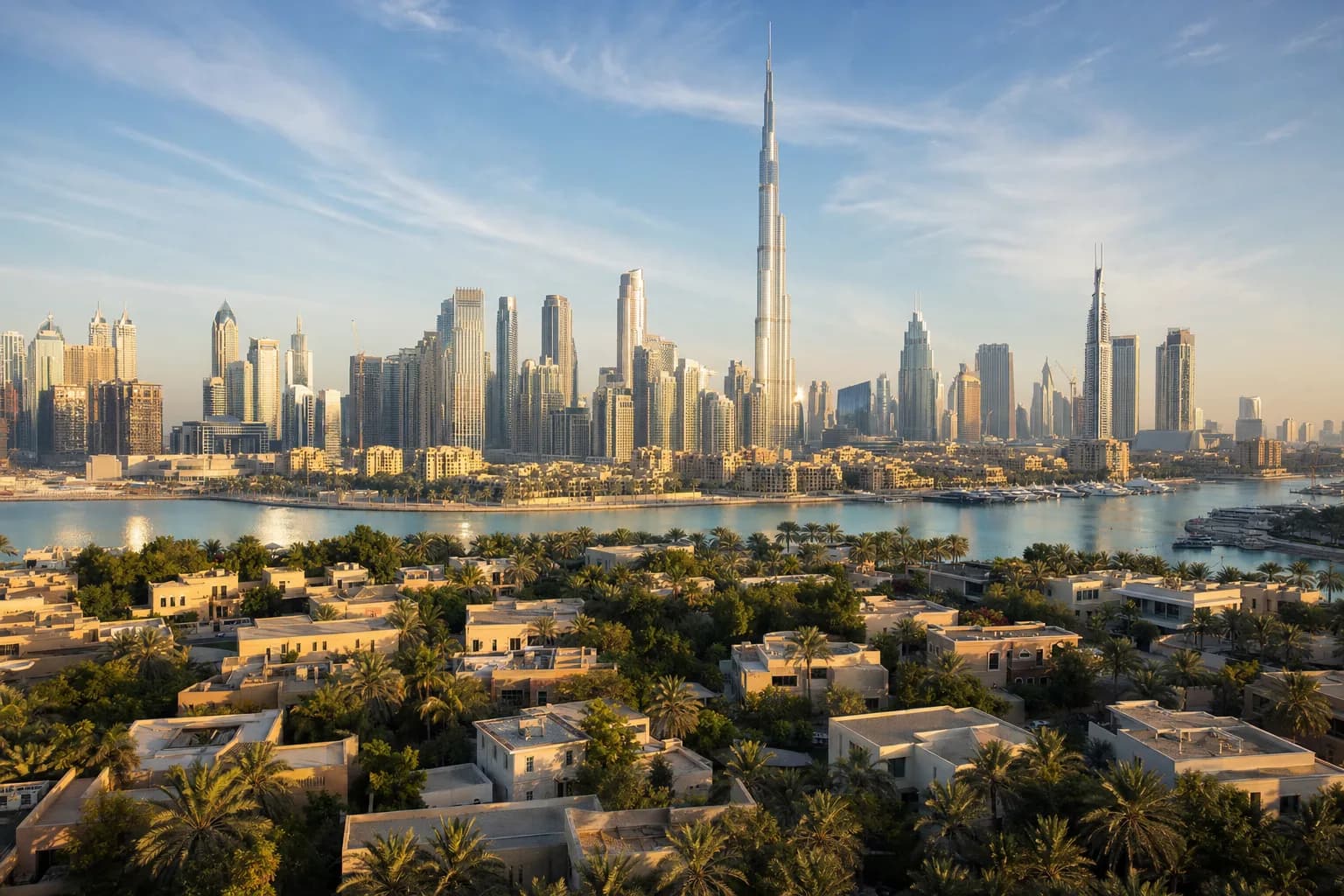
Legal security, freehold ownership and 0% tax tip the scales towards Dubai; the very low ticket and lifestyle bet draw investors to Bali, subject to a major reservation on ownership.
On this page
- Investing in Dubai vs Bali: the short answer for your profile
- Can you really own the property? Legal security and taxation compared
- Entry ticket and yield: which market puts your capital to work?
- Acquisition costs, running charges and financing: the real cost compared
- Residency, visa and holding horizon: what do you gain beyond yield?
- Which one should you choose for your profile?
Investing in Dubai versus Bali comes down first to a trade-off between title security and the lifestyle bet: in Dubai, freehold ownership has been open to foreigners in designated zones since 2002, and individuals pay no tax on rental income or capital gains (official UAE government portal); in Bali, a foreigner cannot own freehold and has to go through a leasehold arrangement. That divide shapes the entire decision.
We work with investors on both markets, and our role is never to crown a universal winner. This guide compares four decision criteria — ownership and taxation, entry ticket and yield, real cost, residency — then reaches a verdict by profile. In Dubai, the median market price stands at AED 1,883/sqft and the median gross yield at 5.6% according to Bayut data. If you have already settled on the emirate, our complete Dubai investment guide walks through the process from A to Z.
Investing in Dubai vs Bali: the short answer for your profile
For an investor who wants legal security, freehold ownership and 0% taxation, the answer is Dubai; for a very low entry ticket and a lifestyle bet anchored in tourism, it is Bali — with one major reservation over ownership.

The divide appears from the outset. In Dubai, a foreigner secures a freehold title in designated zones and pays no tax on income. In Bali, Indonesian law bars foreigners from freehold ownership: you hold through a lease or a right-of-use structure, never in your own name — a point developed in the next section.
Can you really own the property? Legal security and taxation compared
This is the criterion that settles everything: in Dubai, a foreigner gains freehold ownership in freehold zones with a title deed registered at the Dubai Land Department, against transfer fees of 4% of the price; in Bali, a foreigner never reaches that status.

In Dubai, you buy in your own name in zones such as Palm Jumeirah or Downtown Dubai, with an enforceable title. In Bali, the investor goes through a lease (leasehold, usually 25 to 30 years) or a Hak Pakai–type structure: control of the property rests on a contractual arrangement, not on a title of ownership.
Taxation, quantified and dated
- 0% tax on rental income and capital gains for individuals (Federal Tax Authority).
- 0% VAT on residential sales and rentals (5% on commercial).
- 9% corporate tax above AED 375,000 in profits, since June 2023 — only when holding through a company, not in your own name.
The 1989 France–UAE tax treaty neutralises double taxation via a tax credit, but the income still counts towards the effective rate; our guide to taxation in Dubai details this mechanism. One thing both markets share: plan for succession. In Dubai, Sharia may apply by default; a will registered with the DIFC Courts secures the transmission for non-Muslims.
Verdict on this criterion: Dubai wins clearly on title security and tax clarity. In Bali, the legal risk of the leasehold arrangement is the true hidden cost.
Entry ticket and yield: which market puts your capital to work?
In Dubai, entry tickets range from AED 500,000 to 2M, with a median of AED 1.2M among the projects we list; the fact base provides no price or yield figures for Bali, whose analysis remains qualitative.
A project in mind?
Talk to a Lucretia adviser
Tailored guidance, no obligation.
| Criterion | Dubai | Bali |
|---|---|---|
| Entry ticket | AED 500,000 to 2M (median AED 1.2M) | Very low, but not quantified in the fact base |
| Gross yield | 5 to 8% depending on the district (Bayut) | Lifestyle/tourism bet |
| Yield basis | Actual rent per sqft, published data | Tourist seasonality |
Yield depends on the district, not the country. According to Bayut data, affordable districts return 7 to 10% gross and premium areas around 5 to 6%. As of March 2026, Arjan shows a calculated gross yield of 7.1% at AED 1,485/sqft, Dubai Sports City 6.8% at AED 1,318/sqft and Dubai International City 7.7%, against Palm Jumeirah at 4.5% for AED 4,336/sqft.
Across the whole market, the range runs from 1.5% (La Mer) to 7.7% (Dubai International City) over 65 districts, median 5.6% according to Bayut data. The stated yield is gross, calculated on rent per sqft — never net, never guaranteed. To read these numbers in context, our analysis of Dubai's real estate market trends and outlook breaks down the median 1,883 AED/sqft price and yields district by district.
Acquisition costs, running charges and financing: the real cost compared
In Dubai, the acquisition cost is high but perfectly transparent: 4% transfer fees at the Dubai Land Department, roughly AED 4,700 to 5,500 in fixed fees, and agency fees of 2% + 5% VAT on the secondary market — often nil for off-plan bought from the developer.


What weighs on the net
Service charges run from AED 3 to 30/sqft/year, regulated through RERA's Mollak system: around 10 to 20 for an apartment, 20 to 50+ for a luxury tower, 2 to 6 for a villa. This recurring line item feeds into the net yield calculation, as our guide to managing a rental property and its service charges in Dubai spells out when moving from gross to real charges.
On the lending side, a non-resident in practice secures financing of 50 to 75% of the value (25 to 50% down payment); the CBUAE regulatory ceiling reaches 80% for a resident expat and drops to 50% for off-plan. Our financing guide for non-residents puts figures on every case.
Deposit security also sets the two markets apart. For off-plan in Dubai, funds pass through a mandatory escrow account under Law No. 8 of 2007, supervised by RERA/DLD, for a deposit of 5 to 20%; the fact base lists no equivalent on the Bali side. Verdict: high but secured costs in Dubai, with bank leverage accessible even to non-residents — a decisive advantage for anyone wanting to model cash flow precisely.
Residency, visa and holding horizon: what do you gain beyond yield?
In Dubai, buying property unlocks a lever absent in Bali: the 10-year Golden Visa from AED 2,000,000 in property investment, according to the official UAE government portal.

Processing is fast: usually a few business days once the file is complete, and 2 to 4 weeks in total including the Emirates ID and the medical check. This permit turns the investment into a life or mobility project, whereas the Balinese lease remains a placement with a capped horizon.
With my clients, the decision often tips the day they grasp that in Dubai the property and long-term residency can be funded in one and the same move — a convenience few markets offer.
— Benoit CLAUDEL, Director of Strategy & Operations
Our dedicated guide to the Golden Visa through property details the conditions and steps. To compare the two markets objectively against your own situation, tailored guidance remains the best way in.
Which one should you choose for your profile?
Dubai suits the investor who prioritises title security, 0% taxation and modellable cash flow; Bali speaks to the one who accepts a leasehold arrangement in exchange for a low ticket and a bet on tourism.

Featured
View projects: Artistry Residences
From AED 2,347,000
Hand-picked new properties with end-to-end expert support.
View projects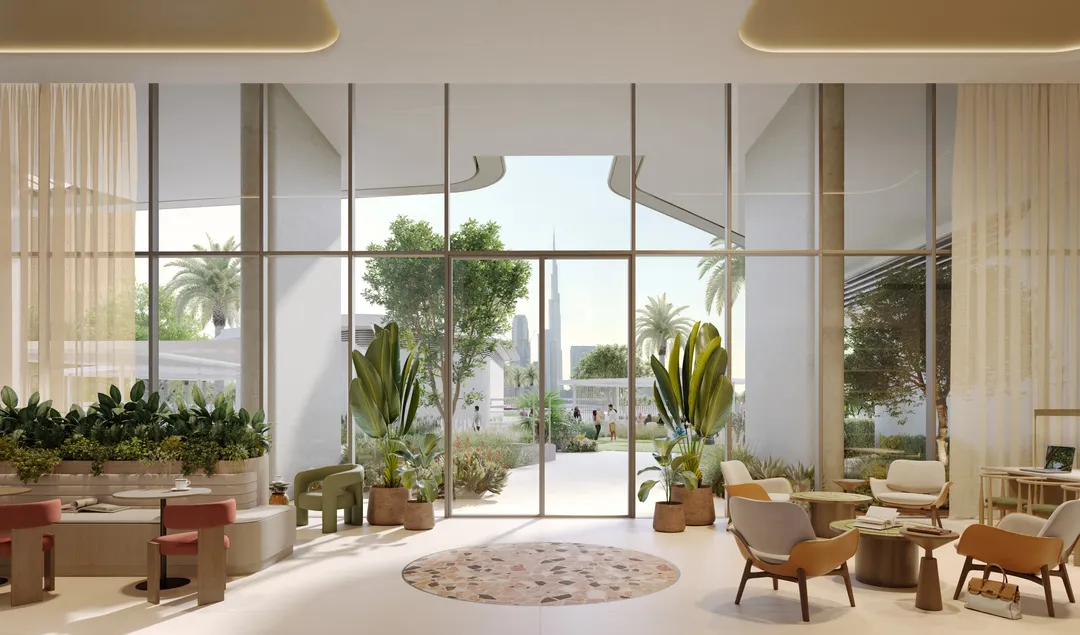
- You want to own in your own name and pass it on with peace of mind → Dubai, where freehold and the DIFC will secure ownership.
- You are targeting a gross yield of 7% and above on long-term rentals → Dubai, in affordable districts such as Arjan or Dubai International City.
- You want long-term residency on top of the investment → Dubai, via the Golden Visa from AED 2M.
- You favour the smallest possible ticket and a lifestyle bet → Bali, fully factoring in the legal risk of the lease.
To explore the emirate's projects and districts before deciding, our Dubai market page brings together the essentials. The right choice depends on your horizon and your tolerance for legal risk — not on any fixed ranking.
This article is part of our guide
Dubai Property Investment Guide for Foreign Buyers
About the author

Benoit CLAUDEL
Director of Strategy & Operations
With over 18 years of experience in real estate and wealth management, Benoît has developed recognized expertise in advising private investors, business executives and family offices. After starting out in a real estate agency and working within one of the most reputable wealth management firms in Paris, he then joined LCL as Head of Private Banking for Île-de-France, advising high-income clients on their real estate strategies. An entrepreneur, he founded and ran his own wealth management firm for 7 years, structuring investment and wealth optimization solutions. Today at Lucretia, Benoît oversees operational strategy, sales performance and advisor training. He works on high-value-added cases, particularly investments via French holding companies, legal structuring and wealth taxation.