In a post dated 17 August 2026, Lucretia breaks down Dubai's rental market figures: 214,445 contracts signed between January and July 2026, driven by a majority of renewals.
On this page
In a post published on 17 August 2026 on our Instagram account, Zach, from the Lucretia team in Dubai, looks back at an underlying trend in the emirate's rental market: Dubai is on track to break its own record for rental contracts. Between January and July 2026, 214,445 leases were signed, roughly 2% more than over the same period a year earlier. That figure builds on 2025, itself a record year with 377,660 contracts registered in total. But beyond the sheer volume, it's the nature of these contracts — and in particular the growing share of renewals — that deserves an investor's attention.
@lucretia_immobilier · 17 August 2026
📊 Dubai is on track to break its own record for rental contracts. 214,445 contracts signed between January and July, roughly 2% more than the same period last year. And 2025 was already a record year with 377,660 contracts in total. But the most telling figure is July's: of the 38,197 contracts registered, more than half are renewals. And that changes everything. Signing a new lease means arriving in Dubai. Renewing it means choosing to stay. When the majority of tenants renew, it's a sign they've found here far more than a temporary address. By type, one-bedroom units carry the market with 41% of contracts, followed by two-bedrooms (23%) and studios (22%). It's this base of residents settling in for the long term that supports the city's entire property market. Planning to buy or invest in Dubai? Write to us 👇 #DubaiRealEstate #ImmobilierDubai #Investissement #MarcheLocatif #Dubai
The essentials
- 214,445 rental contracts were signed in Dubai between January and July 2026, roughly 2% more than over the same period in 2025.
- 2025 was already a record year, with 377,660 rental contracts registered in total.
- In July 2026 alone, 38,197 contracts were registered, of which 19,766 were renewals versus 18,431 new leases.
- One-bedroom apartments account for 41% of contracts, ahead of two-bedrooms (23%) and studios (22%).
- Three-bedroom units make up 10% of contracts and four-bedrooms 3%, according to the figures presented by Lucretia on 17 August 2026.
A project in mind?
Talk to a Lucretia adviser
Tailored guidance, no obligation.
A record-breaking rental market, driven by residents who stay
The standout story of summer 2026 isn't just the rise in volume — it's what's driving it. Of the 38,197 contracts registered in July 2026, more than half — 19,766 to be precise — are lease renewals, versus 18,431 new contracts. The shift is telling: signing a first lease means arriving in Dubai; renewing it means choosing to stay.
When the majority of tenants renew their lease, it's a sign they've found far more than a temporary address. This base of residents settling in for the long term is precisely what supports the city's entire property market, giving depth and visibility to rental demand. For a landlord, a tenant who renews also means less vacancy and lower turnover costs. We explore these dynamics in our guide to Dubai property market trends and outlook.
Which property types are driving demand
By type, the volume is driven by one-bedroom apartments, which alone account for 41% of contracts. Next come two-bedrooms (23%) and studios (22%), while three-bedrooms make up 10% and four-bedrooms 3%.
In other words, nearly nine out of ten contracts involve studios, one- and two-bedroom units. This is the heart of Dubai's rental market: accessible properties, sought after by newcomers and established residents alike, and easy to rent out as well as resell. Established districts such as Dubai Marina concentrate a significant share of this demand, with a dense supply of compact apartments and a stable population of international residents.
What it means for investors
For an investor, what we at Lucretia take away from these figures is less the record itself than its composition. A market where renewals outnumber new leases is a market where rental demand rests on settled residents, not solely on inbound flows. It's a signal of maturity that matters when choosing a property: the depth of demand for studios, one- and two-bedroom units reduces vacancy risk and makes resale easier.
In practical terms, this steers a rental investment strategy towards the most liquid property types and the districts with the most stable resident populations. In Dubai, it's worth remembering, individuals pay no tax on rental income or on property capital gains — a framework we set out in our guide to property taxation in Dubai. No future return can be guaranteed, and the choice of property, location and acquisition structure remains decisive.
If you're considering a purchase or investment in Dubai, our local presence allows us to assess rental demand district by district and to secure every step of the way. You can explore the market fundamentals on our Investing in Dubai page, and compare investment approaches in our Dubai vs Bali guide.
Source: Original post on Instagram (@lucretia_immobilier) — 17 August 2026
Free guide, delivered on WhatsApp
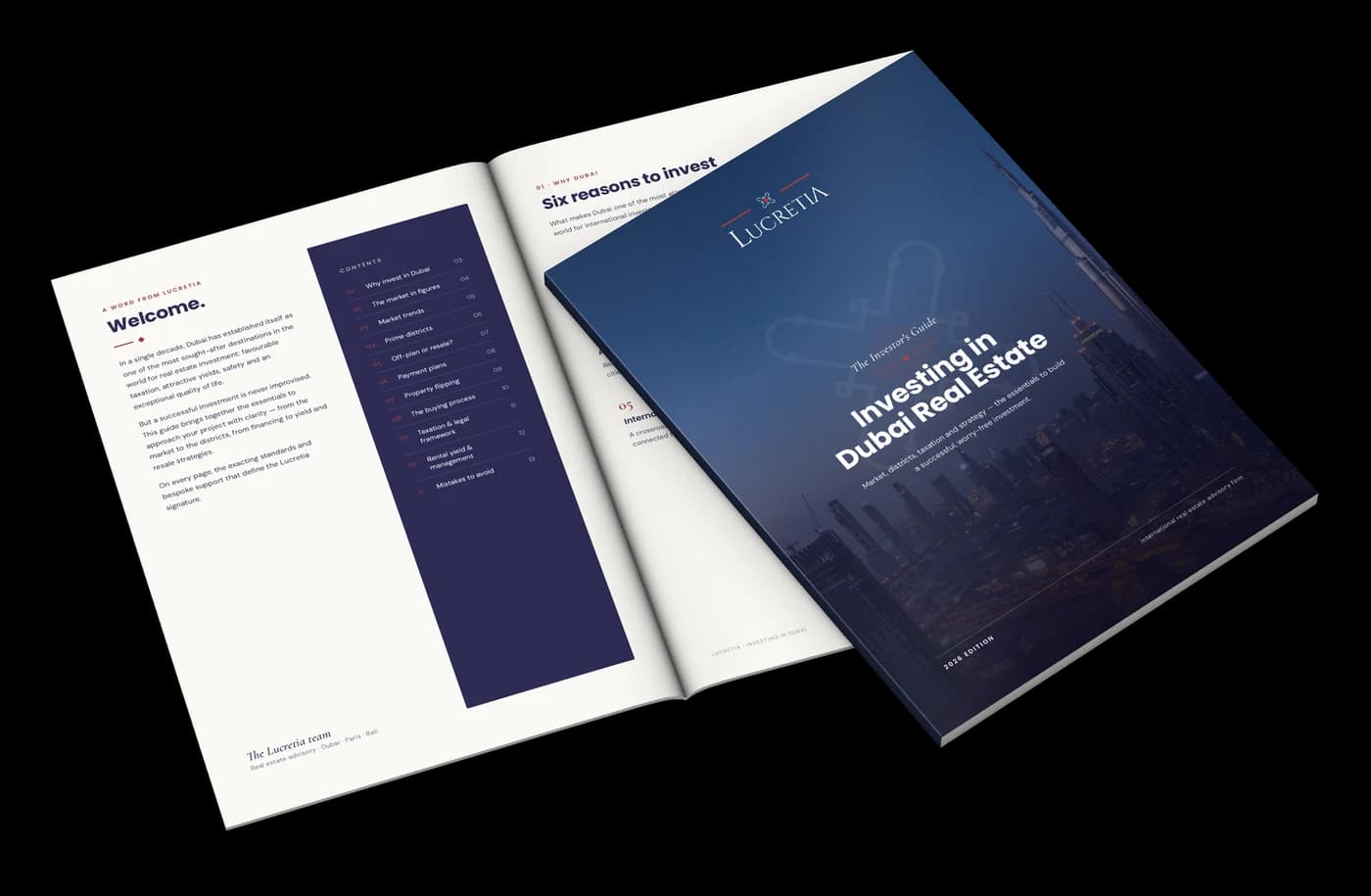
Get the guide "Investing in Dubai"
Taxation, visas, financing, buying steps: 14 pages written by our advisers, sent to your WhatsApp within minutes.
This article is part of our guide
Dubai Property Investment Guide for Foreign Buyers
About the author

Zakaria SEBAIBI
Real Estate Consultant
Originally from Asnières-sur-Seine and holding a Master's degree in finance, Zakaria specializes in the sale of off-plan real estate properties. With a long-term vision and a spirit of shared trust, he stands out for his excellent listening skills and his ability to understand his clients' needs. Resilient and determined, he puts his expertise at the service of those wishing to invest in the off-plan market, ensuring personalized support.