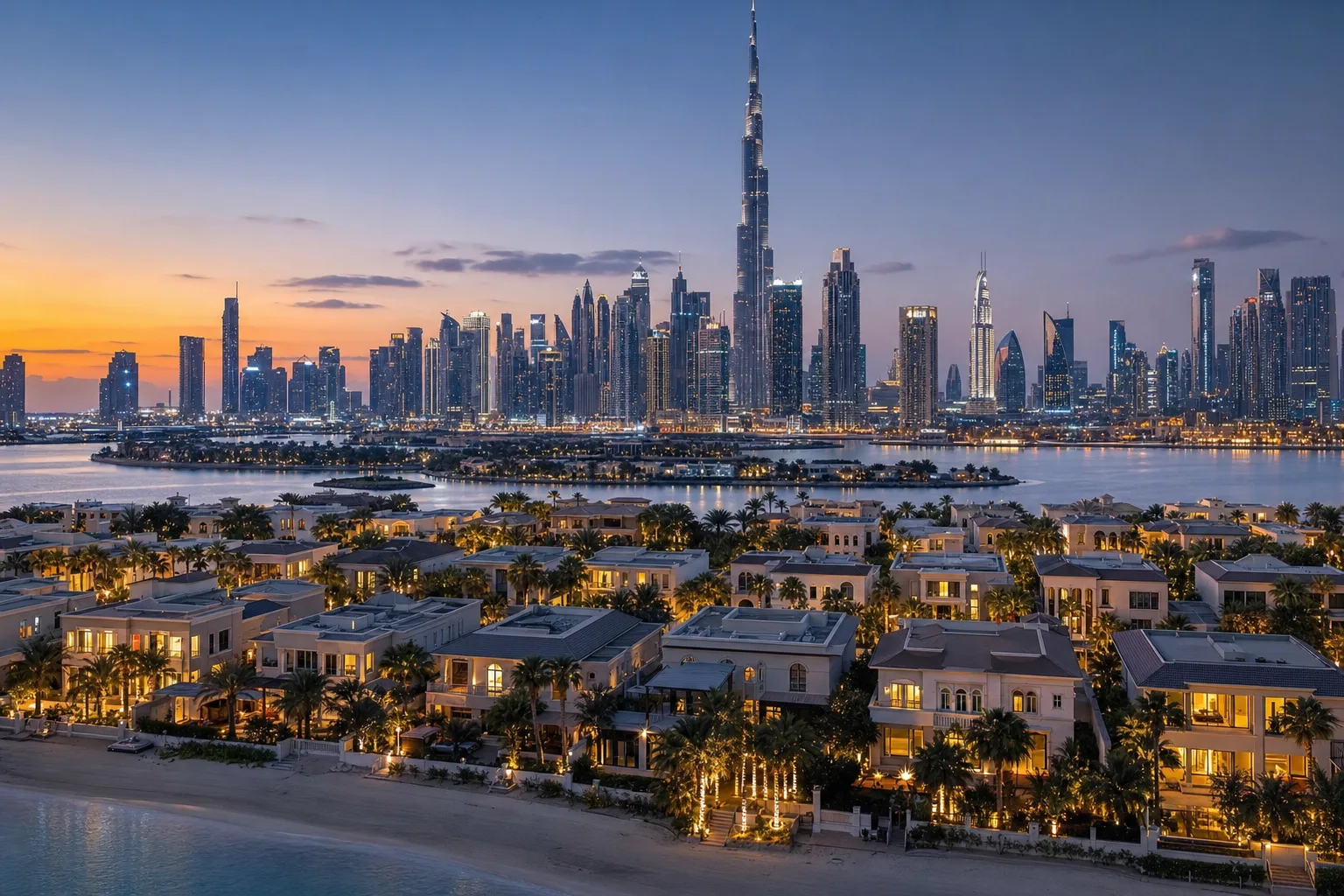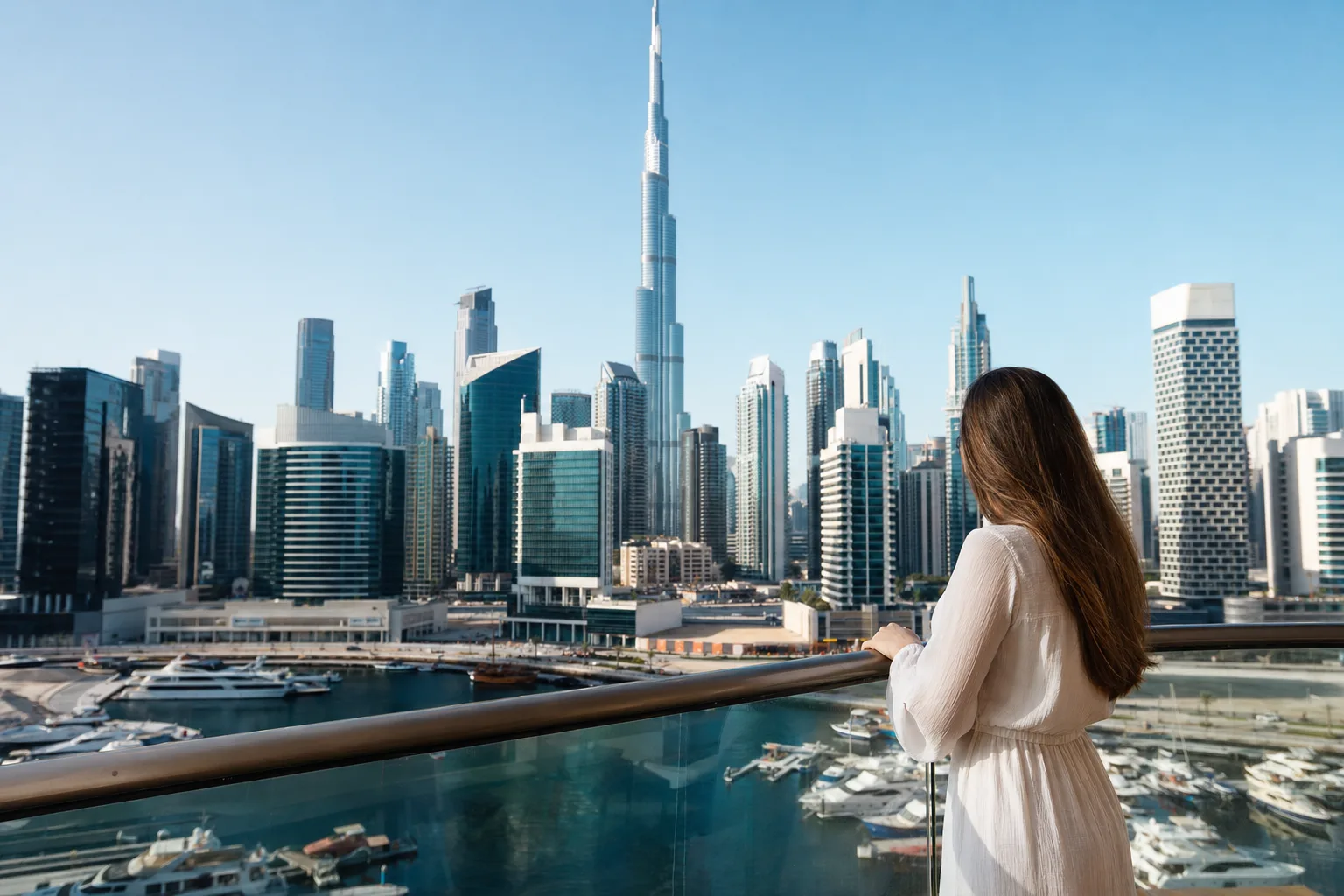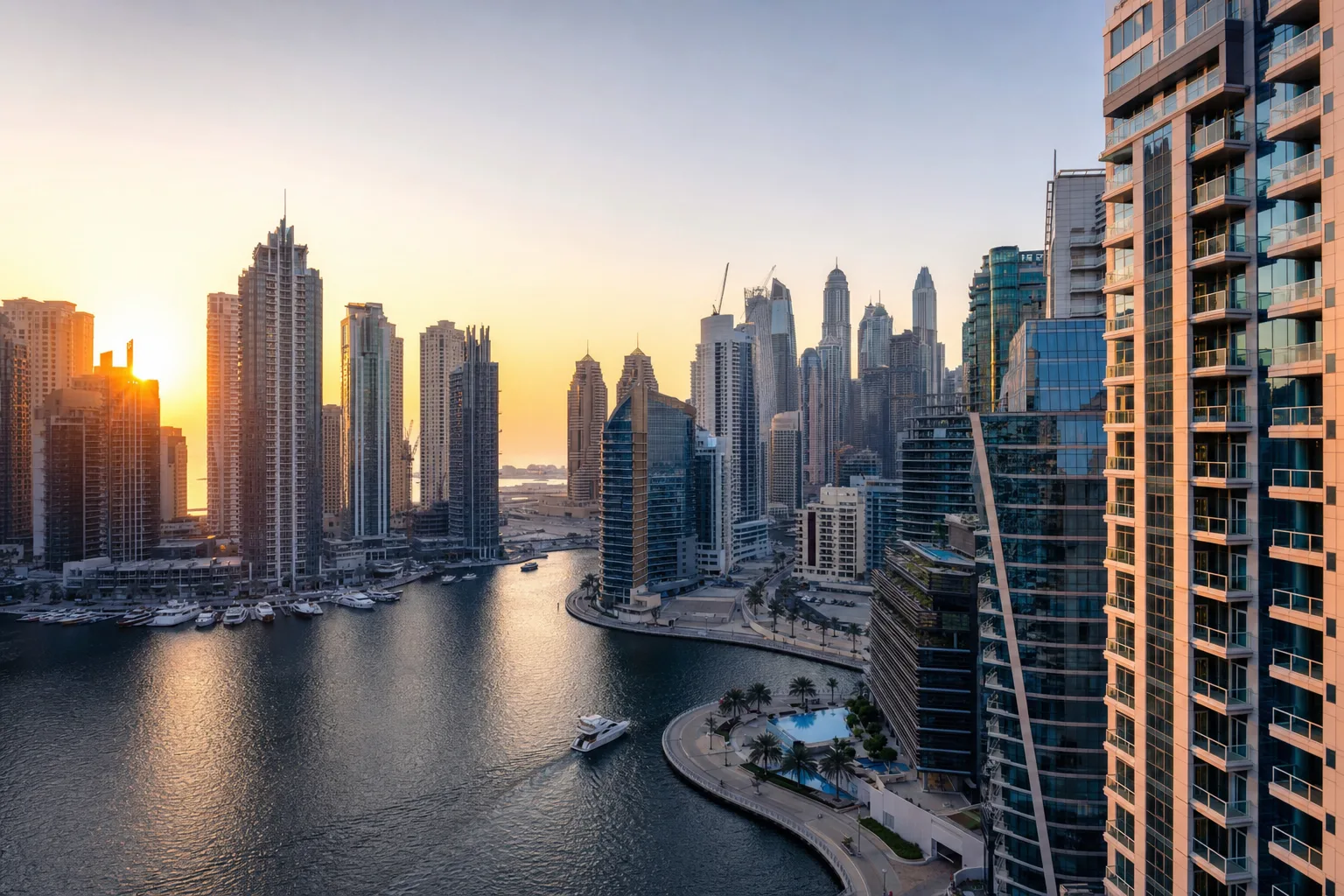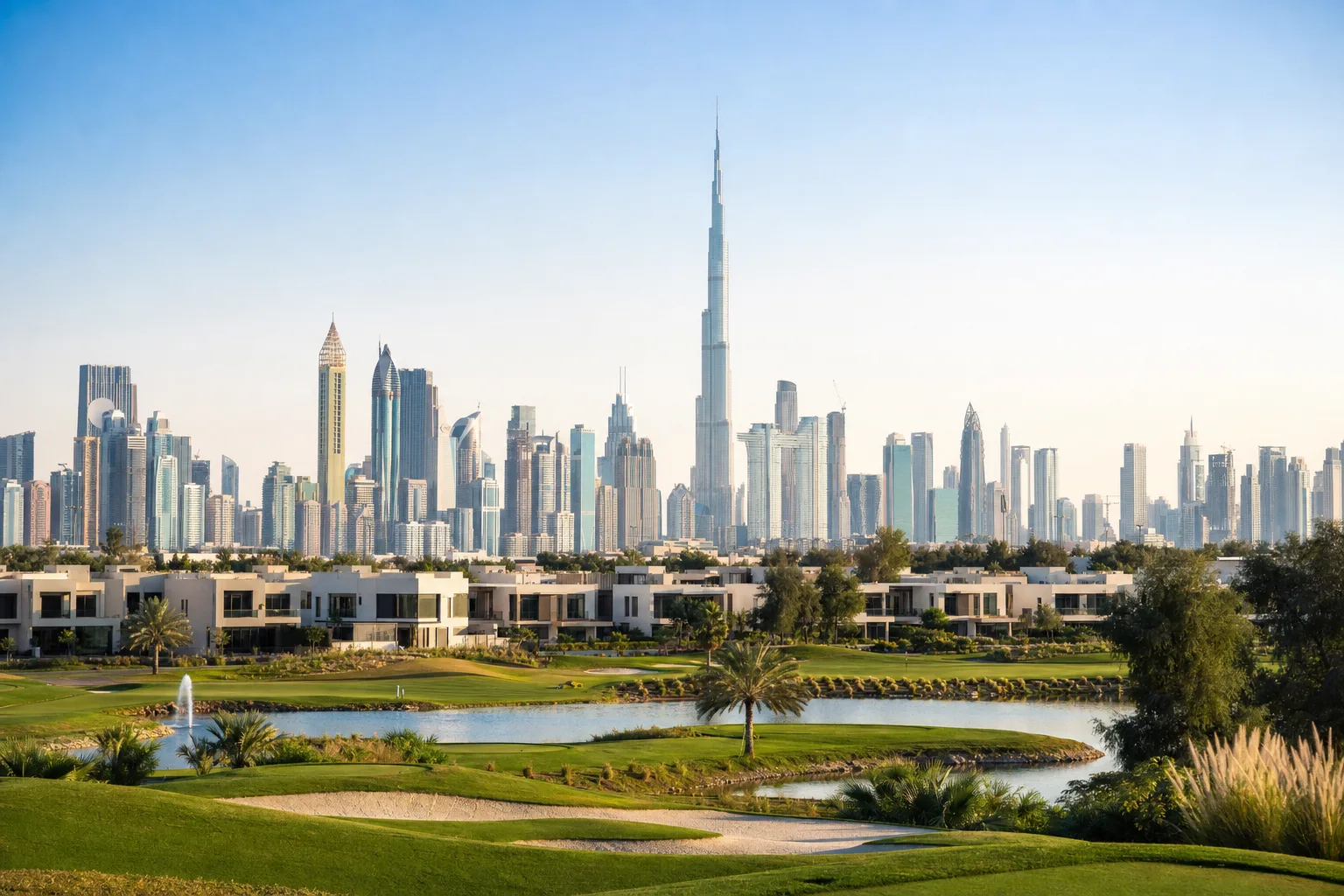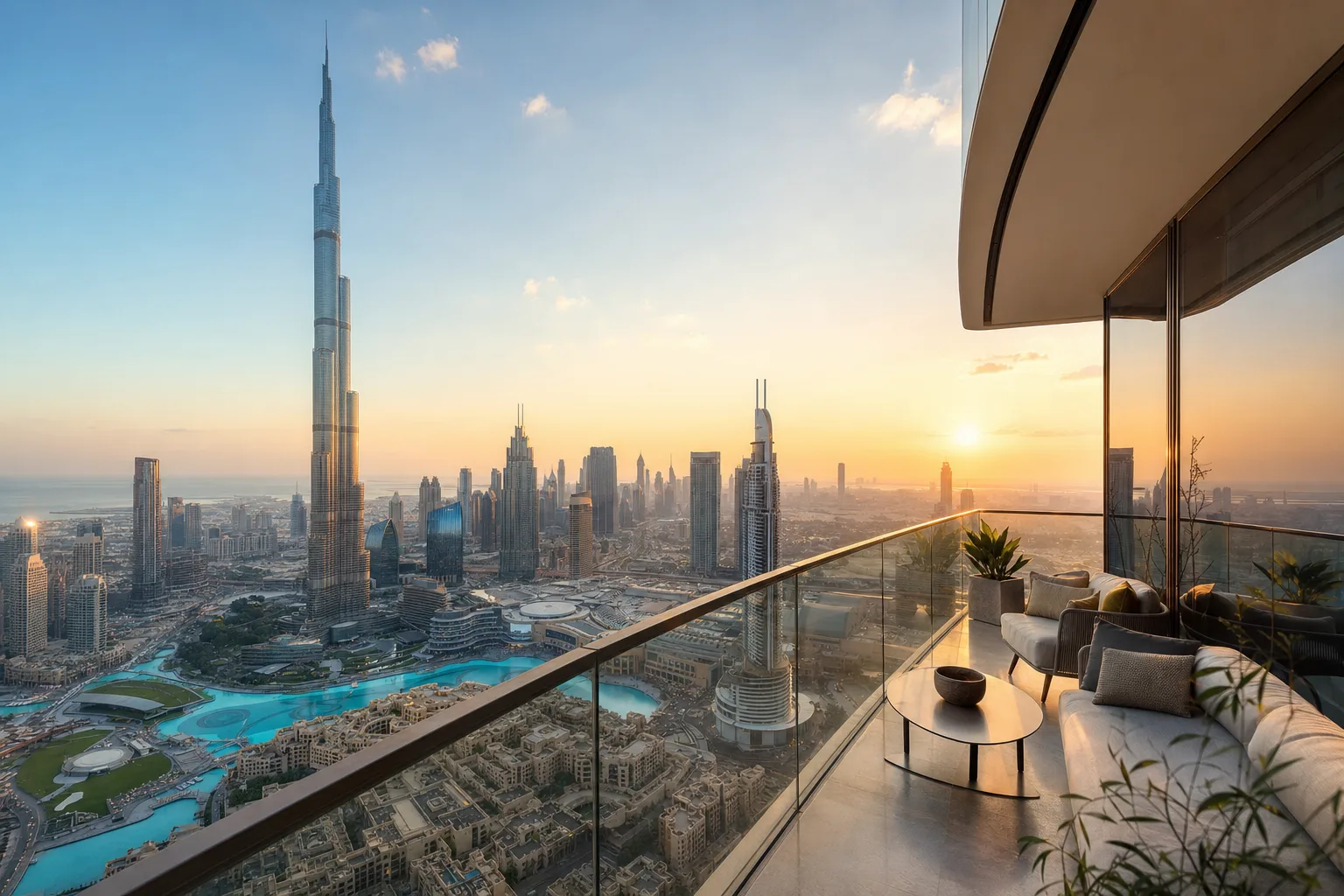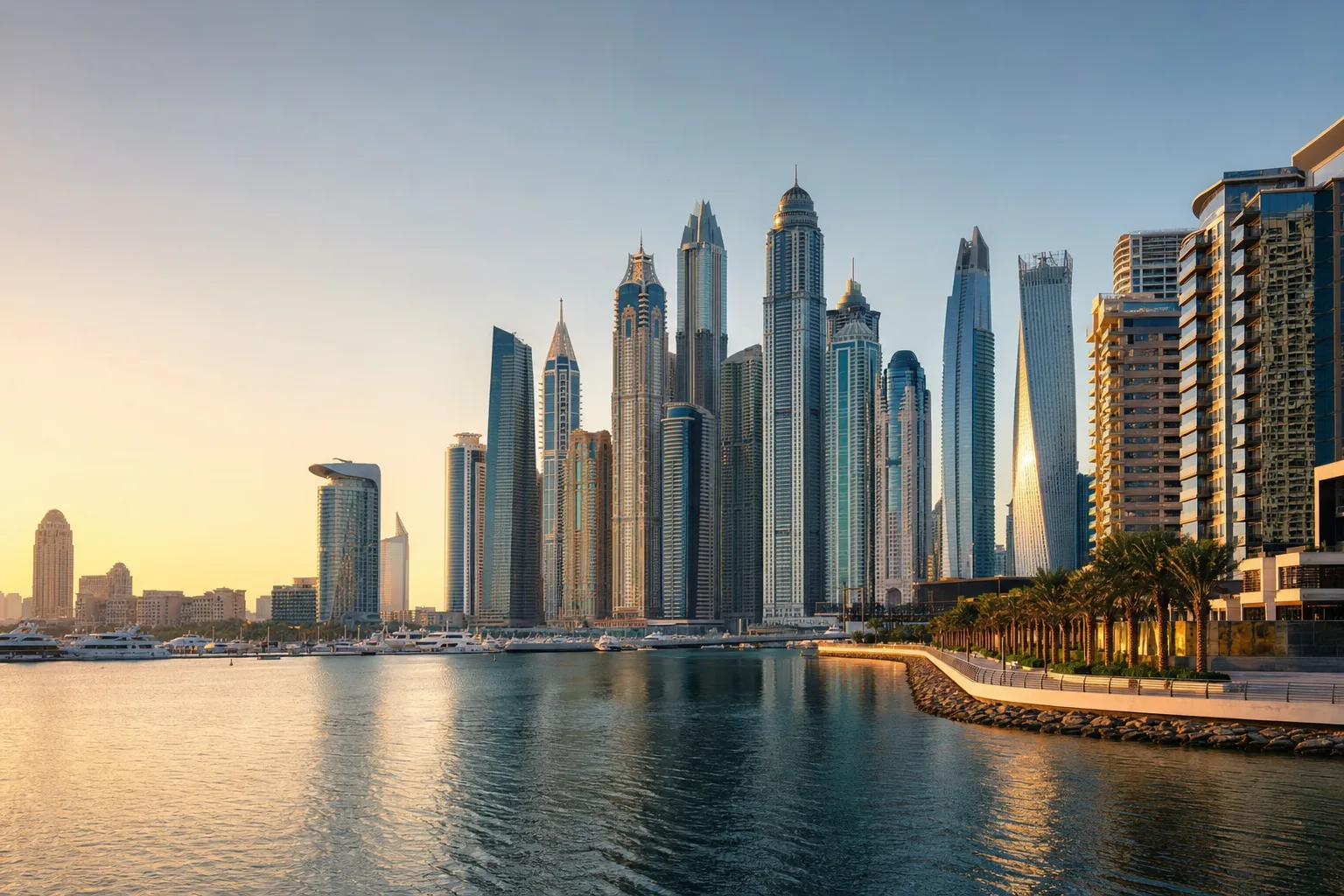
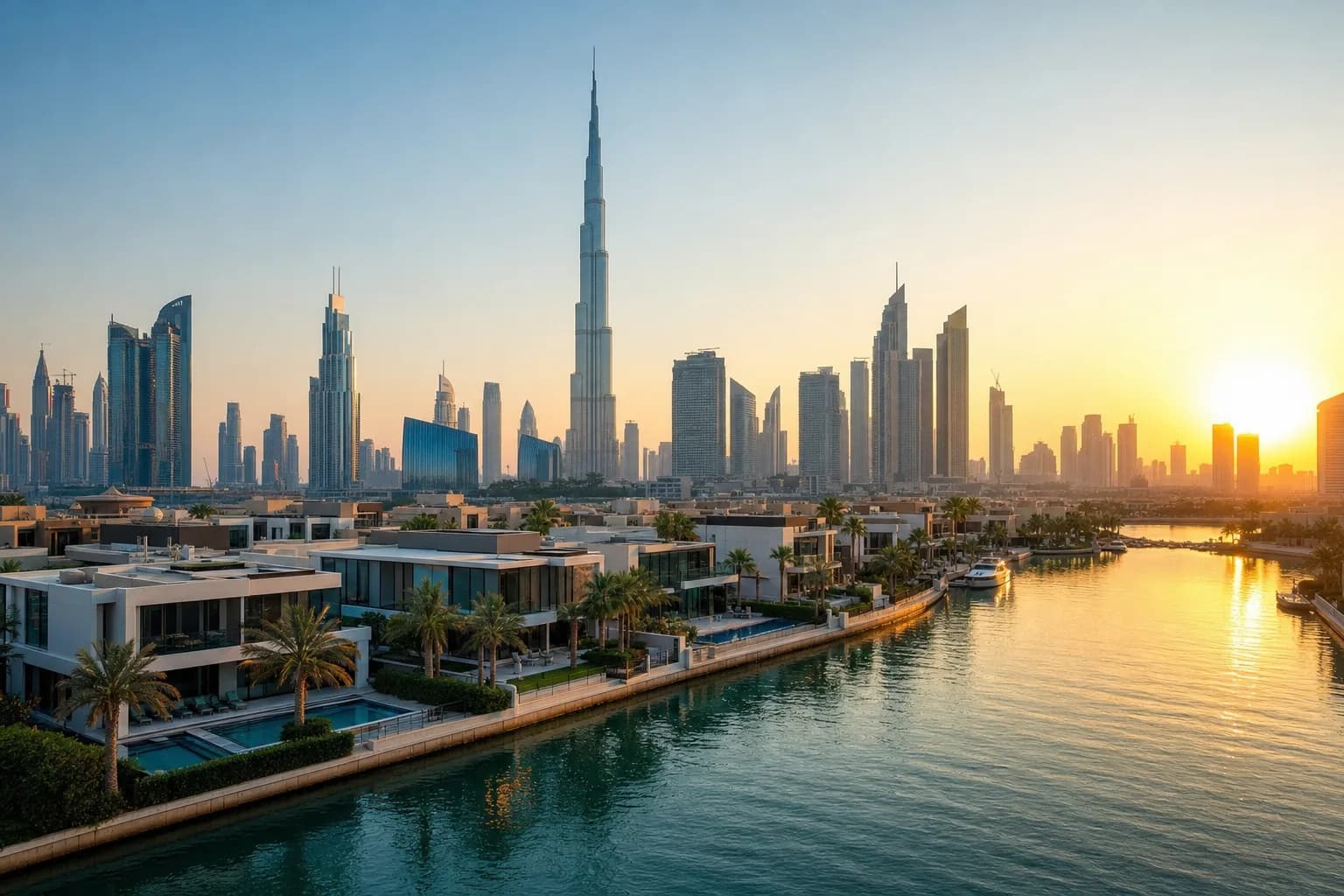
Palm Jumeirah, Downtown, Dubai Marina, Business Bay: what Dubai's established districts really cost — prices, yields and the pitfalls to know before you buy.
On this page
- Which Dubai districts should you buy in for a safe address?
- Price, rent and yield: what these established districts really deliver
- Established or up-and-coming: should you pay the price of prime districts?
- Benchmark developers and projects in the safe districts
- What buying in a safe address really costs: fees and charges
- The framework that secures buying in an established zone: freehold, financing, taxation
- What pitfalls await the buyer in safe addresses?
The best areas to buy property in Dubai in a safe location are four established districts that stand out for their liquidity and steady rental demand: Palm Jumeirah (AED 4,336/sq ft, March 2026, per Bayut), Downtown Dubai (AED 3,454/sq ft), Business Bay (AED 2,445/sq ft, February 2026) and Dubai Marina (AED 2,376/sq ft). These are deep markets, with a long price history and an endless flow of buyers and tenants.
These established districts command a premium and yield slightly less than the more affordable areas. In exchange, you buy quick resale, easy letting and value growth that has already been proven. Here's how to price each one, when to prefer them over an up-and-coming address, and the premium pitfalls too many buyers discover too late.
Which Dubai districts should you buy in for a safe address?
The four safe addresses in Dubai are Palm Jumeirah, Downtown Dubai, Business Bay and Dubai Marina. These districts combine liquidity, international recognition and permanent rental demand. The full figures, price and rent by district, follow in the next section.
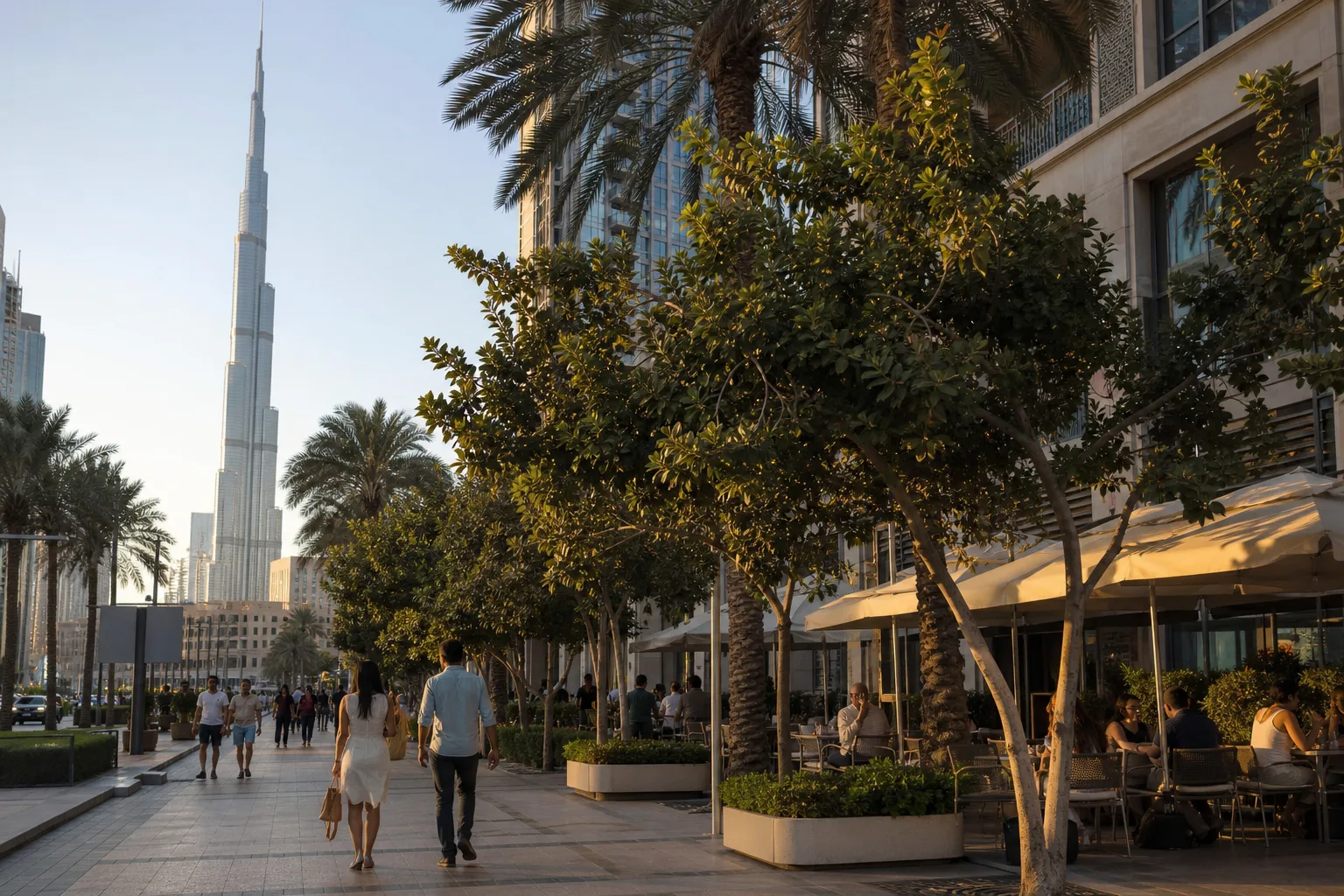
A "safe address" rests on three concrete criteria. First, a long price history that has weathered several cycles. Then, market depth: Business Bay has the most available projects of the group, meaning choice when you buy and buyers when you sell. Finally, steady rental demand, driven by jobs, tourism and infrastructure.
The trade-off is deliberate: the calculated gross yield is more modest than in emerging districts. You aren't paying for these districts to maximise yield, but for ease of entry and exit.
Price, rent and yield: what these established districts really deliver
Here are the four districts by the numbers, from most expensive to most affordable, based on Bayut's monthly series. Palm Jumeirah shows AED 4,336/sq ft for sale, rent of AED 196/sq ft/year and a calculated gross yield of 4.5% (March 2026, per Bayut): the most expensive address in this panel, an iconic beachfront island.
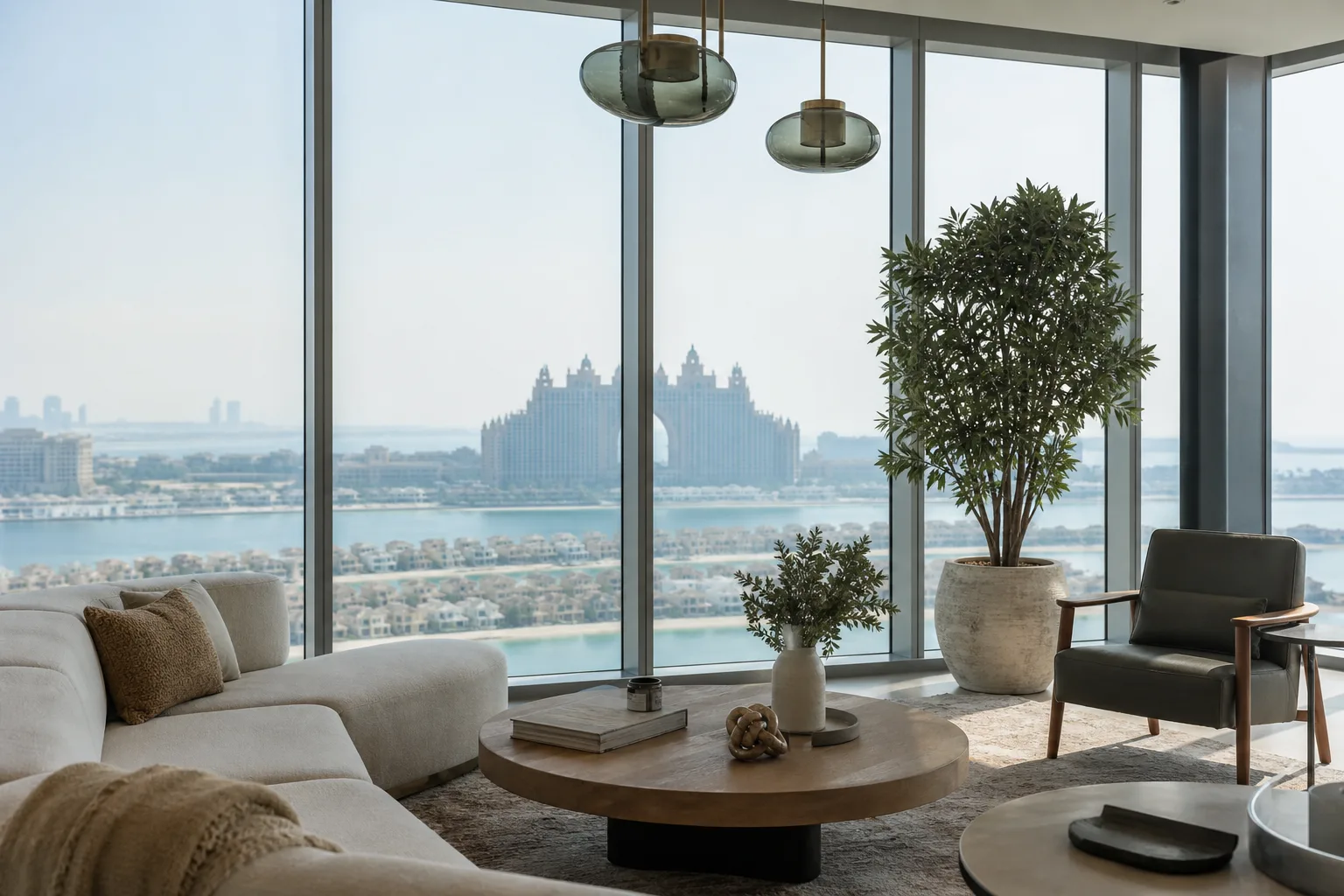
Downtown Dubai follows at AED 3,454/sq ft, with rent of AED 194/sq ft/year and 5.6% calculated gross yield (March 2026, per Bayut): the tourist and office heart, around Burj Khalifa and Dubai Mall.
Business Bay (AED 2,445/sq ft, rent AED 143/sq ft/year, 5.8%, February 2026) and Dubai Marina (AED 2,376/sq ft, 5.8%, per Bayut) offer the best price/yield balance of the established group. A softer entry price, a higher yield, without leaving the premium DNA behind. For a closer look at price per square foot, real gross yield and new projects on the waterfront, see our guide to buying an apartment in Dubai Marina.
Worked example: a one-bedroom in Business Bay
At AED 2,445/sq ft (Bayut, February 2026), a 750 sq ft apartment comes out at around AED 1.83M by value per square foot. Two projects in the district bracket this budget: Canal Heights (DAMAC, from AED 1.2M) and Binghatti Skyrise (from AED 1.3M).
At Bayut's rent of AED 143/sq ft/year, those 750 sq ft generate around AED 107,000 in annual rent, i.e. the 5.8% gross yield. This yield is gross and calculated: it deducts neither service charges, nor vacancy, nor management. For a closer look at price per square foot, real gross yield and current projects on the canal, see our guide to buying in Business Bay.
Established or up-and-coming: should you pay the price of prime districts?
Paying the price of a prime district makes sense if you're after liquidity, less so if you're targeting future capital gains: the value growth of established districts has already largely played out. Over 60 months, Palm Jumeirah gained +69.1%, Business Bay +64.9% and Downtown Dubai +51.9% (per Bayut). So you're buying past performance, not a discount to catch up on.
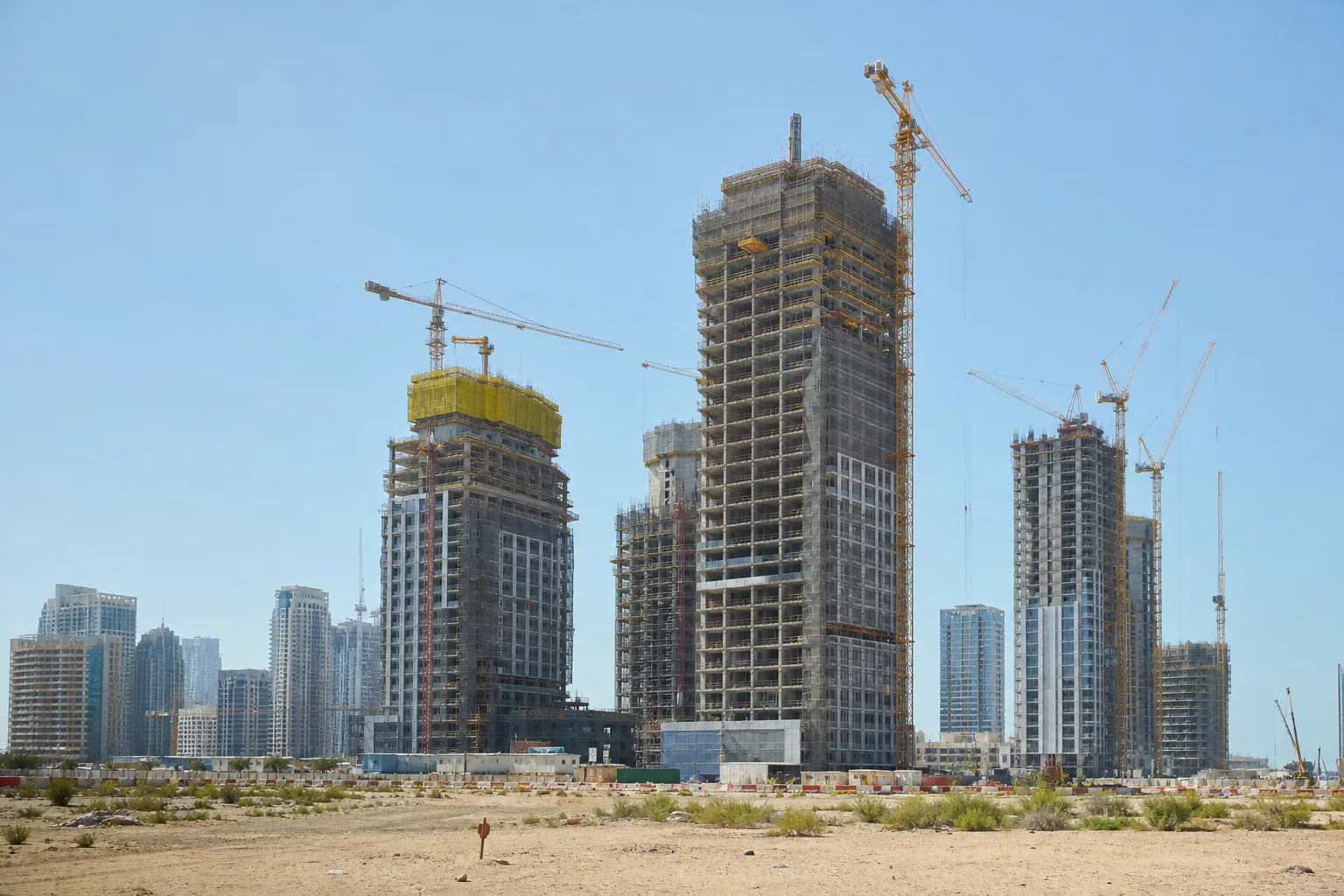
Two "up-and-coming" addresses, backed by well-regarded masterplans, offer an interesting profile at a lower price. Dubai Creek Harbour shows AED 2,584/sq ft for a calculated gross yield of 6.3%, and Dubai Hills AED 2,529/sq ft at 6.2% (per Bayut). The same benchmark developers, prices below Palm and Downtown, and a more generous yield. For a closer look at price per square foot, real rents and Emaar projects in this golf district, see our guide to buying in Dubai Hills Estate.
To place each district, keep the market benchmark in mind: a median price of AED 1,883/sq ft across 73 districts and a median change of +2.6% over 12 months (per Bayut). A district well above the median is paying for its reputation; one close to it deserves a look at its rent.
The established-versus-emerging choice depends on your objective. Our guide Where to invest in Dubai: choosing the right district for your objective sets out the full decision framework, and Rental yields in Dubai covers the yield-versus-capital-gains trade-off.
Benchmark developers and projects in the safe districts
The reliability of safe addresses owes much to their historic developers. Emaar Properties and Nakheel Properties shaped Downtown and Palm Jumeirah: these are the players that underpin the depth of the secondary market.
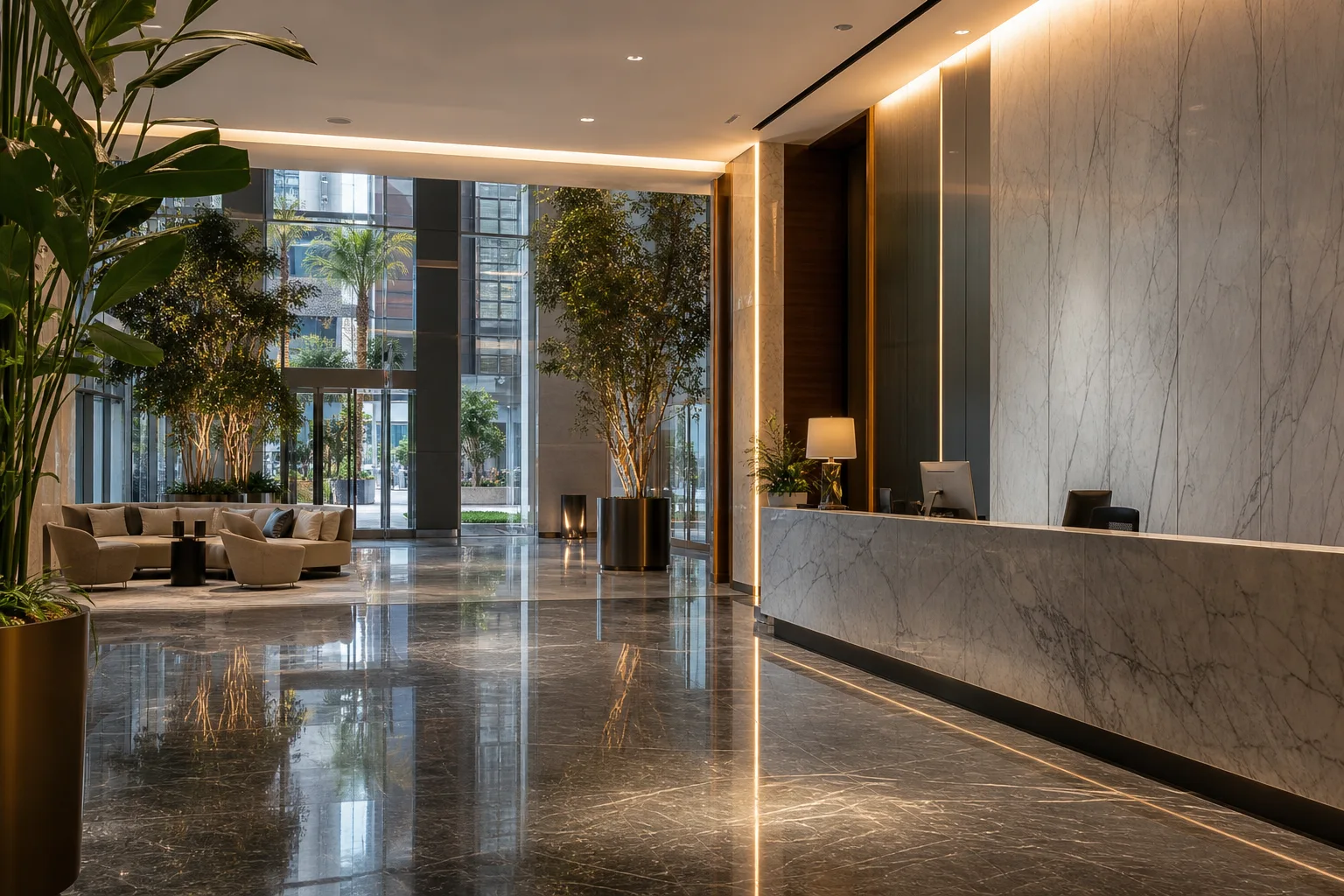
Business Bay illustrates the density of available supply, with projects such as Canal Heights (DAMAC, from AED 1.2M, handover June 2027), Bayz 102 (Danube, from AED 1.6M) and Peninsula Three (Select Group, from AED 1.9M).
In Downtown, a project like Binghatti Skyblade (from AED 1.8M, handover December 2027) provides an entry ticket into the most central district. For reference, Dubai's new-build market shows a median entry price of around AED 1.2M — useful for comparing a safe address against the wider supply.
You'll find the full project catalogue to cross-reference district, developer and handover date.
What buying in a safe address really costs: fees and charges
On a premium property, first budget 4% in transfer fees to the Dubai Land Department, plus AED 4,700 to 5,500 in fixed fees according to Property Finder. On the secondary market, add 2% agency fees and 5% VAT on that commission. On a high price, these percentages weigh heavily in absolute terms.
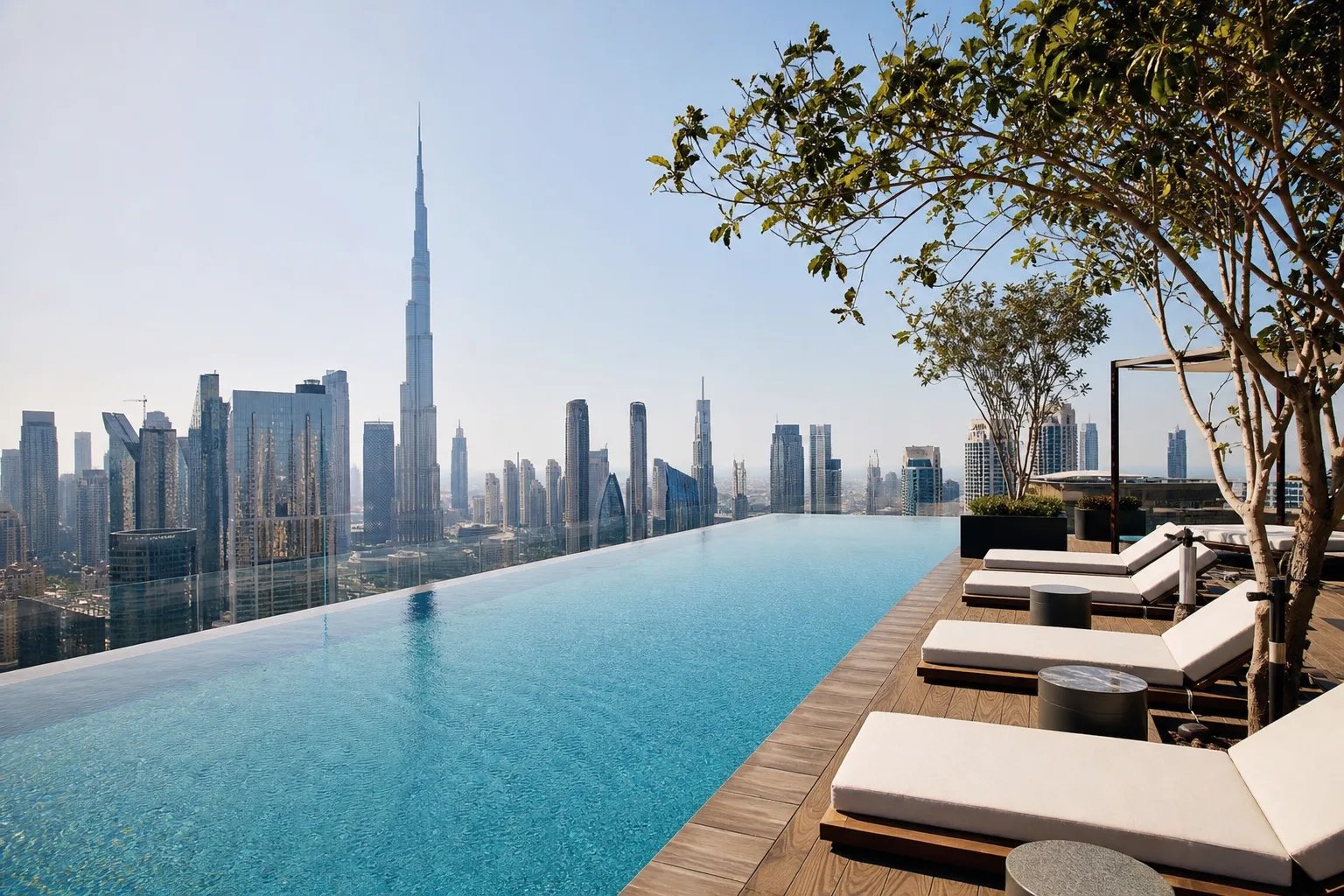
Featured
View projects: Dubai Harbour Residences
From AED 7,168,667
Hand-picked new properties with end-to-end expert support.
View projects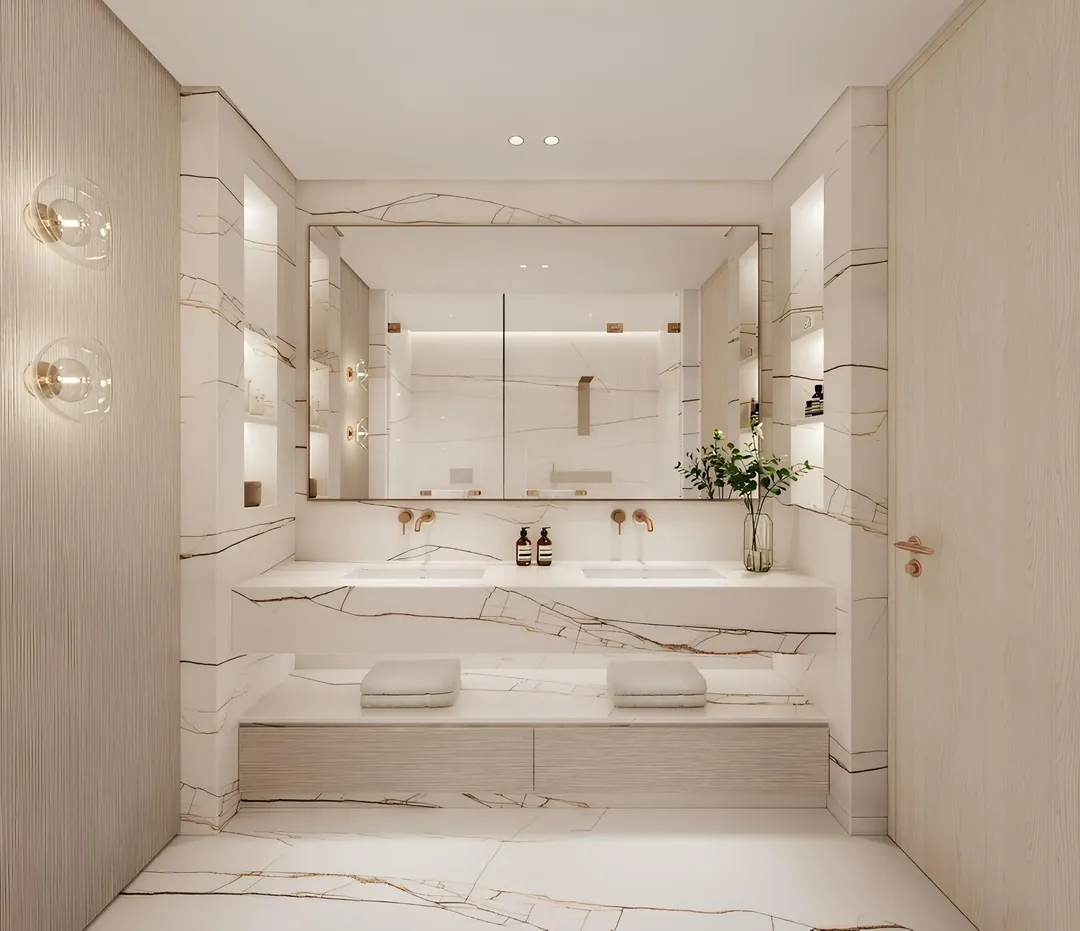
The decisive cost line for premium property is the service charges. In luxury towers, they reach AED 20 to 50+/sq ft/year, versus AED 10-20 for a standard apartment (regulated via Mollak / RERA). This is what weighs most in Palm Jumeirah and Downtown.
These charges explain the gap between the headline gross yield and the real return. The full net calculation is set out in our guides Property taxation in Dubai and Managing your rental property in Dubai.
Good news on the residency front: the Golden Visa threshold, set at AED 2M, is easily reached given the price per square foot in these districts. The conditions and steps are detailed in our guide Dubai Golden Visa through real estate.
| Cost line | Amount | Source |
|---|---|---|
| DLD transfer | 4% of price | DLD |
| DLD fixed fees | ~AED 4,700-5,500 | Property Finder |
| Agency (secondary) | 2% + 5% VAT | Property Finder |
| Luxury tower charges | AED 20-50+/sq ft/year | RERA / Mollak |
The framework that secures buying in an established zone: freehold, financing, taxation
Palm Jumeirah, Downtown, Marina and Business Bay are all in freehold zones, open to full foreign ownership since 2002 (source Dubai Land Department). You own the property and the title, with no time limit. The full list of authorised zones is in our guide legal framework of property ownership in Dubai.

A project in mind?
Talk to a Lucretia adviser
Tailored guidance, no obligation.
On financing, a non-resident in practice obtains 50 to 75% of the price depending on the bank (a 25 to 50% down payment), and 50% off-plan. The detailed conditions are in our guide financing a property purchase in Dubai.
Taxation remains the major advantage: individuals pay no tax on rental income or on capital gains, and residential property is at 0% VAT. Bilateral tax treaties may organise a tax credit in your home country, a topic developed in the taxation guide.
Finally, new-build projects in these districts are protected by a mandatory escrow account (Law No. 8 of 2007). The mechanism is explained in our guide buying off-plan in Dubai.
What pitfalls await the buyer in safe addresses?
The first pitfall of safe addresses is compressed yield: you pay the price of security without checking that the rent per square foot holds up. In Palm Jumeirah, the calculated gross yield drops to 4.5% (per Bayut). This level is only justified if the rent per sq ft stays high — AED 196 in Palm, 194 in Downtown — over the long run.
The second pitfall lies in the service charges of luxury towers, which erode the net return far more than in an affordable district. Ask for the exact figure for the specific building before signing, never an average.
The third pitfall is confusing "established premium" with "high-performing premium." Some expensive districts structurally deliver little: La Mer 1.5%, Trade Center 1 1.7%, Bukadra 3% (per Bayut). A high price does not guarantee performance.
Among my clients, the most common mistake on premium property is signing off on a gross yield without having read the tower's service charge line. On a luxury address, that's what makes or breaks the net return.
— Sofiane ABDELAZIZ, Real Estate Consultant
One last point, succession: by default, Sharia law may apply to inheritance. A registered will (DIFC Wills) secures the transfer for non-Muslims — a habit worth adopting, detailed in the legal framework guide.
In this guide
Articles in this guide
This article is part of our guide
Dubai Property Investment Guide for Foreign Buyers
About the author

Sofiane ABDELAZIZ
Real Estate Consultant
Sofiane is a real estate investment expert in Dubai with a solid background in finance and investment strategy. He specializes in financial market analysis and risk management, treating real estate as a true asset class. After gaining experience in the secondary market, he moved into Off Plan investment, developing in-depth knowledge of the Dubai real estate market. At Lucretia Immobilier, he supports an international clientele in acquiring high-potential properties with a structured, transparent, and performance-driven approach.