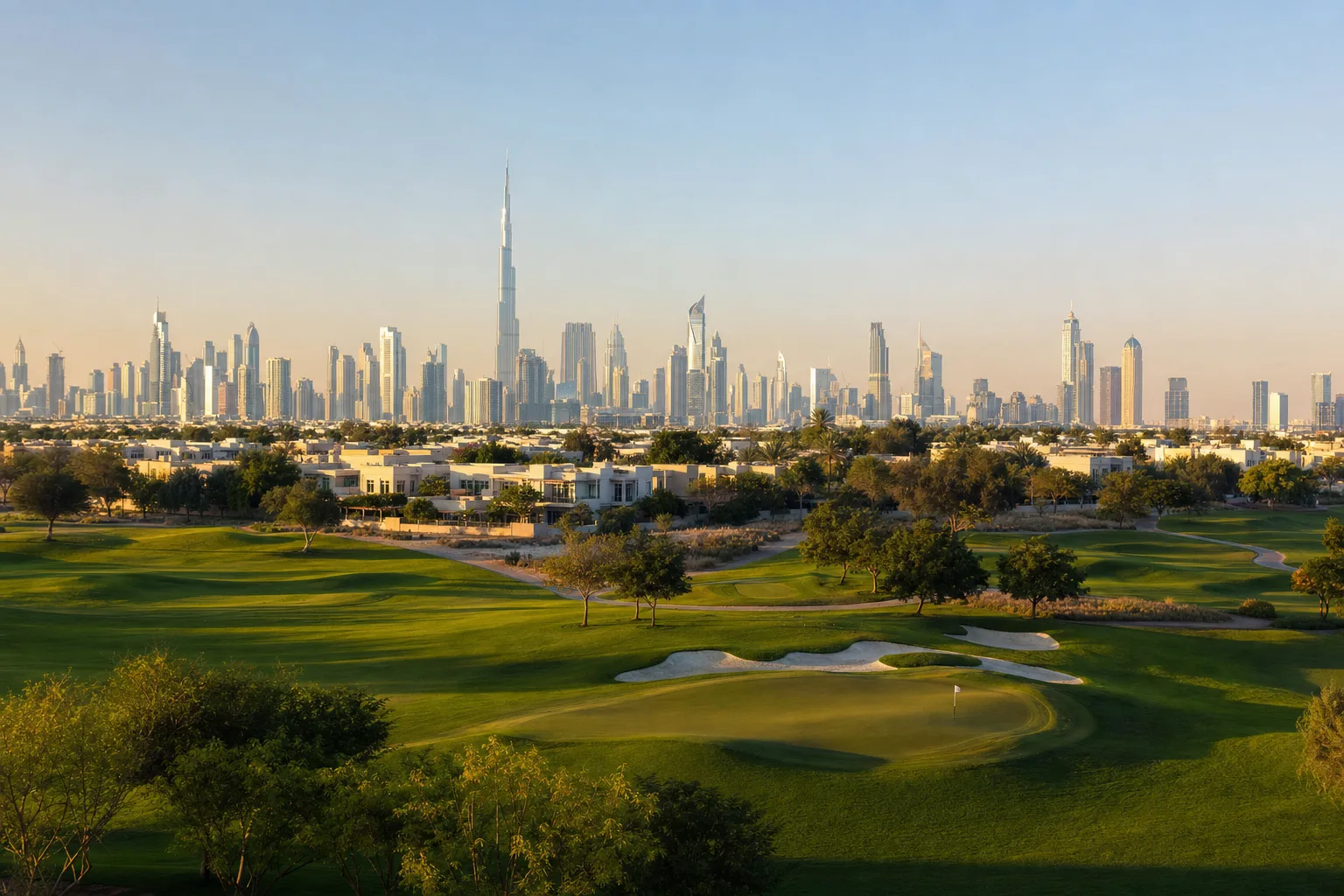
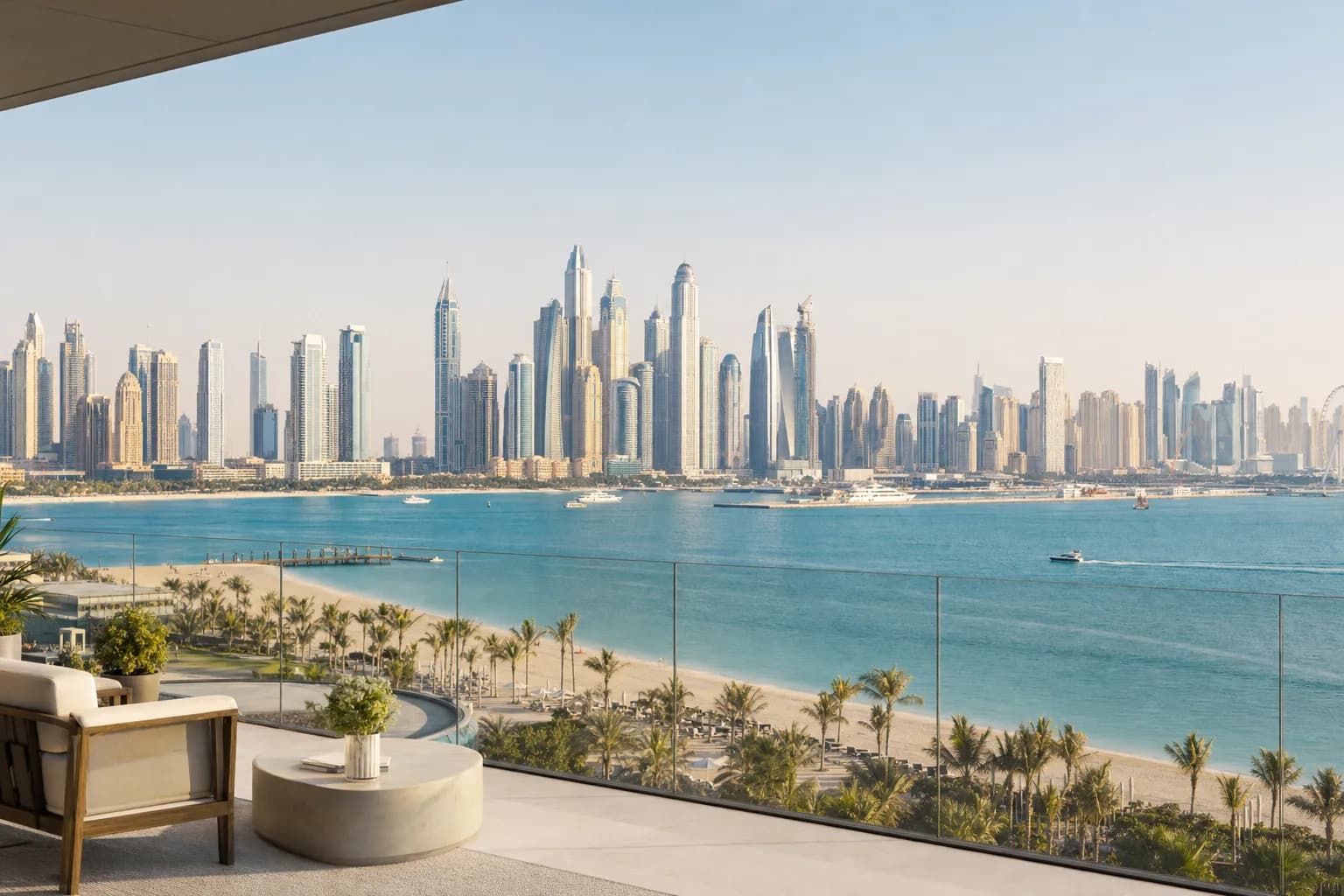
Freehold in Dubai has opened foreign ownership since 2002 in designated areas, with a title deed in the buyer's name: here's what this right really guarantees.
On this page
- Can a foreigner really own property in Dubai?
- Which areas are freehold for foreign ownership?
- What does a freehold purchase really cost?
- Freehold and residency: what the title opens on the visa side
- Off-plan freehold: what protection before the final title?
- Points to watch: inheritance, charges and pitfalls
Freehold in Dubai has allowed foreigners to own property outright since 2002 within designated areas, with a title deed issued in the buyer's name, according to the Dubai Land Department. A non-resident buys on exactly the same footing as a resident, with no nationality requirement, and holds the property in perpetuity.
What remains is to understand exactly what this right covers: where you can buy, what it costs to obtain the title, what it opens — or doesn't — on the residency side, and the legal points to check before you sign.
Can a foreigner really own property in Dubai?
Yes. An investor living abroad acquires exactly the same rights as a UAE resident, with no nationality or residency requirement whatsoever. This is not a precarious right of use: it is full ownership in every sense.

The core distinction is between two regimes. Freehold confers perpetual ownership of both the property and the land: you resell, let and pass it on freely. Leasehold, by contrast, grants only a time-limited right of use, from 10 to 99 years, at the end of which the property reverts to the landowner.
Which areas are freehold for foreign ownership?
Foreign freehold ownership exists only within the perimeters approved by decree: outside these designated areas, outright ownership is not open to foreigners. Confirming that a property sits within a freehold zone is therefore the very first step.
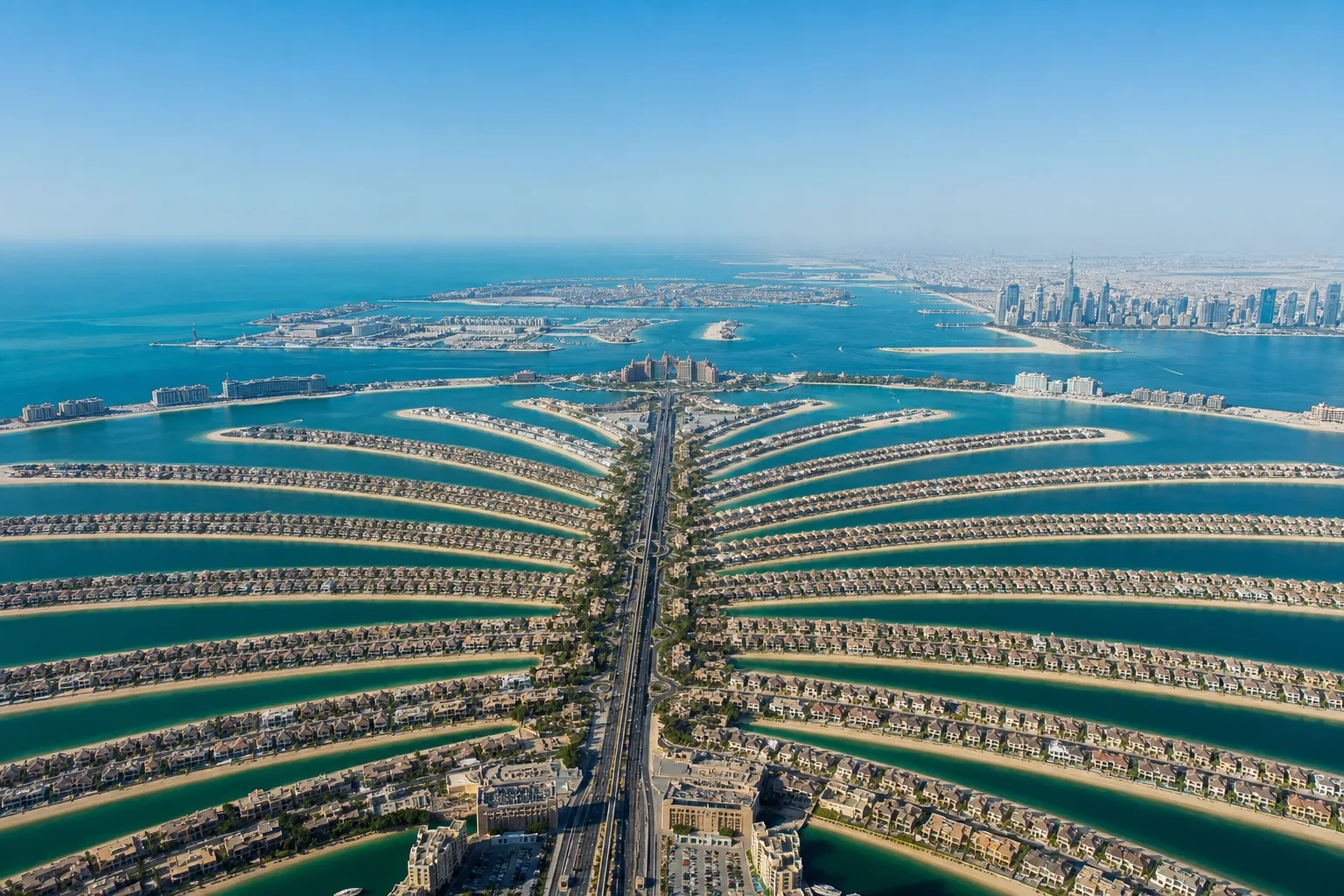
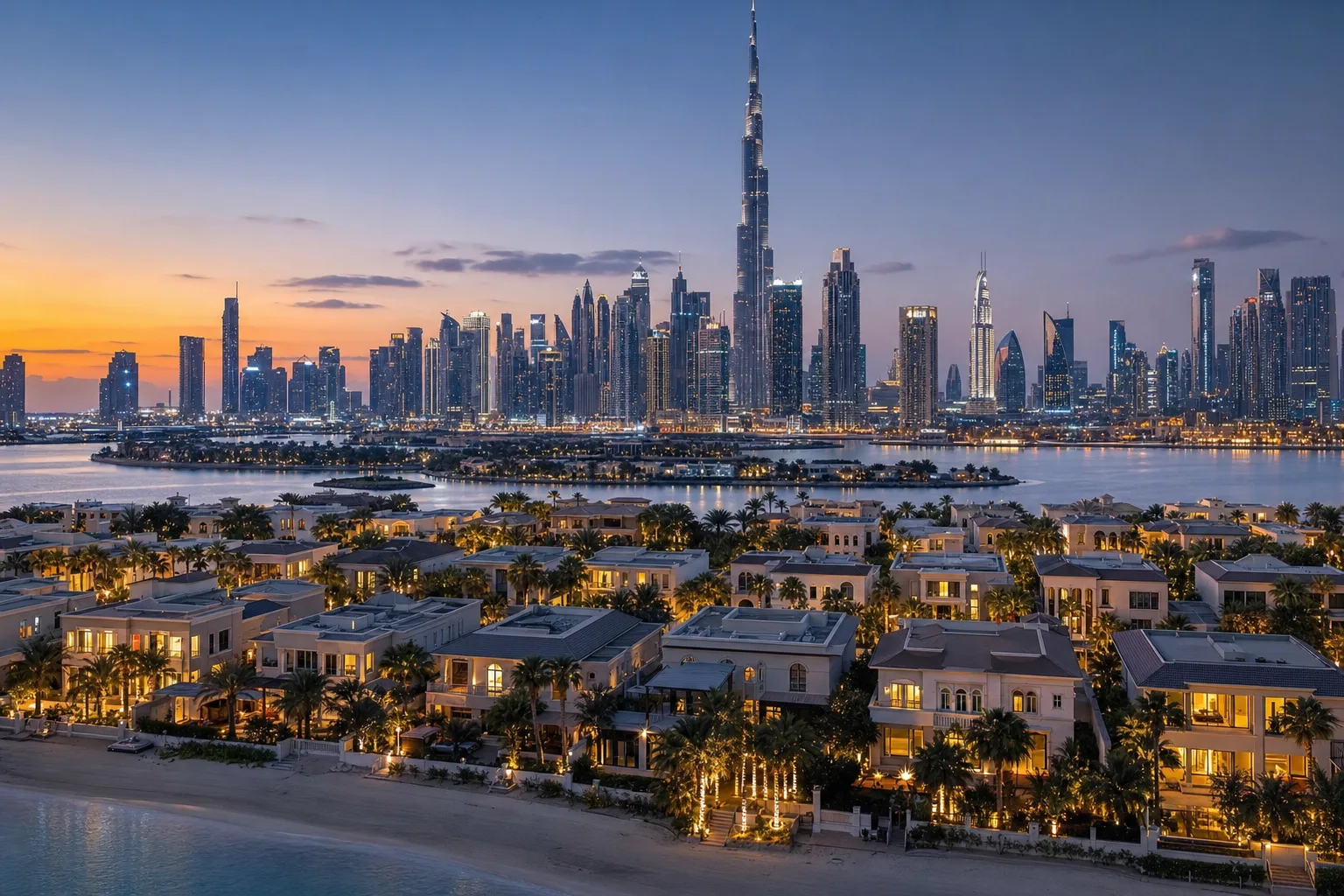
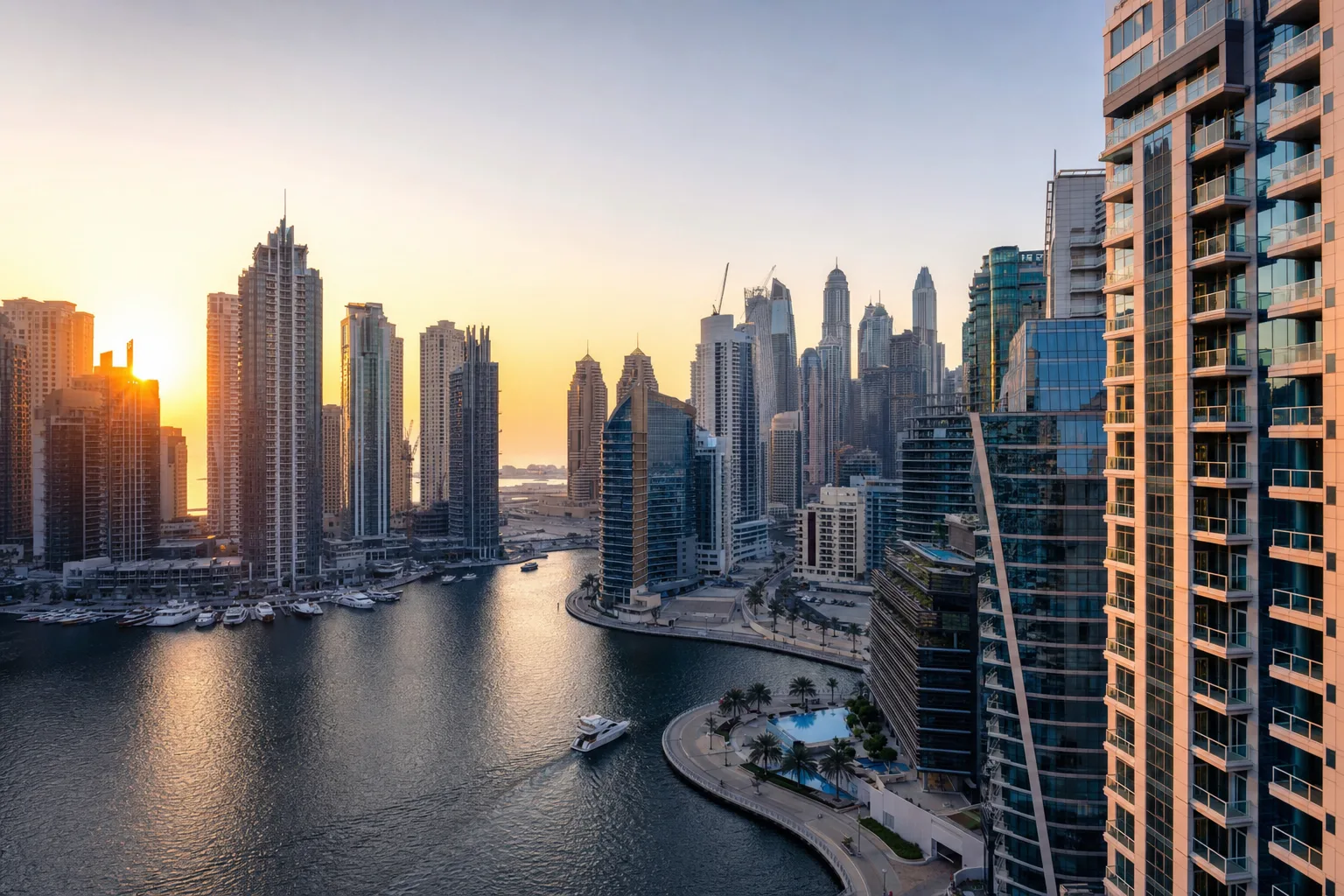
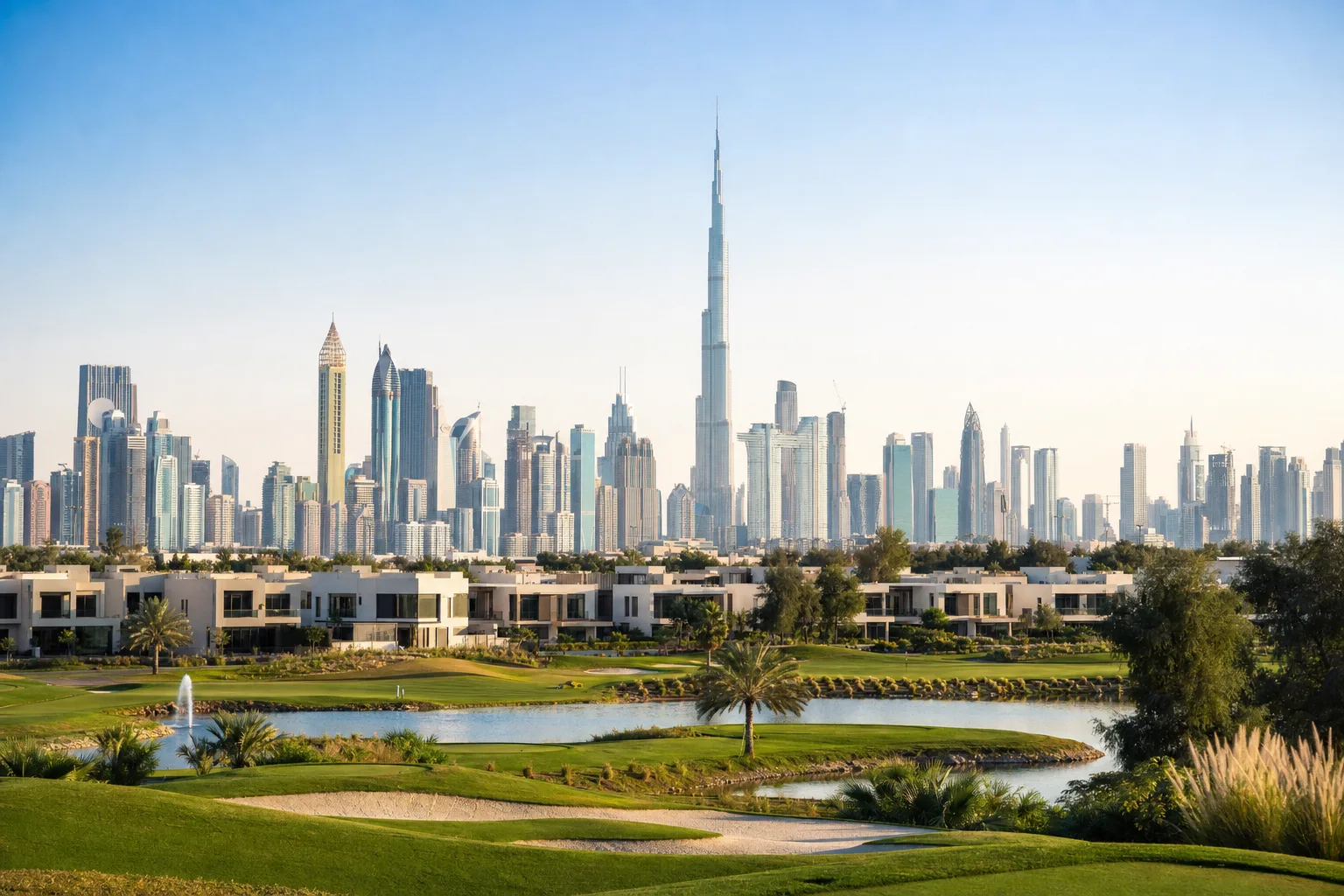
Several landmark districts fall under this regime. Palm Jumeirah, Downtown Dubai, Business Bay and Dubai Marina are among the most sought-after addresses, positioned in the premium segment.
For a first entry point, other freehold areas remain more accessible: Jumeirah Village Circle, Arjan, Dubailand Residence Complex or Dubai Sports City.
We list numerous projects spread across these freehold areas, backed by active developers, with staggered handovers from 2019 to 2031. To compare price and yield area by area, our guide on choosing the right district for your goal lays out the figures. To place these districts in a broader perspective, our guide on Dubai real estate market trends reads median prices and yields number by number.
What does a freehold purchase really cost?
Beyond the price, obtaining the freehold title deed adds around 6% in ancillary fees, including a 4% DLD transfer fee. Take a real property from our catalogue: The Archive, in Dubailand Residence Complex, listed from AED 700,000.

Free resource
Get our investment guide
The essentials — strategy, taxation, steps — to download.
The transfer fee charged by the Dubai Land Department comes to 4% of the price, or AED 28,000 on this AED 700,000 property. On top of that come fixed administrative fees of around AED 4,700 to 5,500 according to Property Finder: title deed AED 580, plan fee around AED 250, and trustee office around AED 4,000 to 4,200.
On the resale market, agency fees amount to 2% of the price plus 5% VAT, payable by the buyer; when buying off-plan directly from the developer, there is generally no commission on the buyer's side. The full sequence, from budget preparation to registration of the title deed, is set out in our guide on the process of buying a completed property.
| Item | Amount |
|---|---|
| Price (The Archive) | from AED 700,000 |
| DLD transfer (4%) | AED 28,000 |
| DLD fixed fees | ~AED 4,700 to 5,500 |
| Agency (resale, 2% + VAT) | depending on price |
The full breakdown of purchase costs is set out in our guide on Dubai real estate taxation.
Freehold and residency: what the title opens on the visa side
A freehold property worth at least AED 2,000,000 opens the right to apply for the 10-year real estate Golden Visa, according to the official UAE government portal. This is the threshold that links ownership to the right of residence.

Featured
View projects: Six Senses Residences
From AED 10,259,700
Hand-picked new properties with end-to-end expert support.
View projects
Once the file is complete, allow 2 to 4 weeks in total, including the Emirates ID and the medical check. The actual timeline depends above all on how complete your file is.
Below AED 2 million, the property remains fully owned, but it does not open the Golden Visa. Ownership and residency are two separate matters: you can own without residing, and you must reach the threshold to link the two.
The Golden Visa step following the handover of a new-build property is described in our guide on the off-plan buying process.
Off-plan freehold: what protection before the final title?
Off-plan, freehold ownership takes shape gradually: a provisional registration precedes the final title deed handed over at completion. In between, the law protects the buyer through a specific mechanism.
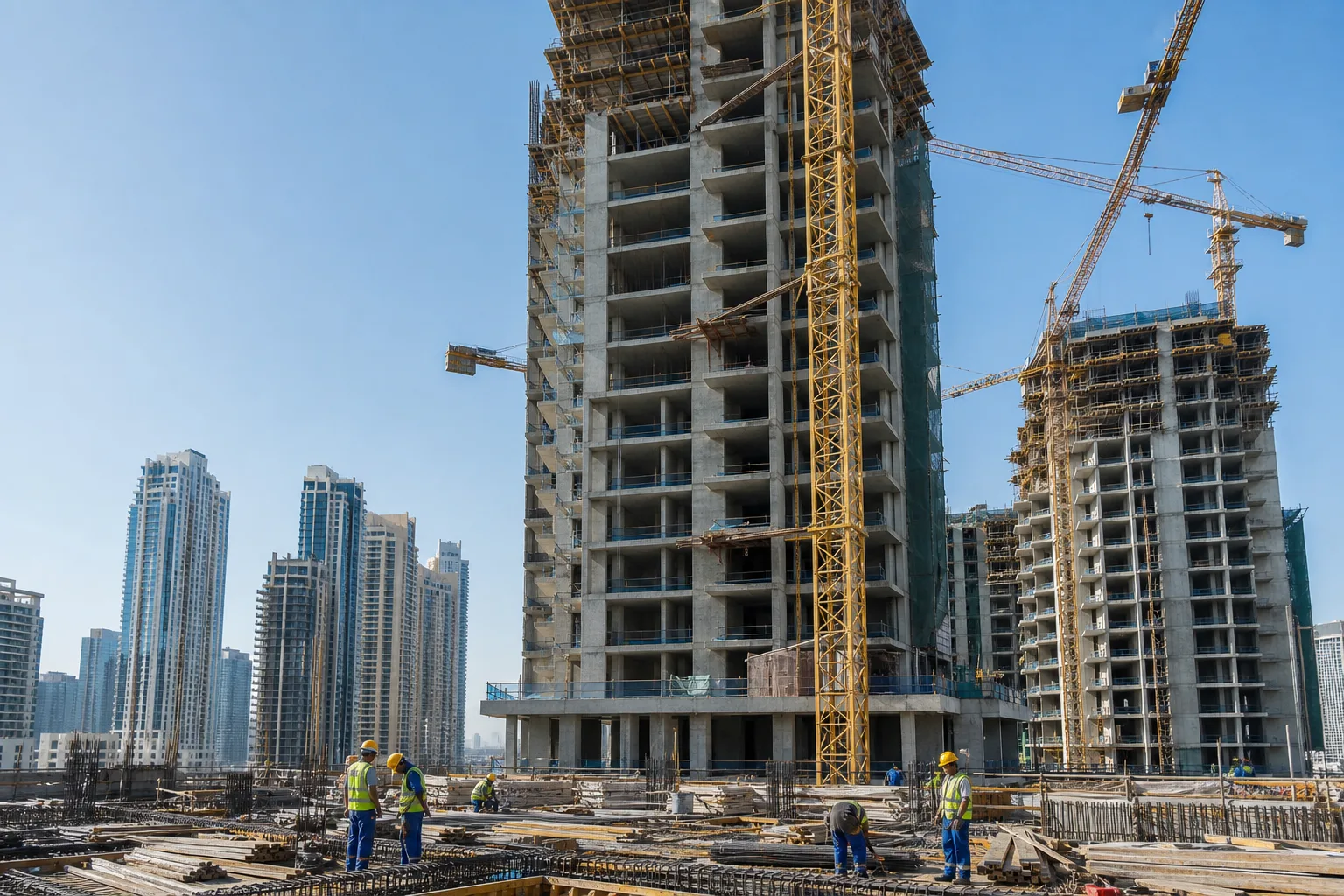
Escrow accounts (escrow) are mandatory for any off-plan project, under Law No. 8 of 2007, supervised by the RERA and the Dubai Land Department. Your payments do not go to the developer: they are held in a regulated account and released as construction progresses.
The reservation deposit is generally between 5 and 20% of the price, often 10 to 20%, sometimes preceded by a fixed booking fee of around AED 20,000 to 100,000 before signing the SPA. These funds are likewise secured in the escrow account.
A concrete example: Canal Heights, developed by DAMAC Properties in Business Bay, is offered from AED 1.2M. The full set of steps is detailed in our off-plan guide.
Points to watch: inheritance, charges and pitfalls
The first pitfall is inheritance: absent any provision to the contrary, Sharia may apply to the transfer of a property in Dubai. A will registered with the DIFC Courts or the Dubai courts secures inheritance for non-Muslims, according to the distribution you choose.
A project in mind?
Talk to a Lucretia adviser
Tailored guidance, no obligation.
Next comes the recurring cost of ownership. Service charges range from about AED 3 to 30 per square foot per year, regulated by the RERA through the Mollak system: allow around AED 10 to 20/sq ft for an apartment, AED 20 to 50 and above for a luxury tower, and AED 2 to 6 for a villa. If you intend to let the property, our guide on rental management and charges in Dubai details how these service charges weigh on net yield.
On financing, non-residents face a stricter framework. The CBUAE allows up to 80% lending for a resident expatriate, but a non-resident typically obtains 50 to 75%, meaning a down payment of 25 to 50%. Our guide on financing for non-residents details these conditions.
Among my clients, the mistake I see most often is signing a preliminary contract without having confirmed that the plot is genuinely in a freehold zone — only to discover too late that it was a right of use.
— Benoit CLAUDEL, Director of Strategy & Operations
That is precisely the check we carry out ahead of every acquisition, before any commitment on your part.
This article is part of our guide
Dubai Property Investment Guide for Foreign Buyers
About the author

Benoit CLAUDEL
Director of Strategy & Operations
With over 18 years of experience in real estate and wealth management, Benoît has developed recognized expertise in advising private investors, business executives and family offices. After starting out in a real estate agency and working within one of the most reputable wealth management firms in Paris, he then joined LCL as Head of Private Banking for Île-de-France, advising high-income clients on their real estate strategies. An entrepreneur, he founded and ran his own wealth management firm for 7 years, structuring investment and wealth optimization solutions. Today at Lucretia, Benoît oversees operational strategy, sales performance and advisor training. He works on high-value-added cases, particularly investments via French holding companies, legal structuring and wealth taxation.