Two opposing logics: pay in instalments for a unit due later to chase capital growth, or buy something rentable right now. We compare them criterion by criterion.
On this page
- Off-plan or ready-to-move in Dubai: which to choose for your situation?
- Cash flow and payment terms: how much do you put down, and when?
- Rental yield: immediate rent or deferred income?
- Capital growth: which type appreciates most in Dubai?
- Risk and security: what you see vs what you bet on
- Which to choose according to your investor profile?
Off-plan or ready-to-move in Dubai: off-plan suits investors chasing capital growth who want to spread their payments, while ready property (a completed unit on the secondary market) is the way to earn rent immediately on something you can see before buying, with a gross yield of 5 to 8% depending on the district (Bayut, Dubai Sales Market Report 2025). Neither option wins outright: it all comes down to your cash flow and your time horizon.
The distinction is straightforward. Off-plan means buying on plan, paying in instalments and taking handover later — 2027 to 2031 for the projects we list. Ready-to-move is an already-built unit you can rent from the day you sign. Four criteria settle the question: cash flow and payment terms, rental yield, capital growth, then risk and security.
Off-plan or ready-to-move in Dubai: which to choose for your situation?
The right choice depends on your objective: off-plan to maximise appreciation while spreading payments, ready-to-move for rent that lands the moment the unit is let.

An off-plan purchase is paid in successive tranches up to key handover, with completion in the future. A ready property already exists: you visit it, you check its condition, you let it without waiting. These are two timelines, two risk profiles and two ways of tying up capital.
The step-by-step of each buying journey falls outside this comparison. For the process, lean on our dedicated guides: buying off-plan step by step and buying on the secondary market. Here we settle the choice upstream: which one serves your situation.
Cash flow and payment terms: how much do you put down, and when?
With off-plan, you start with a deposit of 5 to 20% of the price on reservation — often 10 to 20% — then settle the balance in instalments up to handover; with ready-to-move, you pay almost everything at transfer, in one concentrated effort (SBA/Grosvenor market sources).

Off-plan therefore smooths the outlay over several years. Your funds are secured in a RERA-regulated escrow account, a protection set out in Law No. 8 of 2007 (Dubai Land Department). The secondary market, by contrast, requires you to mobilise the capital in one go.
Financing widens the gap. For a resident expat, borrowing is capped at 50% of value on off-plan, against up to 80% on a completed property at AED 5M or below (CBUAE Rulebook); a non-resident's terms are stricter, detailed in our guide on financing for non-residents.
On entry costs, buying off-plan directly from the developer generally avoids any agency commission on the buyer's side, whereas the secondary market costs 2% + 5% VAT (RERA framework). The 4% DLD fee and fixed charges of AED 4,700 to 5,500 apply in both cases.
| Criterion | Off-plan | Ready-to-move |
|---|---|---|
| Initial outlay | Deposit 5-20% on reservation | Almost all at transfer |
| Instalments | Payments until handover | Concentrated payment |
| LTV (resident expat) | 50% | Up to 80% (≤ AED 5M) |
| Agency commission | Generally none | 2% + 5% VAT |
| RERA escrow | Mandatory | Not applicable |
Rental yield: immediate rent or deferred income?
A ready-to-move property generates rent as soon as it is let, with a gross yield of 5 to 8% depending on the district and a market median of 5.6% across 65 districts that have both a sale and a rental series (Bayut). With off-plan, no rent comes in during construction: income only starts once the keys are handed over.
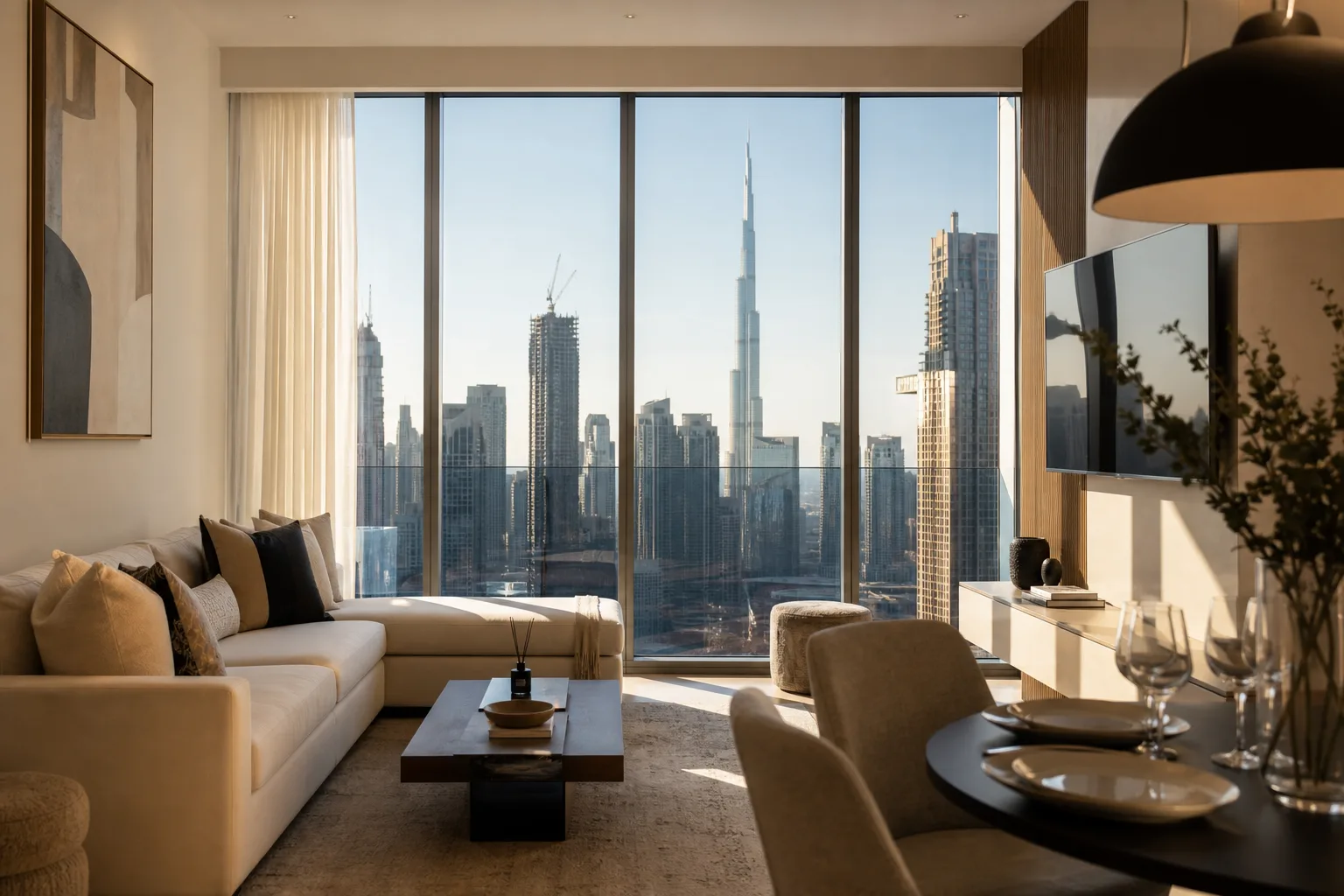
This is the most concrete difference for an investor. A project in our catalogue due in 2028 or 2029 earns nothing before the keys, whereas a secondary-market apartment works from day one.
The achievable level depends above all on the district. Affordable areas post the strongest gross yields: Arjan at 7.1% or Dubai Sports City at 6.8% (Bayut data, March 2026). Prime completed addresses yield less: Downtown Dubai 5.6%, Palm Jumeirah 4.5% (Bayut data, March 2026).
These figures are gross calculated yields — annual rent per square foot divided by price per square foot, before charges and vacancy. To move to net, factor in charges: our guide on gross vs net yield details the calculation.
| Criterion | Off-plan | Ready-to-move |
|---|---|---|
| Time to first rent | After handover (2027-2031 in our catalogue) | As soon as it is let |
| Typical gross yield | By district once completed | 5 to 8% (median 5.6%) |
| Annual service charges | AED 3 to 30/sq ft/year | AED 3 to 30/sq ft/year |
Service charges — AED 3 to 30/sq ft/year depending on the property, regulated by RERA via Mollak — apply in both cases and weigh on net yield.
Capital growth: which type appreciates most in Dubai?
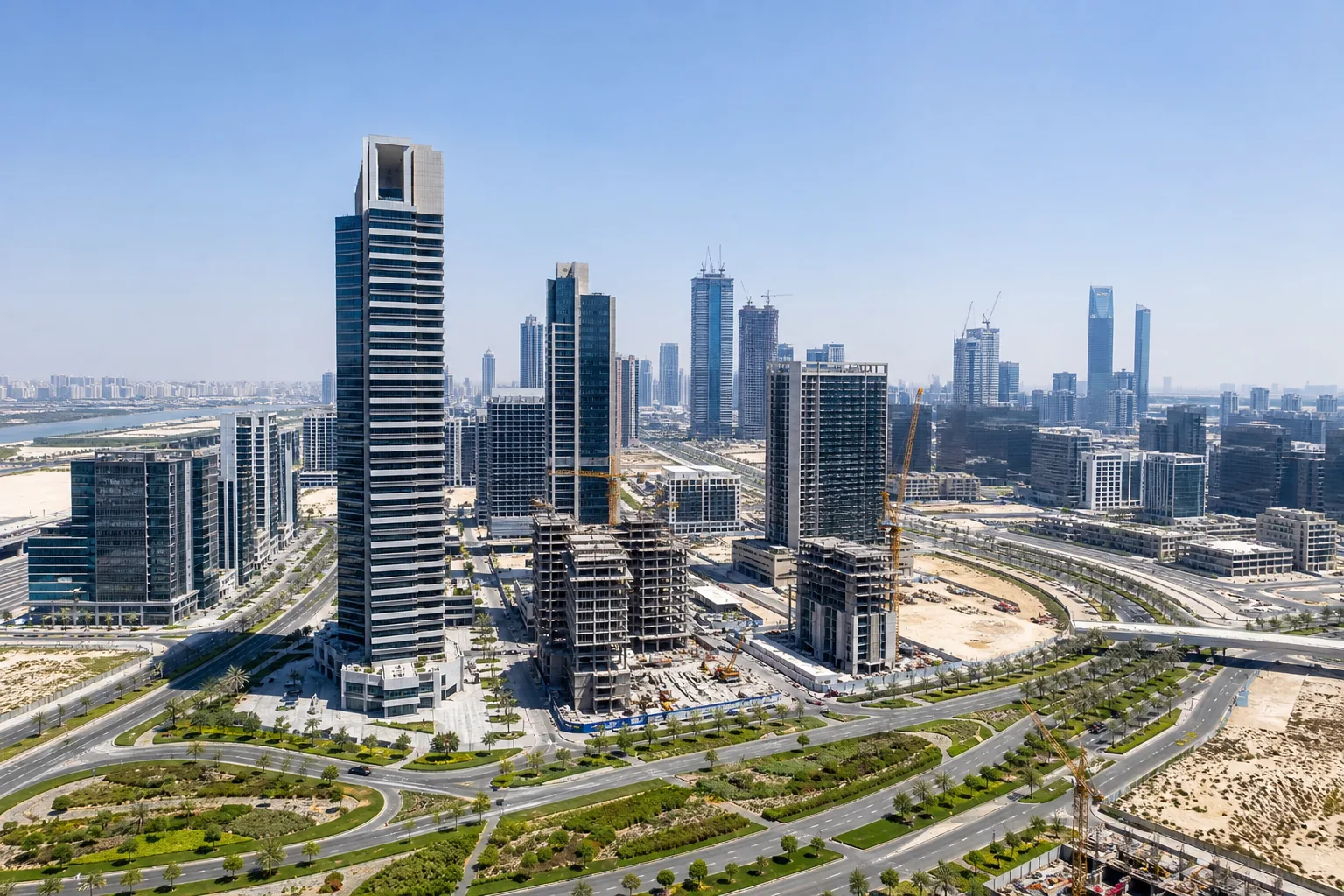
Off-plan offers the strongest appreciation leverage, because the price paid on plan captures the rise through to handover, in fast-growing districts such as Dubai Silicon Oasis at +108.9% over 60 months or Jumeirah Garden City at +147.6% over 60 months (Bayut data, March 2026).
Free resource
Get our investment guide
The essentials — strategy, taxation, steps — to download.
Ready-to-move appreciates more smoothly, in already-established districts. Downtown Dubai rose 51.9% and Palm Jumeirah 69.1% over 60 months (Bayut data, March 2026) — a solid gain, but without the step-change of a construction site moving from plan to built.
Resale levers and spotting rising districts are covered in our guides on buy-and-sell strategies and up-and-coming districts.
| Criterion | Off-plan | Ready-to-move |
|---|---|---|
| Growth driver | Plan → handover gap | Smoothed district appreciation |
| Horizon | Construction (2027-2031) | Long term |
| 60-month example | Jumeirah Garden City +147.6% | Palm Jumeirah +69.1% |
Risk and security: what you see vs what you bet on
Off-plan carries a risk of delay or construction default, softened by the mandatory escrow required under Law No. 8 of 2007 with RERA/DLD oversight; ready-to-move removes that uncertainty since the property is visible and its condition verifiable before purchase.
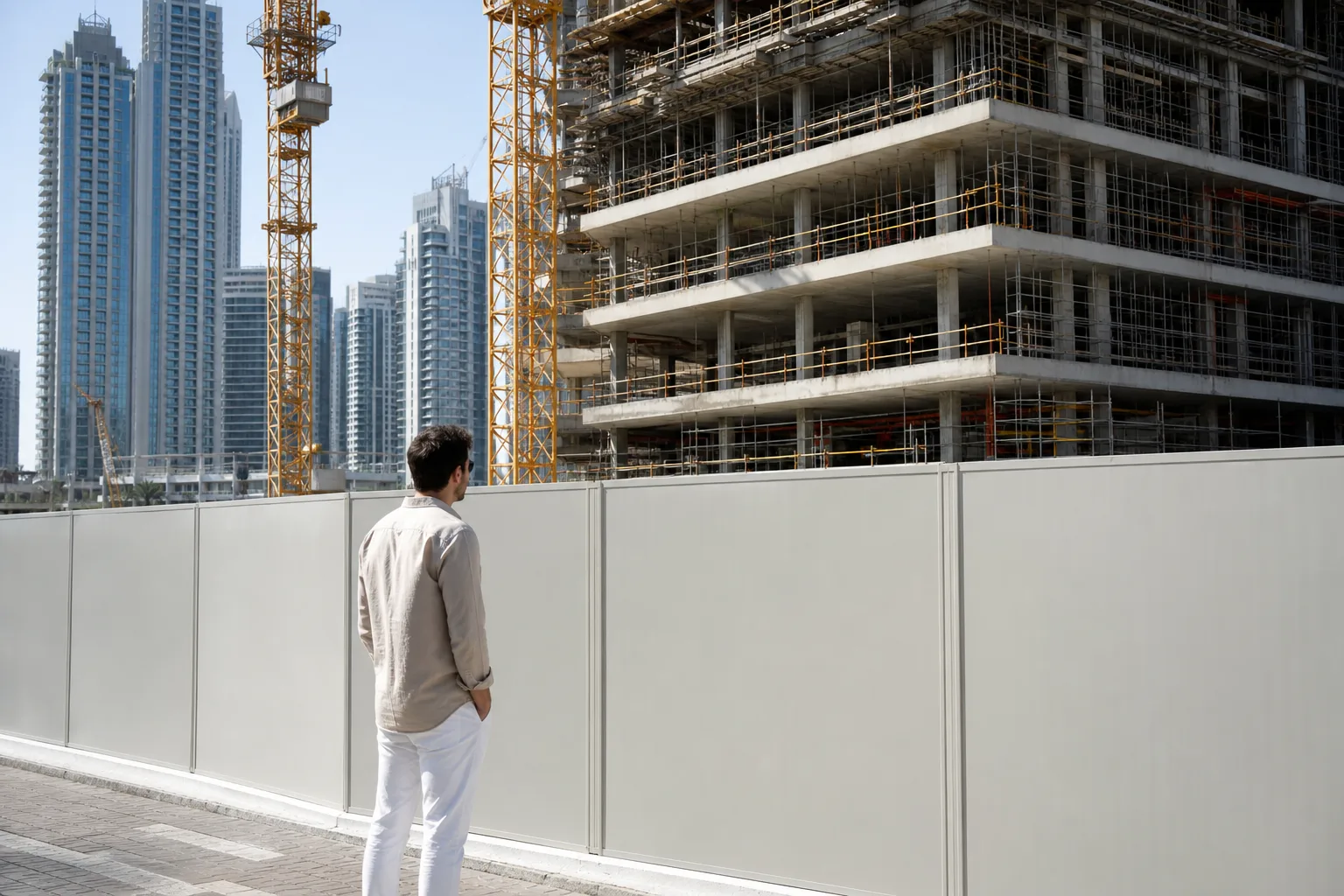
This is the central trade-off. With off-plan, you are betting on delivery — hence the importance of the developer's strength, a point our guide on developer reliability addresses. On the secondary market, you often pay a higher price per square foot in established districts, in exchange for certainty.
The legal and tax framework is identical in both cases. Freehold ownership has been open to foreigners in designated zones since 2002 (Dubai Land Department), individuals pay no tax on rental income or capital gains (UAE government), and VAT on residential property is 0%.
Tax is covered in depth in our guide on property taxation in Dubai. On residency, the Golden Visa requires AED 2M of investment, a threshold identical off-plan or secondary — off-plan counting on the value invested.
Which to choose according to your investor profile?
There is no universal winner: the choice depends on your horizon, your cash flow and your objective of income or appreciation.

Featured
View projects: Lunaya
From AED 6,798,750
Hand-picked new properties with end-to-end expert support.
View projects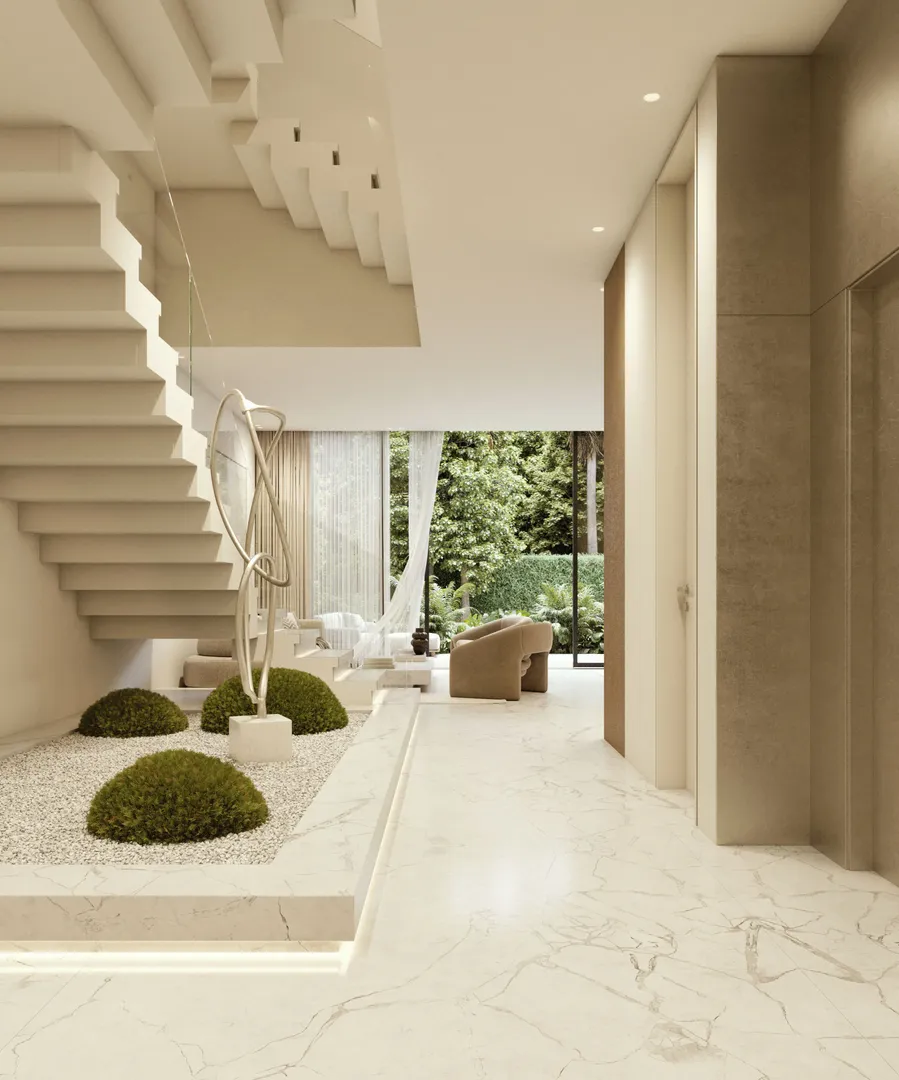
You want immediate cash flow
Ready-to-move in a high-yield district is the clear call: Arjan at 7.1% or Dubai Sports City at 6.8% (Bayut data, March 2026) put your capital to work from the moment it is let.
You are targeting appreciation and can tie up capital without rent
Off-plan in a rising district captures the plan-to-handover gap. A project such as The Archive in Dubailand Residence Complex, due September 2028, or a scheme in Business Bay illustrates this logic.
Your cash flow is limited but steady
Off-plan and its instalment structure — a 10 to 20% deposit then staged payments — sit better than a concentrated secondary-market payment. You come in with less initial capital.
You want maximum security and to see before buying
Ready-to-move in an established district like Downtown Dubai or Palm Jumeirah removes construction risk.
On the ground, the mistake I see most often is the investor who picks off-plan for the headline yield, forgetting they won't collect a single dirham of rent before the keys are handed over. I always have my clients answer one question: do you need that income now, or can you wait?
— Léonard ARZOUNI, Real Estate Consultant
We work through this choice with each client according to their horizon and cash flow. To cross-reference the type of property with this decision, see our guide on apartment, villa or townhouse, and the overview on our Dubai market page.
This article is part of our guide
Dubai Property Investment Guide for Foreign Buyers
About the author

Léonard ARZOUNI
Real Estate Consultant
Léonard is a luxury real estate consultant with more than six years of experience in the high-end market. He is fluent in French and English and assists an international clientele in the acquisition and management of exceptional properties, both residential and investment-oriented. His expertise covers property valuation, portfolio management and strategic negotiation, enabling him to develop tailor-made solutions adapted to each client's wealth objectives. He is appreciated for his rigour and attention to detail. Outside of work, Léonard is passionate about contemporary art, collecting works by emerging artists. He is a curious traveller who loves discovering new cultures.