The mistakes that cost you dearly when investing in Dubai: forgotten fees, misread yields, neglected residence tax. Each one costed with market data.
On this page
- What are the 7 costliest mistakes for investors in Dubai?
- Mistake #1 — Budgeting only for the listed price
- Mistake #2 — Confusing the advertised gross yield with real returns
- Should you really aim for the highest yield?
- Mistake #4 — Underestimating the off-plan framework and financing rules
- Mistake #5 — Believing in "zero tax" and neglecting your residence tax situation
- Mistake #6 — Forgetting succession and picking the wrong developer and district
- How can you avoid these mistakes based on your objective?
The costliest mistakes when investing in Dubai almost always come down to a number that got overlooked: forgetting the 4% transfer fee charged by the Dubai Land Department (DLD), reading a gross yield as if it were net, or ignoring the tax rules in your country of residence. None of these mistakes are down to bad luck — each one shows up in the data, and each one has a price tag.
Keep this benchmark in mind: the median calculated gross yield sits at 5.6% across 65 districts, for a median price of AED 1,883/sq ft according to Bayut data (March 2026). That anchor lets you weigh up any seller's promise. Here are the seven traps that come up most often, with the money lost behind each one.
What are the 7 costliest mistakes for investors in Dubai?
The seven most common mistakes come from overlooked figures, not market swings — and each one can be fixed before you sign. They show up with almost every buyer who goes it alone, and fall into seven clear categories that I'll cost out one by one.

- Mistake #1 — Budgeting only for the listed price: acquisition costs come on top of the price.
- Mistake #2 — Confusing gross and net yield: charges eat into the gap.
- Mistake #3 — Chasing the highest yield: risk tracks the rate.
- Mistake #4 — Underestimating the off-plan framework and financing: escrow, deposit, LTV.
- Mistake #5 — Believing in "zero tax": your residence tax situation still needs handling.
- Mistake #6 — Forgetting succession: without a will, Sharia law can apply.
- Mistake #7 — Picking the wrong developer and district: catalogue depth protects you.
The guiding thread is the same everywhere: position each offer against the 5.6% median gross yield and the median price of AED 1,883/sq ft according to Bayut data (March 2026). The detailed processes — buying off-plan, the secondary market, the Golden Visa and choosing the right district — are covered in their dedicated guides.
Mistake #1 — Budgeting only for the listed price
The first trap is reasoning on the property price alone: DLD transfer fees come to 4% of the purchase price, plus fixed charges set by the Dubai Land Department. These 4% are unavoidable and are paid at the moment ownership is transferred.

On top of that 4% come roughly AED 4,700 to 5,500 in fixed fees: the title deed (~AED 580, AED 40 off-plan), plan fees (~AED 250) and the trustee office (~AED 4,000 to 4,200), according to Property Finder data. A modest line item next to the price, but one that belongs in the budget.
Agency fees on the secondary market
On the secondary market, the buyer pays 2% of the price + 5% VAT in agency fees, according to Property Finder. When buying off-plan directly from the developer, there is usually no commission on the buyer's side — a difference that weighs on the total budget.
The full worked example — DLD + agency + fixed fees on a real purchase — is detailed in our guide to taxation and purchase costs.
Mistake #2 — Confusing the advertised gross yield with real returns
All Bayut yields are gross and calculated (annual rent per sq ft ÷ price per sq ft), before charges and before vacancy: reading them as "net" or "guaranteed" is a misinterpretation. A seller advertising "7% net guaranteed" is describing a figure that doesn't exist in the market data.
Featured
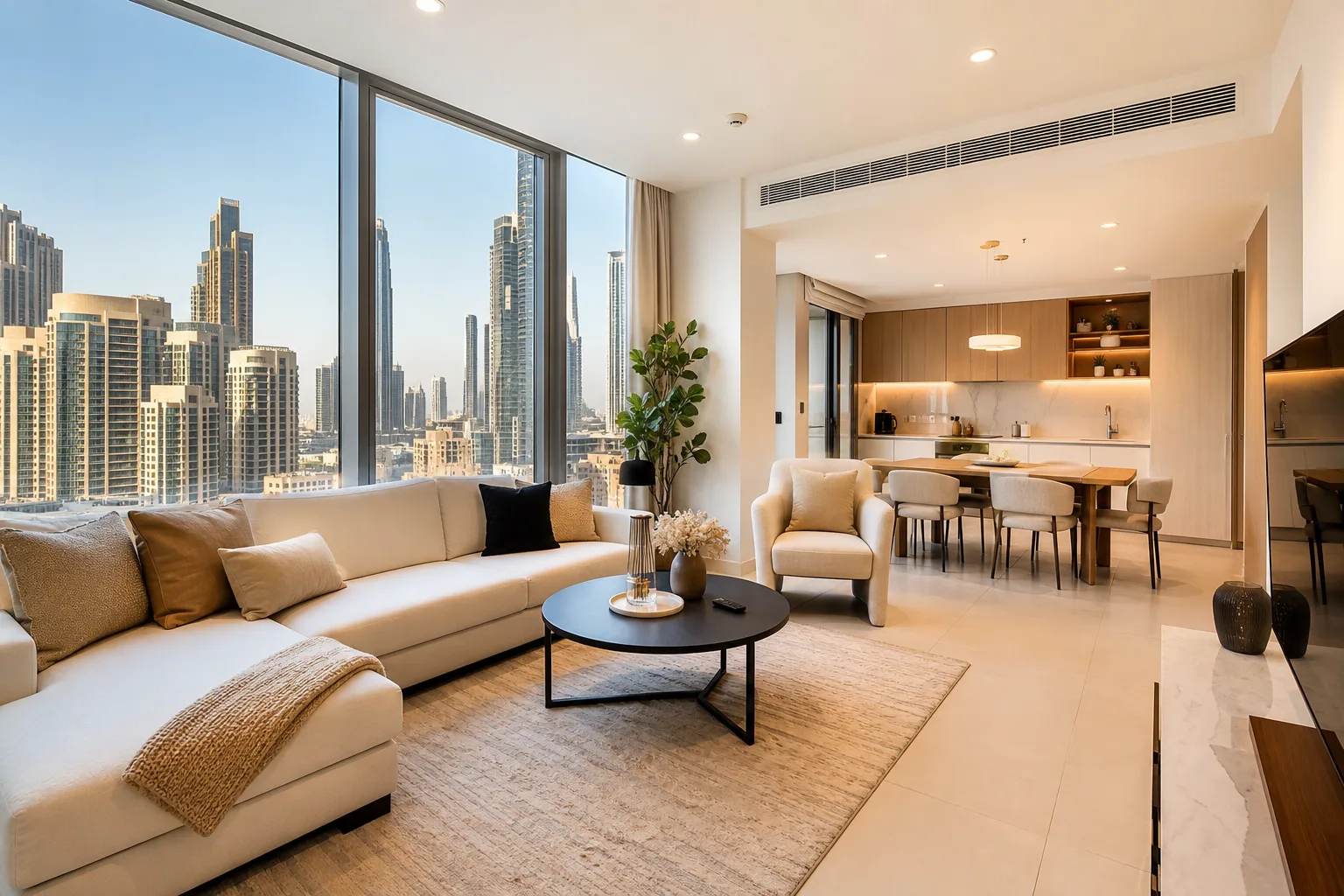
View projects: Artistry Residences
From AED 2,347,000
Hand-picked new properties with end-to-end expert support.
View projects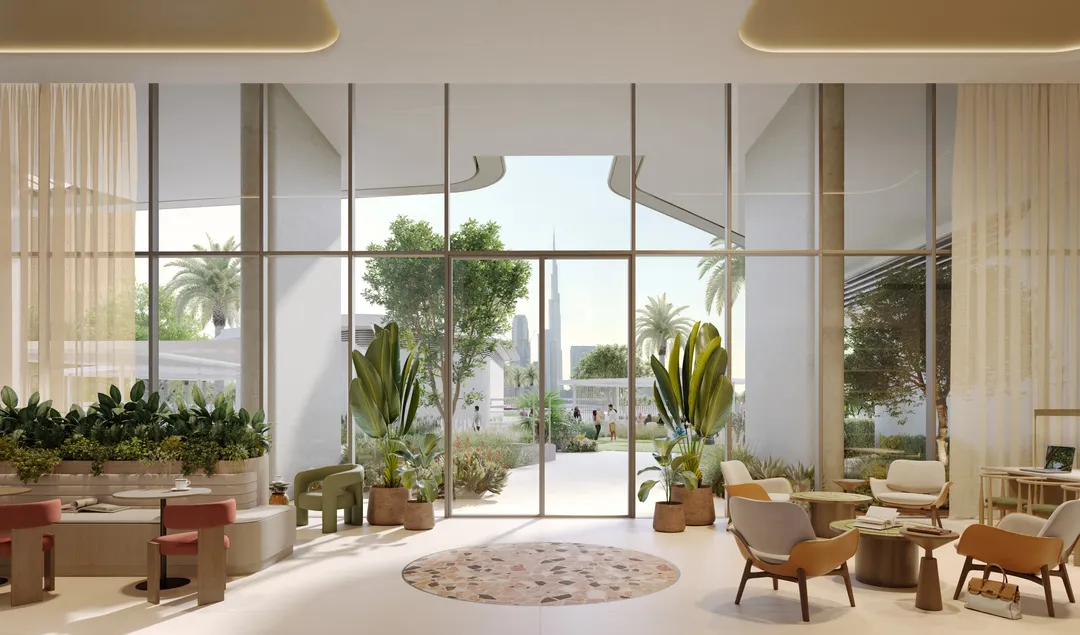
The gap between gross and net depends mostly on service charges: a luxury tower cuts far more into the yield than a villa, where charges are lightest. At equal rent, two properties therefore don't deliver the same cash flow.
Compare two districts from our market data: Palm Jumeirah shows a 4.5% calculated gross yield, against 7.1% in Arjan (Bayut data, March 2026). The gross figure says nothing about the net once charges are deducted — and prestige towers often carry the heaviest charges.
The detailed move from gross to net cash flow, with the full calculation, is set out in our guide to rental yields.
Should you really aim for the highest yield?
No: mechanically chasing the maximum yield exposes you to other risks. Dubai International City shows a 7.7% calculated gross yield, Wasl Gate 7.7% and Damac Riverside 7.2% (Bayut data), but these affordable areas concentrate more volatile rental demand and higher vacancy.
The opposite trap lurks on the prestige side: La Mer returns just 1.5%, Trade Center 1 1.7%, Ras Al Khor Industrial 1 2.8% and Bukadra 3% (Bayut data, March 2026). There you're paying for the name, not the rental return.
The sweet spot sits around the median: Dubai Silicon Oasis 6.3%, Dubai Science Park 6.6% and Dubai Sports City 6.8% (Bayut data, March 2026) combine a solid yield with capital growth. Always position an offer on this scale. The decision grid by objective is developed in our guide "Where to invest in Dubai".
Mistake #4 — Underestimating the off-plan framework and financing rules
With off-plan, the major mistake is paying funds outside an escrow account: escrow accounts have been mandatory for off-plan projects since Law No. 8 of 2007, under RERA/DLD supervision according to the Dubai Land Department. Paying into a non-escrow account exposes your capital.
A project in mind?
Talk to a Lucretia adviser
Tailored guidance, no obligation.
Second mistake: getting the deposit wrong. It sits between 5 and 20% of the price at reservation (often 10-20%), sometimes preceded by a booking of ~AED 20,000 to 100,000 before signing the SPA. This amount needs to be available from the outset.
The mortgage-cap mirage
Many buyers plan around the LTV cap for resident expats (80% ≤ AED 5M, 70% above, 60% for a second property, 50% off-plan) set by the CBUAE. Yet a non-resident in practice obtains only 50 to 75%, meaning a deposit of 25 to 50%.
The step-by-step off-plan journey and the worked example of non-resident financing are covered in our off-plan and financing guides.
Mistake #5 — Believing in "zero tax" and neglecting your residence tax situation
The "zero tax" is real but partial: individuals pay no UAE tax on rental income or capital gains, and residential property carries 0% VAT according to the UAE government's official portal. This advantage, however, only holds within the Emirates.

The classic mistake is forgetting the tax rules in your country of residence. The France-UAE treaty of 19 July 1989 provides that property income is taxable in the UAE and double taxation eliminated via a tax credit, according to the BOFiP — but this income still counts toward calculating the effective tax rate in your country of residence.
The detail — supporting documents, effective rate, how the tax credit works — is developed in our taxation guide.
With my clients, the blind spot is almost never Dubai: it's what happens back in their country of residence. "Zero tax" reassures them so much that they forget to declare, and putting it right costs more than preparing for it.
— Sofiane ABDELAZIZ, Real Estate Consultant
Mistake #6 — Forgetting succession and picking the wrong developer and district
Without a registered will, Sharia law can apply by default to estates in Dubai: a DIFC Wills or a will lodged with the Dubai courts secures the transfer for non-Muslims, according to the DIFC Courts. Planning this step spares your heirs a long, costly deadlock.
Another mistake: choosing a developer or a project without catalogue depth. Among the 80 active developers we list, players such as Emaar Properties (14 published projects), DAMAC Properties (17) or Binghatti Developers (13) offer a verifiable delivery track record.
The entry ticket needs calibrating too. The projects we list range from AED 500,000 to AED 2M, with a median of AED 1.2M, for completions from 2019 to 2031: a distant date ties up your capital for longer. A well-referenced project like The Archive in Dubailand Residence Complex, from AED 700,000 (completion September 2028), is a clearer entry point than a bet on an unknown player.
How can you avoid these mistakes based on your objective?
The method comes down to one rule: start from your objective, then check each mistake against our market data before signing. The table below sums up the seven traps, their cost and the reflex that neutralises them.
| Mistake | Reference figure | The reflex that protects you |
|---|---|---|
| Budgeting the price alone | 4% DLD + ~AED 4,700-5,500 fixed | Add fees and agency (2% + VAT) |
| Gross read as net | Service charges AED 3 to 30/sq ft/yr | Deduct charges and vacancy |
| Max yield, no risk factored in | Median 5.6% (Bayut) | Aim around the median |
| Off-plan/financing framework | Non-resident: 50-75% LTV | Check escrow and real deposit |
| Absolute "zero tax" | Effective rate at home; 9% CT | Handle your residence tax situation |
| Succession overlooked | Sharia by default | Register a DIFC will |
| Wrong developer/district | 80 developers listed | Require a delivery track record |
For a steady yield, favour districts around the median and a developer with a deep catalogue. For capital growth, accept a lower yield in exchange for appreciation potential, without forgetting the entry costs. For long-term residence, size the budget around the Golden Visa threshold.
We secure every step — from vetting the developer to calculating the net yield — so these mistakes cost you nothing. Discover our approach to the Dubai market and what we do.
This article is part of our guide
Dubai Property Investment Guide for Foreign Buyers
About the author

Sofiane ABDELAZIZ
Real Estate Consultant
Sofiane is a real estate investment expert in Dubai with a solid background in finance and investment strategy. He specializes in financial market analysis and risk management, treating real estate as a true asset class. After gaining experience in the secondary market, he moved into Off Plan investment, developing in-depth knowledge of the Dubai real estate market. At Lucretia Immobilier, he supports an international clientele in acquiring high-potential properties with a structured, transparent, and performance-driven approach.