From the published gross yield to the net yield you actually collect: the formula line by line, a worked example on Al Maryah Island and the pitfalls that distort returns in Abu Dhabi.
On this page
- Gross vs net yield: what's the difference, and which one matters in Abu Dhabi?
- Calculating net rental yield in Abu Dhabi: the formula line by line
- Worked example: a 1,000 sq ft apartment on Al Maryah Island
- Why the gross-to-net gap varies by district
- Net yield and capital growth: should you add them together?
- The pitfalls that inflate a yield calculation
To calculate your net rental yield in Abu Dhabi, subtract service charges, management, maintenance and vacancy from the annual rent, then divide the result by the purchase price plus transfer fees. The median gross yield across 8 districts stands at 5.7%, according to Bayut data (monthly series, August 2026 for the latest data point).
The gap between the two rates depends on the district, the price per sq ft and your actual running costs. The worked example below draws on public market data and shows how each cost line pulls the rate down. For a broader view of the market, see our invest in Abu Dhabi page.
Gross vs net yield: what's the difference, and which one matters in Abu Dhabi?
Gross yield compares annual rent with the purchase price alone. Net yield deducts running costs, vacancy and fees from the rent, then compares what's left with the total acquisition cost. Net yield is therefore the measure of the money that actually lands in your account. The distinction is explained in our glossary.
Published figures for Abu Dhabi are calculated gross yields: they range from 2.4% to 6.8% by district, according to Bayut data (March 2026). They are obtained by dividing annual rent per sq ft by price per sq ft, with no allowance for running costs or vacancy.
The emirate has one distinctive feature. Individuals pay 0% tax on rental income and capital gains, according to the official UAE government portal. Pre-tax and post-tax net yields are therefore the same. In Europe, these are two separate steps.
I often see clients looking only at the gross figure shown by a portal or a developer. To compare districts on that first filter, our guide to rental yields in Abu Dhabi gives the full ranking. Net yield, on the other hand, has to be worked out property by property.
Calculating net rental yield in Abu Dhabi: the formula line by line
Net yield is the rent collected, minus all operating costs, divided by the purchase price plus the 2% transfer fee paid through ADREC and DARI.

The numerator: what you actually collect
- Annual rent collected: since 3 June 2026, all lease renewals take place with no increase and are pegged to the last registered Tawtheeq contract, according to ADREC. Keep the rent flat in your calculation.
- Building charges (service charges): take them from the building's actual service charge invoices.
- Property management: your manager's contract sets the rate. Our guide to property management in Abu Dhabi explains what this line covers.
- Maintenance and vacancy: a provision for repairs, plus months without a tenant between leases.
Our dataset provides no amounts for these lines. They are variables: price them from your own quotes.
The denominator: total cost, not the asking price
Add the transfer fee to the price. The "tax" line is zero: our guide to property taxation in Abu Dhabi has the details.
We apply this method, with every cost documented, in our buy-to-let investment studies.
Worked example: a 1,000 sq ft apartment on Al Maryah Island
On Al Maryah Island, a 1,000 sq ft apartment costs AED 2,043,000 (AED 2,043/sq ft) and rents for AED 138,000 a year (AED 138/sq ft/year), according to Bayut data (March 2026). Its calculated gross yield is therefore 6.8%.
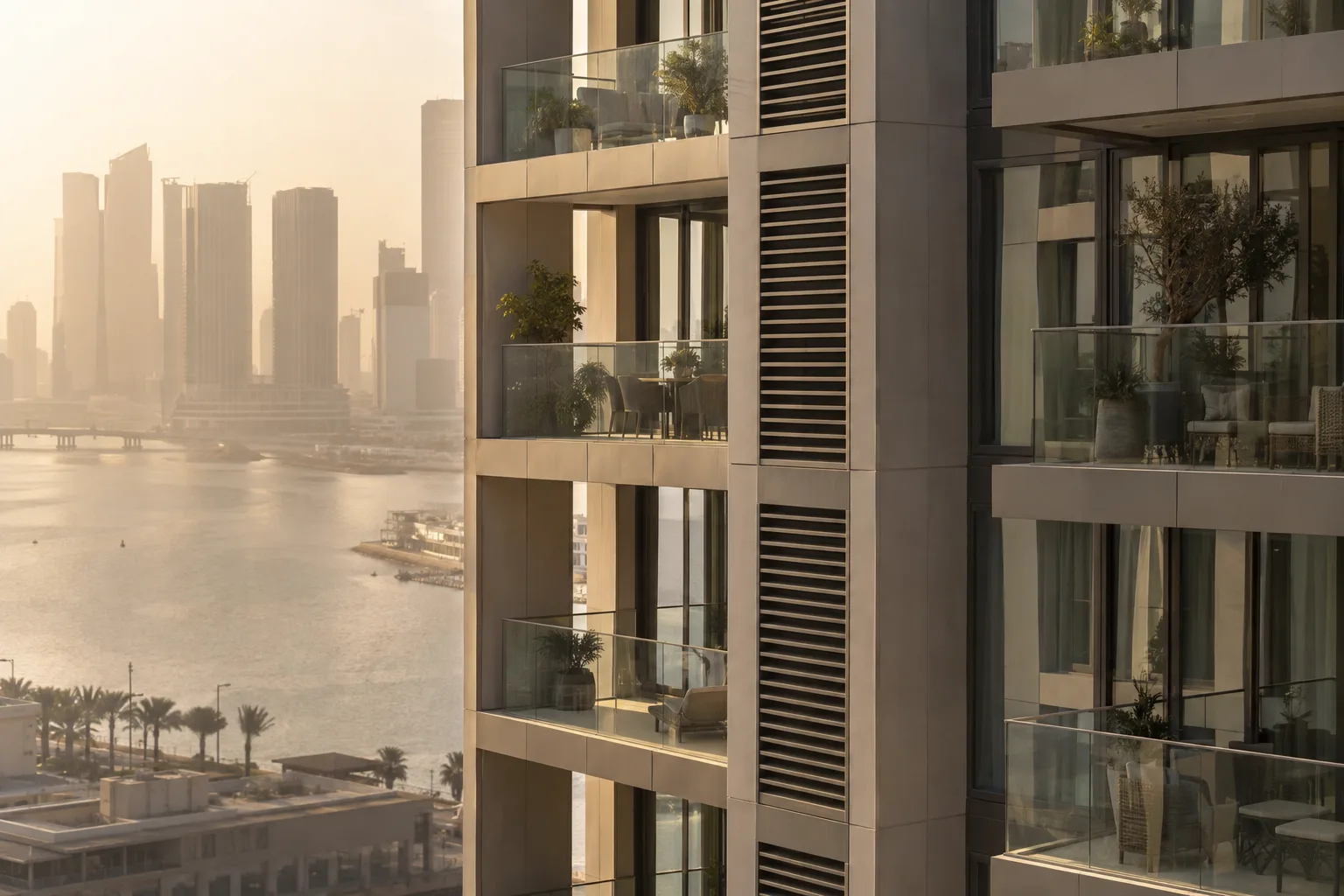
Next, add the 2% transfer fee, or AED 40,860. Total cost then reaches AED 2,083,860. Against that cost, the AED 138,000 rent gives a yield of around 6.6%, before a single running cost.
Then deduct your actual running costs from the rent. On 1,000 sq ft, every AED/sq ft of annual charges costs AED 1,000 a year. It lowers the rate by about 0.05 points on a total cost of AED 2,083,860. That way you can see the impact of each line before you've even gathered all your quotes.
The district includes, for example, The St. Regis Residences, due for handover in December 2028. At this price per sq ft, a 1,000 sq ft property exceeds the AED 2,000,000 threshold set for the Golden Visa. The conditions are set out in our guide to the property Golden Visa in Abu Dhabi.
Why the gross-to-net gap varies by district
The gap between gross and net varies with price per sq ft and rent level: the lower the rent per sq ft, the larger the share a given charge per sq ft absorbs.

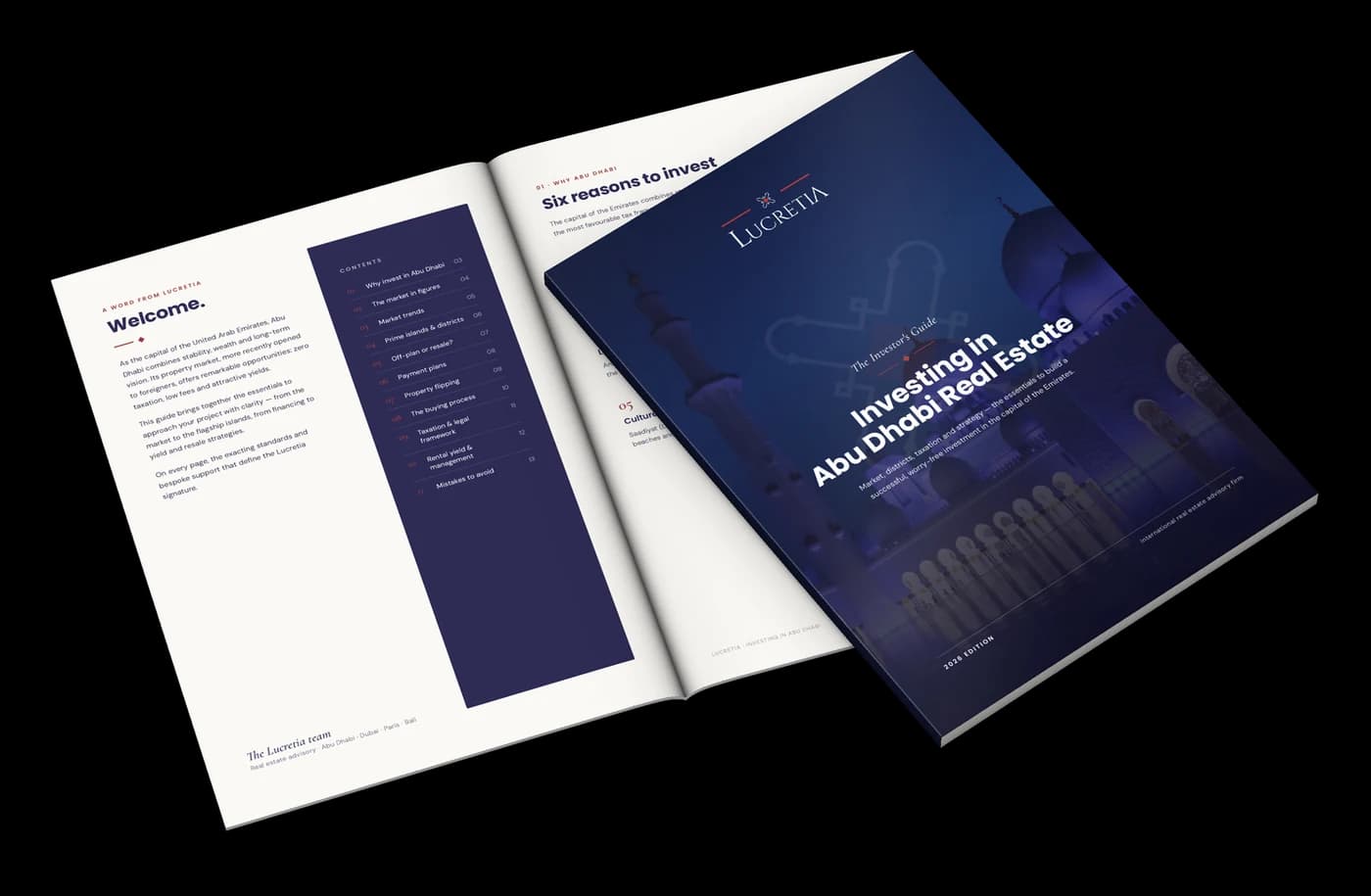
Free guide, delivered on WhatsApp
Get our investment guide
Taxation, visas, financing, buying steps: 14 pages sent to your WhatsApp within minutes.
| District (Bayut, March 2026) | Price AED/sq ft | Rent AED/sq ft/year | Calculated gross | 2% fee on 1,000 sq ft | Yield on total cost | Share of rent absorbed by AED 1/sq ft of charges |
|---|---|---|---|---|---|---|
| Al Saadiyat Island | 2,714 | 117 | 4.3% | AED 54,280 | ≈ 4.2% | ≈ 0.9% |
| Reem Island | 1,497 | 102 | 6.8% | AED 29,940 | ≈ 6.7% | ≈ 1% |
| Al Jurf Gardens | 1,603 | 39 | 2.4% | AED 32,060 | ≈ 2.4% | ≈ 2.6% |
In Al Jurf Gardens, rent is only AED 39/sq ft/year. Every fixed cost therefore weighs nearly three times as much, proportionally, as in Saadiyat.
Reem Island and Al Maryah both show a 6.8% gross yield, but at different prices (AED 1,497 vs 2,043/sq ft). On Reem, every AED/sq ft of charges takes off about 0.07 points, against 0.05 on Al Maryah. If charges per sq ft are similar, the cheaper district can end up behind once costs are deducted.
When I rerun the numbers with a client using the building's real service charges, the initial ranking between two districts doesn't always hold.
— Sofiane ABDELAZIZ, Real Estate Consultant
Net yield and capital growth: should you add them together?
No: net yield measures cash you actually collect, whereas price growth remains an unrealised gain. Adding them into a single rate mixes money received with a gain that exists only on paper.
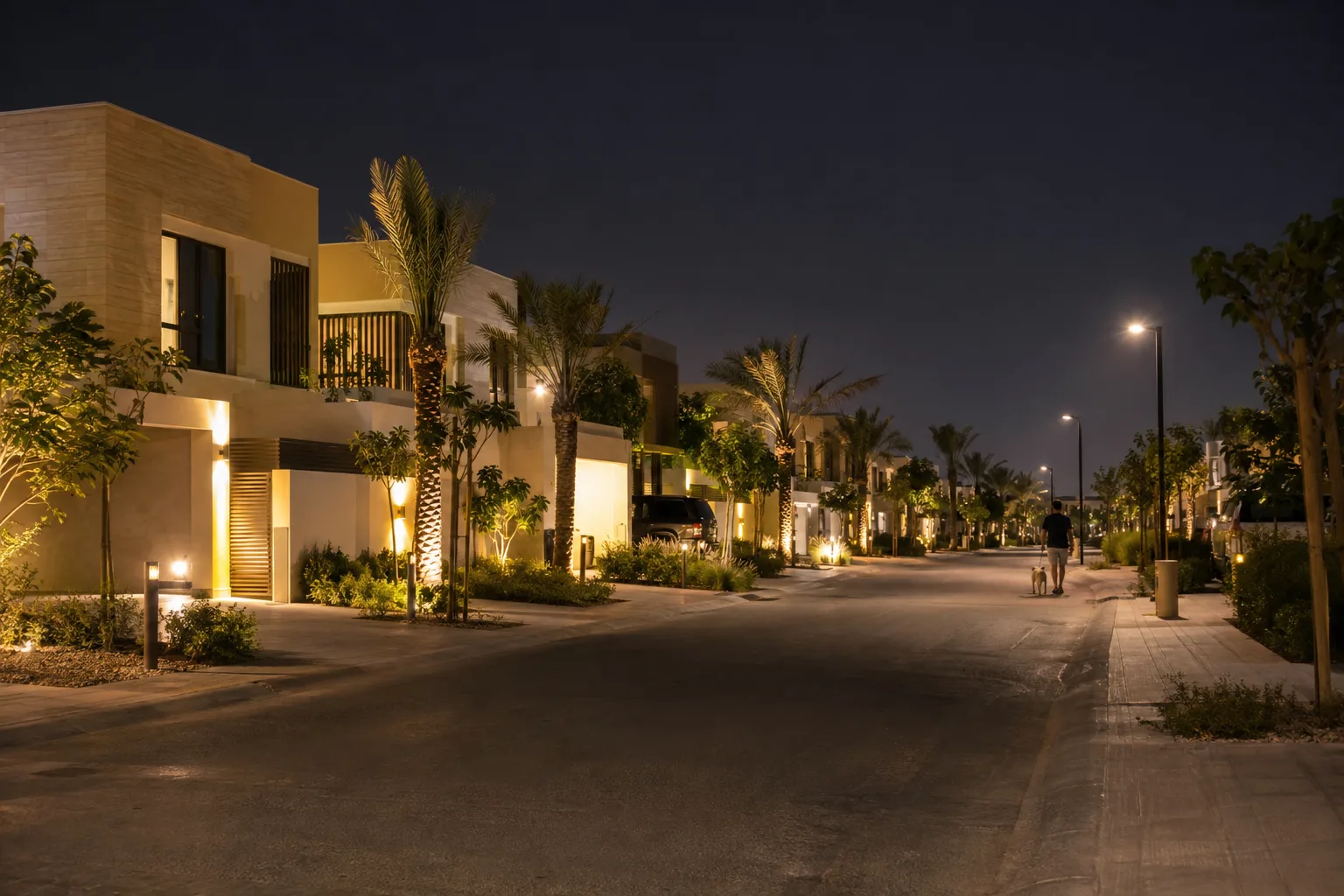
Over 12 months, Bayut data (March 2026) shows +3.7% on Al Maryah, +4.1% in Saadiyat and +5.4% in Al Jurf Gardens. The market median is +6.1% across 10 districts.
These figures describe two different risk profiles:
- Al Jurf Gardens: low rent and stronger capital growth. Your result depends mainly on the price you sell at.
- Al Maryah Island: the reverse. Rent makes up most of the return, and the result depends less on price movements.
So calculate two separate indicators: net income collected, then an estimated capital gain that you only count at the point of sale. To follow price trends, read our analysis of the Abu Dhabi property market. To turn an unrealised gain into a real one, see our guide to selling a property in Abu Dhabi.
The pitfalls that inflate a yield calculation
The most common trap is presenting the gross yield calculated from Bayut as a net yield, or even as a guaranteed yield. That rate deducts no running costs and no vacancy.
A project in mind?
Talk to a Lucretia adviser
Tailored guidance, no obligation.
Forgetting the rent-free period of an off-plan purchase
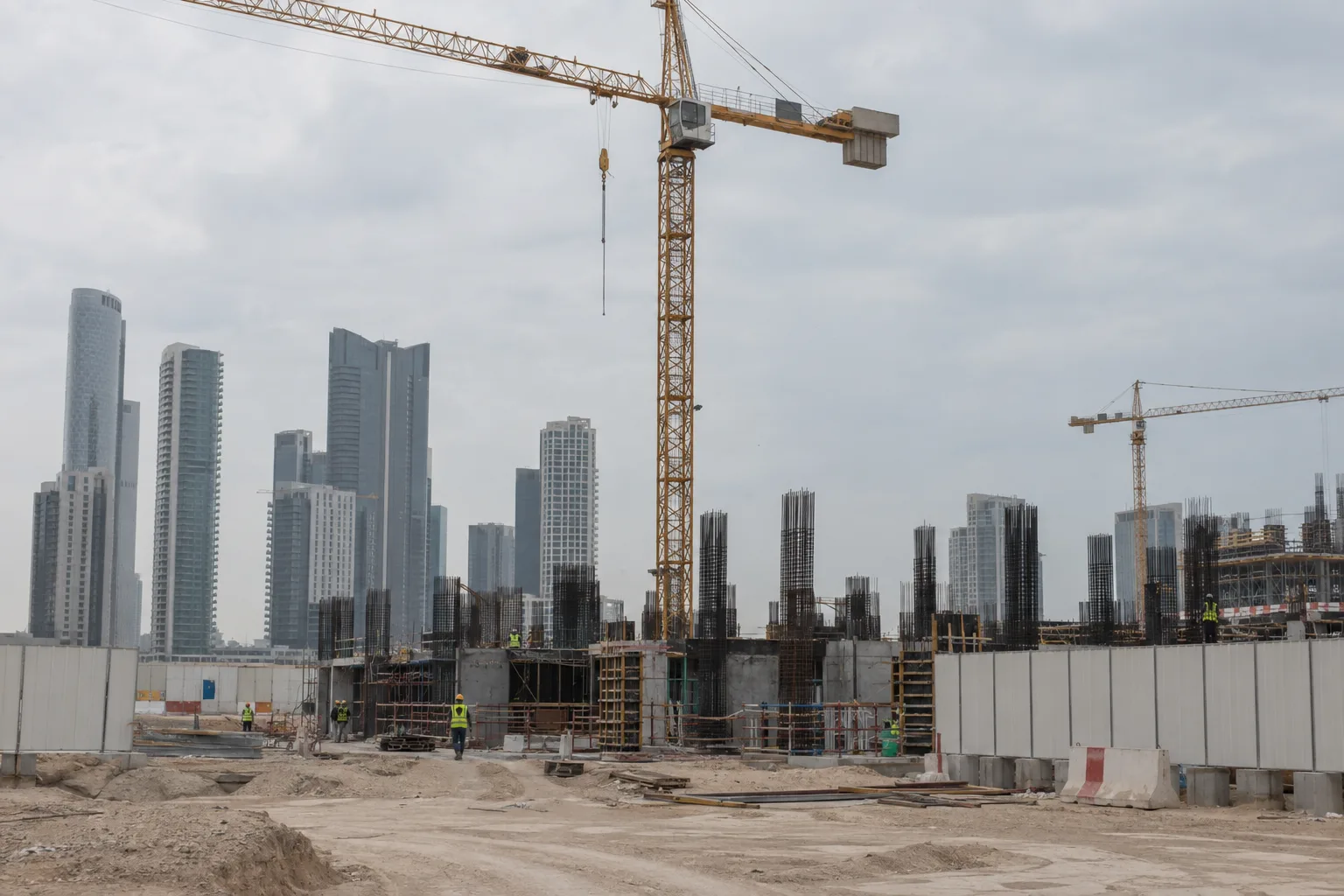
An off-plan property generates no rent before handover. The Artery Residences, on Reem Island, starts at AED 1.8M and is due for handover in December 2029. Until then, the money paid in earns nothing. The mistake I see most often is calculating yield from the first instalment without counting those years with no income. Our guide to buying off-plan in Abu Dhabi details the payment schedule.
Mixing data from different dates
Not all series cover the same month. The price for Al Rahah dates from February 2026, Al Bahyah from April 2026, and most other districts from March 2026. Always compare data from the same month.
This article is part of our guide
Abu Dhabi Property Investment Guide: Buy, Let and Resell with Confidence
About the author

Sofiane ABDELAZIZ
Real Estate Consultant
Sofiane is a real estate investment expert in Dubai with a solid background in finance and investment strategy. He specializes in financial market analysis and risk management, treating real estate as a true asset class. After gaining experience in the secondary market, he moved into Off Plan investment, developing in-depth knowledge of the Dubai real estate market. At Lucretia Immobilier, he supports an international clientele in acquiring high-potential properties with a structured, transparent, and performance-driven approach.