Prices still moderate, the trajectory already under way: Dubai's emerging districts where capital can still work, backed by Bayut figures.
On this page
- Where to buy in Dubai before prices rise: the emerging districts to target now
- How to spot a district before prices rise: the 3 signals to read in Bayut's data
- A worked example: investing in an emerging district, what it actually looks like
- Immediate yield or future capital gain: which type of emerging district for which goal?
- Off-plan in emerging districts: the projects carrying the bet on rising prices
- Why these districts are rising: infrastructure, supply and market context
- The pitfalls of the emerging district: what can derail the bet
To invest in Dubai's up-and-coming districts before prices rise, target the ones still trading below the market median of 1,883 AED/sqft while posting strong five-year growth: Dubai South (1,440 AED/sqft, +87% over 60 months), Dubai Industrial City (1,331 AED/sqft, +132.1% over 60 months) and Dubai Silicon Oasis (1,370 AED/sqft, +108.9% over 60 months), according to Bayut data from March 2026. These areas combine an accessible entry point with a trajectory that is already well underway.
An emerging district isn't an area where "nothing is happening": it's an area where prices have started to climb without yet reaching premium levels. Reading the right data series, telling capital gains apart from yield, and picking the right delivery horizon — that's where the line falls between a measured bet and a disappointment.
Where to buy in Dubai before prices rise: the emerging districts to target now
The emerging districts to target now are Dubai South, Dubai Industrial City and Dubai Silicon Oasis: all trade below the market median of 1,883 AED/sqft and show five-year growth well above the market's median move of +2.6% over 12 months, according to Bayut data.
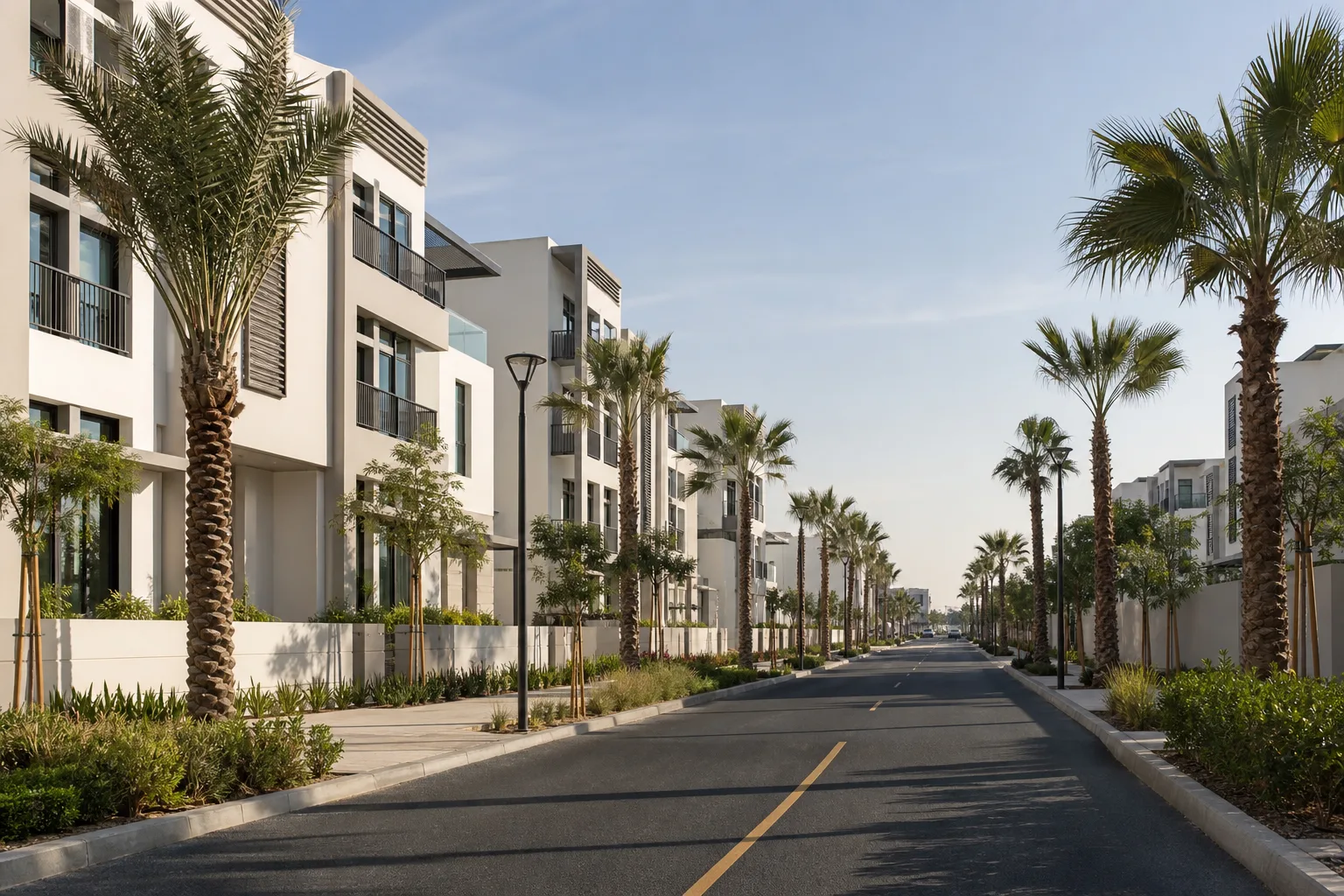
For an investor, an "emerging district" meets two simple criteria: a still-moderate price (below the market median) and an upward trajectory already in motion, readable over 36 and 60 months. It isn't a bet on the unknown, but on a dynamic that is already measurable.
Three profiles worth a close look
- Dubai South: 1,440 AED/sqft (March 2026), +55.7% over 36 months, +87% over 60 months, calculated gross yield 5.1% — the infrastructure play around Al Maktoum Airport, according to Bayut data; we break down the numbers in our guide on buying in Dubai South: prices, yields and projects.
- Dubai Industrial City: 1,331 AED/sqft (March 2026), +87.3% over 36 months and +132.1% over 60 months, calculated gross yield 5.3% — the strongest five-year appreciation in our dataset, according to Bayut.
- Dubai Silicon Oasis: 1,370 AED/sqft (March 2026), +77.7% over 36 months, +108.9% over 60 months, calculated gross yield 6.3%, according to Bayut.
The yield cited here is gross and calculated (annual rent per sqft divided by price per sqft): never net, never guaranteed. It gives a sense of the cash flow before costs and vacancy.
How to spot a district before prices rise: the 3 signals to read in Bayut's data
Spotting a district before prices rise comes down to cross-checking three signals: a per-sqft price below the market median of 1,883 AED/sqft, 60-month growth clearly stronger than the last 12 months, and a decent gross yield. Never mix a per-district figure with a broad market average.
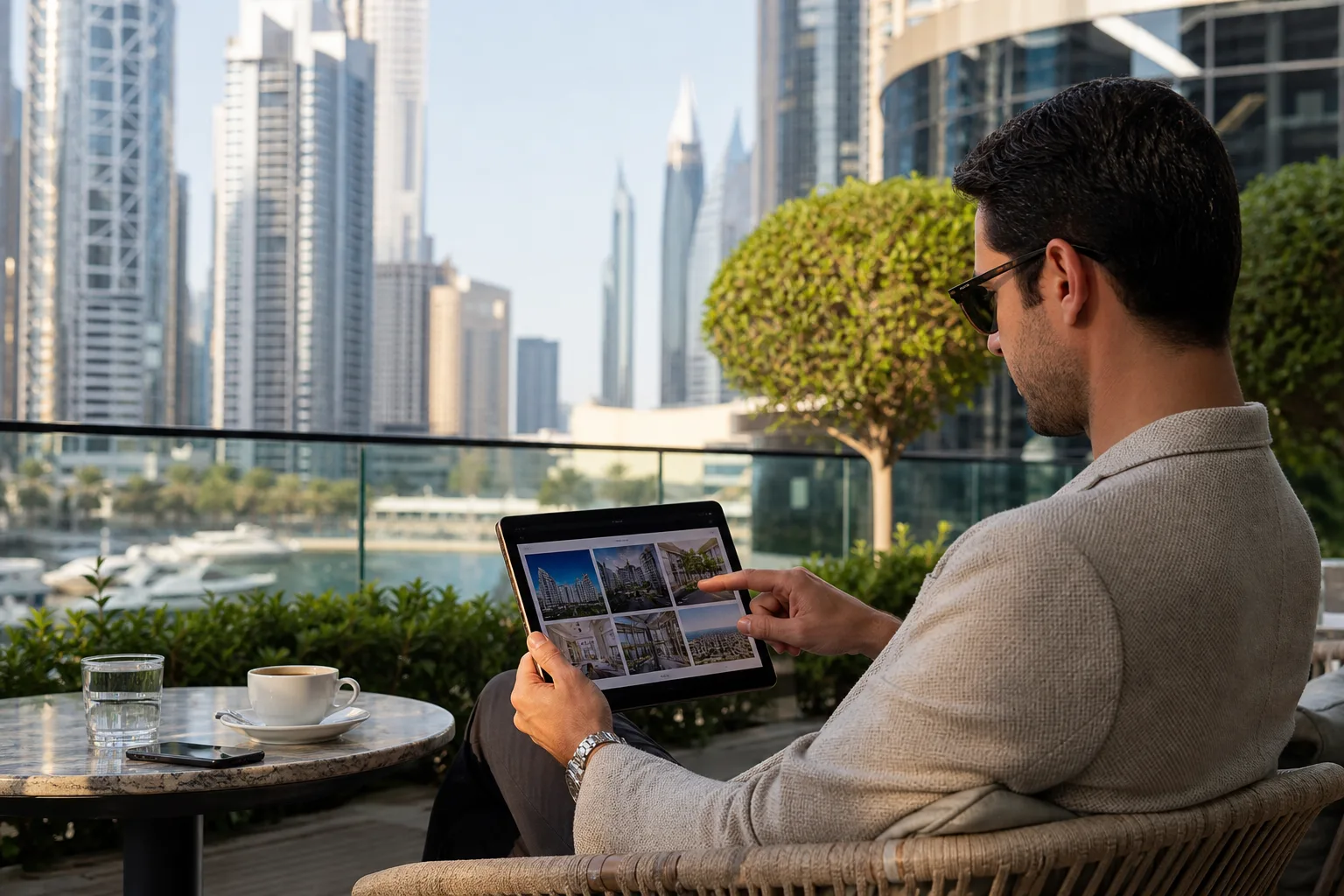
Signal 1 — the price gap
Always compare the district's price with the market median, 1,883 AED/sqft according to Bayut. Dubailand Residence Complex trades at 1,277 AED/sqft (March 2026): a discount that leaves room before it reaches Dubai's average level.
Signal 2 — the trajectory already under way
Read the gap between the 12-month and the 60-month moves. Still at Dubailand Residence Complex, prices gained only +3.4% over 12 months but +110.9% over 60 months (Bayut, March 2026): the structural rise is there, even if the past year marks a pause.
Signal 3 — recent momentum, but not at any price
A rapid 12-month rebound only matters if it comes with a decent yield. Bukadra jumps +12.2% over 12 months (March 2026) but offers only a 3% calculated gross yield. A spectacular rise doesn't mean cash flow.
A worked example: investing in an emerging district, what it actually looks like
With a budget of around 1.2M AED, you can finance close to 910 sqft in Dubai Sports City (1,318 AED/sqft, March 2026, Bayut) — enough to gauge concretely the expected rent and the entry costs.
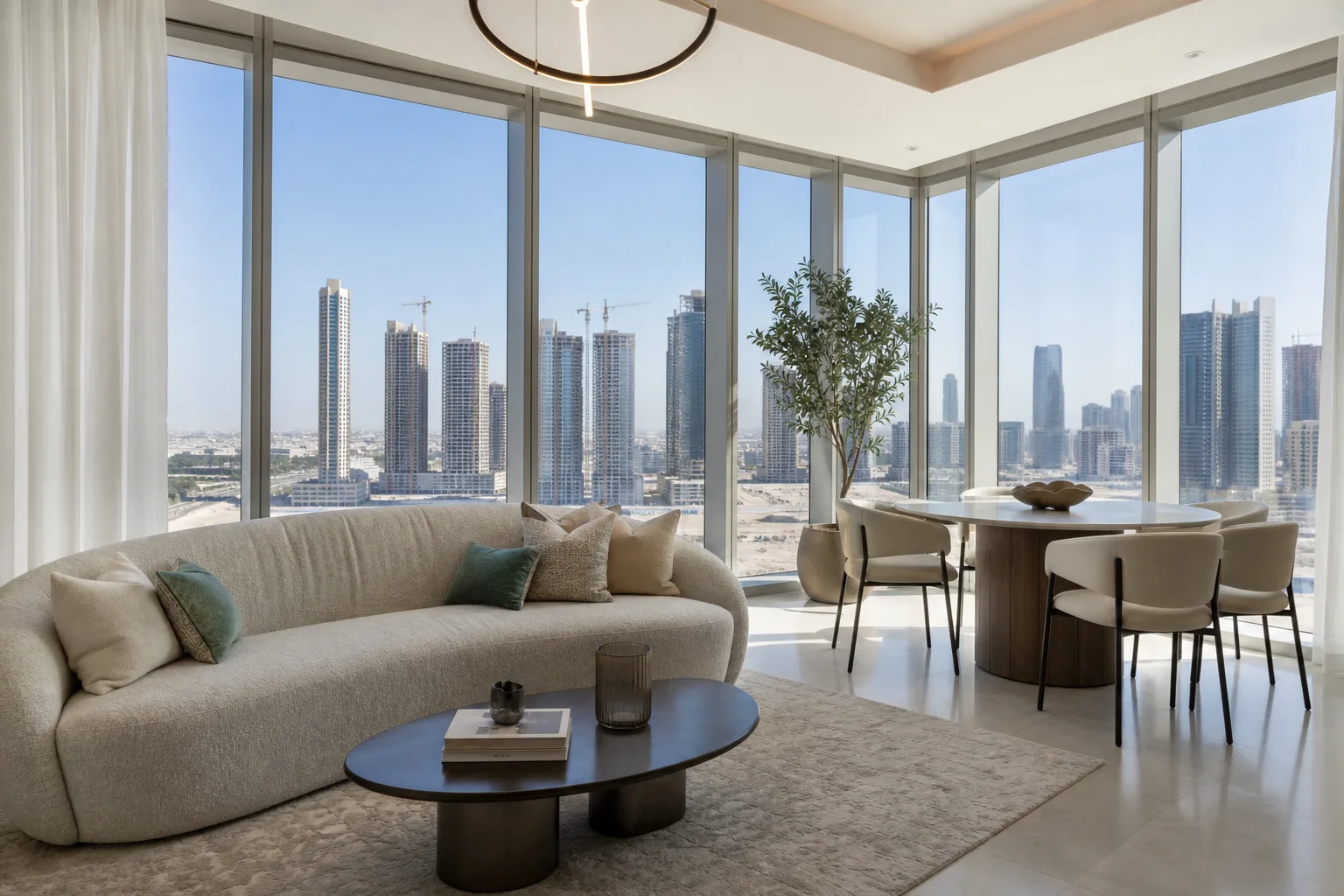
Dubai Sports City, line by line
In Dubai Sports City, Bayut's rent comes out at 89 AED/sqft/year for a calculated gross yield of 6.8% (March 2026). On a floor area of around 910 sqft, that's an annual gross rent close to 81,000 AED — before costs and vacancy.
For the same budget, Arjan pushes the dial higher: 1,485 AED/sqft (March 2026), rent 106 AED/sqft/year, calculated gross yield 7.1% — the best yield among the accessible districts in our dataset, according to Bayut.
The entry costs to add to the price
- DLD transfer fee: 4% of the purchase price according to the Dubai Land Department, i.e. 48,000 AED on a 1.2M AED property.
- Fixed fees: an additional 4,700 to 5,500 AED (title deed, admin fees, trustee office), according to Property Finder.
- Annual service charges: around 10 to 20 AED/sqft/year for an apartment, regulated by RERA via Mollak — this is what turns gross yield into real yield.
The detail on taxation and moving from gross to net is covered in our guide on Dubai property taxation.
Immediate yield or future capital gain: which type of emerging district for which goal?
The choice comes down to two families of emerging districts: those that have already appreciated strongly (capital-gain potential) and those that offer a high gross yield (immediate cash flow) — the Bayut series are enough to tell them apart. A waterfront alternative sits between the two, where a new Emaar hub blends appreciation with rental depth, as we set out in our guide on buying in Dubai Creek Harbour: prices, yields and projects.
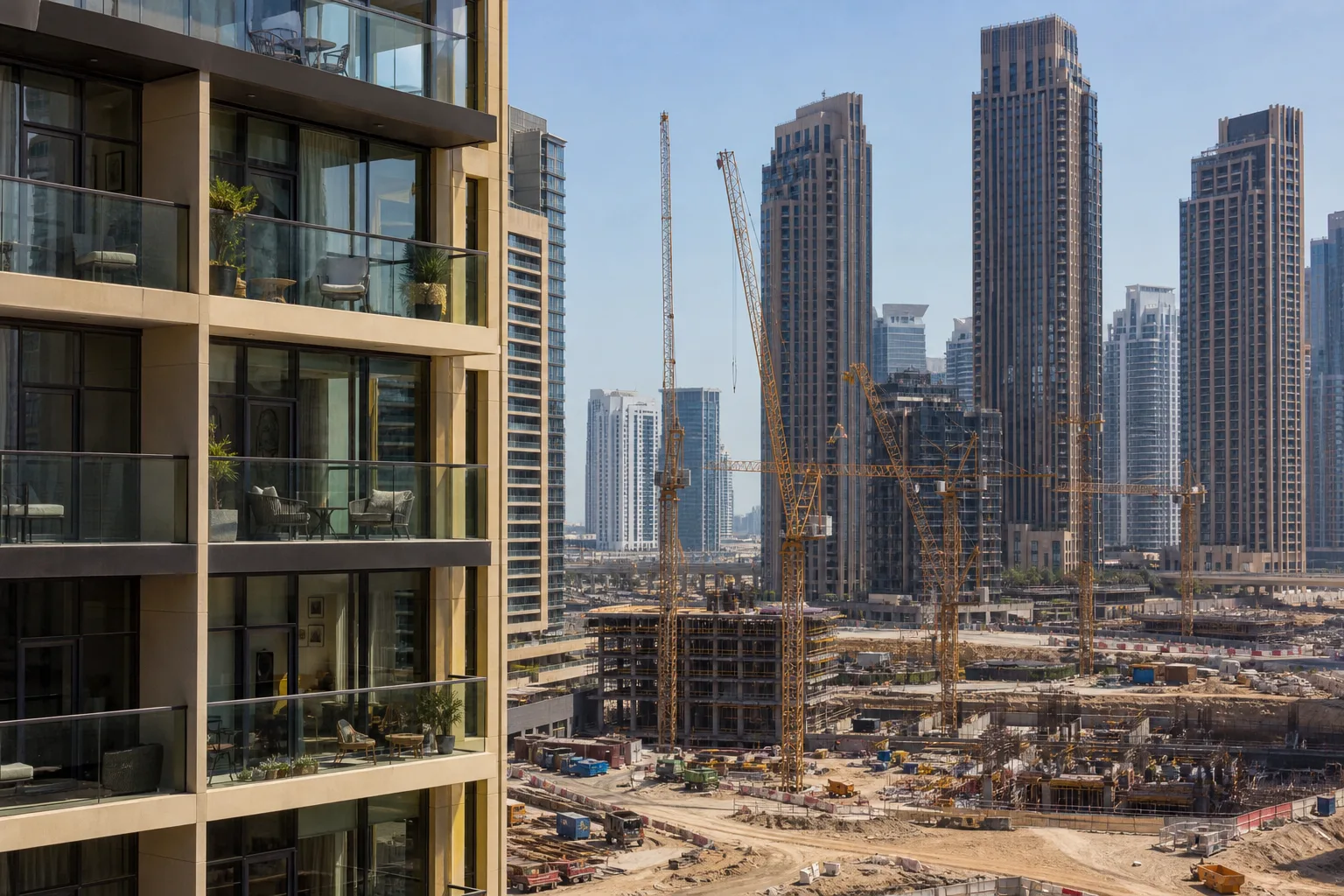
Capital-gain profile
Three districts dominate five-year appreciation (Bayut, March 2026): Dubai Industrial City +132.1%, Dubai Silicon Oasis +108.9% and Dubailand Residence Complex +110.9%. Their appreciation has been the strongest in the dataset.
Yield profile
If cash flow comes first, look at Arjan (7.1%), Dubai Sports City (6.8%) and Dubai Science Park (6.6%) — calculated gross yields, March 2026, according to Bayut. A comparable yield-led profile is Jumeirah Village Circle, detailed in our guide on buying in JVC Dubai: prices, yield and projects.
| District | Price (March 2026) | 60-month appreciation | Gross yield |
|---|---|---|---|
| Dubai Industrial City | 1,331 AED/sqft | +132.1% | 5.3% |
| Dubai Silicon Oasis | 1,370 AED/sqft | +108.9% | 6.3% |
| Arjan | 1,485 AED/sqft | +52.6% | 7.1% |
| Dubai Sports City | 1,318 AED/sqft | +79.4% | 6.8% |
All these figures come from Bayut's March 2026 series. To place each district, keep the market scale in mind: the calculated gross yield ranges from 1.5% (La Mer) to 7.7% (Dubai International City), with a median of 5.6% across 65 districts. The full decision framework is set out in our guides on where to invest in Dubai based on your goal and rental yield in Dubai.
Off-plan in emerging districts: the projects carrying the bet on rising prices
In an emerging district, most of the supply is off-plan: that's where the new launches are concentrated, often with accessible entry points. Here are concrete projects we list, without going through the buying process itself here.
Featured
View projects: Lunaya
From AED 6,798,750
Hand-picked new properties with end-to-end expert support.
View projects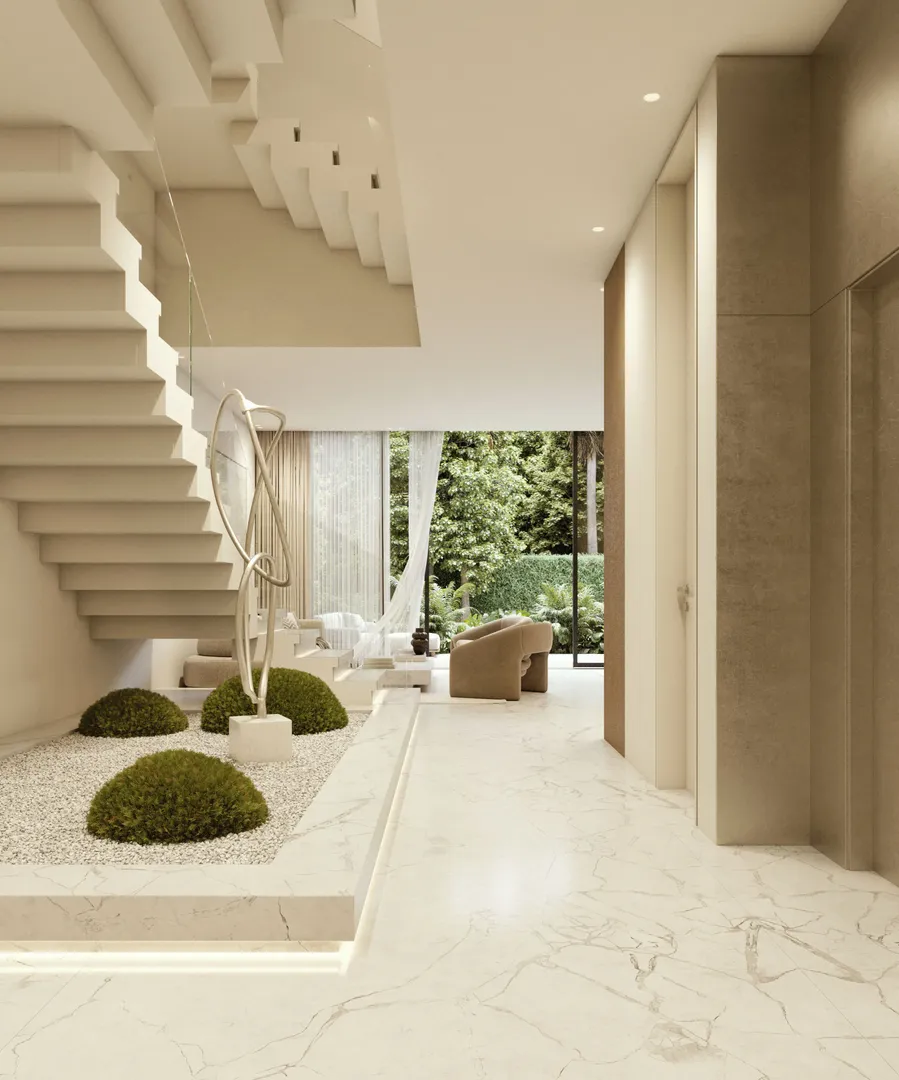
Three districts, worked examples
- Dubai South: Calisi (Zoya Developments) from 700,000 AED, delivery September 2028; Enre Residence (Imtiaz Developments) from 1.2M AED.
- Dubai Industrial City: Coventry Residence (GFS Developments) from 600,000 AED; Élanora (Zoya Developments) from 700,000 AED.
- Dubailand Residence Complex: among the 27 projects we list in this district, The Archive (Imtiaz Developments) from 700,000 AED, delivery September 2028.
These purchases are secured: funds pass through a mandatory escrow account for any off-plan project (Law No. 8 of 2007, RERA/DLD oversight), according to the Dubai Land Department. The reservation deposit is generally between 5 and 20% of the price. The full journey, from reservation to handover, is described in our guide on buying off-plan in Dubai.
With my clients, the first mistake in an emerging district is buying the cheapest project without looking at the delivery date or the pace of sales around it. An isolated building in an area that's still empty takes longer to rent out.
— Sofiane OULD, Founder & Chief Executive Officer
Why these districts are rising: infrastructure, supply and market context
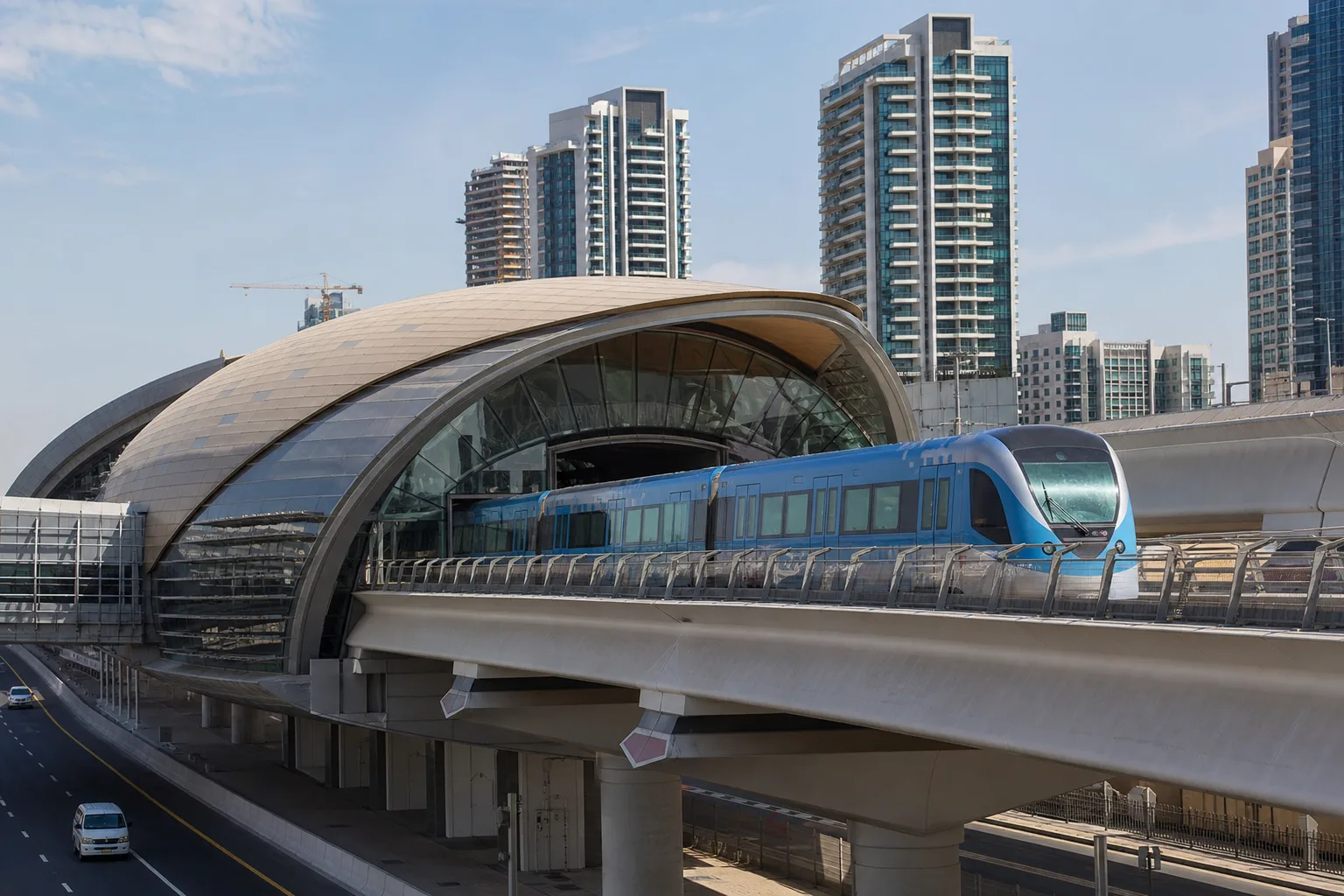
These districts are rising because three forces combine: new infrastructure, growing supply and a framework that welcomes foreign buyers. Context explains the trajectory — it doesn't replace reading the prices.
A project in mind?
Talk to a Lucretia adviser
Tailored guidance, no obligation.
Depth of supply, a sign of maturing
The more projects a district accumulates, the more it takes shape. In our catalogue, Dubailand Residence Complex counts 27 published projects, Business Bay 21, Dubai Islands 13 and Dubai Industrial City 9 — an indicator of developers' appetite for the area. The waterfront archipelago has its own dynamic, which we break down in our guide on buying in Dubai Islands: prices, yields and projects.
A framework that opens these districts to foreigners
Full ownership (freehold) has been open to foreigners in Dubai's designated zones since 2002, according to the Dubai Land Department — the detail of the zones is in our guide on the legal framework of property ownership in Dubai.
Another lever: a property investment of at least 2M AED opens the Golden Visa for 10 years, according to the UAE government portal. Combining several emerging properties can be enough to reach the threshold, as our guide on the Golden Visa through property explains.
Finally, not all districts rise at the same pace: across 73 districts with a sales series, the median move is only +2.6% over 12 months, according to Bayut. Sorting district by district therefore remains decisive.
The pitfalls of the emerging district: what can derail the bet
The main pitfall of the emerging district is mistaking potential for certainty: strong past growth, like Dubai Industrial City's +132.1% over 60 months (Bayut), documents a trend, not a guarantee of future yield. Three specific points of caution add to the general mistakes.
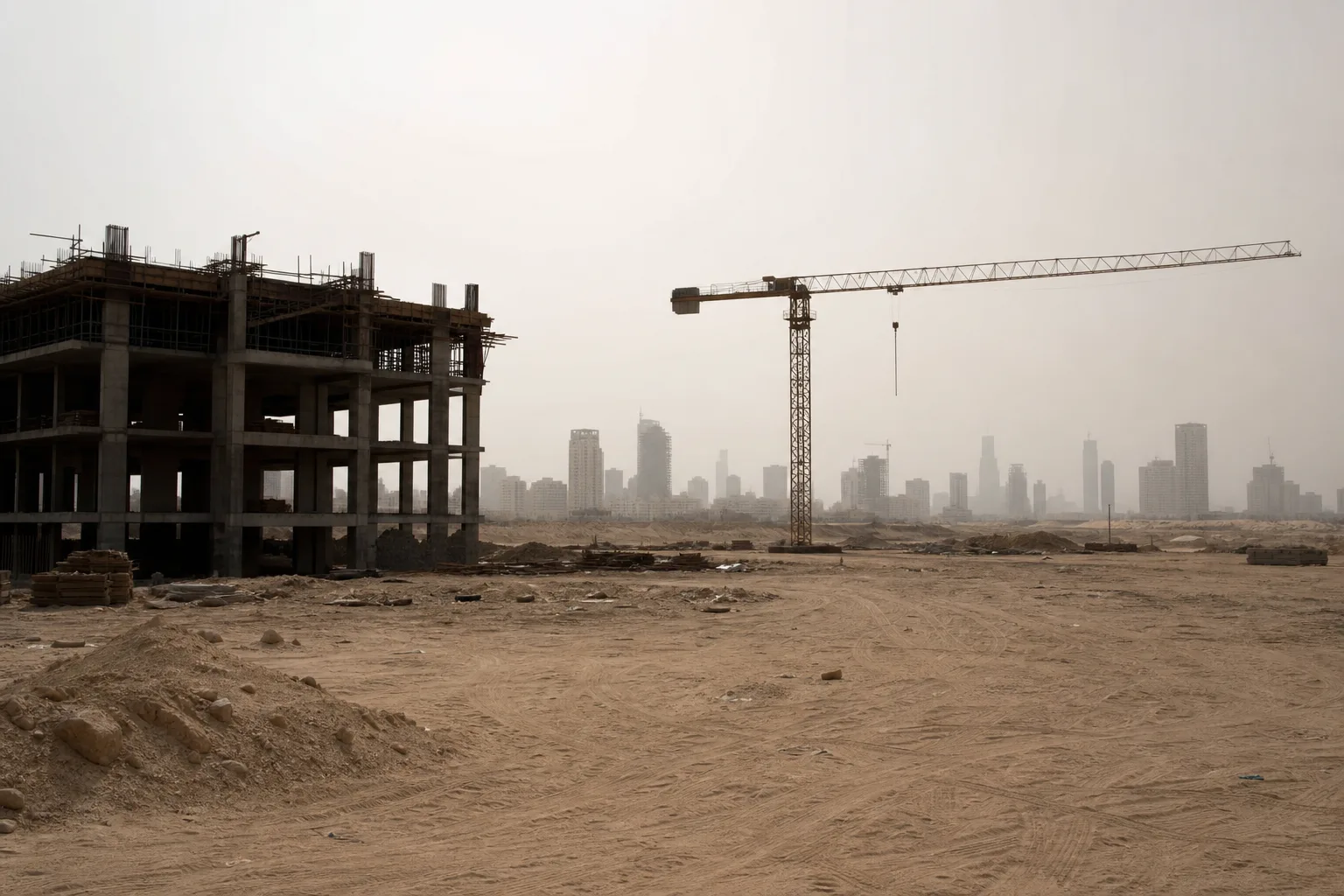
- The gap between delivery and rental demand. An area under construction can deliver several thousand units at once; letting them out then takes longer and vacancy climbs. We track deliveries and prices in these districts project by project to anticipate this risk.
- The rise without yield. Bukadra is the example: a price that climbs fast can mask a weak rent, and its gross yield stays among the lowest in the dataset despite high 12-month momentum.
- The headline price alone. On top of the 4% transfer fee and the fixed costs come annual service charges that weigh on the real yield — a point detailed in our guide on mistakes to avoid when investing in Dubai.
For an overview of the market and our advisory services, the investing in Dubai page brings together the districts, the projects and our services.
In this guide
Articles in this guide
This article is part of our guide
Dubai Property Investment Guide for Foreign Buyers
About the author

Sofiane OULD
Founder & Chief Executive Officer
A visionary entrepreneur and recognized expert in Dubai's prestige real estate market, Sofiane began his career in Paris before joining major players in online real estate (SeLoger, MeilleursAgents, Airbnb). Based in Dubai since 2019, he quickly established himself as one of the city's top-performing brokers. Founder of Lucretia Immobilier, he now supports his clients with an approach combining integrity, innovation and excellence, thereby redefining the standards of luxury.