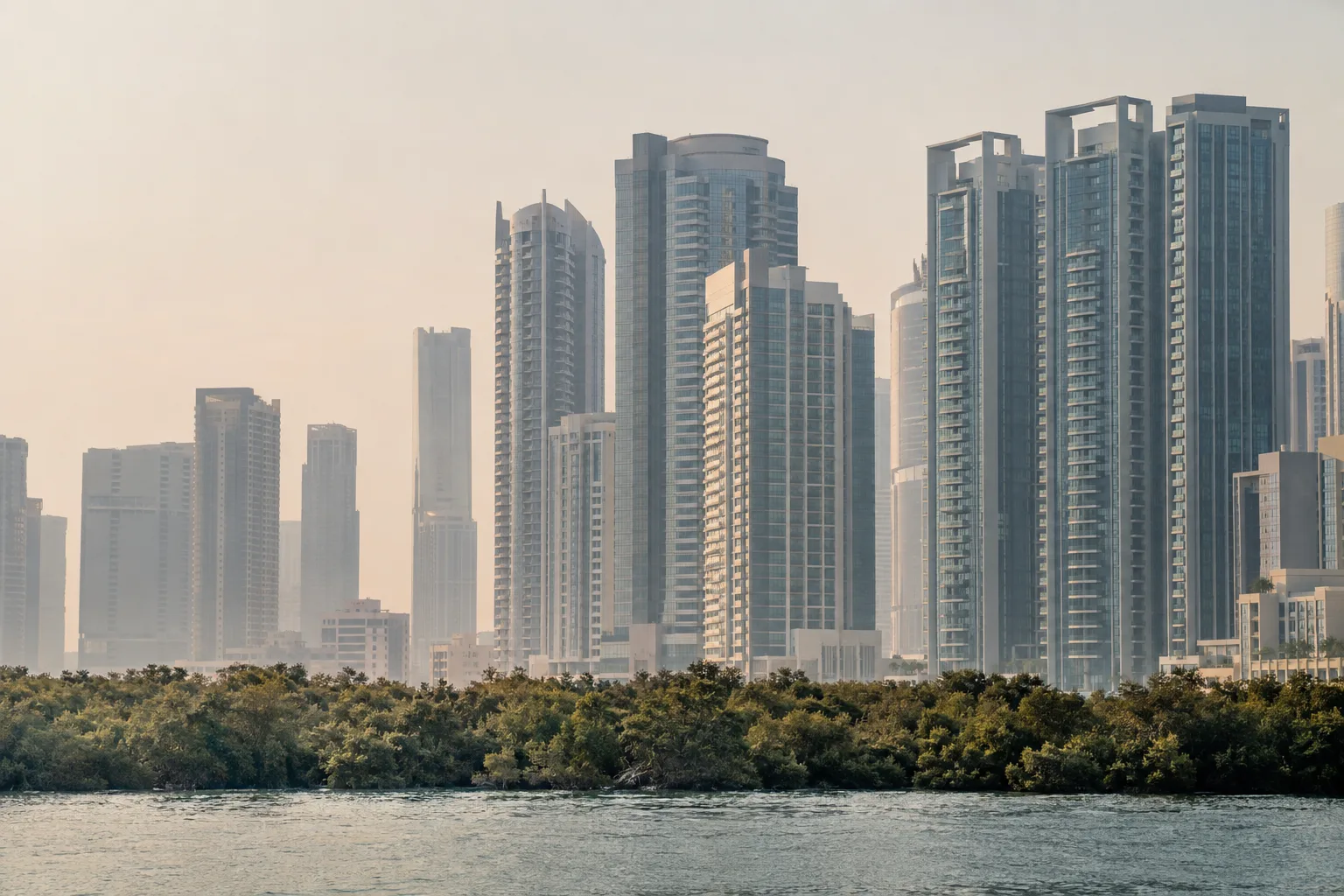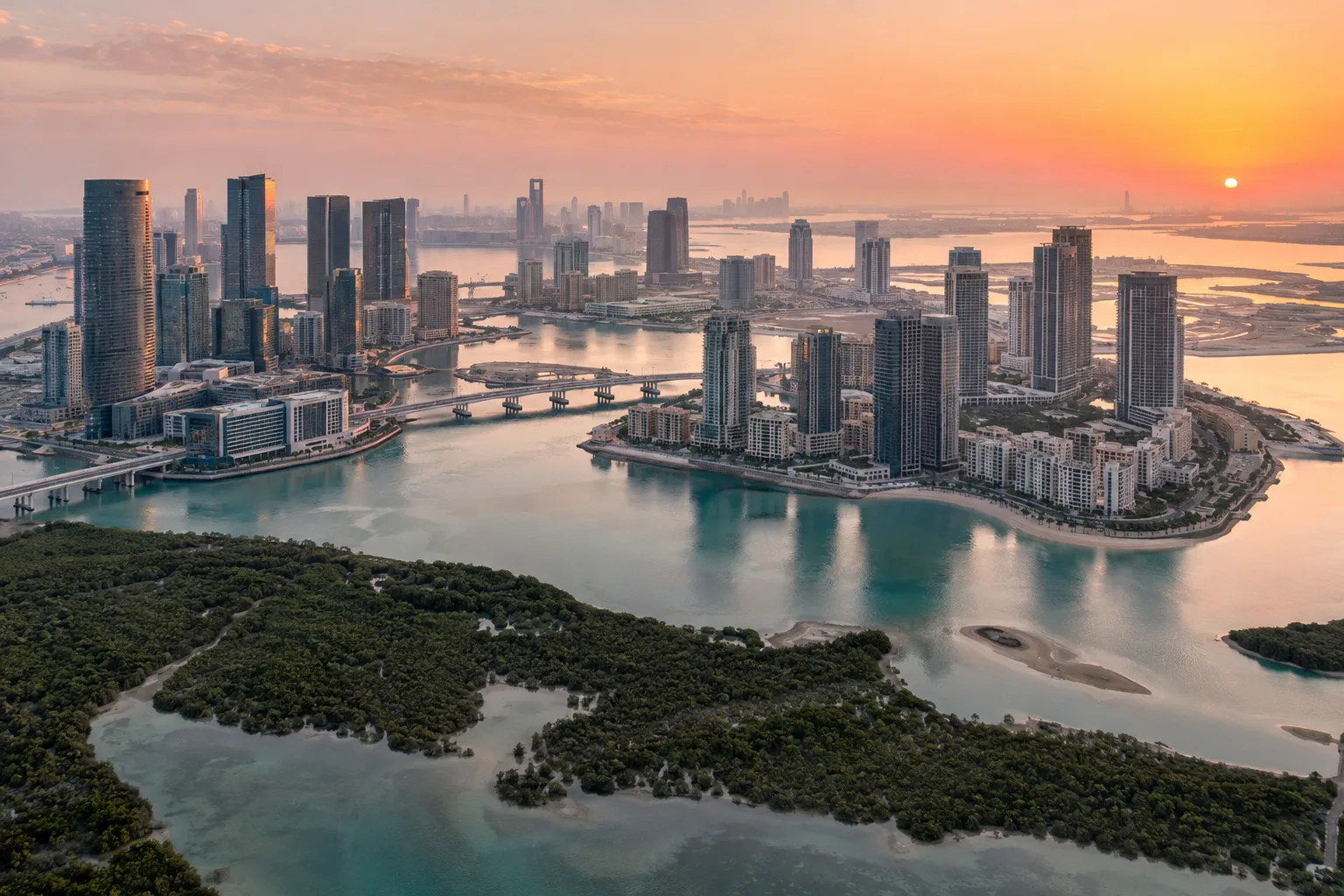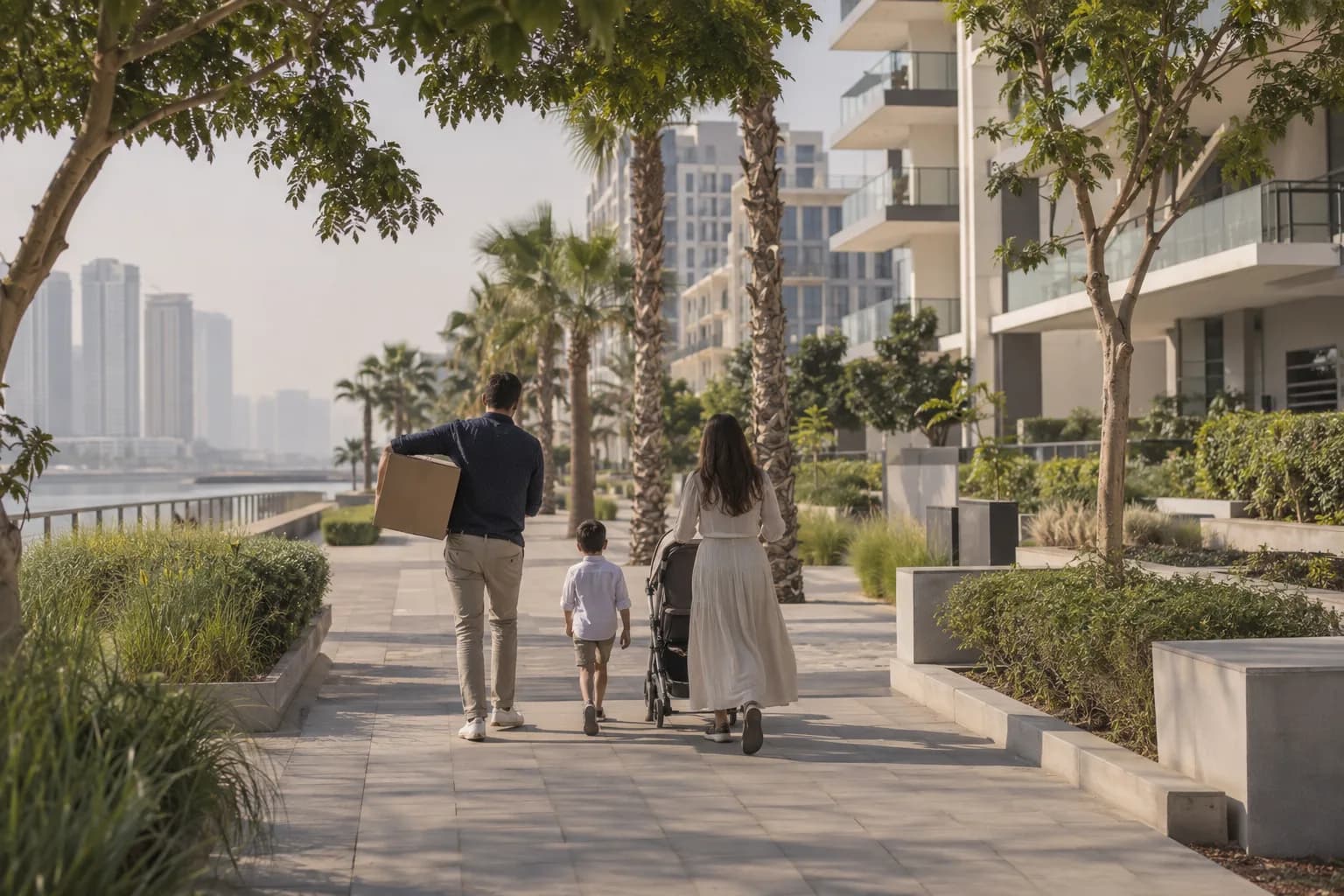
Neighbourhoods, rents, renting versus buying your home, tax and move-in timing: what to know before you relocate to Abu Dhabi and invest there with method.
On this page
- Can you live in Abu Dhabi as an expat and own property there?
- Where to live in Abu Dhabi: which neighbourhood for which lifestyle?
- Worked example: renting or buying your main home on Reem Island and Saadiyat
- Living locally while investing: what 0% tax changes
- When to move in? Timing your relocation with the property handover
- Pitfalls to avoid when relocating to Abu Dhabi as an investor
Living in Abu Dhabi as an expat and buying your home there is possible in the areas open to foreigners, within a stock of around 409,000 homes set to grow by 71,000 units by 2030 (ADREC, H1 2026 market report). What remains is choosing the neighbourhood that fits the way you live, then deciding between renting and buying.
Lucretia stays with you beyond the signature, right through to settling in: choosing the neighbourhood, key handover, everyday formalities.
Can you live in Abu Dhabi as an expat and own property there?
Yes: a foreigner can own property in Abu Dhabi within the designated investment zones, including Reem Island, Yas and Saadiyat, according to DARI, the Abu Dhabi Real Estate Centre platform. Purchases there are freehold, and you can live in the property.
The right to reside can also come through property. An investment of at least AED 2,000,000 qualifies for the 10-year Golden Visa, according to the official UAE government portal. The real budget and application requirements are covered in our guide to the property Golden Visa in Abu Dhabi.
Three ways to find a home when you arrive
- Rent your home: you try out a neighbourhood without tying up capital, but rent weighs on your budget every year.
- Buy your main residence: rent disappears and the property can underpin your residency.
- Buy one to live in and one to let: a home for you, and another generating income in a higher-yielding neighbourhood.
To get your bearings, the profiles of Reem Island, Yas Island and Saadiyat set out prices, rents and projects for each neighbourhood.
Where to live in Abu Dhabi: which neighbourhood for which lifestyle?
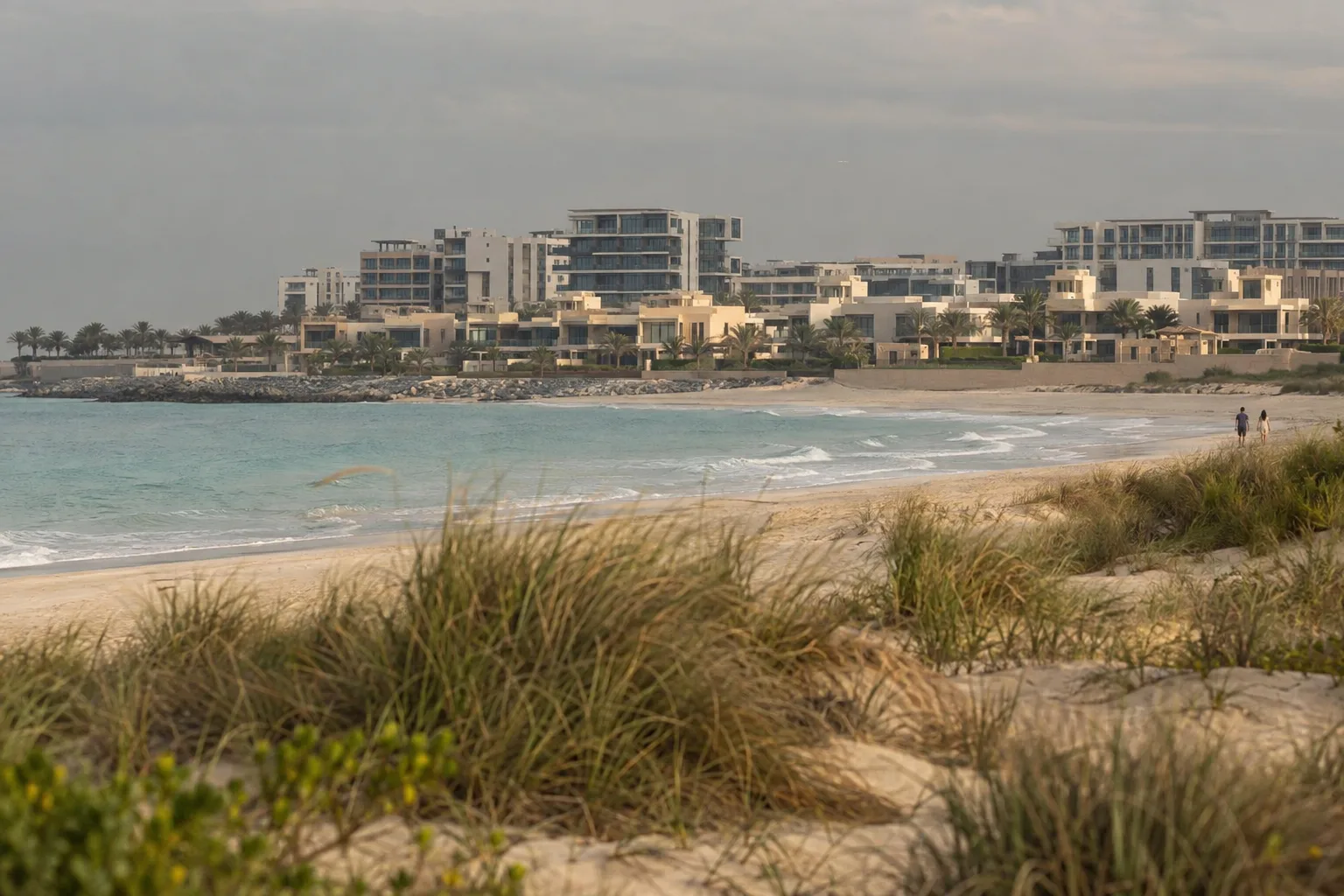
For the same 1,000 sq ft home, annual rent varies more than threefold depending on the neighbourhood, according to Bayut data (March 2026). That rent is your largest cost of living if you rent, and the rent you avoid if you buy.
| Neighbourhood | Lifestyle | Annual rent for 1,000 sq ft | Sale price per sq ft |
|---|---|---|---|
| Saadiyat | Culture and beach | AED 117,000 | AED 2,714 (March 2026) |
| Yas Island | Leisure | AED 112,000 | AED 1,922 (March 2026) |
| Reem Island | Urban living | AED 102,000 | AED 1,497 (March 2026) |
| Al Maryah Island | Business district | AED 138,000 | AED 2,043 (March 2026) |
| Al Rahah | Waterfront | AED 97,000 | AED 1,691 (February 2026) |
| Al Jurf Gardens | Quieter living | AED 39,000 | AED 1,603 (March 2026) |
| Ghantout | Quieter living | AED 61,000 | AED 1,546 (March 2026) |
Rents and prices: Bayut data, annual rent per sq ft multiplied by 1,000.
Al Maryah Island is the most expensive neighbourhood for a resident tenant. At the other end, Al Jurf Gardens and Ghantout offer space at lower cost, in exchange for distance from the centre.
The median price stands at AED 1,792/sq ft across 10 neighbourhoods, according to Bayut (latest data point August 2026). For a yield-focused ranking, see our guide to where to invest in Abu Dhabi.
Worked example: renting or buying your main home on Reem Island and Saadiyat
On Reem Island, the total cash outlay on purchase equals nearly fifteen years of avoided rent; on Saadiyat, nearly twenty-four years. The calculation uses Bayut prices and rents (March 2026) and the 2% transfer fee stated by DARI.
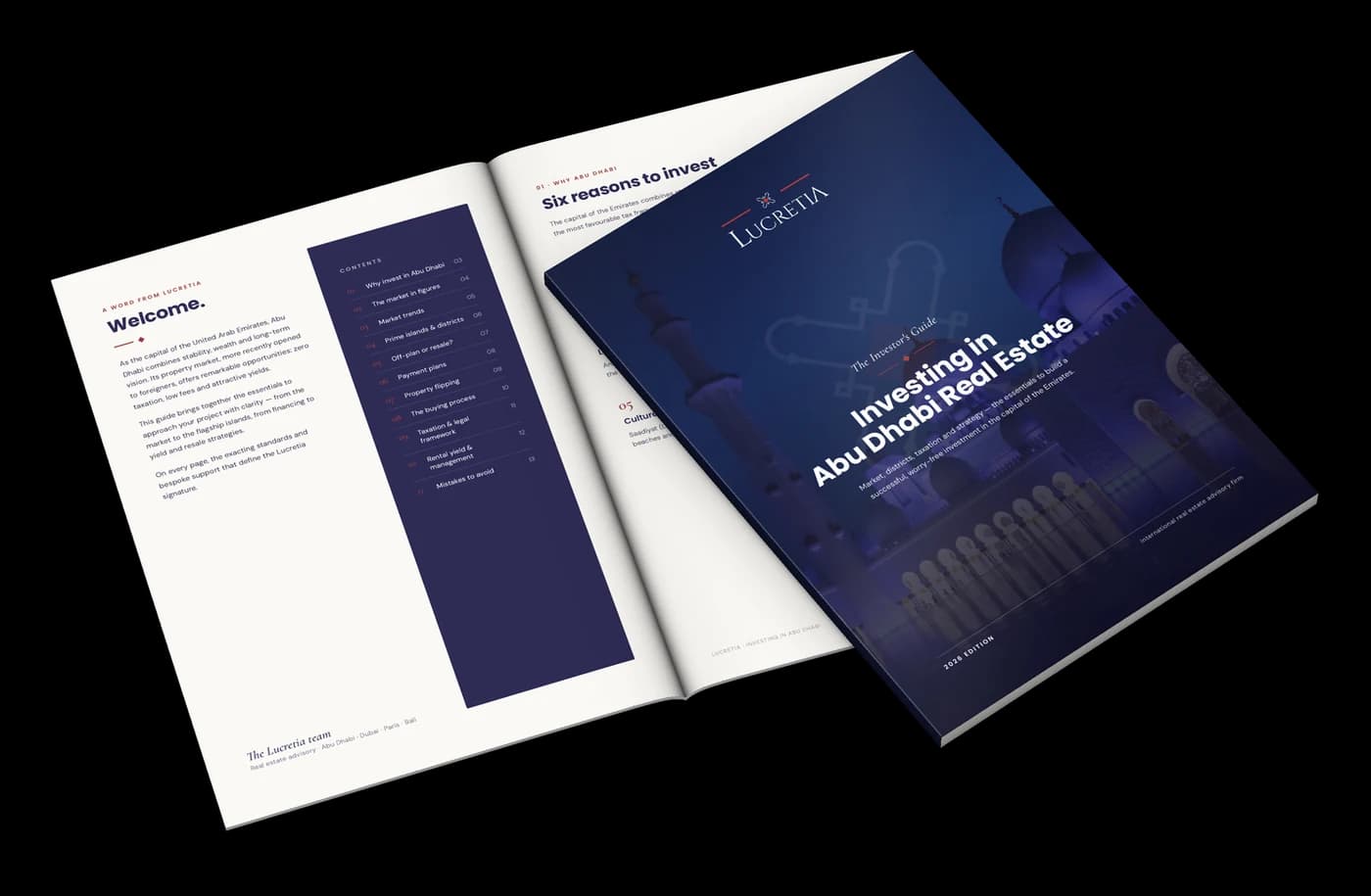
Free guide, delivered on WhatsApp
Get our investment guide
Taxation, visas, financing, buying steps: 14 pages sent to your WhatsApp within minutes.
| For 1,000 sq ft | Reem Island | Saadiyat |
|---|---|---|
| Purchase price (Bayut, March 2026) | AED 1,497,000 | AED 2,714,000 |
| 2% transfer fee (DARI) | AED 29,940 | AED 54,280 |
| Total outlay | AED 1,526,940 | AED 2,768,280 |
| Annual rent avoided (Bayut) | AED 102,000 | AED 117,000 |
| Calculated gross yield | 6.8% | 4.3% |
Reading the example
On Reem Island, the avoided rent represents a calculated gross 6.8% of the price, before charges. Prices there rose +6.1% over 12 months and +37.3% over 36 months, according to Bayut: the resident owner also benefits from that momentum.
On Saadiyat, the avoided rent amounts to only a calculated gross 4.3%. But the purchase clears the AED 2,000,000 Golden Visa threshold: the same property houses you and can underpin your residency.
Buying on Reem Island therefore saves more rent per dirham invested; buying on Saadiyat also serves your residency plans. Deposit, mortgage and payment schedule are covered in our guide to financing property in Abu Dhabi, and paying the price and fees in our guide to opening an account and transferring your funds.
With clients who arrive as a family, I find the decision is rarely made on the numbers alone: schools, the commute to the office and the beach count as much as yield. I advise them to set these criteria before comparing figures.
Living locally while investing: what 0% tax changes
In the UAE, personal income tax is 0%: neither rental income nor property capital gains are taxed, according to the taxation page of the official UAE portal. Whatever your second property earns is yours in full.
A project in mind?
Talk to a Lucretia adviser
Tailored guidance, no obligation.
Once settled, many residents add a rental property. The median calculated gross yield reaches 5.7% across 8 neighbourhoods, from 2.4% in Al Jurf Gardens to 6.8% on Al Maryah Island, according to Bayut. The neighbourhood-by-neighbourhood breakdown is in our guide to rental yields in Abu Dhabi.
Live here, invest there
Nothing requires you to invest where you live. A family can live on Saadiyat, at a calculated gross 4.3%, for its lifestyle, and place its rental property on Reem Island or Al Maryah Island, both at a calculated gross 6.8% according to Bayut.
Living locally makes it easier to keep an eye on your tenant, but it is no substitute for solid organisation. Our guide to property management in Abu Dhabi compares self-management with using a manager.
When to move in? Timing your relocation with the property handover
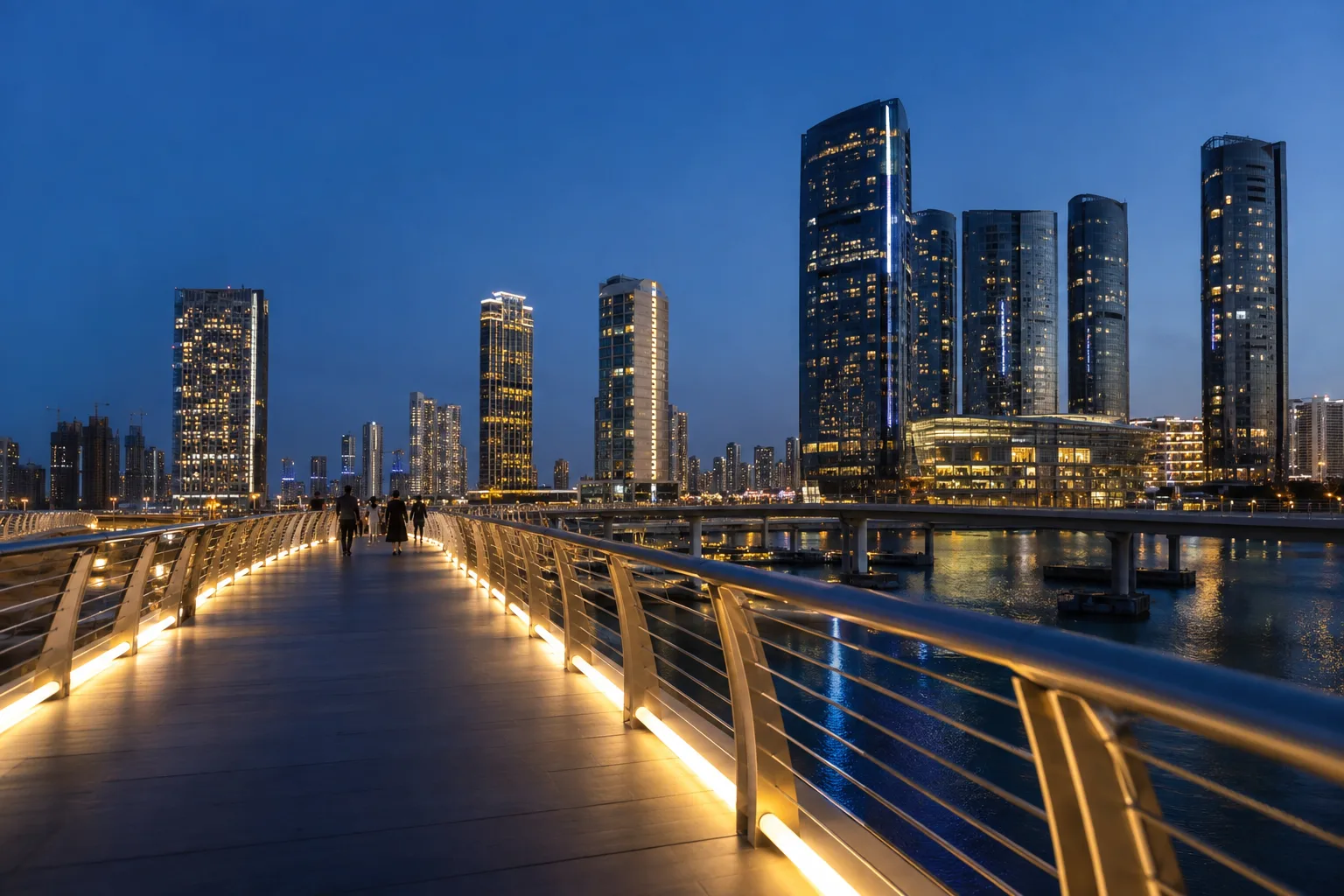
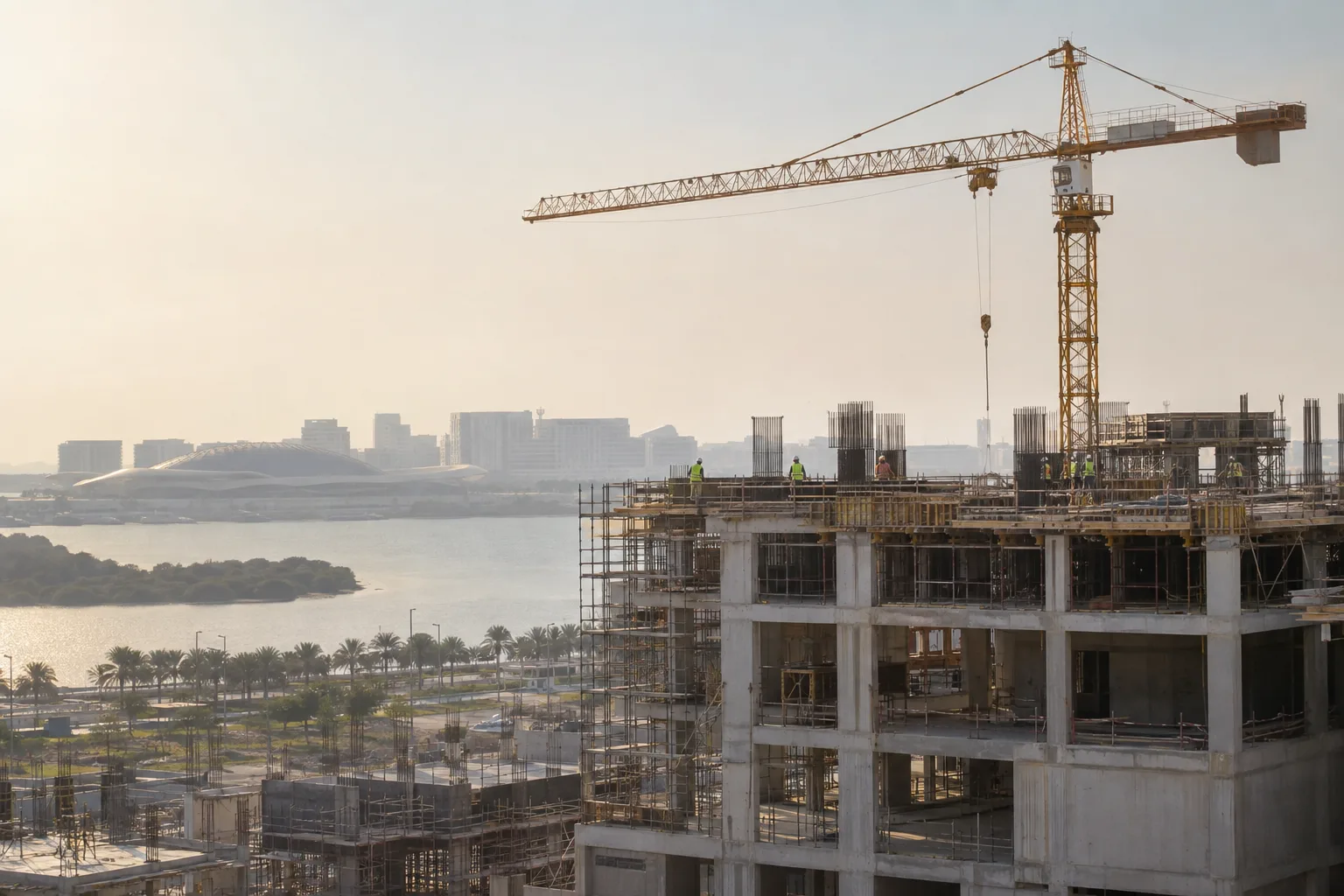
The handover date sets your relocation timeline. Across the 69 projects we list in Abu Dhabi, handovers run from 2013 to 2031, with entry prices from AED 500,000 to AED 2M and a median of AED 1.5M (17 projects with a published price).
Moving in straight away
A completed property lets you move in as soon as you buy. Oceanscape, on Reem Island, starts at AED 500,000 and was handed over in May 2013. Louvre Abu Dhabi Residences, on Saadiyat, has been complete since February 2025.
Timing your arrival with an upcoming handover
- Kayan, in Al Jurf Gardens: handover expected November 2026.
- Ohana By The Sea, in Al Jurf Gardens: January 2027.
- Rivage, on Reem Island: December 2027.
Renting in the meantime
With The Artery Residences, from AED 1.8M and due in December 2029, plan for several years of renting before moving in. How off-plan works is explained in our guide to buying off-plan in Abu Dhabi.
On the ground, I often see clients sign a lease with no break clause even though their handover is approaching. I recommend aligning the lease term with the key handover date. All developments are listed in all our projects in Abu Dhabi.
Pitfalls to avoid when relocating to Abu Dhabi as an investor
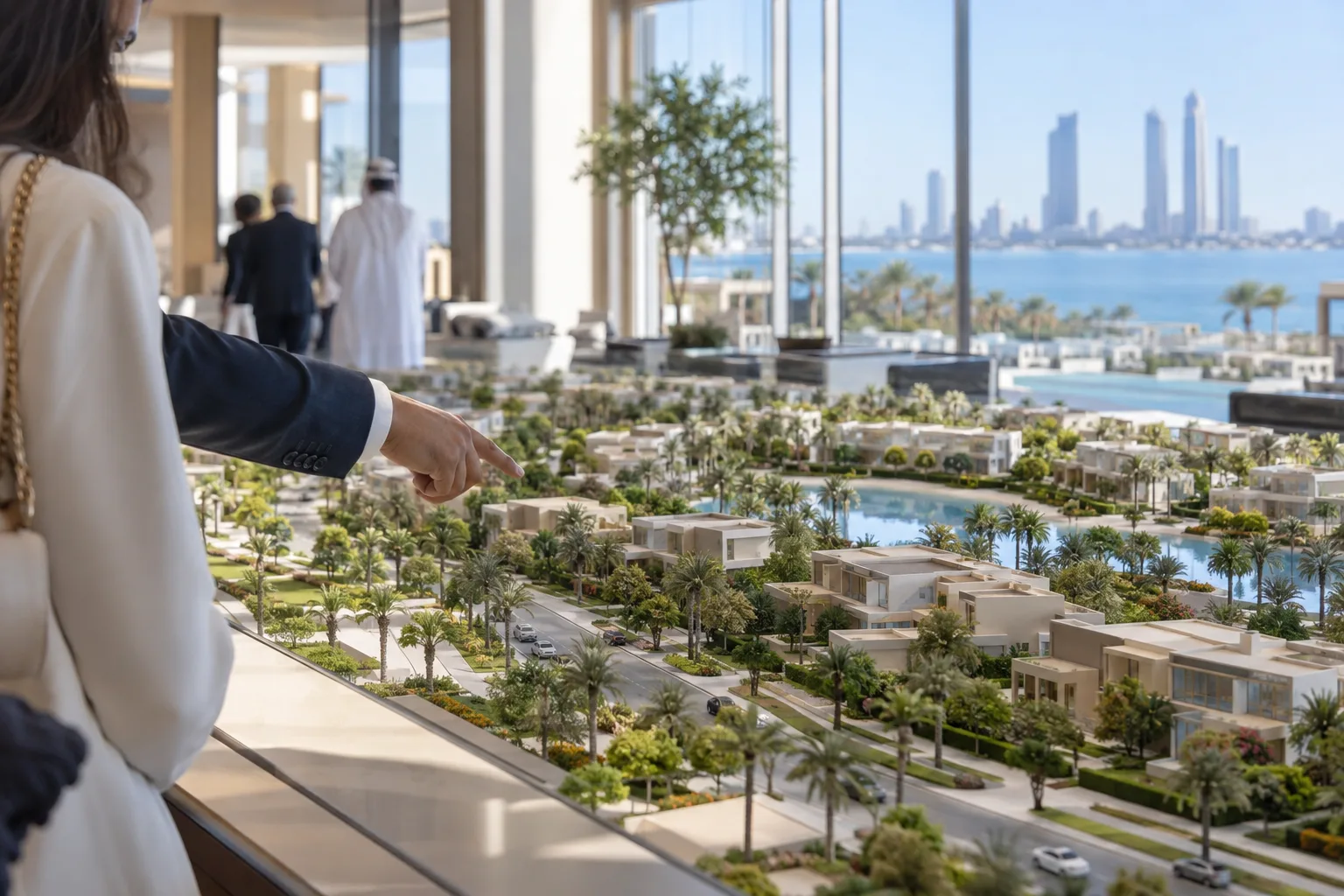
The first pitfall is falling for a neighbourhood without checking that it is one of the 50 investment zones open to foreigners, a total reached in H1 2026 according to the ADREC transactions report.
Confusing where you live with an open zone
Our catalogue also lists projects in Al Layyan, Zayed City, Masdar City and Khalifa City. These neighbourhoods are not among the zones this guide cites from DARI (Reem Island, Yas, Saadiyat), so we do not assign them a status here.
For these addresses, check on DARI, project by project, that the plot lies within an investment zone and what type of title a foreigner acquires. The concept of an investment zone is defined in our glossary.
Forgetting you might leave
A home must be easy to let or resell if your life changes. In Al Jurf Gardens, rent is only AED 39/sq ft/year (a calculated gross 2.4%), while prices have risen +59.6% over 36 months, according to Bayut: the property gains value, but rents poorly.
Underestimating volatility
In Al Bahyah, prices rose +44.4% over 12 months but are down −8.6% over 36 months (AED 858/sq ft, April 2026). On Fahid Island, they reach AED 3,844/sq ft after +186.4% over 36 months, according to Bayut.
The most successful relocations I support begin with a few weeks of renting in the target neighbourhood: you then buy knowing your commute, your neighbours and your rhythm.
— Belen ALBA, Real Estate Consultant
For an overview of the market, see our page on investing in Abu Dhabi.
In this guide
Articles in this guide
This article is part of our guide
Abu Dhabi Property Investment Guide: Buy, Let and Resell with Confidence
About the author

Belen ALBA
Real Estate Consultant
With experience in Dubai's real estate market and an international background between Brussels and Dubai, Belen brings a 360° vision of the sector. After working for more than a year within a well-known developer, she supported both investor clients and partner agents, giving her a unique inside view of the sales process and off-plan projects. Multilingual (French, Spanish, Portuguese and English), Belen knows how to naturally connect with clients from all over the world. Her approach: direct, transparent and results-oriented — with a genuine passion for helping each client make the right investment at the right time.