Price per square foot, real yield, appreciation and off-plan projects: what a purchase on the new Dubai Islands archipelago is really worth.
On this page
- Buying in Dubai Islands: is it worth investing, and at what price?
- What rental yield can you expect in Dubai Islands?
- Does Dubai Islands still have appreciation potential?
- Which new-build projects should you buy in Dubai Islands?
- What does a Dubai Islands purchase really cost beyond the price?
- Financing and Golden Visa: what Dubai Islands opens up for the investor
- Taxation of a Dubai Islands purchase: 0% locally and the impact back home
Buying in Dubai Islands means stepping onto a waterfront archipelago priced at AED 2,379/sq ft to buy (March 2026), according to Bayut data — above the Dubai market median of AED 1,883/sq ft, but for a seafront property. This former Deira Islands project, entirely under development, now concentrates a supply of new-build stock with handovers spread from 2027 to 2029.
The bet is clear: pay less for a seafront home than at Palm Jumeirah, in an area that still has no existing stock to weigh on prices. What remains is to separate hard figures — prices, rents, appreciation — from the sales pitch. That is exactly what we lay out here, series by series.
Buying in Dubai Islands: is it worth investing, and at what price?
Dubai Islands trades at AED 2,379/sq ft to buy (March 2026), according to Bayut data — a price above the Dubai market median of AED 1,883/sq ft across 73 tracked districts, but one that remains the hallmark of a waterfront archipelago.
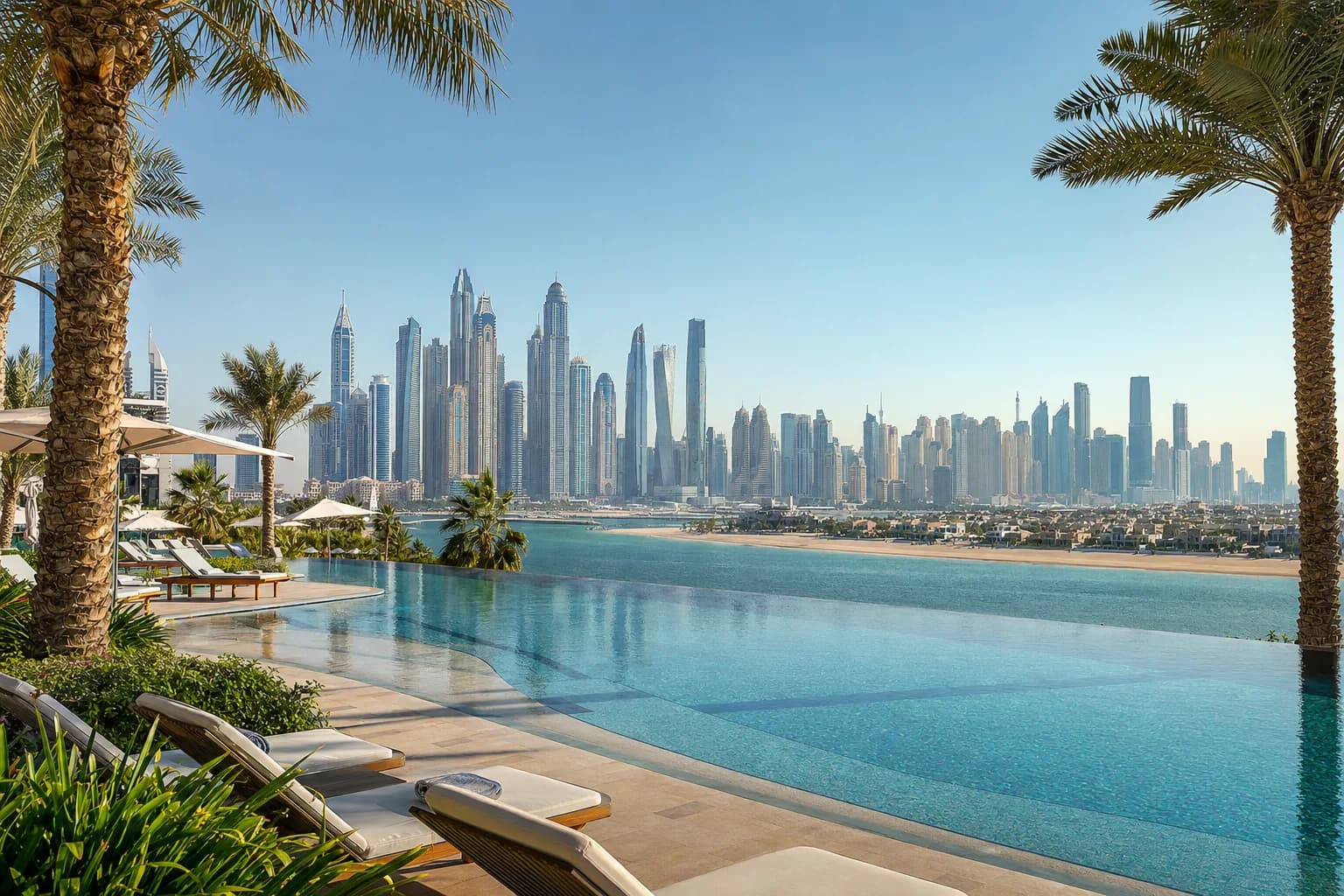
This positioning is the district's central appeal. You pay for the waterfront without reaching the price tags of the most established island addresses. For a figures-based comparison with the city's other major archipelago, our dedicated guide to Palm Jumeirah details its own price level and entry budget.
The market here is still young. We list 13 projects across Dubai Islands, with handovers staggered from 2027 to 2029. In other words, supply remains largely off-plan: you mostly buy on plan, from developers, before the archipelago takes its final shape.
What rental yield can you expect in Dubai Islands?
Yield in Dubai Islands should be read as gross: it is the annual rent per square foot divided by the price per square foot, excluding charges and vacancy — never a net yield, never a guaranteed figure.
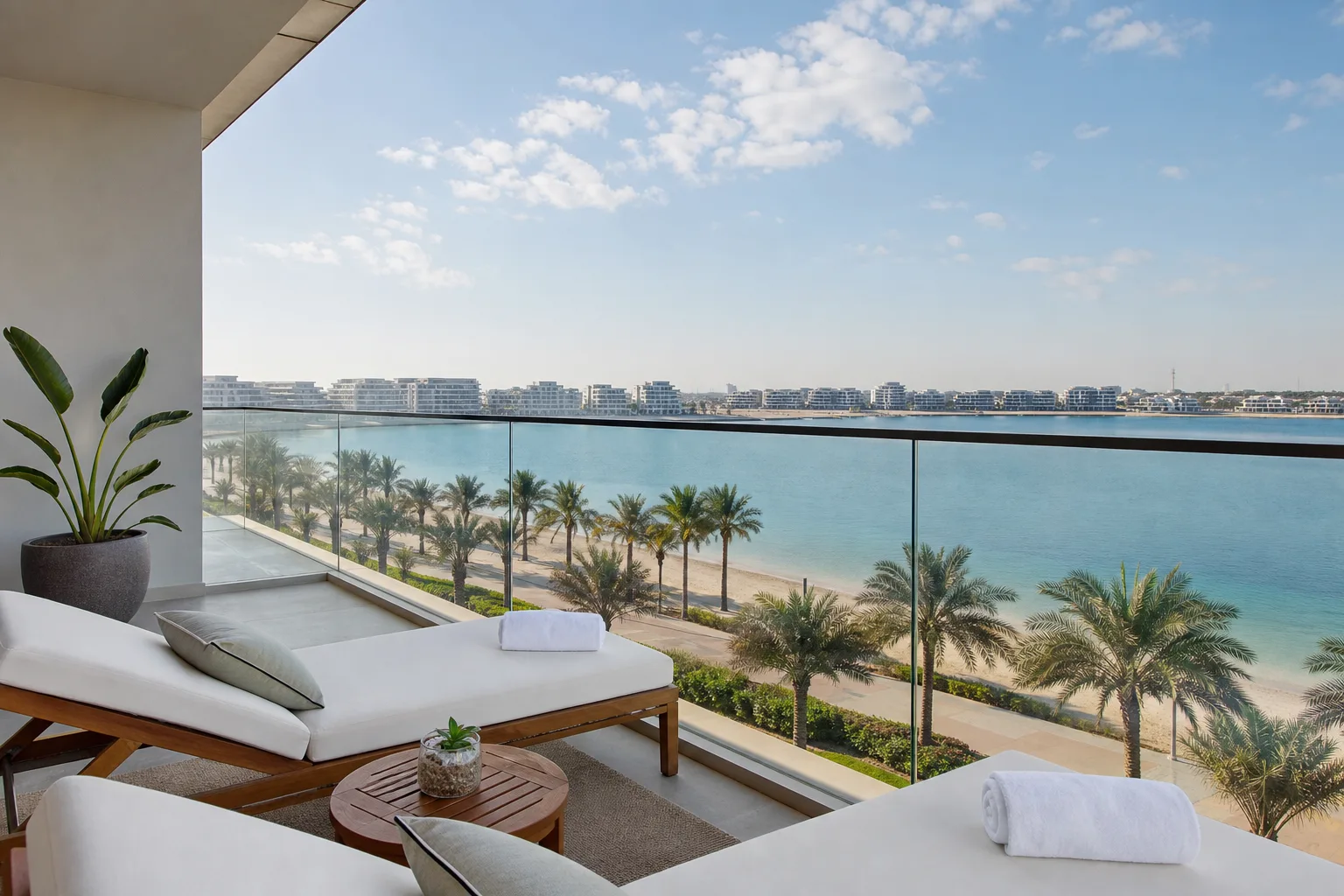
To place the area in context, the Dubai market posts a median gross yield of 5.6% across 65 districts with both a sale and a rental series (Bayut data), within a range running from 1.5% at La Mer up to 7.7% at Dubai International City.
A waterfront archipelago behaves like a premium area: rents track the standard of finish, but the high purchase price pulls the yield toward the lower end of the range. So the sensible expectation is around 5 to 6% — the premium-district band according to Bayut — rather than the 7 to 10% of affordable areas like JVC or Arjan.
Does Dubai Islands still have appreciation potential?
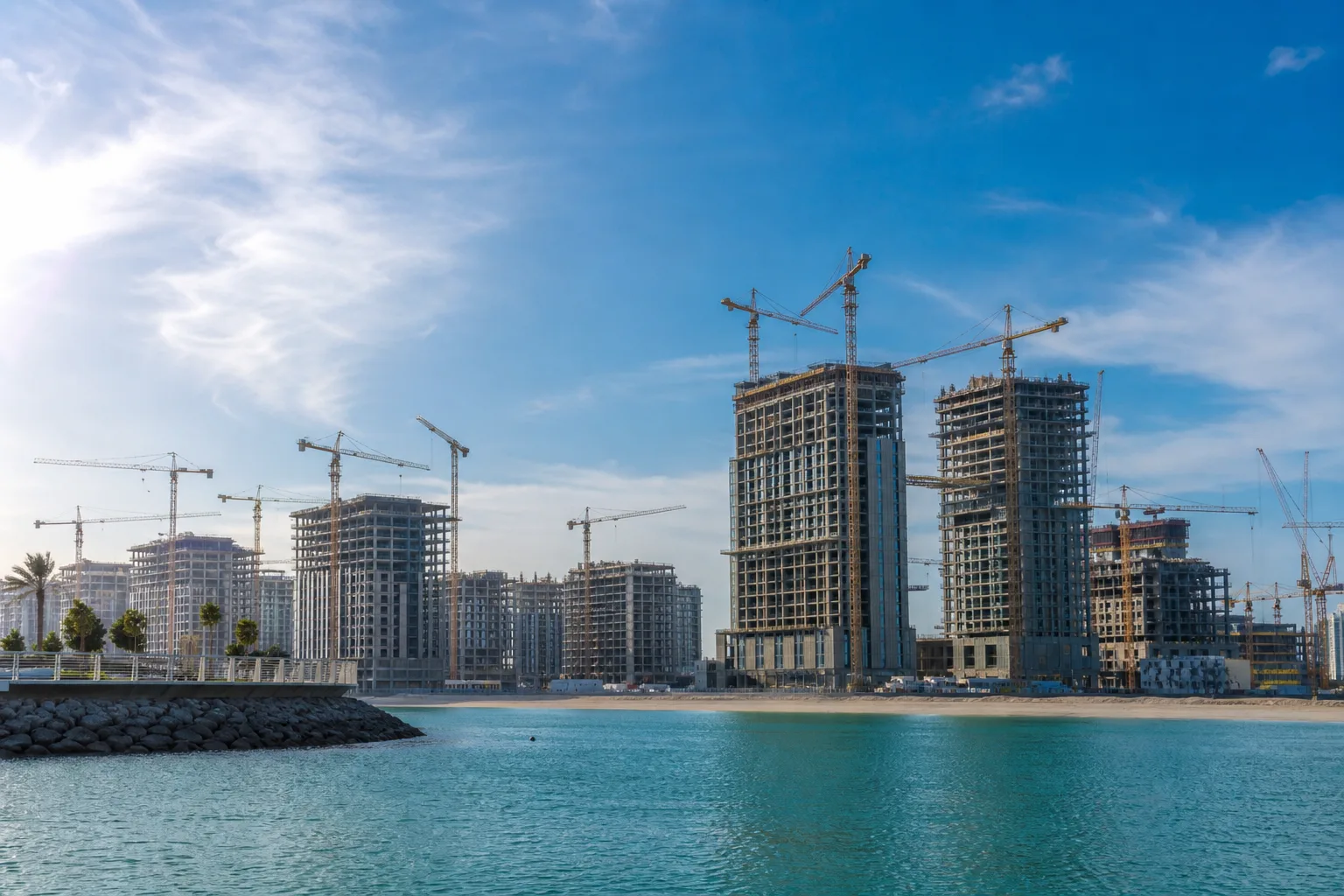
Prices in Dubai Islands have risen by 4.1% over 12 months (March 2026), according to Bayut data — above the market's median movement, which comes in at +2.6% over 12 months across 71 districts.
A project in mind?
Talk to a Lucretia adviser
Tailored guidance, no obligation.
This lead over the median signals a district in its ramp-up phase, not one that has reached a plateau. Three factors support the momentum.
- The archipelago is new and entirely under development: value builds as infrastructure and residences rise from the ground.
- Supply is concentrated over 2027-2029, which paces handovers rather than flooding the market all at once.
- No existing delivered stock is dragging prices down — everything on sale is new.
Reading a rising signal calls for method: cross-checking prices, rents and pace of change without relying on a single figure. We lay out this approach in our guide to Dubai's up-and-coming districts.
Which new-build projects should you buy in Dubai Islands?
Dubai Islands counts 13 projects listed in our catalogue, backed by 7 active developers. Imtiaz Developments leads 5 projects there, Nakheel Properties and Mr. Eight Development sign 2 each, alongside Centurion Properties, Beyond by Omniyat, Chaimaa Holding and Samana Developers.
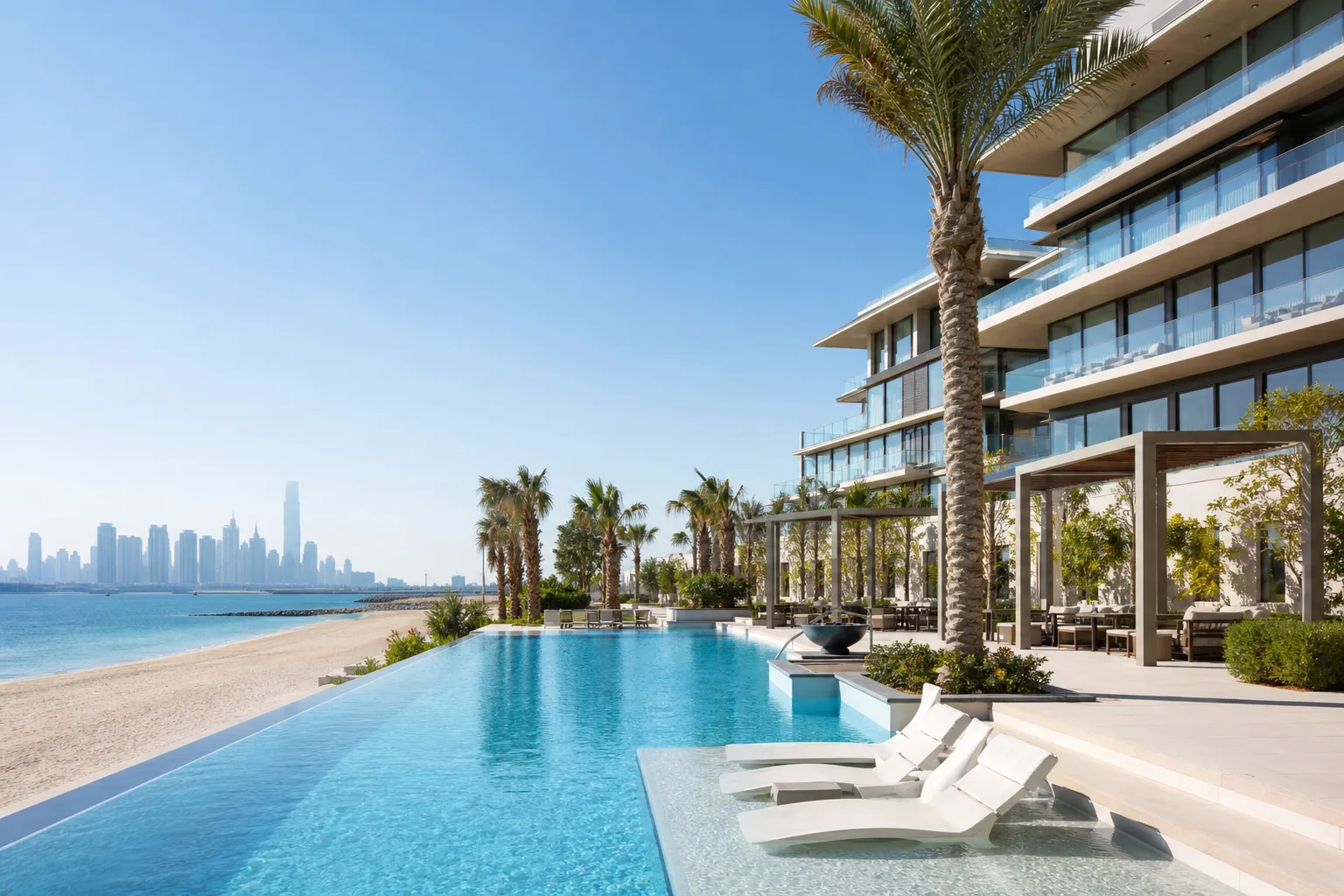
A few concrete markers among the projects we track:
- Bay Grove Residences (Nakheel Properties) — handover September 2028.
- Beach Walk Residence 4 (Imtiaz Developments) — handover June 2027.
- Sea Cliff (Imtiaz Developments) — handover March 2028.
- Hado by Beyond (Beyond by Omniyat) — handover September 2029.
The timeline is clearly spread out. Buyers who want a short horizon target the June 2027 handovers, such as Beach Walk Residence 4 or Sunset Bay 4; those willing to wait for a more upmarket positioning look at Hado by Beyond in September 2029.
Before signing, two reflexes: decide between on-plan and completed property, and check the developer's track record. Our guides on off-plan vs ready-to-move and choosing your developer frame both decisions.
On an archipelago rising from the ground, I always advise my clients to look first at the handover phase and the exact location of the unit within the masterplan — two neighbouring residences won't share the same view or the same beach access.
— Sofiane OULD, Founder & Chief Executive Officer
What does a Dubai Islands purchase really cost beyond the price?
Beyond the headline price, a purchase in Dubai Islands carries a 4% transfer fee at the Dubai Land Department, calculated on the purchase price, plus roughly AED 4,700 to 5,500 in fixed administrative charges.
Free resource
Get our investment guide
The essentials — strategy, taxation, steps — to download.
These fixed charges cover the title deed (about AED 580, reduced to AED 40 for off-plan), the plan fee (about AED 250) and the trustee office (about AED 4,000 to 4,200), according to Property Finder.
Two items then depend on the purchase route:
| Item | Secondary | Off-plan (from the developer) |
|---|---|---|
| Agency fee | 2% of the price + 5% VAT | Usually no buyer commission |
| Upfront outlay | Deposit on signing | Down payment of 5 to 20% (often 10-20%) |
Since Dubai Islands is mostly an off-plan market, the common case is this one: no commission on the buyer's side, but a down payment of 5 to 20% at reservation, sometimes preceded by a fixed booking fee of AED 20,000 to 100,000 before signing the SPA. The funds are secured in a regulated escrow account.
Finally, the annual service charges — from AED 3 to 30/sq ft/year, roughly 10-20 for an apartment and 20-50+ for a luxury tower — weigh on the yield every year. To add up all these items on a concrete case, see our guide to purchase costs in Dubai.
Financing and Golden Visa: what Dubai Islands opens up for the investor
For an off-plan purchase like most in Dubai Islands, the CBUAE caps lending at 50% LTV; in practice, a non-resident secures between 50 and 75% financing, meaning a down payment of 25 to 50% depending on the bank.

Featured
View projects: Artistry Residences
From AED 2,347,000
Hand-picked new properties with end-to-end expert support.
View projects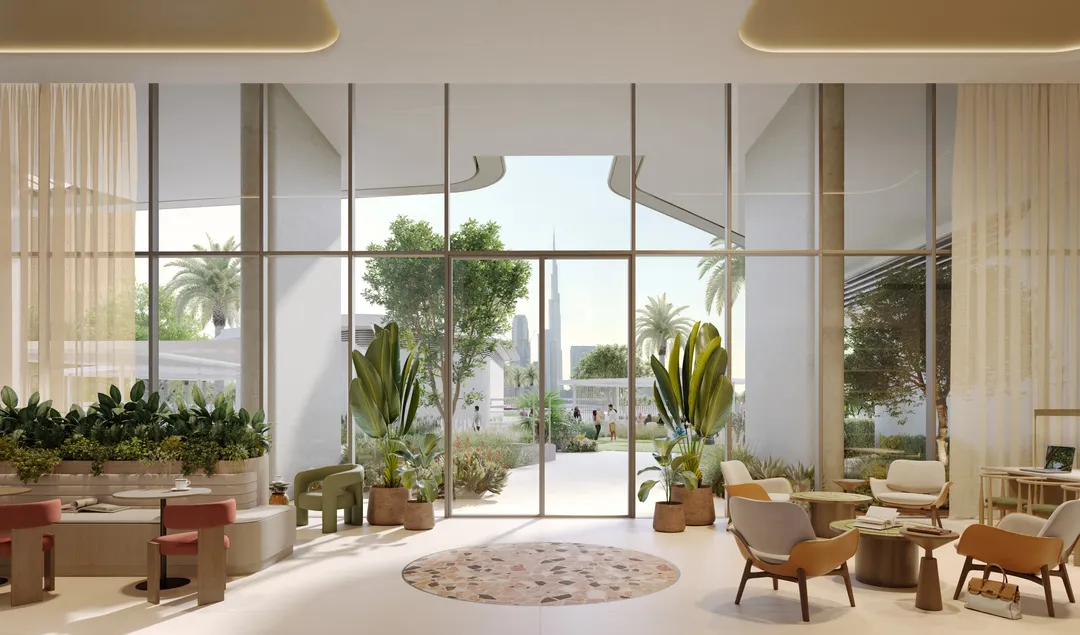
Many buyers sidestep a mortgage by relying on the developer's staggered payment plan, very common in off-plan and tied to construction progress. The detailed terms of a local mortgage appear in our guide on the non-resident mortgage.
On the residency side, the 10-year real estate Golden Visa is granted from AED 2,000,000 invested in real estate, according to the official UAE government portal. Several premium projects on the archipelago reach this threshold. Once the file is complete, the decision comes within a few business days; allow 2 to 4 weeks in total including the Emirates ID and the medical exam.
Taxation of a Dubai Islands purchase: 0% locally and the impact back home
In Dubai, individuals pay no tax on rental income or on real estate capital gains: the rate is 0%, according to the official UAE government portal. Residential sales and rentals are also at 0% VAT.

This framework applies to Dubai Islands just as it does to the rest of the city. Rent collected on an apartment on the archipelago is not clipped by a local tax, and a resale with a capital gain triggers no taxation in the Emirates.
What remains is the tax regime of your country of residence, which does not vanish. For a French tax resident, the 1989 France-UAE treaty neutralises French tax on this income through a tax-credit mechanism, but it counts toward the calculation of the effective rate. We detail this point in our guide on real estate taxation in Dubai. These rules are no substitute for personalised advice: that is the purpose of our wealth studies.
This article is part of our guide
Dubai Property Investment Guide for Foreign Buyers
About the author

Sofiane OULD
Founder & Chief Executive Officer
A visionary entrepreneur and recognized expert in Dubai's prestige real estate market, Sofiane began his career in Paris before joining major players in online real estate (SeLoger, MeilleursAgents, Airbnb). Based in Dubai since 2019, he quickly established himself as one of the city's top-performing brokers. Founder of Lucretia Immobilier, he now supports his clients with an approach combining integrity, innovation and excellence, thereby redefining the standards of luxury.