A developer payment plan lets you pay for an off-plan property in several instalments up to handover. This guide explains how it works, applies it to a real Reem Island project and lists the pitfalls to avoid before signing.
On this page
- What is an off-plan payment plan in Abu Dhabi, and can foreigners use one?
- How does a payment plan work, from reservation to handover?
- Case study: paying for Radiant Bridges on Reem Island in instalments until May 2029
- Which project to choose based on your preferred payment period?
- What the property is worth while you pay: price trends during construction
- Payment plan pitfalls in Abu Dhabi
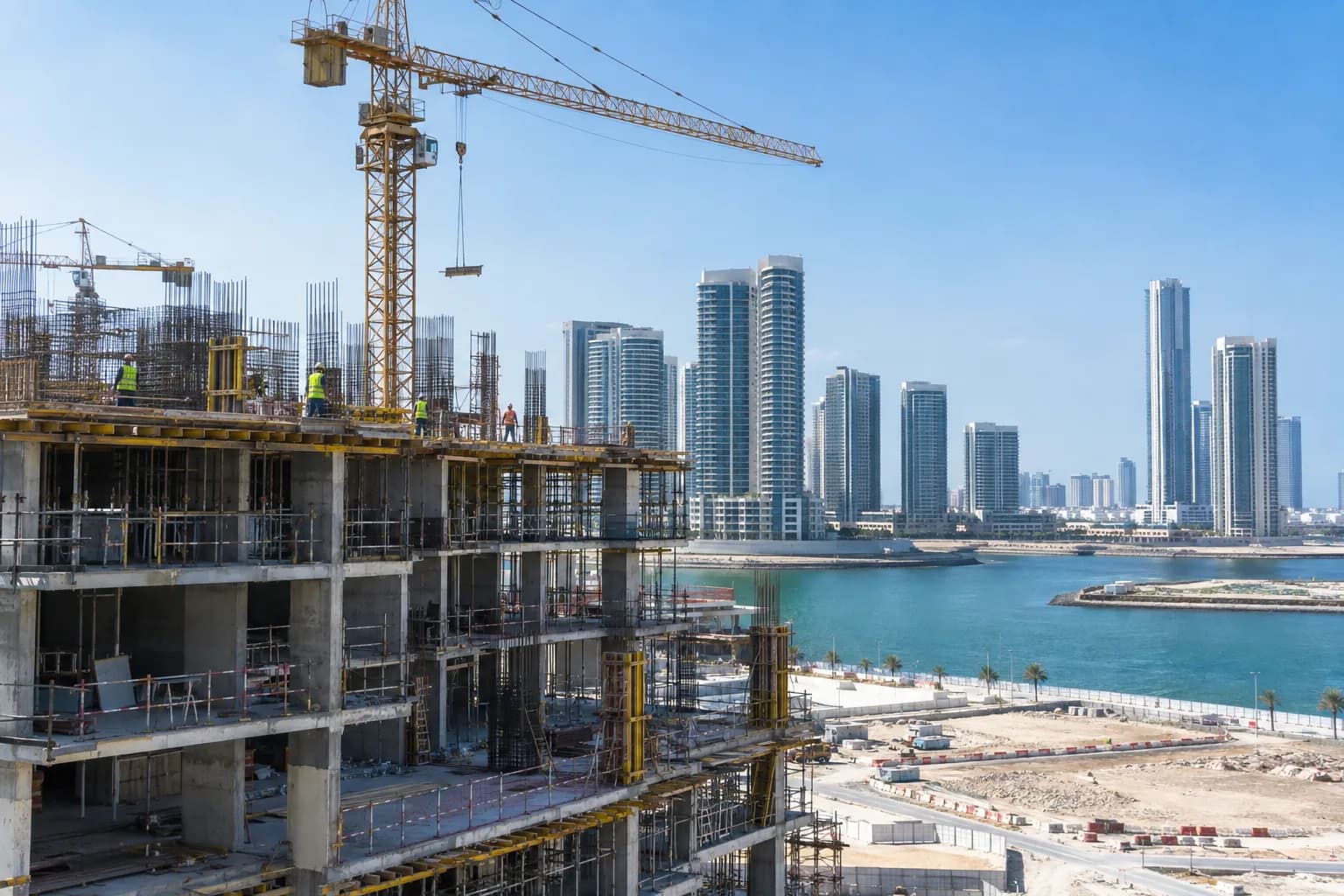
An off-plan payment plan in Abu Dhabi lets you pay for an off-plan property in several instalments to the developer, right up to handover: Law No. 3 of 2015 regulating the real estate sector (ADREC) provides that the buyer pays according to actual construction progress, unless otherwise agreed with the developer. You don't put down the full price at once: your payments follow the pace of the build.
This payment method complements, or replaces, a bank mortgage. It suits investors who want to spread their outlay over several years while locking in a purchase price today. Lucretia supports you across the Abu Dhabi market and negotiates with developers the schedules that best suit your cash flow.
What is an off-plan payment plan in Abu Dhabi, and can foreigners use one?
A payment plan is a split payment, made directly to the developer during the construction of an off-plan property and up to handover. Foreigners can access it in designated investment zones such as Reem Island, Yas Island or Al Saadiyat Island, according to DARI.
It isn't a loan: no bank is involved, no credit check is carried out, and the sale contract sets the schedule. We compare developer payment plans and bank loans in our guide to property financing in Abu Dhabi.
The schedule follows the build. Among the projects we list, handovers run from 2013 to 2031. A building already delivered, such as Oceanscape, completed in May 2013, can no longer be paid in instalments to the developer: only projects under construction offer this option.
The choice remains wide, with 69 published projects and 24 active developers in our catalogue. The rules specific to buying new are covered in our guide to buying off-plan in Abu Dhabi.
How does a payment plan work, from reservation to handover?
A payment plan runs in three stages: a payment on reservation, instalments during construction, then the balance on handover. The share of each instalment is set by each developer's contract.
- Reservation: a first payment secures the unit and opens the signing of the sale contract.
- Construction: instalments fall due at each payment milestone, tied to construction progress.
- Handover: the balance is due at handover.
No standard split applies from one project to the next. I always ask my clients to obtain the schedule in writing, instalment by instalment, before any reservation: it is the only document that binds the developer.
A duration set by the handover date
The later the handover, the more spread out the payments. Rivage, by Deyaar Development on Reem Island and due in December 2027, offers about 14 months of payments from October 2026. On the same island, Bab Al Qasr Beach Resort 77, by Burtville Developments, offers about 62, until December 2031.
Documents to keep
Keep the sale and purchase agreement (SPA), every receipt and the contractual schedule. According to ADREC's developer journey, every off-plan sale is registered through an SPA the buyer can view on the ADREC portal: compare the registered schedule with the one you were shown. The other steps are part of the buying process in Abu Dhabi.
Case study: paying for Radiant Bridges on Reem Island in instalments until May 2029
At Radiant Bridges, a project by developer Radiant on Reem Island priced from AED 1.4M and due in May 2029, a buyer reserving in October 2026 spreads payments over about 31 months.

Free guide, delivered on WhatsApp
Get our investment guide
Taxation, visas, financing, buying steps: 14 pages sent to your WhatsApp within minutes.
The first cost outside the schedule: transfer fees. At 2% of the price according to DARI, they come to AED 28,000 on AED 1.4M and leave your cash on top of the instalments paid to the developer. The detailed calculation is in our guide to property buying costs in Abu Dhabi.
In terms of size, this ticket buys about 935 sq ft at Reem Island's average price of AED 1,497/sq ft, according to Bayut data (March 2026).
Once delivered, the property starts earning. With rent of AED 102/sq ft/year according to Bayut data (March 2026), these 935 sq ft generate about AED 95,400 in gross annual rent. That matches the district's calculated gross yield of 6.8%, before service charges and vacancy.
This rent is not taxed for individuals: income tax is 0%, including rental income and capital gains, according to the UAE government's official portal.
Which project to choose based on your preferred payment period?
The payment period depends on the handover date. Among the projects we list, it ranges from about 14 months for Rivage, due in December 2027, to about 62 months for Bab Al Qasr Beach Resort 77, due in December 2031, counting from October 2026. The table below shows a selection.
| Project | Developer | District | Starting price | Handover | Payment period from October 2026 |
|---|---|---|---|---|---|
| Al-Reeman Gate | Third Quarter Real Estate Development | Al Shamkhah | AED 900,000 | March 2028 | about 17 months |
| Naseem Al Jurf | IMKAN Properties | Al Jurf Gardens | AED 1.1M | June 2028 | about 20 months |
| The District | Reportage Properties | Reem Island | AED 1.1M | June 2029 | about 32 months |
| Sobha City | Sobha Realty | Al Bahyah | AED 1.5M | December 2029 | about 38 months |
| Bloom Living Alhambra | Bloom Properties | Zayed City | AED 1.6M | September 2030 | about 47 months |
| Al Ghadeer Parks | Aldar Properties | Al Layyan | AED 2M | June 2031 | about 56 months |
A short plan concentrates the effort, but handover comes quickly, and so does rental income. A long plan smooths the payments and leaves time to prepare the balance.
On ticket size, starting prices in our catalogue range from AED 500,000 to AED 2M, with a median of AED 1.5M calculated across 17 projects with a displayable price.
What the property is worth while you pay: price trends during construction
The contract price stays fixed, but market value moves during the payment period: the median 12-month change reaches +6.1% across 10 Abu Dhabi districts, according to Bayut data (series to August 2026).
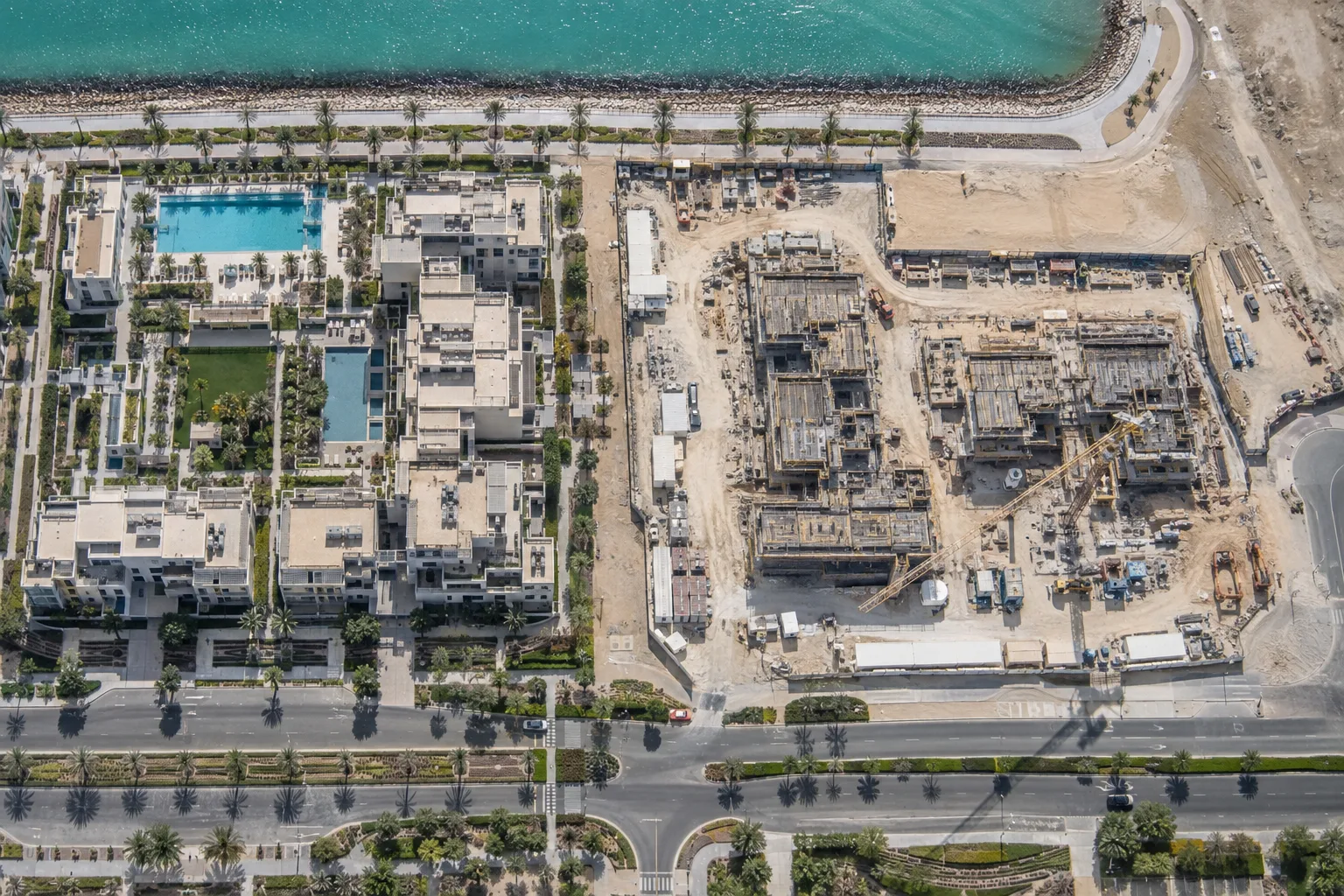
The main areas follow this trend: Reem Island +6.1%, Yas Island +6.3% and Al Jurf Gardens +5.4% over 12 months, according to Bayut data (March 2026). Activity is keeping pace: the Abu Dhabi Real Estate Centre reports AED 66 billion in transactions in Q1 2026. That is a 160.7% increase and its best quarter on record.
Al Bahyah is the counter-example: +44.4% over 12 months, but −8.6% over 36 months according to Bayut data (April 2026). Past gains don't guarantee value at handover.
The consequence is mechanical. The longer the plan, the longer you stay exposed to the market cycle, up or down, before you can rent or resell. To read these movements district by district, use our analysis of Abu Dhabi property market trends.
Payment plan pitfalls in Abu Dhabi
The most common trap is confusing "interest-free" with "cost-free". The transfer fees mentioned above come on top of the instalments, and Reem Island's 6.8% is a gross yield: service charges and vacancy are then deducted, as explained in our guide to gross vs net yield in Abu Dhabi.
A project in mind?
Talk to a Lucretia adviser
Tailored guidance, no obligation.
Committing to a developer for several years
Before signing a three- or four-year schedule, look at the developer's track record, published projects and handover dates. Aldar Properties has 17 published projects in our catalogue and Reportage Properties has 8: their pages show how their handovers are staggered.
Golden Visa: assume nothing
The threshold is AED 2,000,000 of property investment, according to the UAE Golden Visa portal. Have the authorities confirm how a property still being paid for is taken into account. The key points are covered in our guide to the Abu Dhabi property Golden Visa.
The balance at handover
Plan for the final payment from the day you reserve, since the property earns nothing yet at that stage. A buyer who has paid 50% of the price can register a mortgage on the unit before handover.
According to The National, the bank then pays the remaining instalments into the escrow account. Financing is capped at 50% of the price (LTV) and the service is limited to eligible projects, developers and banks.
The mistake I see most often on the ground is a budget built around the construction instalments that forgets the balance: the clients who sleep well are the ones who sorted out the final payment before they even reserved.
— Mourad LACHAB, Real Estate Consultant
This article is part of our guide
Abu Dhabi Property Investment Guide: Buy, Let and Resell with Confidence
About the author

Mourad LACHAB
Real Estate Consultant
Originally from Strasbourg and after ten years in Paris, Mourad moved to Dubai. A former soldier in the French Army for five years, he developed discipline, rigor and a sense of responsibility — qualities he now puts to work for his clients. He started out in Dubai at an English-speaking agency specializing in the secondary market, then joined Lucretia to support French-speaking clients with a 360° view of the market: off-plan, resales, rentals, taxation, etc. A committed and passionate professional, Mourad stands out for his seriousness, transparency and determination. He also practices boxing, a sport that perfectly reflects his mindset.